Very interesting! How did you decide which 2,200 docs to use? Hadn’t seen @nvk
’s implementation of the wiki, thanks for that. Might give that a whirl.
CODE
-
Document Selection Strategy and Wiki Implementation Discussion
By
–
-
OpenClaw-RL Repository and Free AI/ML Engineering PDF Guide
By
–
OpenClaw-RL Repo: github.com/Gen-Verse/OpenCla… If you want to learn AI/ML engineering, I have put together a free PDF (380+ pages) with 150+ core lessons. Download for free: dailydoseofds.github.io/ai-e…
→ View original post on X — @akshay_pachaar, 2026-04-12 13:35 UTC
-
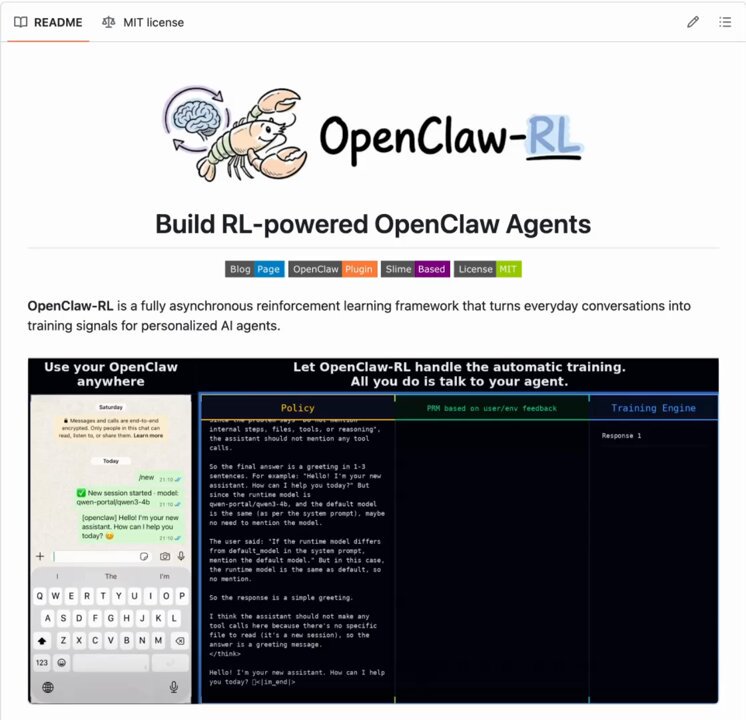
OpenClaw-RL: Reinforcement Learning for Agent Model Weights
By
–
OpenClaw meets RL!
— Akshay 🚀 (@akshay_pachaar) 12 avril 2026
OpenClaw Agents adapt through memory files and skills, but the base model weights never actually change.
OpenClaw-RL solves this!
It wraps a self-hosted model as an OpenAI-compatible API, intercepts live conversations from OpenClaw, and trains the policy in… pic.twitter.com/4kxY1b2wSCOpenClaw meets RL! OpenClaw Agents adapt through memory files and skills, but the base model weights never actually change. OpenClaw-RL solves this! It wraps a self-hosted model as an OpenAI-compatible API, intercepts live conversations from OpenClaw, and trains the policy in the background using RL. The architecture is fully async. This means serving, reward scoring, and training all run in parallel. Once done, weights get hot-swapped after every batch while the agent keeps responding. Currently, it has two training modes: – Binary RL (GRPO): A process reward model scores each turn as good, bad, or neutral. That scalar reward drives policy updates via a PPO-style clipped objective. – On-Policy Distillation: When concrete corrections come in like "you should have checked that file first," it uses that feedback as a richer, directional training signal at the token level. When to use OpenClaw-RL? To be fair, a lot of agent behavior can already be improved through better memory and skill design. OpenClaw's existing skill ecosystem and community-built self-improvement skills handle a wide range of use cases without touching model weights at all. If the agent keeps forgetting preferences, that's a memory problem. And if it doesn't know how to handle a specific workflow, that's a skill problem. Both are solvable at the prompt and context layer. Where RL becomes interesting is when the failure pattern lives deeper in the model's reasoning itself. Things like consistently poor tool selection order, weak multi-step planning, or failing to interpret ambiguous instructions the way a specific user intends. Research on agentic RL (like ARTIST and Agent-R1) has shown that these behavioral patterns hit a ceiling with prompt-based approaches alone, especially in complex multi-turn tasks where the model needs to recover from tool failures or adapt its strategy mid-execution. That's the layer OpenClaw-RL targets, and it's a meaningful distinction from what OpenClaw offers. I have shared the repo in the replies!
→ View original post on X — @akshay_pachaar, 2026-04-12 13:35 UTC
-
Model Training Harness Modifications and Testing Requirements
By
–
Potentially, but needs more testing. Most other models are trained on a claude code-like harness, whereas codex is different enough to justify modifications. You can change a gate line in hackable install to test. If I enable it for all and it does not help, I get shit here
-
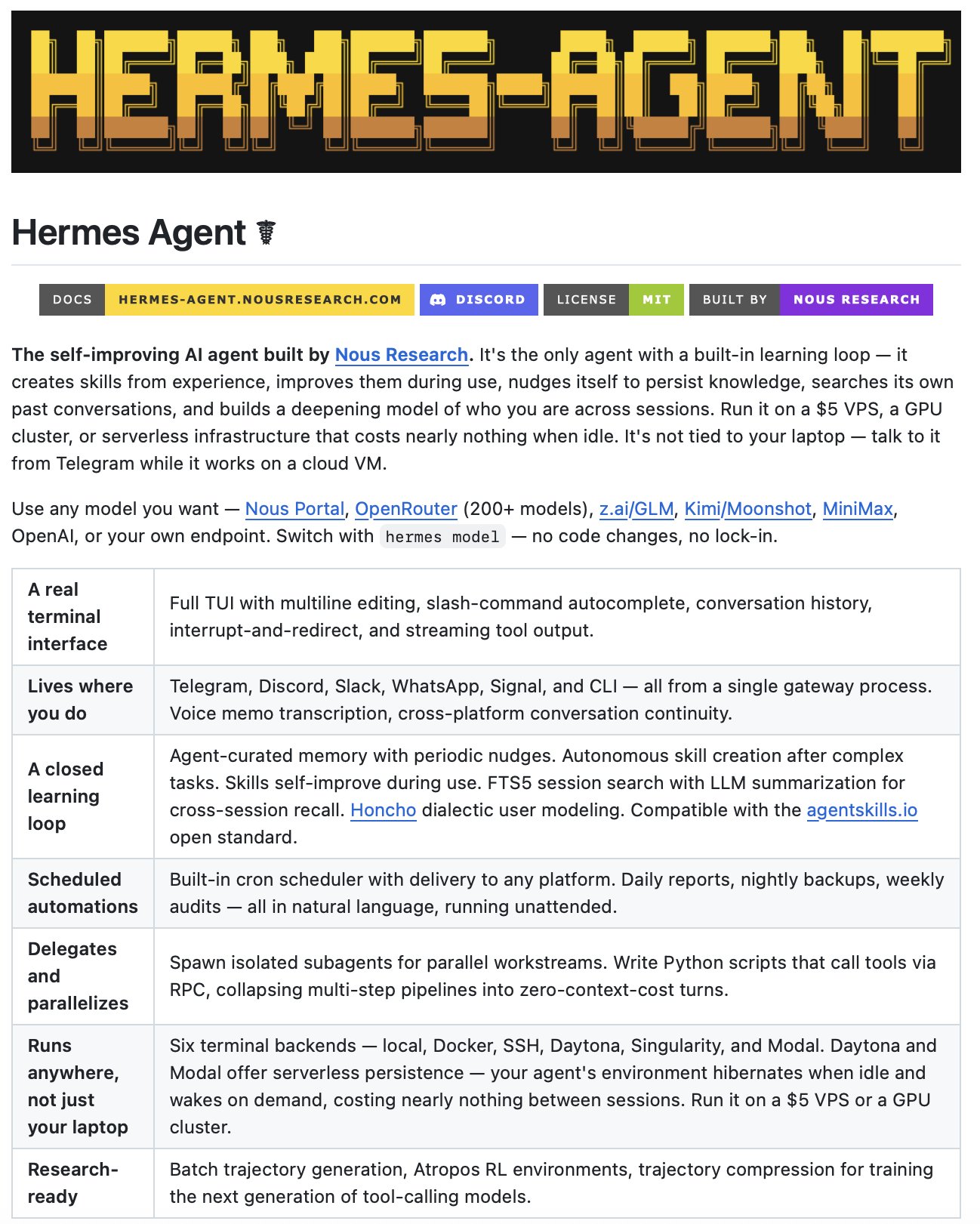
Follow Sumanth for AI Engineering Insights and Tutorials
By
–
If you found it useful, reshare it with your network Follow me → @Sumanth_077 for more insights and tutorials on AI Engineering!
-
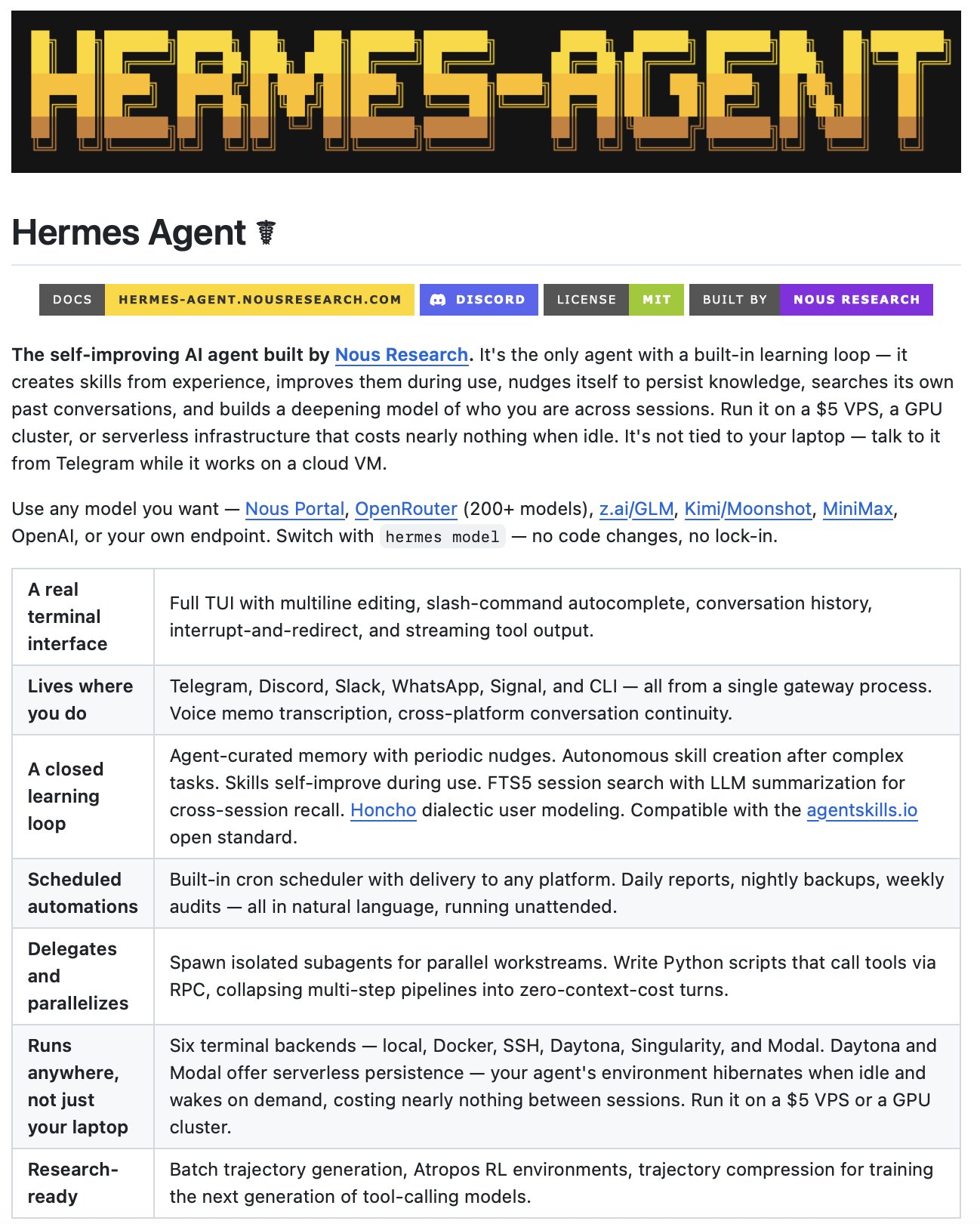
Hermes Agent: Self-Improving AI with Cross-Session Memory
By
–
The self-improving AI agent from Nous Research! Hermes Agent is a self-improving AI agent that builds skills from your work, improves them over time, and remembers across sessions. Most AI agents reset every conversation. You teach them your codebase structure, they forget. You
-
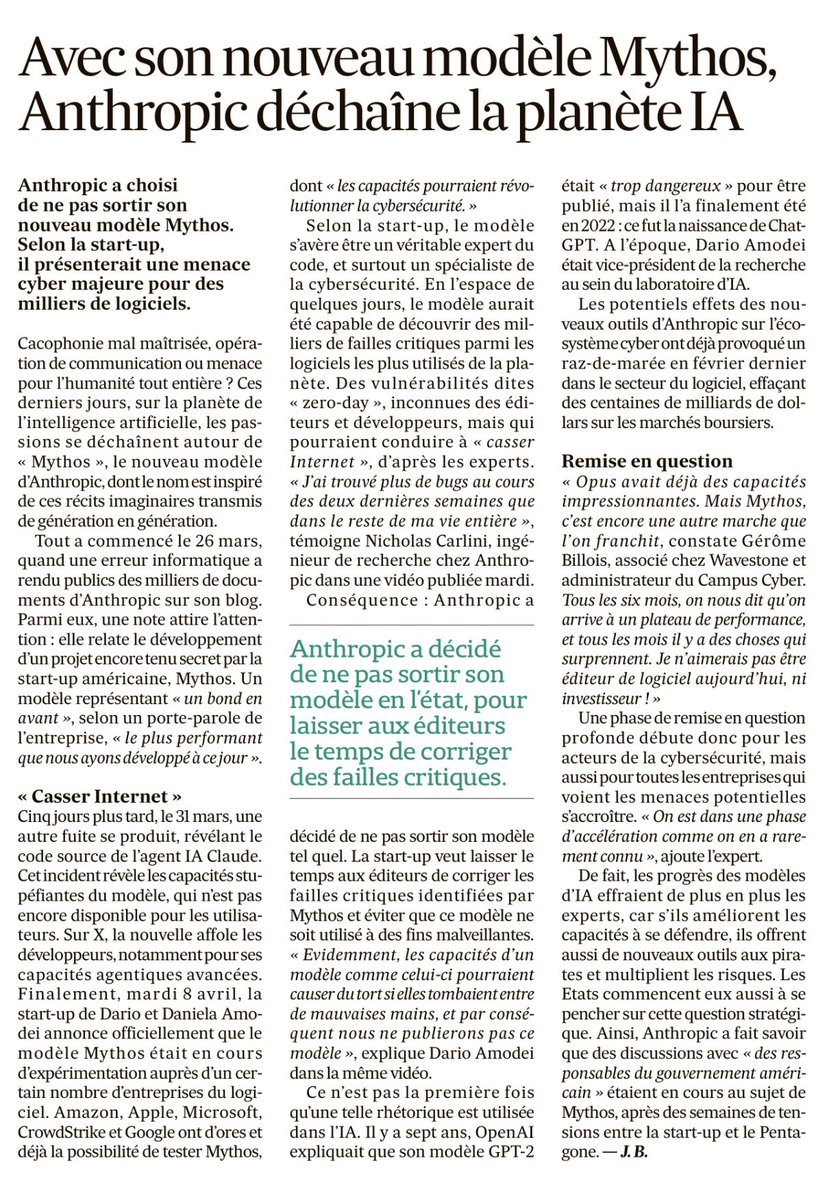
Anthropic Refuses to Release Its Too Powerful Mythos AI Model
By
–
Anthropic has created an AI model so powerful that it refuses to release it. Mythos discovered thousands of critical zero-day vulnerabilities in the world's most used software within days. Amazon, Apple, Microsoft, Google are already testing it. An Anthropic engineer: "I found more bugs in two weeks than in the rest of my entire life." [Translated from EN to English]
→ View original post on X — @alex_tsico, 2026-04-12 11:39 UTC
-

Programming Without English: The Rise of Visual Code
By
–
You don’t even need English any more to write code. Simple graphs will do.
-

Claude Mythos Linked to ByteDance’s Looped LLM Research
By
–
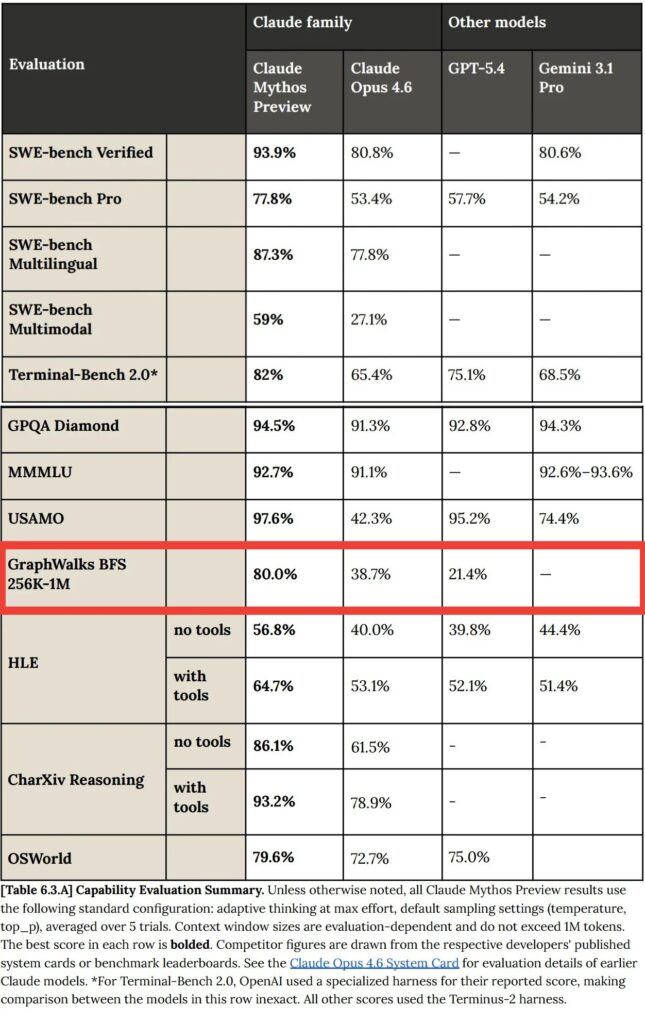
This might be the most important observation about Claude Mythos that nobody is picking up on. Chris is connecting Mythos to ByteDance’s “Scaling Latent Reasoning via Looped Language Models” paper. The core idea: instead of thinking out loud with chain-of-thought text, a looped
-
Memory Sparse Attention GitHub Repository Reaches 3000 Stars
By
–
讲真,我们没有想到 Memory Sparse Attention 的 GitHub Repo 会这么快到 3000 星。更没有想到大家的关注度这么高。也许真的印证了那句话吧,「能带走的才是记忆,带不走的则是过去」。
— 艾略特 (@elliotchen100) 12 avril 2026
起初,MSA 只是一篇论文。一个支持 1 亿 Token 上下文的端到端方案,大胆,也优雅。
核心就两个点:一个是 Dual… pic.twitter.com/DUBidTcl8rTo be honest, we didn't expect the GitHub Repo for Memory Sparse Attention to hit 3000 stars so quickly. Even less did we expect such high attention from everyone. Maybe it really proves that saying: "What you can take with you is memory; what you can't take is the past." At the