Interesting!
One thing that I have to always do: whenever a Claude Code starts to go wrong, I kill it, because when they fill their context with error logs and wrong ideas, they tend to keep digging their hole.
A good agent orchestrator would have "kill conditions" to just
AUTOMATION
-
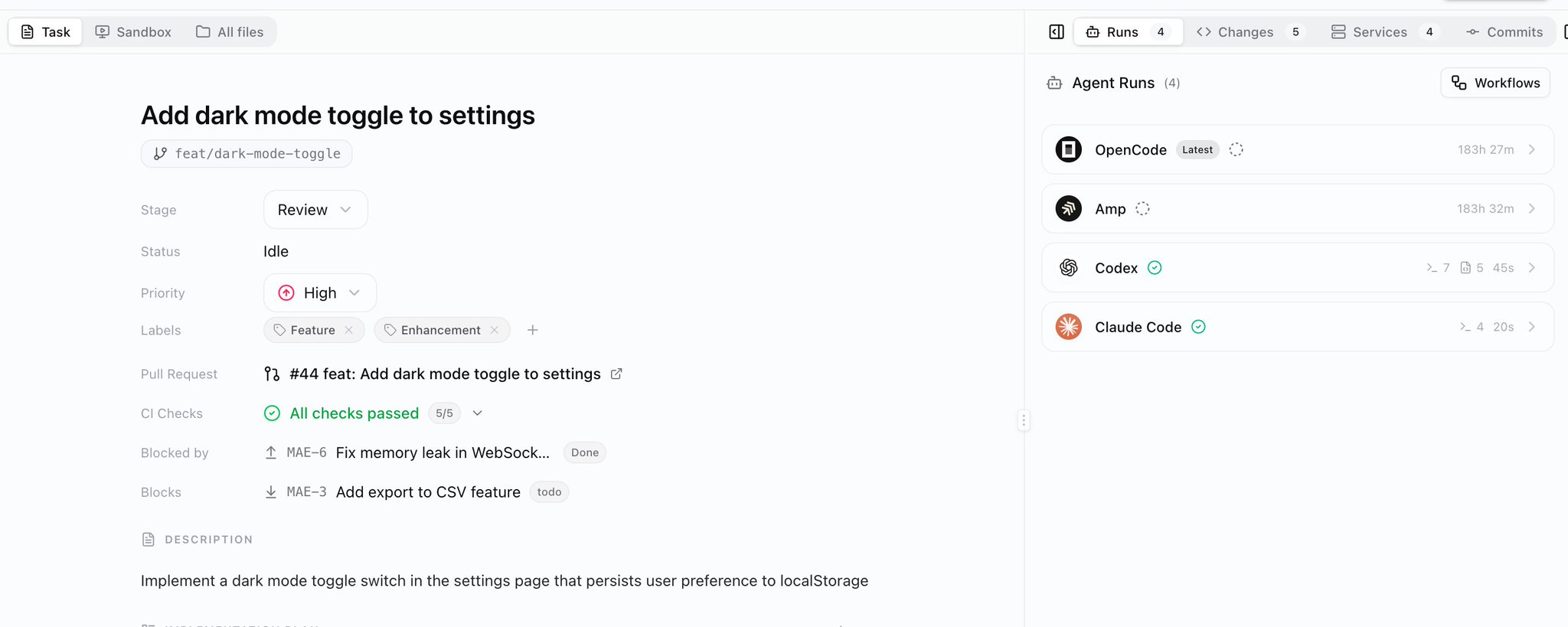
Kill conditions for agent orchestrators to stop error loops
By
–
-

Multi-Agent Communication Architecture: Design Decisions for AI Systems
By
–
How should AI agents talk to each other? There's no one-size-fits-all answer. As we deploy multi-agent systems in robotics, autonomous vehicles, and distributed AI, choosing the right communication architecture becomes a first-order design decision. The problem: Multi-agent RL
-
Remixing LobeHub agent to extract arXiv paper authors
By
–
Stop searching and pasting prompts from all over the internet.
— God of Prompt (@godofprompt) 27 janvier 2026
LobeHub has an agent marketplace.
I found a People Search agent in the community, then leveled it up by remixing the prompt and swapping tools.
Now it:
→ Extracts all authors from an arXiv paper
→ Finds their… pic.twitter.com/XS5PeNVzyYStop searching and pasting prompts from all over the internet.
LobeHub has an agent marketplace. I found a People Search agent in the community, then leveled it up by remixing the prompt and swapping tools. Now it: → Extracts all authors from an arXiv paper
→ Finds their -
Build a Twitter growth pipeline with multi-agent system in 10 minutes
By
–
Built a Twitter growth pipeline in 10 minutes:
→ Agent 1: monitors trends
→ Agent 2: researches sources
→ Agent 3: drafts threads
→ Agent 4: prepares posts Supervisor orchestrates. Agents work in parallel. Human approves before publish.
One instruction. Full content -
L3 and L4 Agent Levels: Hand-holding vs Supervisor Orchestration
By
–
Nobody's explaining this:
— God of Prompt (@godofprompt) 27 janvier 2026
L3 (Manus, Cowork): Agent asks for guidance constantly. Heavy hand-holding. User maintains active role throughout.
L4 (LobeHub): Supervisor handles orchestration. Agents work in parallel. Human only approves output.
The Knight Institute literally… pic.twitter.com/DIC8sAuWnNNobody's explaining this: L3 (Manus, Cowork): Agent asks for guidance constantly. Heavy hand-holding. User maintains active role throughout. L4 (LobeHub): Supervisor handles orchestration. Agents work in parallel. Human only approves output. The Knight Institute literally
-
Now anyone can build n8n agents easily using Claude with this prompt
By
–
Now anybody can build n8n agents easily using Claude with this prompt. loved it.
-
UK Government Partners to Build AI Assistant for GOV.UK Services
By
–
We’re partnering with the UK's Department for Science, Innovation and Technology to build an AI assistant for http://
GOV.UK. It will offer tailored advice to help British people navigate government services. Read more about our partnership: -
Network Intelligence and Coordination Drive Performance Under Pressure
By
–
At those speeds, technology becomes a matter of timing and trust, and this example shows very clearly how network intelligence and coordination can make the difference under real pressure. @TMobileBusiness
-

AI Transforms Data Analytics Through Natural Language and Agents
By
–
AI is transforming how organisations explore and understand their data. In this video, I show how natural language interfaces, real-time insight detection, and AI agents are reshaping decision-making and democratising analytics for everyone. #DataAnalytics #AI
-
MCP servers deliver interactive interfaces for seamless AI workflows
By
–
This means:
— God of Prompt (@godofprompt) 27 janvier 2026
Any MCP server can now deliver interactive interfaces wherever users work.
Developers get a universal way to bring their tools into AI conversations.
And users get seamless workflows without tab-switching. pic.twitter.com/DJiy4dH8cDThis means: Any MCP server can now deliver interactive interfaces wherever users work. Developers get a universal way to bring their tools into AI conversations. And users get seamless workflows without tab-switching.