Most people use AI like a search engine. That’s the lowest value use case. The real leverage comes when AI moves from answering questions to supporting execution. For small and mid-sized businesses, the shift is practical: Use it to structure decisions.
Model scenarios before
AUTOMATION
-
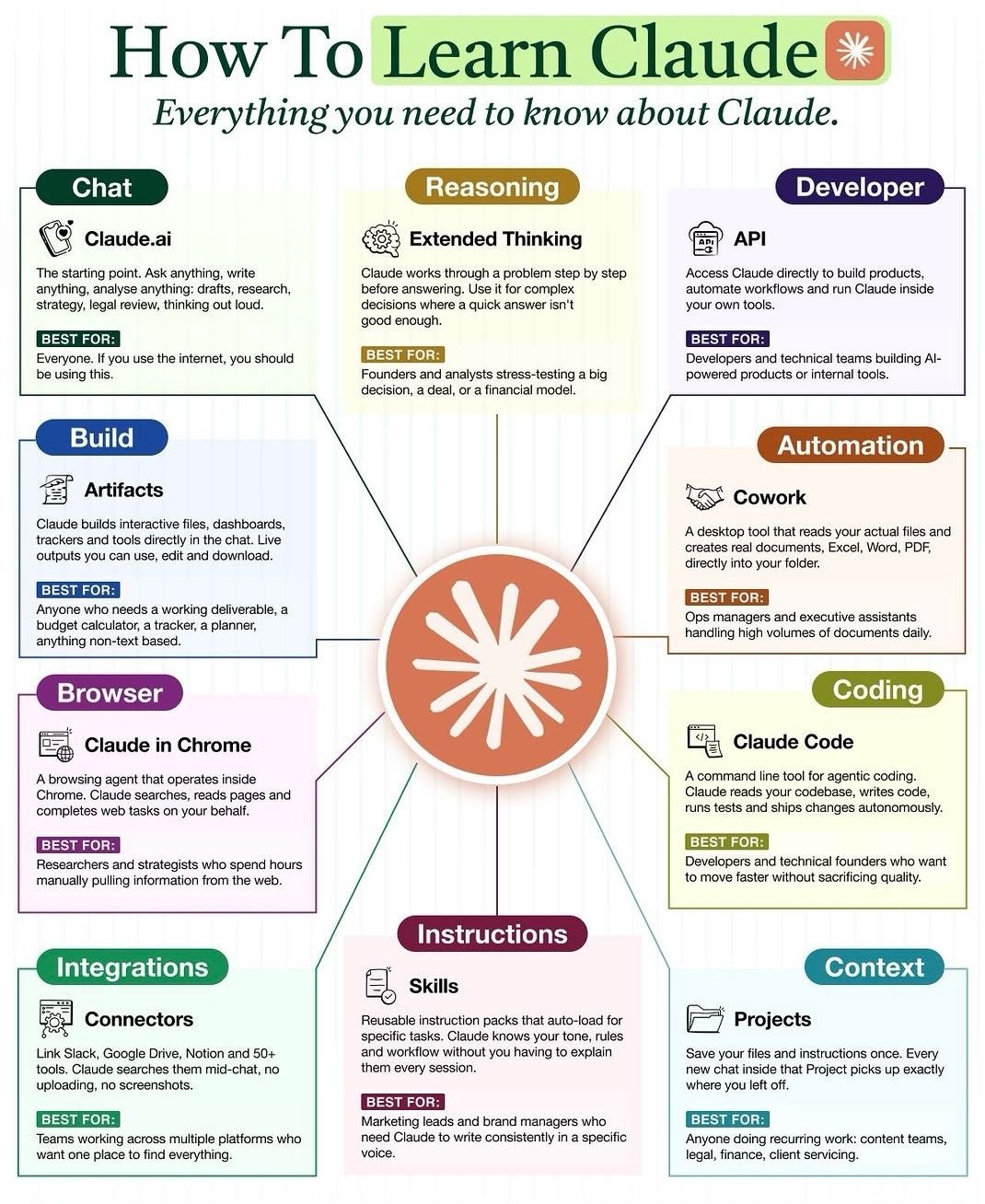
Using AI to move from answers to execution for businesses
By
–
-
AI Disrupts Speaker Agencies as Disintermediation Accelerates
By
–
You're right about the middlemen—most of them no longer add any value. I see it in my line of work: speaker agencies with their exorbitant commissions are suffering from disintermediation. Whereas for years, it was a goldmine. AI is rendering them obsolete.
-
Promptable World Events: Dynamic Simulation Control for Enterprise Training
By
–
Then there is “promptable world events.” Inside the simulation, you can dynamically: → Change the weather
→ Modify objects
→ Introduce or alter characters
→ Trigger new scenarios in real time Think about the enterprise implications: → Training embodied agents
→ -
Using AI May Automate Your Own Job Away
By
–
"Those who do not use AI will be replaced by those who use AI" Do you remember that punchline to justify training employees in the use of AI? Well, it's false: by using AI, each person contributes to automating their own job. AI will do everything.
-
AI Scientist V1 Completed Before o1-Preview, Models More Capable Now
By
–
The AI Scientist V1 was completed months before o1-preview and reasoning models were released. The models have clearly gotten much more capable since then. Very excited for where things are headed for AI and automated research! Sakana AI (@SakanaAILabs) The AI Scientist: Towards Fully Automated AI Research, Now Published in Nature Nature: nature.com/articles/s41586-0… Blog: sakana.ai/ai-scientist-natur… When we first introduced The AI Scientist, we shared an ambitious vision of an agent powered by foundation models capable of executing the entire machine learning research lifecycle. From inventing ideas and writing code to executing experiments and drafting the manuscript, the system demonstrated that end-to-end automation of the scientific process is possible. Soon after, we shared a historic update: the improved AI Scientist-v2 produced the first fully AI-generated paper to pass a rigorous human peer-review process. Today, we are happy to announce that “The AI Scientist: Towards Fully Automated AI Research,” our paper describing all of this work, along with fresh new insights, has been published in @Nature! This Nature publication consolidates these milestones and details the underlying foundation model orchestration. It also introduces our Automated Reviewer, which matches human review judgments and actually exceeds standard inter-human agreement. Crucially, by using this reviewer to grade papers generated by different foundation models, we discovered a clear scaling law of science. As the underlying foundation models improve, the quality of the generated scientific papers increases correspondingly. This implies that as compute costs decrease and model capabilities continue to exponentially increase, future versions of The AI Scientist will be substantially more capable. Building upon our previous open-source releases (github.com/SakanaAI/AI-Scien…), this open-access Nature publication comprehensively details our system's architecture, outlines several new scaling results, and discusses the promise and challenges of AI-generated science. This substantial milestone is the result of a close and fruitful collaboration between researchers at Sakana AI, the University of British Columbia (UBC) and the Vector Institute, and the University of Oxford. Congrats to the team! @_chris_lu_ @cong_ml @RobertTLange @_yutaroyamada @shengranhu @j_foerst @hardmaru @jeffclune — https://nitter.net/SakanaAILabs/status/2036840833690071450#m
→ View original post on X — @_yutaroyamada, 2026-03-26 08:53 UTC
-
Trucks Transformed into Drone Command Hubs: Road to Sky
By
–
From Road to Sky: Trucks Transformed into #Drone Command Hubs
— Ronald van Loon (@Ronald_vanLoon) 26 mars 2026
via @ZappyZappy7
#Engineering #ArtificialIntelligence #Innovation #Technology pic.twitter.com/C4dViOQiK1From Road to Sky: Trucks Transformed into #Drone Command Hubs
via @ZappyZappy7 #Engineering #ArtificialIntelligence #Innovation #Technology -
Playwright Interactive Skills Implementation Discussion
By
–
this should by and large already be possible with playwright interactive no? anything you’d like to add/ change? https://
github.com/openai/skills/
tree/main/skills/.curated/playwright-interactive
… -
OpenAI Skills and Sub-Agents: What’s Missing?
By
–
to a large extent this is all already possible with openai/skills paired with sub agents no? anything that’s missing?
-
What Tools Should Integrate With Codex Next?
By
–
We are expanding Codex’s toolkit – what tools would you love to see work with codex the most?
-
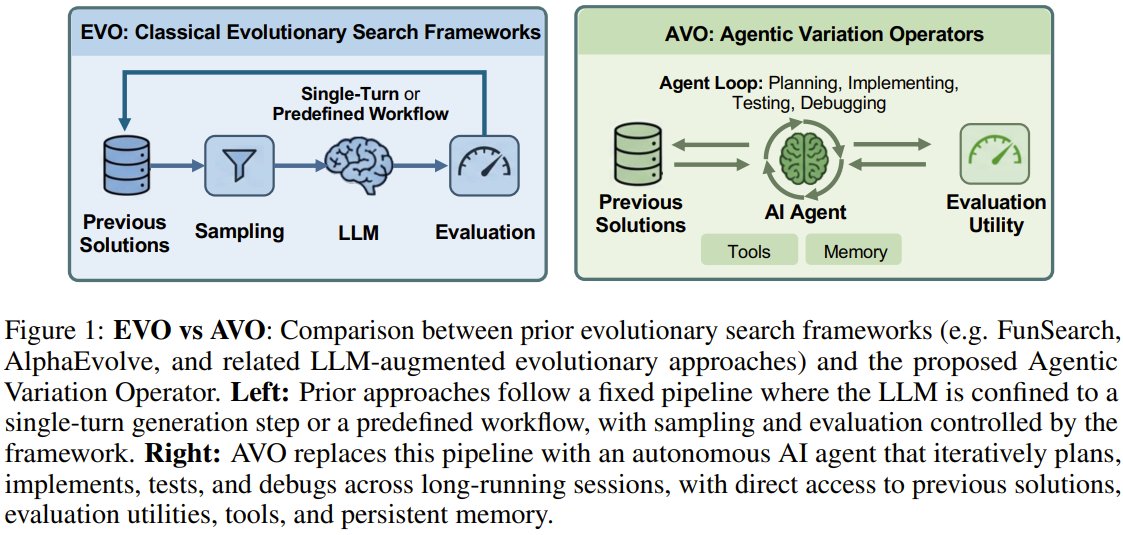
NVIDIA’s Agentic Variation Operators Transform Code Evolution Autonomously
By
–
Huge! Operator engineers should start worrying about their jobs. NVIDIA just introduces Agentic Variation Operators (AVO), a new approach where autonomous AI agents evolve and optimize code themselves. Instead of fixed rules, these agents dynamically propose, repair, critique,