NEW EPISODE: @jack & @roelofbotha unpack @blocks 40% staff cut and rebuilding the entire company as a mini-AGI. This isn’t “use AI to make people more productive.” It’s making the company itself the intelligence. If you’re a founder or operator wondering what work looks like in the next 5 years… this is the episode. The evolution looks like: • Manager mode = Pyramid 🔺 (command & control) • Founder mode = Flat ➖(founders decide fast) • Dorsey mode = Circle 🔵 w/ AI at the center, humans at the edge, and decisions flow from customer inputs → AI → humans steering it I’ve tried killing org charts before. Brutally hard. But we never had these tools. This is rewriting the CEO playbook for the AI era. Buckle up. 00:00 Existential Dread & Hope 02:56 AI Replaces Hierarchy 07:22 Block’s New Three Roles 26:47 Flattening the Company, Fast 35:23 Getting the Board to Buy-In, Fast 36:50 Building a Great Board 41:29 Founder CEO Lessons 48:18 Second Acts & Conviction 56:22 Timeless CEO Traits
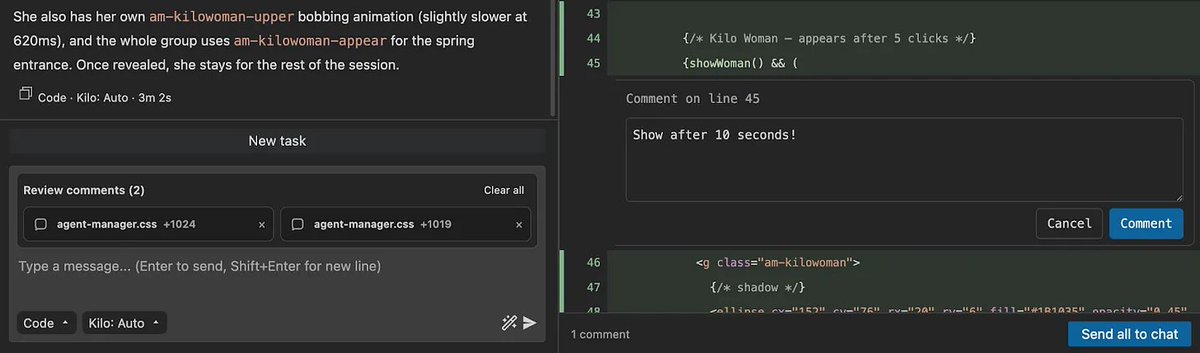
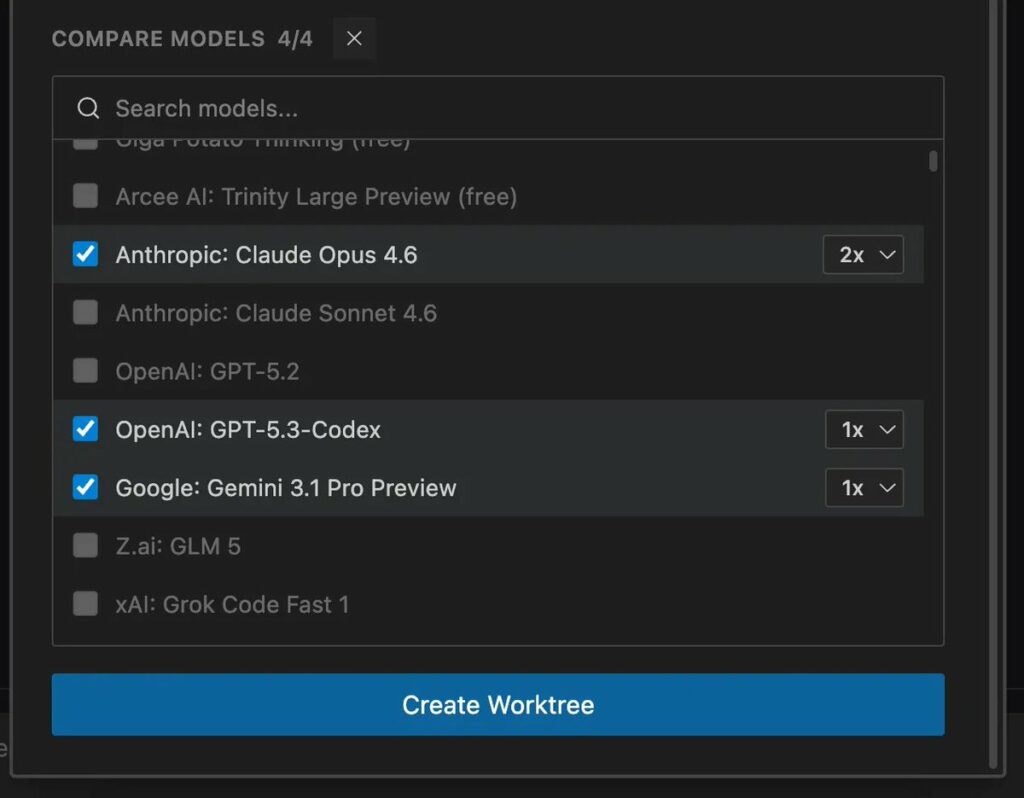
Most coding agents do not fail because they are weak. They fail because they are hard to inspect. The real problem with coding agents is not autonomy. It’s easy to make them “autonomous”. The problem is observability. A lot of tools still look impressive right until the moment they say “done”, move on, and when you check, the thing is half-built, wrong, or never happened. It happens to me almost every day, and if you don’t check for it, you might as well skip half your to-do tasks… That is why I care so much about observability and control in agentic coding. Not just more tool calls. Not just more agents. Not just more autonomy. I want to see the diff. I want to review the exact line and ensure it was done, and understand how. I want to send (only relevant) feedback back into the context. I want to compare models on a real task in my repo instead of guessing. That is what I found interesting in the rebuilt Kilo Code extension on VS Code. Yes, the parallel subagents and tons of features are cool. But the part I care about more is the (human) review loop around them. You can inspect what each agent changed, comment directly on the diff, and send those comments back as structured context. That matters. Because the value of these tools is not just in generation. It is correction. It is debugging weird hallucinations (and other LLM weaknesses). It is catching the moments where the model says “I made it” and absolutely did not. And honestly, model comparison on real tasks is underrated too. Benchmarks are nice. Your repo and actual use case are way nicer. If a tool helps you compare quality, behaviour, and likely cost on your own codebase, that is real value. A 2026 tool NEEDS to be focusing around models’ weaknesses, which starts with observability and monitoring. And, unfortunately, observability, control, and evaluation are still missing layers in many agent products. I highly recommend trying it out and taking the time to review agents’ code in general! I put the link in the comments if you want to try it. What do you care about more in coding agents today: more autonomy, or more observability?
We're partnering with Slack to give SlackBot a voice. Powered by ElevenAgents, teams can now automate workflows, generate natural-sounding audio, and interact with information more intuitively, all within Slack. Slack (@SlackHQ) Your AI investment is only as good as its access. ⚡️ We’ve turned Slackbot into the orchestrator for your entire enterprise. Agentforce agents? Connected. 🤖 6,000+ AppExchange tools? Integrated. 🛠️ Productivity? Unlocked. 🔓 Trusted data, apps, and agents, all in one conversation. — https://nitter.net/SlackHQ/status/2039049928228401193#m
Yeah, I agree. Plus two years from now Robotaxis from a number of companies, including Tesla, will be in many neighborhoods. I seriously doubt I'll buy another car to put in my garage again. Waymo customers tell me that they never will buy one again.
Engineering teams are shipping code faster than ever, but production operations remain heavily manual and concentrated in the hands of a few experienced engineers. The result: slower incident resolution, constant interruptions, and… pic.twitter.com/DKWXhzK4PO
LangSmith for Startups Spotlight: TierZero Engineering teams are shipping code faster than ever, but production operations remain heavily manual and concentrated in the hands of a few experienced engineers. The result: slower incident resolution, constant interruptions, and growing operational toil as systems scale. TierZero is the AI platform that helps engineering teams run production systems reliably at scale. Their agents automate incident response, surface reliability risks, and give engineers instant answers to production questions. High-scale teams like Discord, Drata, Framer, and WeightWatchers trust TierZero to accelerate incident resolution and reclaim engineering capacity. At Drata, TierZero reduced issue time-to-resolution by 42% and saved 7000+ engineering hours annually. LangSmith plays a central role in how the team builds agents. Learn more 👉 tierzero.ai Reach out to the team for a free 30-day trial 👉 cal.com/tierzero-az/45min
audit and fix your entire developer docs site in under a minute
We built an AI agent with @browserbase and @cerebras that audits your entire docs site
> point it at any documentation site > agent goes down the link tree > agent crawls and verifies every page, checks every link,… pic.twitter.com/Y6pZjYtYPH
audit and fix your entire developer docs site in under a minute We built an AI agent with @browserbase and @cerebras that audits your entire docs site > point it at any documentation site > agent goes down the link tree > agent crawls and verifies every page, checks every link, reads every code snippet > agent also compares content to your GitHub repo > returns a full report with suggested fixes and source references The full code and tutorial for how to build this yourself is live now.
Totally. Been interviewing Waymo customers and they love them. Getting three rides in one changes them deeply. Many say that before they got that experience they thought they "loved to drive" or "could never trust a computer to drive." After? They say: 1. I'm never going
Totally. And my autonomous car is feeling normal. I noticed that by interviewing Waymo customers. They see it as normal life now. One guy has taken one to work every day for two years.
How is @Salesforce’s Agentforce impacting government?
AI in the public sector has moved from hesitation to execution. Agents are now live and reducing costs, improving service delivery, and handling millions of citizen interactions. #sponsored
How is @Salesforce’s Agentforce impacting government? AI in the public sector has moved from hesitation to execution. Agents are now live and reducing costs, improving service delivery, and handling millions of citizen interactions. #sponsored The bigger shift is from reactive systems to proactive, personalized government. This is a redefinition of how government serves citizens: piped.video/EKH6cmeJC3E #AI #GovAI #Agentforce #Missionforce #SalesforcePartner