AI Dynamics

Global AI News Aggregator

About

AI

  • Heaviside Foundation Model for Electromagnetism Announced

    Today, we're announcing Heaviside, our foundation model for electromagnetism. Trained on tens of millions of designs and over 20 years of proprietary simulation data, Heaviside predicts electromagnetic behavior from geometry in 13ms, which is 800,000x faster than a commercial solver. Heaviside is not a language model, and it’s not a surrogate model. Heaviside marks a new class of foundation model for physics which understands the fundamental relationships between materials, the geometries and the electromagnetic fields they generate. We’re releasing a research preview of Heaviside in Atlas RF Studio, an interactive agentic sandbox where you describe the EM behavior you want and the model generates the physical structure that produces it. @arenaphysica , we believe the implications of this class of model extend well beyond RF, as the frontier of exquisite hardware is electromagnetically-governed: wireless communication, radar, power delivery, high-speed computing, and the interconnects inside every chip on earth. In the months ahead, we’re excited to scale up Heaviside to broader frequency ranges, design spaces, and to support silicon-level designs, and deploy it with our closest partners and collaborators in service of their biggest design challenges. If you’ve read our thesis, this is just Step 2 in our pursuit of electromagnetic superintelligence. Read the full announcement and try Atlas RF Studio…tell us what you think: arenaphysica.com/publication…

    → View original post on X — @whiteafrican, 2026-03-31 14:53 UTC
  • AI threatens developer clients more than developers themselves

    Par rapport a ton podcast ou tu parlais de la disparition des dev, ça va surtout commencer par la disparition des clients des dev.

    → Voir le post original sur X — @jessyseonoob

  • AI Adoption Accelerates as Models and Tools Become More Open

    Discussed on @Bloomberg Asia TV: As AI models, tools, and architectures become more open, AI adoption will accelerate worldwide. Security imperfections should be approached with caution as open technologies like OpenClaw and the ecosystems mature over time. bloomberg.com/news/videos/20…

    → View original post on X — @kaifulee, 2026-03-31 14:52 UTC

  • Elon Musk lunar domain AI cancer research initiative

    Dispo sur la lune ? Y'a @elonmusk qui est déjà sur mon site https://
    x.lune.space je peux faire free . lune. space Les recettes seront pour la recherche contre le cancer, avec l'IA

    → Voir le post original sur X — @jessyseonoob

  • AI Upgrade Cycle: Expensive Misdirection

    The AI model upgrade cycle is the most expensive misdirection in enterprise software right now. GPT-4 to GPT-5. Claude 3 to Claude 4. Gemini 2 to Gemini 3. Billions reallocated. Accuracy still plateaued at 50%. Hallucinations still shipping to production. Confidently.

    → View original post on X — @godofprompt

  • RISE Framework Enables Robots Self-Improvement Through Imagination
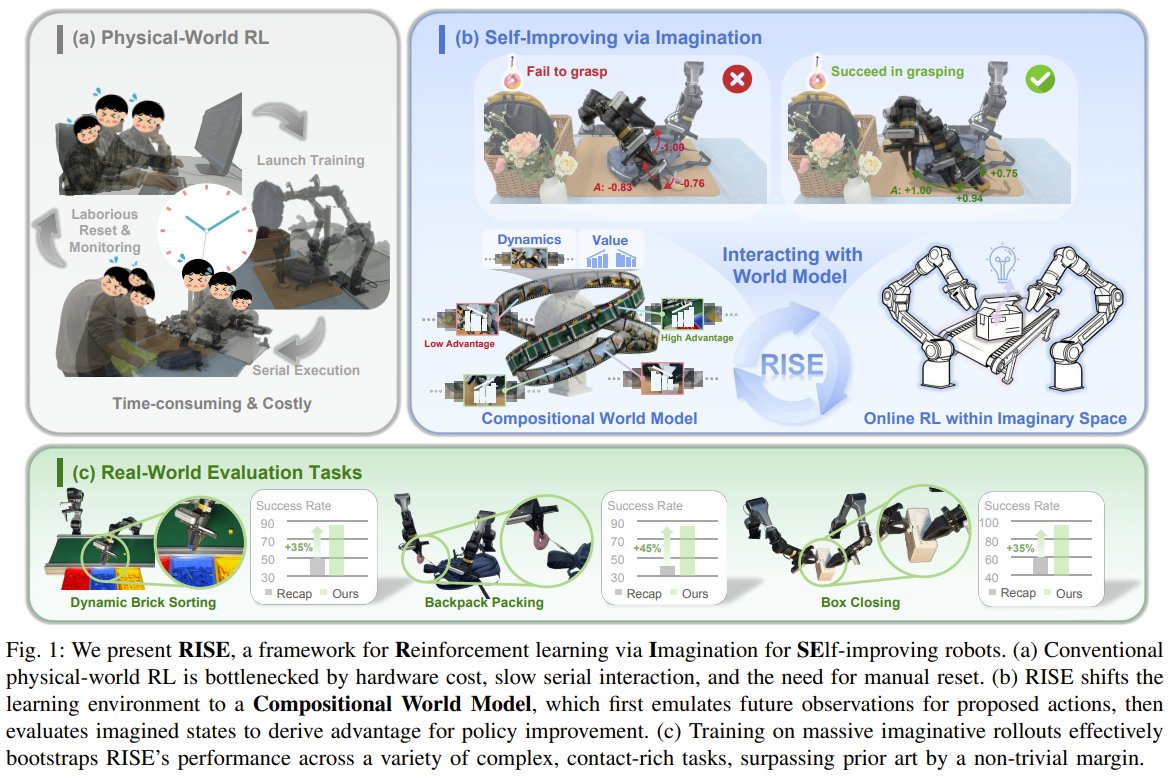
    RISE Framework Enables Robots Self-Improvement Through Imagination

    What if robots could learn complex, real-world tasks significantly faster and safer, all by just imagining? Jiazhi Yang and a team from The Chinese University of Hong Kong, Kinetix AI, and Tsinghua University just unveiled RISE. This framework lets robots self-improve by

    → View original post on X — @jiqizhixin

  • LeCun Accused of Repeatedly Appropriating Others’ AI Research
    LeCun Accused of Repeatedly Appropriating Others’ AI Research

    Over and over and over LeCun borrows other people’s ideas and makes them sound like his own. It’s astonishing that the media never investigates, when the pattern has been so consistent for decades.

    → View original post on X — @garymarcus

  • Ultralytics YOLO Models Export Integration for Metis AIPUs
    Ultralytics YOLO Models Export Integration for Metis AIPUs

    From trained model to edge deployment in days, not months. Ultralytics has introduced an updated export integration for Metis AIPUs. Export your YOLO models, compile for Metis hardware, and run inference without PyTorch at the edge. >> Join us on April 8 for an Ultralytics Live session where we'll walk through the integration in action. Stay tuned for details! >> Check out the blog here: eu1.hubs.ly/H0t6rj40 #AxeleraAI #Ultralytics #YOLO #EdgeAI #ComputerVision

    → View original post on X — @axeleraai, 2026-03-31 14:44 UTC

  • AI Agents Transform Database Architecture Beyond 1980s Models
    AI Agents Transform Database Architecture Beyond 1980s Models

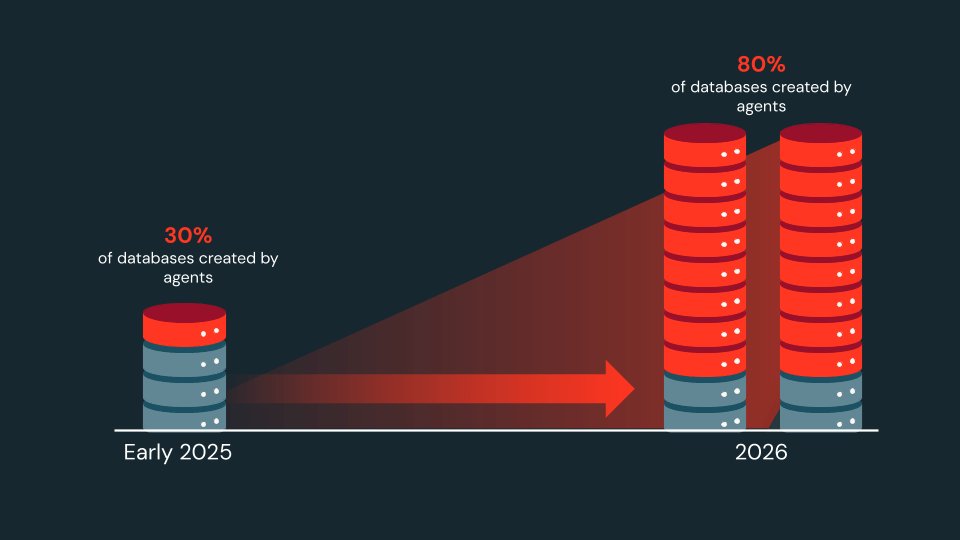
    The database architecture that made sense in the 1980s doesn't hold up in a world where agents are the primary builders. The reason is that agentic development doesn't work like traditional development. AI agents now create roughly 4x more databases than human users on Lakebase.

    → View original post on X — @databricks

  • Claude Memory Mechanism Analysis: Solid Engineering But Limited Architecture

    I took a look at CC's Memory mechanism, and it's nothing special.The entire memory system's core is just a single MEMORY.md file, no more than 200 lines, which gets stuffed into the context at the start of each conversation. What happens when memories accumulate?A background subprocess called AutoDream runs periodically to scan, merge, and trim, ensuring everything fits.In plain terms: the model can't remember on its own, so it uses the file system + LLM self-management to simulate memory.This solution is solid from an engineering standpoint, but has several fundamental limitations:1. Storage and retrieval depend entirely on the file system + Markdown, cannot scale to cross-project, cross-Agent scenarios; memory becomes isolated silos2. No true semantic indexing, no dynamic recall based on relevance; 200 lines is a hard ceiling3. AutoDream's consolidation is rule-driven (scanning, merging, trimming), not cognition-driven; it can deduplicate and compress, but cannot extract new insights from experience4. No forgetting curve, no memory reinforcement mechanism; memories either exist or are deleted, with no middle groundAfter working on Memory for a while, you realize the ceiling for these solutions isn't actually engineering—it's architecture. As long as the model's attention mechanism itself doesn't support efficient retrieval of large historical contexts, the application layer will always be patching.This is why we chose a different path at EverMind. The MSA (Memory Sparse Attention) we released recently does content-aware sparse routing directly at the Transformer attention layer, letting the model learn itself what to recall and what to ignore, rather than relying on external scripts to make those decisions.A's engineering prowess is undoubtedly top-tier. But this leak happens to prove: the Agent Memory problem is far from solved. [Translated from EN to English]

    → View original post on X — @elliotchen100, 2026-03-31 14:40 UTC