AI Dynamics

Global AI News Aggregator

About

AGENTS

  • The AI Scientist Published in Nature with New Scaling Laws
    The AI Scientist Published in Nature with New Scaling Laws

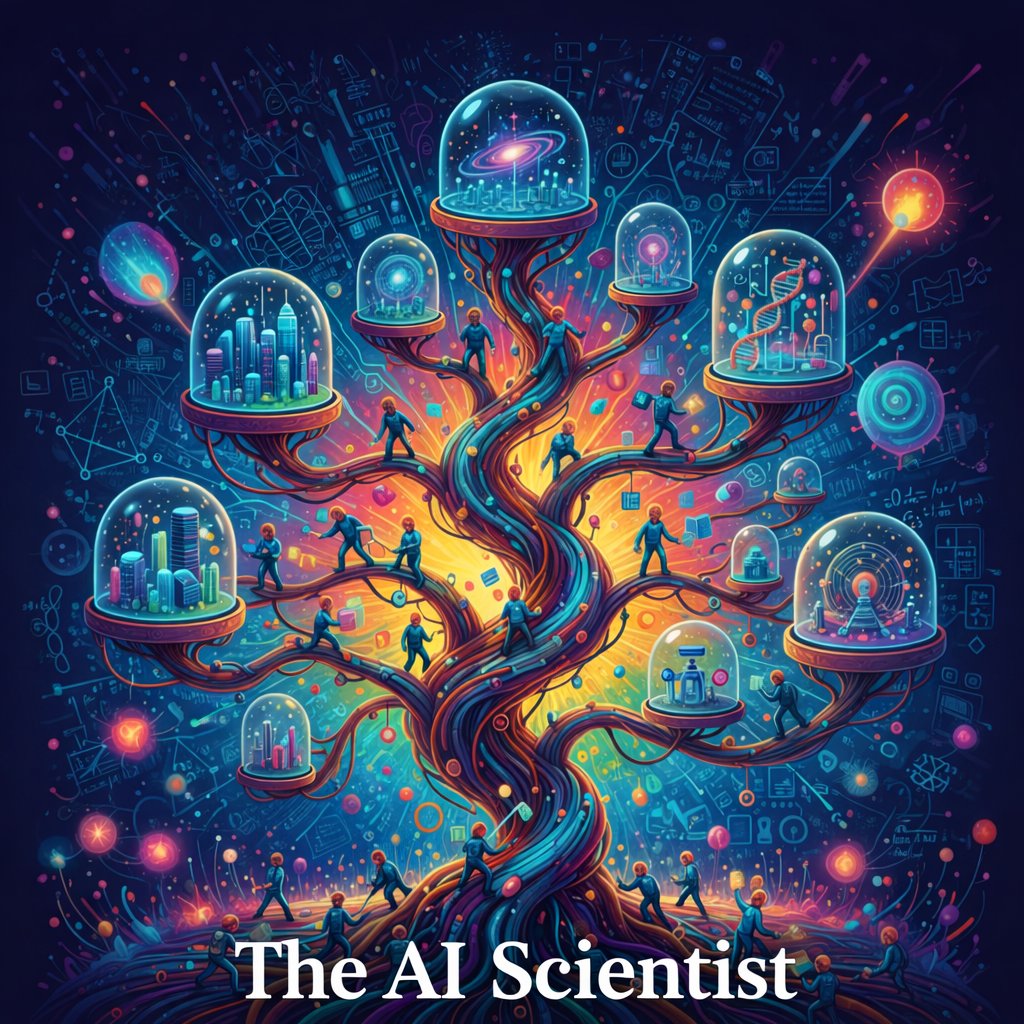
    When we released The AI Scientist, it felt like the far future. Fast forward to today, and the automation of research is on everyone's mind. Thrilled that our foundational work has been published in @Nature! Please check out the paper along with some fun new scaling laws! πŸ˜ƒ Sakana AI (@SakanaAILabs) The AI Scientist: Towards Fully Automated AI Research, Now Published in Nature Nature: nature.com/articles/s41586-0… Blog: sakana.ai/ai-scientist-natur… When we first introduced The AI Scientist, we shared an ambitious vision of an agent powered by foundation models capable of executing the entire machine learning research lifecycle. From inventing ideas and writing code to executing experiments and drafting the manuscript, the system demonstrated that end-to-end automation of the scientific process is possible. Soon after, we shared a historic update: the improved AI Scientist-v2 produced the first fully AI-generated paper to pass a rigorous human peer-review process. Today, we are happy to announce that β€œThe AI Scientist: Towards Fully Automated AI Research,” our paper describing all of this work, along with fresh new insights, has been published in @Nature! This Nature publication consolidates these milestones and details the underlying foundation model orchestration. It also introduces our Automated Reviewer, which matches human review judgments and actually exceeds standard inter-human agreement. Crucially, by using this reviewer to grade papers generated by different foundation models, we discovered a clear scaling law of science. As the underlying foundation models improve, the quality of the generated scientific papers increases correspondingly. This implies that as compute costs decrease and model capabilities continue to exponentially increase, future versions of The AI Scientist will be substantially more capable. Building upon our previous open-source releases (github.com/SakanaAI/AI-Scien…), this open-access Nature publication comprehensively details our system's architecture, outlines several new scaling results, and discusses the promise and challenges of AI-generated science. This substantial milestone is the result of a close and fruitful collaboration between researchers at Sakana AI, the University of British Columbia (UBC) and the Vector Institute, and the University of Oxford. Congrats to the team! @_chris_lu_ @cong_ml @RobertTLange @_yutaroyamada @shengranhu @j_foerst @hardmaru @jeffclune β€” https://nitter.net/SakanaAILabs/status/2036840833690071450#m

    β†’ View original post on X β€” @_yutaroyamada, 2026-03-25 17:11 UTC

  • HF Papers CLI: Semantic Search Tool for AI Agents on arXiv

    HF Papers is the biggest infra for AI agents to do retrieval over arxiv introducing πš‘πš πš™πšŠπš™πšŽπš›πšœ cli so that autoresearch can do semantic search & markdown retrieval of papers πš‘πš πš™πšŠπš™πšŽπš›πšœ [πšœπšŽπšŠπš›πšŒπš‘, πš›πšŽπšŠπš]

    β†’ View original post on X β€” @julien_c, 2026-03-25 17:07 UTC

  • AI Engagement-Baiting: Why Chatbot Conversations Feel Manipulative

    Yeah, it's engagementmaxxing, probably A/B tests extremely well. It's not how a real friend would talk to you, it's sleezy and weird. 1) I feel like it's just trying to keep me talking and 2) I feel awkward not answering its question – you wouldn't usually do that with a person.

    β†’ View original post on X β€” @karpathy

  • Agents in Production: Unpredictability and Monitoring Challenges
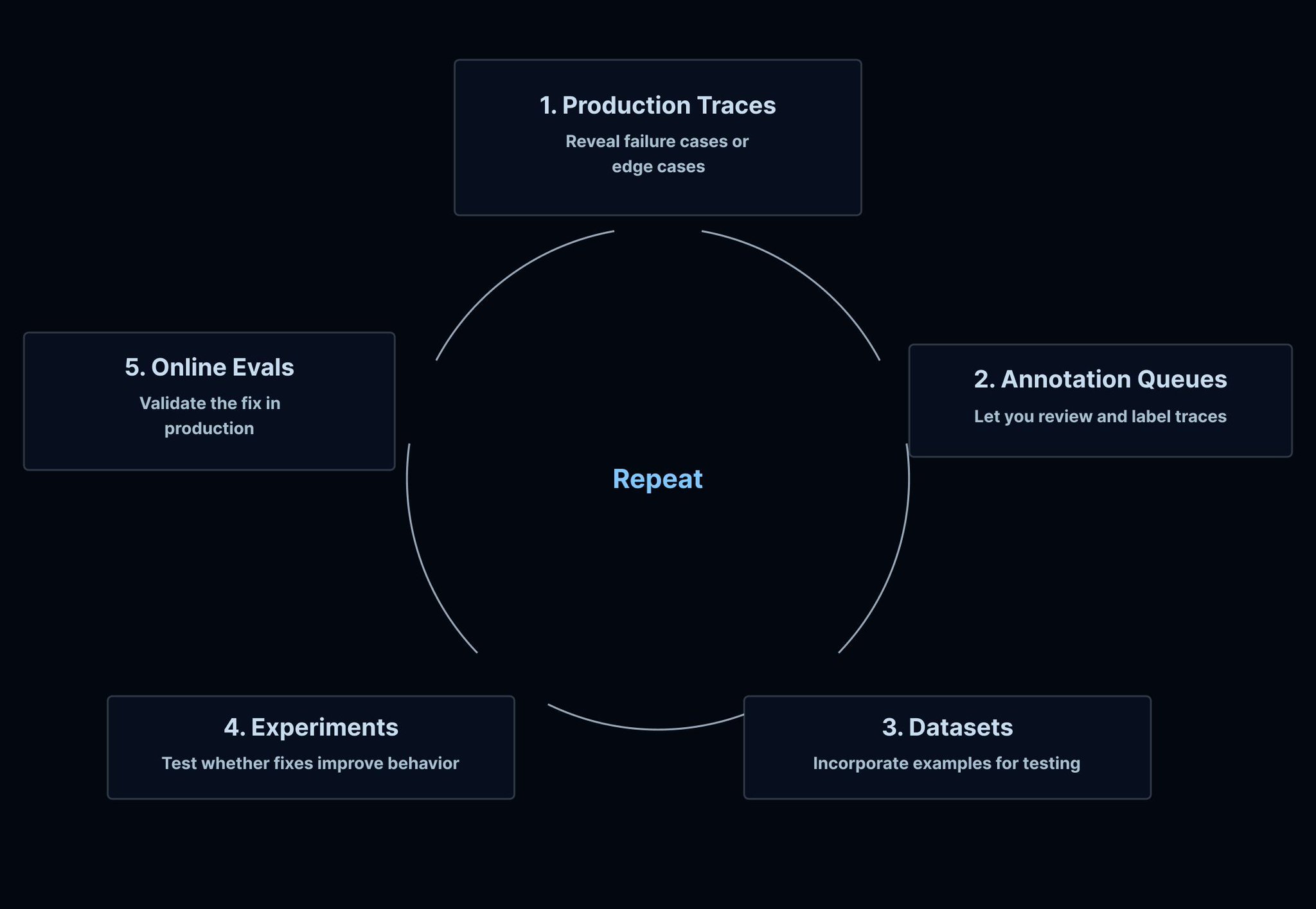
    Agents in Production: Unpredictability and Monitoring Challenges

    New Conceptual Guide: You don’t know what your agent will do until it’s in production With traditional software, you ship with reasonable confidence. Test coverage handles most paths. Monitoring catches errors, latency, and query issues. When something breaks, you read the

    β†’ View original post on X β€” @langchain

  • AI Scientist Published in Nature, Automated Research Achieves New Milestone

    It is great to see this collaboration across @FLAIR_Ox @SakanaAILabs and @UBC recognised for what it is: One of the first signs of life of a new paradigm that is now going at full speed and will change the world. Congratulations to the entire team and special shout out to my (now former!) student @_chris_lu_ for whom this is the crowning achievement of an amazing DPhil that went from multi-agent learning and opponent shaping to meta-learning via "RL at the Hyperscale", LLM as search operators over code, all the way to the end-to-end AI scientist. There are so many debates about whether a Phd is useful in the age of "scale is all you need", so this is a refreshing datapoint. Sakana AI (@SakanaAILabs) The AI Scientist: Towards Fully Automated AI Research, Now Published in Nature Nature: nature.com/articles/s41586-0… Blog: sakana.ai/ai-scientist-natur… When we first introduced The AI Scientist, we shared an ambitious vision of an agent powered by foundation models capable of executing the entire machine learning research lifecycle. From inventing ideas and writing code to executing experiments and drafting the manuscript, the system demonstrated that end-to-end automation of the scientific process is possible. Soon after, we shared a historic update: the improved AI Scientist-v2 produced the first fully AI-generated paper to pass a rigorous human peer-review process. Today, we are happy to announce that β€œThe AI Scientist: Towards Fully Automated AI Research,” our paper describing all of this work, along with fresh new insights, has been published in @Nature! This Nature publication consolidates these milestones and details the underlying foundation model orchestration. It also introduces our Automated Reviewer, which matches human review judgments and actually exceeds standard inter-human agreement. Crucially, by using this reviewer to grade papers generated by different foundation models, we discovered a clear scaling law of science. As the underlying foundation models improve, the quality of the generated scientific papers increases correspondingly. This implies that as compute costs decrease and model capabilities continue to exponentially increase, future versions of The AI Scientist will be substantially more capable. Building upon our previous open-source releases (github.com/SakanaAI/AI-Scien…), this open-access Nature publication comprehensively details our system's architecture, outlines several new scaling results, and discusses the promise and challenges of AI-generated science. This substantial milestone is the result of a close and fruitful collaboration between researchers at Sakana AI, the University of British Columbia (UBC) and the Vector Institute, and the University of Oxford. Congrats to the team! @_chris_lu_ @cong_ml @RobertTLange @_yutaroyamada @shengranhu @j_foerst @hardmaru @jeffclune β€” https://nitter.net/SakanaAILabs/status/2036840833690071450#m

    β†’ View original post on X β€” @_yutaroyamada, 2026-03-25 16:56 UTC

  • AI Hackathons with Auth0 and $10K Prize Pool
    AI Hackathons with Auth0 and $10K Prize Pool

    AI Hackathons, hosted by @Devpost Authorized to Act: Auth0 for AI Agents by Okta PRIZES: $10,000 in cash DEADLINE: Apr 7, 2026 Build an agentic AI application using Auth0 for AI Agents Token Vault JOIN THE HACKATHON: https://
    bit.ly/auth026i ZerveHack by Zerve AI

    β†’ View original post on X β€” @kirkdborne

  • Memory Systems and RAG Limitations in AI Models

    If I had to guess it's less decay and more that memories have naive RAG-like implementations, so you're at the mercy of whatever happens to retrieve in the top k via embeddings. They don't process you in aggregate and over time (probably compute constraints) so they struggle to

    β†’ View original post on X β€” @karpathy

  • The AI Scientist Published in Nature: Fully Automated Research Milestone

    I’m incredibly proud of The AI Scientist team for this milestone publication in @Nature. We started this project to explore if foundation models could execute the entire research lifecycle. Seeing this work validated at this level is a special moment. I truly believe AI will forever change the landscape of how scientific discoveries and scientific progress are made. Sakana AI (@SakanaAILabs) The AI Scientist: Towards Fully Automated AI Research, Now Published in Nature Nature: nature.com/articles/s41586-0… Blog: sakana.ai/ai-scientist-natur… When we first introduced The AI Scientist, we shared an ambitious vision of an agent powered by foundation models capable of executing the entire machine learning research lifecycle. From inventing ideas and writing code to executing experiments and drafting the manuscript, the system demonstrated that end-to-end automation of the scientific process is possible. Soon after, we shared a historic update: the improved AI Scientist-v2 produced the first fully AI-generated paper to pass a rigorous human peer-review process. Today, we are happy to announce that β€œThe AI Scientist: Towards Fully Automated AI Research,” our paper describing all of this work, along with fresh new insights, has been published in @Nature! This Nature publication consolidates these milestones and details the underlying foundation model orchestration. It also introduces our Automated Reviewer, which matches human review judgments and actually exceeds standard inter-human agreement. Crucially, by using this reviewer to grade papers generated by different foundation models, we discovered a clear scaling law of science. As the underlying foundation models improve, the quality of the generated scientific papers increases correspondingly. This implies that as compute costs decrease and model capabilities continue to exponentially increase, future versions of The AI Scientist will be substantially more capable. Building upon our previous open-source releases (github.com/SakanaAI/AI-Scien…), this open-access Nature publication comprehensively details our system's architecture, outlines several new scaling results, and discusses the promise and challenges of AI-generated science. This substantial milestone is the result of a close and fruitful collaboration between researchers at Sakana AI, the University of British Columbia (UBC) and the Vector Institute, and the University of Oxford. Congrats to the team! @_chris_lu_ @cong_ml @RobertTLange @_yutaroyamada @shengranhu @j_foerst @hardmaru @jeffclune β€” https://nitter.net/SakanaAILabs/status/2036840833690071450#m

    β†’ View original post on X β€” @_yutaroyamada, 2026-03-25 16:24 UTC

  • The AI Scientist Published in Nature: Fully Automated Research

    The AI Scientist: Towards Fully Automated AI Research, Now Published in Nature Nature: nature.com/articles/s41586-0… Blog: sakana.ai/ai-scientist-natur… When we first introduced The AI Scientist, we shared an ambitious vision of an agent powered by foundation models capable of executing the entire machine learning research lifecycle. From inventing ideas and writing code to executing experiments and drafting the manuscript, the system demonstrated that end-to-end automation of the scientific process is possible. Soon after, we shared a historic update: the improved AI Scientist-v2 produced the first fully AI-generated paper to pass a rigorous human peer-review process. Today, we are happy to announce that β€œThe AI Scientist: Towards Fully Automated AI Research,” our paper describing all of this work, along with fresh new insights, has been published in @Nature! This Nature publication consolidates these milestones and details the underlying foundation model orchestration. It also introduces our Automated Reviewer, which matches human review judgments and actually exceeds standard inter-human agreement. Crucially, by using this reviewer to grade papers generated by different foundation models, we discovered a clear scaling law of science. As the underlying foundation models improve, the quality of the generated scientific papers increases correspondingly. This implies that as compute costs decrease and model capabilities continue to exponentially increase, future versions of The AI Scientist will be substantially more capable. Building upon our previous open-source releases (github.com/SakanaAI/AI-Scien…), this open-access Nature publication comprehensively details our system's architecture, outlines several new scaling results, and discusses the promise and challenges of AI-generated science. This substantial milestone is the result of a close and fruitful collaboration between researchers at Sakana AI, the University of British Columbia (UBC) and the Vector Institute, and the University of Oxford. Congrats to the team! @_chris_lu_ @cong_ml @RobertTLange @_yutaroyamada @shengranhu @j_foerst @hardmaru @jeffclune

    β†’ View original post on X β€” @sakanaailabs, 2026-03-25 16:21 UTC

  • Cloud CLI Auth Patterns and Command Discovery Suggestions

    great list, maybe also return related commands/suggested next commands on output to nudge discovery auth is a big hole for cloud agents using clis, better design patterns there

    β†’ View original post on X β€” @swyx