OpenAI’s new $100 ChatGPT Pro tier signals AI’s transition from experimental to essential business tool, while the OpenClaw vs Hermes agent war intensifies. Meanwhile, AI video generation achieves character consistency, robotics advances in specialized applications, and enterprises struggle with workflow integration challenges.
The $100 question: OpenAI bets big on premium AI
OpenAI just made its boldest pricing move yet. The new $100/month ChatGPT Pro tier isn’t just another subscription bump—it’s a declaration that AI has crossed the threshold from “nice to have” to “business critical.”
Here’s what caught my attention: 5x more Codex usage, unlimited access to their Pro model, and what they’re calling “unlimited thinking.” That last part is interesting. They’re essentially betting that businesses will pay premium prices for AI that can reason longer and deeper.
But the real story isn’t the pricing—it’s the projection. OpenAI is forecasting $2.5 billion in ad revenue for 2026, scaling to $100 billion by 2030. They’re banking on 2.75 billion weekly users and the unique advantage that chatbot users explicitly state what they want to buy.
Think about that for a second. We’re not just talking about another tech company trying to monetize attention. We’re talking about a fundamental shift in how commerce might work when AI knows exactly what you’re looking for.
The agent wars heat up: OpenClaw vs Hermes
While OpenAI focuses on premium subscriptions, the real battle is happening in the agent space. And it’s getting nasty.
Nous Research’s Hermes agent is positioning itself as the OpenClaw killer. The claims are bold: easier setup, better upgrade paths, lower token usage, and superior skill management. Robert Scoble hosted a two-hour deep dive with Nous Research’s CTO, and the technical community is paying attention.
What’s fascinating is how quickly this market is fragmenting. Multica announced support for Hermes agents this week, promising users can “deploy an army” of them. Meanwhile, OpenClaw pushed version 2026.4.9 with something they call “dreaming”—REM backfill and diary timeline UI that lets your agent dream about you. Romantic or terrifying? Yes.
The speed of innovation here is breathtaking. We’re seeing Mac Mini users switching from OpenClaw to Hermes, platform comparisons happening in real-time, and new features shipping daily. This isn’t just competition—it’s an arms race.
Machine learning goes mainstream
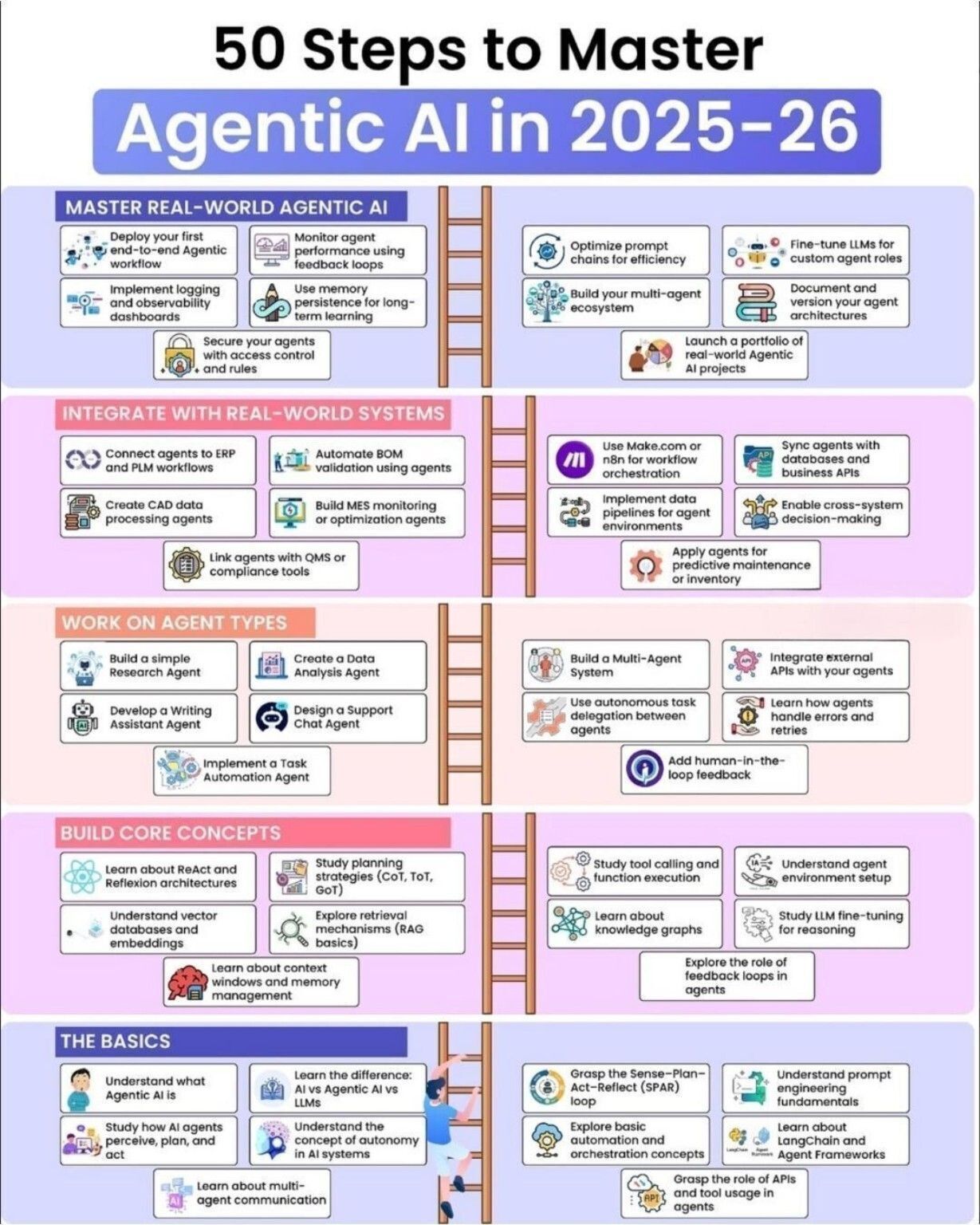
The democratization of AI continues at breakneck speed. The AI Skill Tree for 2026 shows just how accessible machine learning has become, with roadmaps covering everything from basic concepts to advanced deep learning techniques.
But here’s what’s really happening: specialization. We’re seeing 20-algorithm multicenter analyses for medical applications, machine learning models countering intelligent robotics, and deep learning frameworks like Keras becoming standard tools rather than research projects.
Shenzhen is emerging as the world’s robotics hub, with specialized applications like CLIIN’s hull-cleaning robots fighting biofouling at sea and NEXFORM’s hybrid humanoids designed for movement and lifting. This isn’t the general-purpose robotics we imagined—it’s targeted, practical, and shipping now.
Real-time AI transforms industries
The shift to real-time AI decision-making is accelerating across industries. Telecom networks are making autonomous decisions based on business needs at MWC26, while companies like Uber expand their use of AWS chips for AI workloads.
But here’s the uncomfortable truth: automation is coming faster than expected. OpenAI’s Chief Scientist warns that automating intellectual work poses “huge societal challenges.” Job displacement, wealth concentration, and governance of AI-controlled entities are no longer theoretical problems—they’re immediate concerns.
The meme about realizing you can “automate your entire job and never work another day” at 3am isn’t just funny—it’s prophetic. Amazon’s fellowships supporting 42 UCLA doctoral students signal that the race for AI talent is intensifying, but so is the race to replace human workers.
The creative AI workflow revolution
Creative AI is finally solving the workflow problem. HeyGen’s Avatar V addresses the biggest challenge in AI video: character consistency. Fifteen seconds of footage can now lock your identity across every outfit, background, and angle. Seedance 2.0 produces cinematic scenes with real human faces straight from text.
But the real breakthrough isn’t in generation quality—it’s in workflow integration. Meta shipped a fully integrated AI workflow for building VR on the web without touching code. Instant 1.0 positions itself as “the best backend for AI-coded apps.” These aren’t just tools; they’re complete development environments.
The shift is profound. Creative AI success won’t be measured by generation speed or flashy demos, but by how well it fits advertising workflows, how much time it saves content teams, and how often it gets creators close to final quality on the first pass.
Model wars and specialization
The model landscape is fragmenting into specialized use cases. We’re seeing medical models like Google’s MedGemma 1.5 packing 3D radiology, pathology, and clinical document understanding into a single 4B parameter model that outperforms much larger general-purpose models.
AI21 Labs’ Maestro Orchestration Meta Model represents a new category: models that choose other models. Instead of routing every task to your largest model, it dynamically selects the right tool for each step, optimizing cost, latency, and value automatically.
Glass 5.5 Clinical AI claims to outperform frontier models from OpenAI, Anthropic, and Google across nine clinical accuracy benchmarks. Gemma 4 runs locally, costs nothing, uses minimal power—yet 99% of people have never heard of it.
The infrastructure layer emerges
What we’re witnessing is the emergence of AI infrastructure as a distinct layer. AGIBOT’s Genie Sim 3.0 turns embodied AI into a full stack: environment, data, training, and evaluation in one system. Text generates fully interactive 3D worlds in minutes.
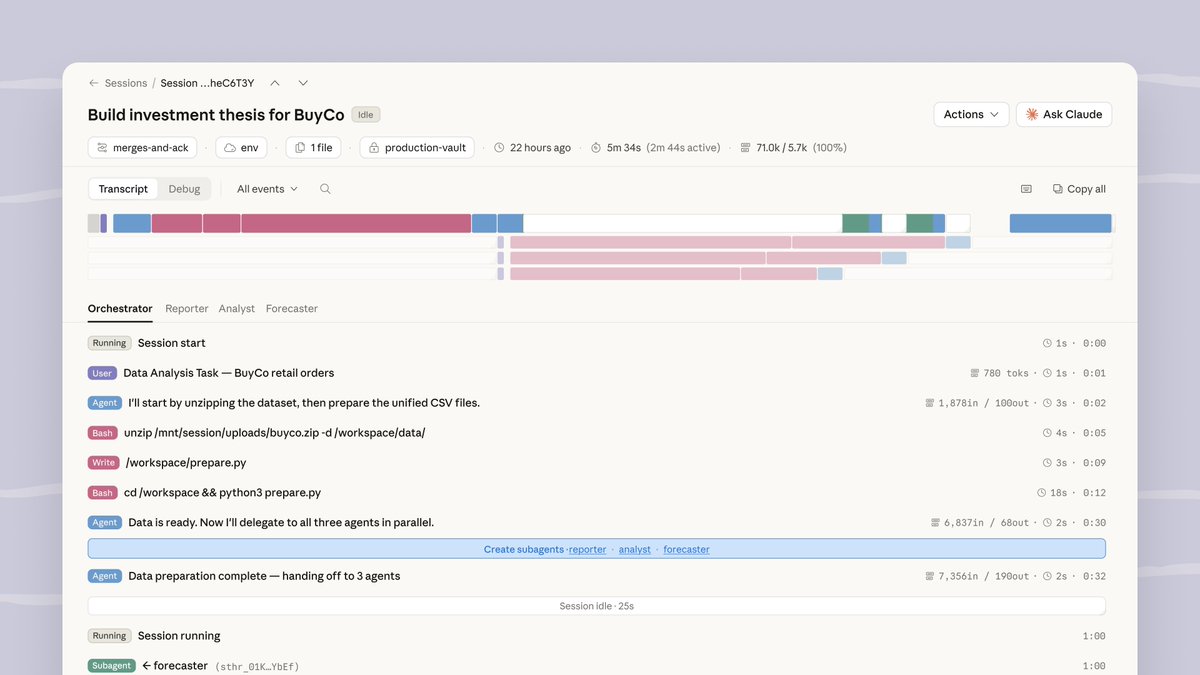
Anthropic’s advisor-executor strategy pairs Opus as an advisor with Sonnet or Haiku as executors, delivering near Opus-level intelligence at a fraction of the cost. Claude Cowork becomes generally available with role-based access controls and usage analytics.
The gap between official releases and open-source clones keeps shrinking. Someone already built Cabinet, an open-source version of Claude Managed Agents. The ecosystem is moving so fast that innovation cycles are measured in days, not months.
The enterprise adoption challenge
Despite all this progress, AI adoption in enterprises remains surprisingly difficult. Steven Sinofsky nails it: “Algorithmic thinking is really, really, really hard for the vast majority of people who have jobs.”
The problem isn’t technical capability—it’s organizational. Companies struggle with workflow mismatch, not image generation quality. If a tool gives you something you still have to heavily fix, rewrite, or redesign, it’s not accelerating creativity; it’s creating more work.
This explains why we’re seeing such focus on integration rather than raw capability. The next wave of AI tools will think like creators first, models second.
What’s next: the convergence accelerates
We’re at an inflection point. The AI ecosystem is consolidating around practical applications while simultaneously exploding in specialized directions. OpenAI’s $100 Pro tier signals that premium AI is becoming a business necessity. The agent wars show that automation platforms are the new battleground.
The companies that win won’t necessarily have the best models—they’ll have the best workflows. They’ll solve integration challenges, not just generation problems. They’ll think like their users, not like their algorithms.
And they’ll move fast. In an ecosystem where innovation cycles happen in days and open-source clones appear within hours of official releases, speed isn’t just an advantage—it’s survival.
The AI revolution isn’t coming. It’s here. The question isn’t whether your industry will be transformed, but whether you’ll be the one doing the transforming.
Photo : Enchanted Tools / Unsplash