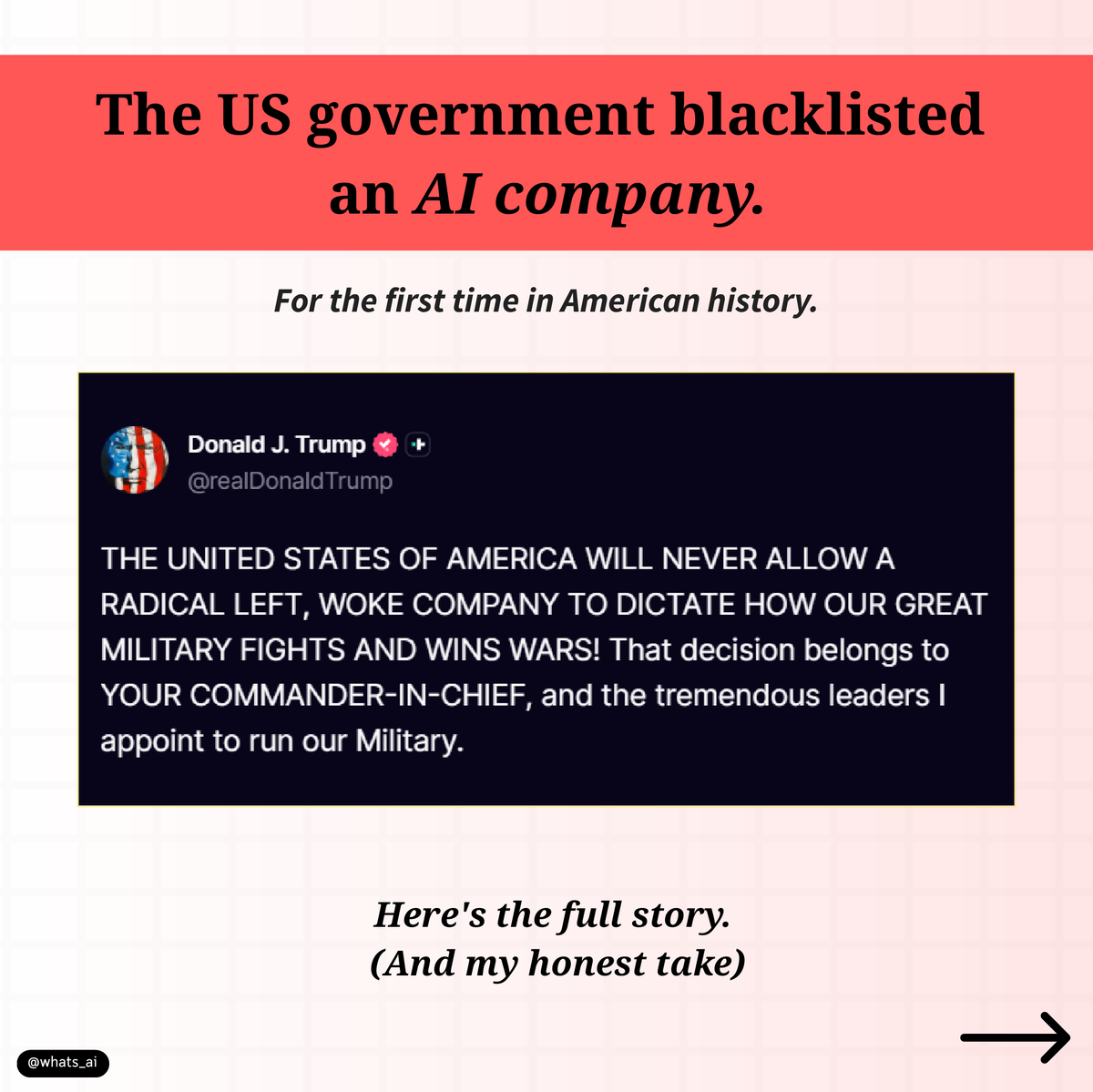
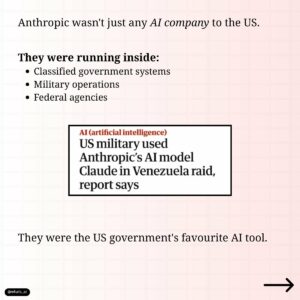
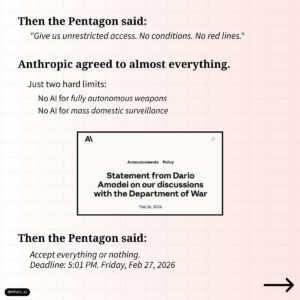
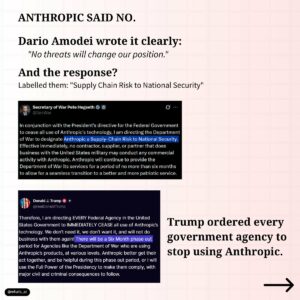
The US government blacklisted an AI company for the first time in American history. Anthropicwas already deep inside classified systems. Then the Pentagon demanded unrestricted access. Anthropic said no. Got labelled a national security risk. OpenAI rushed in with their own deal. But the full story is way more nuanced than what went viral. I break it all down in this carousel 👇 [Translated from EN to English]
It's because you actually ship something at the end that might have some value (to you and or others). Gaming is fun, but vibe coding gives you a real artifact you can use or sell. It combines the fun of building and gambling together.
I do something similar with Cowork and skills at Towards AI, having the LLM maintain the knowledge base itself instead of me editing it manually changed everything. The "compile" framing is perfect.
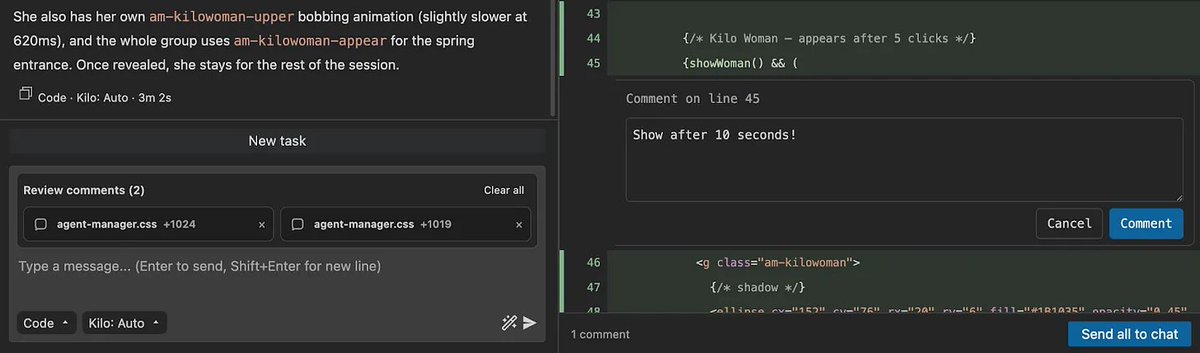
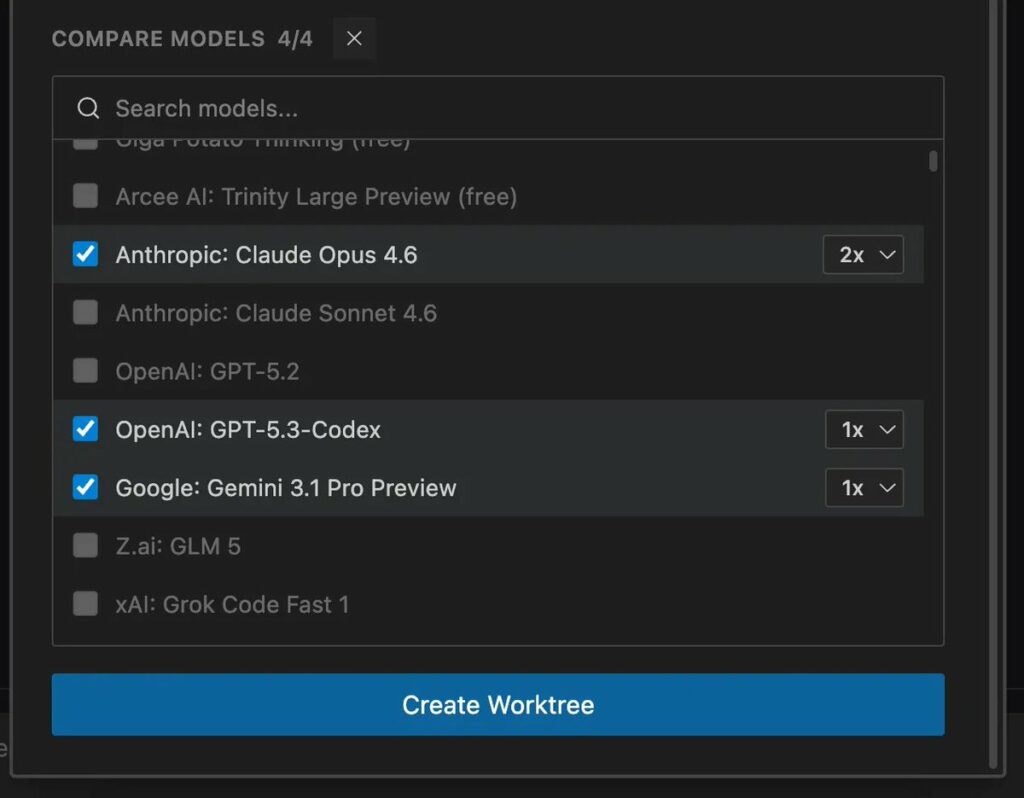
Most coding agents do not fail because they are weak. They fail because they are hard to inspect. The real problem with coding agents is not autonomy. It’s easy to make them “autonomous”. The problem is observability. A lot of tools still look impressive right until the moment they say “done”, move on, and when you check, the thing is half-built, wrong, or never happened. It happens to me almost every day, and if you don’t check for it, you might as well skip half your to-do tasks… That is why I care so much about observability and control in agentic coding. Not just more tool calls. Not just more agents. Not just more autonomy. I want to see the diff. I want to review the exact line and ensure it was done, and understand how. I want to send (only relevant) feedback back into the context. I want to compare models on a real task in my repo instead of guessing. That is what I found interesting in the rebuilt Kilo Code extension on VS Code. Yes, the parallel subagents and tons of features are cool. But the part I care about more is the (human) review loop around them. You can inspect what each agent changed, comment directly on the diff, and send those comments back as structured context. That matters. Because the value of these tools is not just in generation. It is correction. It is debugging weird hallucinations (and other LLM weaknesses). It is catching the moments where the model says “I made it” and absolutely did not. And honestly, model comparison on real tasks is underrated too. Benchmarks are nice. Your repo and actual use case are way nicer. If a tool helps you compare quality, behaviour, and likely cost on your own codebase, that is real value. A 2026 tool NEEDS to be focusing around models’ weaknesses, which starts with observability and monitoring. And, unfortunately, observability, control, and evaluation are still missing layers in many agent products. I highly recommend trying it out and taking the time to review agents’ code in general! I put the link in the comments if you want to try it. What do you care about more in coding agents today: more autonomy, or more observability?
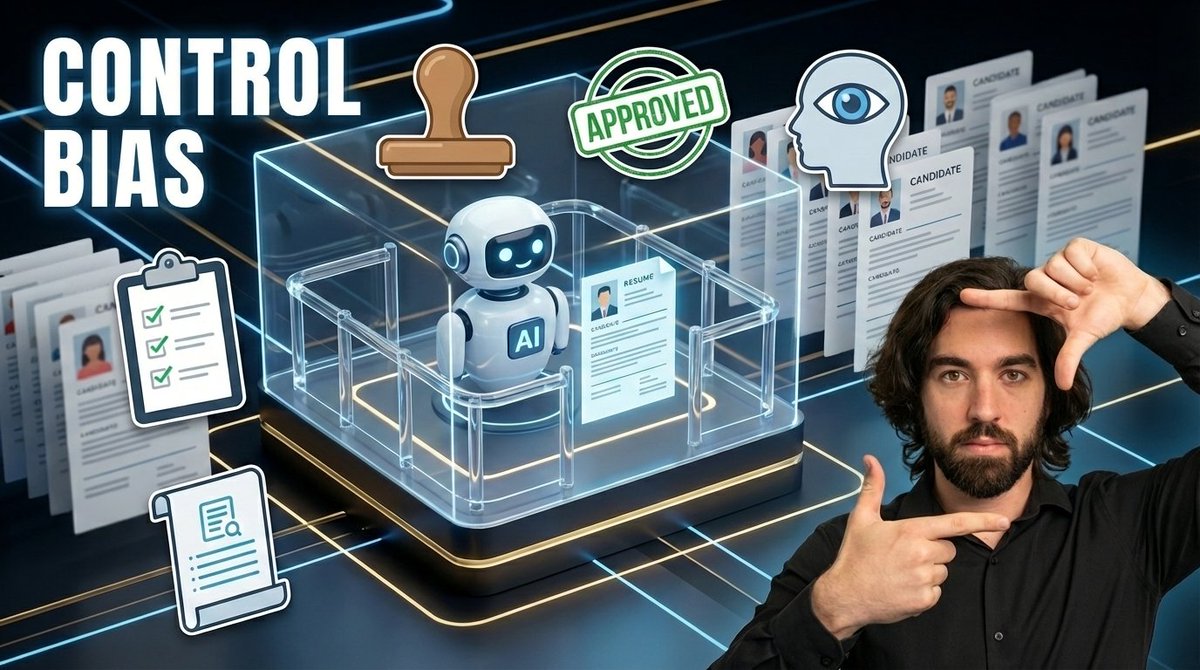
A lot of people have the same instinctive reaction when they hear about autonomous agents: if AI models already have biases, then giving them memory, tools, long-term planning, and the ability to act should obviously make the problem worse. That sounds reasonable. But it's false. Learn why in this week's iteration 👇
https://open.substack.com/pub/louisbouchard/p/will-ai-agents-make-bias-worse?r=25qlky&utm_campaign=post&utm_medium=web&showWelcomeOnShare=true [Translated from EN to English]
I keep pushing Claude Code the hardest and Opus has been amazing for complex tasks. The difference between Sonnet and Opus for following large skill files is quite noticeable on my end.
Portability is so underrated. I want my AI when I need it, not locked into one platform. Pluggable > permanent every time. Being stuck in a chat interface won't change how we work nearly as much.
Parallel function calls are such a game changer for agent latency. The difference between sequential and parallel tool use is night and day in production.