exactly, that’s the messiness of working with the image format I mentioned. I think you can make to generalize well on all these but since there are more degrees of freedom it will require more data to train (luckily this can be done with automatic data augmentation but still)
@rasbt
-
How Constraints Drive Innovation in Neural Network Architecture
By
–
Yeah, I think that’s what brought us CNNS (as opposed to fully connected neural nets), LoRA, and many more
-
Reconsidering VLLM terminology at 3B parameters
By
–
Actually I was thinking about it when typing, and I don't know. I don't want to be that person who goes against the common terminology (like softargmax haha) but it really is a V*L*LM at 3B parameters.
-
Open-weight PyTorch models security and trustworthiness discussion
By
–
If we are talking about the model itself and not the app, these are open-weight PyTorch models. So unless there’s a backdoor in Hugging Face or the PyTorch runtime, there’s really no way for them to be malicious afaik.
-
DeepSeek OCR Paper and Multimodal LLM Article Resources
By
–
Link to the paper: https://
github.com/deepseek-ai/De
epSeek-OCR/blob/main/DeepSeek_OCR_paper.pdf
… My "Understanding Multimodal LLMs" article with more info on how images are fed to LLMs, how cross-attention works, etc: https://
magazine.sebastianraschka.com/p/understandin
g-multimodal-llms?utm_source=publication-search
… -
DeepSeek-OCR Release: Vision Model Capabilities Explained
By
–
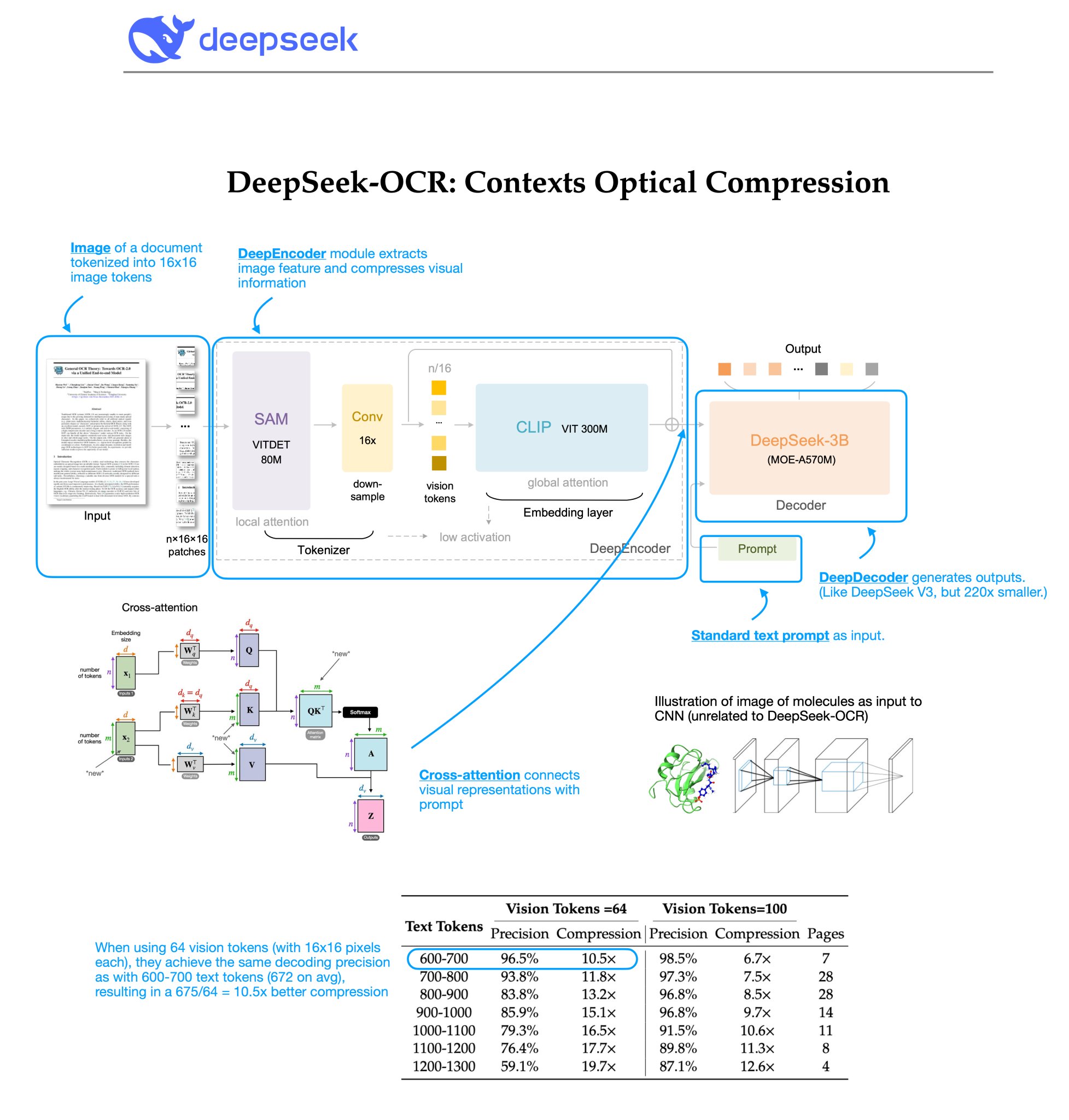
DeepSeek finally released a new model and paper. And because this DeepSeek-OCR release is a bit different from what everyone expected, and DeepSeek releases are generally a big deal, I wanted to do a brief explainer of what it is all about. In short, they explore how vision
-
Visual Tokenization Challenges: Aspect Ratios and Image Preprocessing Complexity
By
–
I know it’s popular to hate tokenizers, but visual representations (which are also tokenized) bring a lot of messiness as well. Aspect ratios, cropping, resolution, brightness, etc. Sure, models learn to deal with that but it requires lots of data to make them robust wrt these.
-
Meet in the Middle: Running Two LLMs with Parameter Sharing
By
–
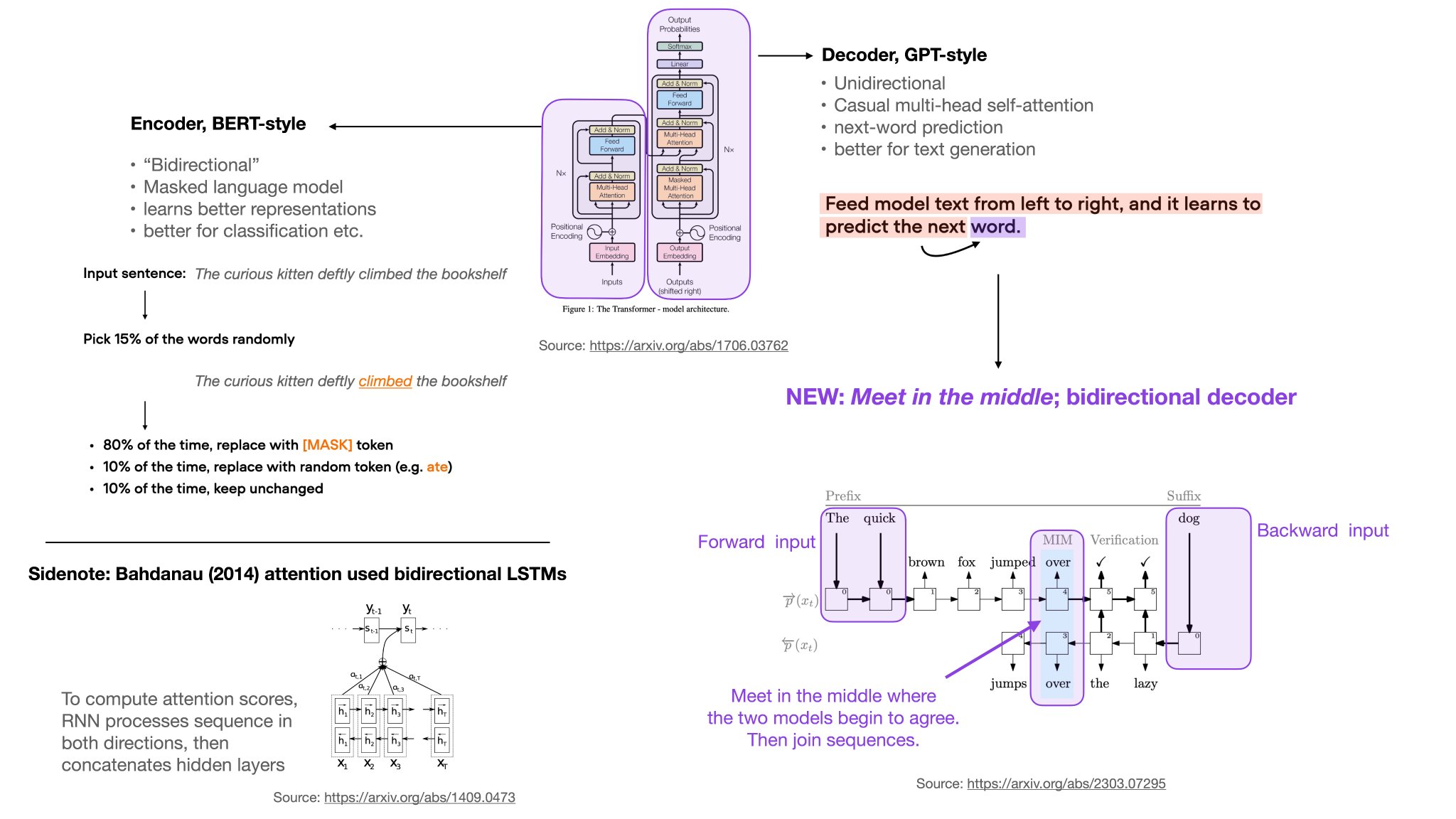
This made me think of the "Meet in the Middle" paper https://
x.com/rasbt/status/1
638538494887821313
…
When I remember correctly, they run two LLMs in both directions with parameter sharing. So it shouldn't impact training time. Kind of wild but hey why not. -
Reading Papers Thoroughly and Training Base Models
By
–
Thanks for sharing! I need to read the paper in more detail so I don't ask these questions that are maybe already answered in the paper . Regarding your second point, that's a good idea. I think this is especially relevant because many based models (like Qwen3) are trained on
-
Dishonesty in Benchmark Reporting: A Corporate Risk
By
–
It's a useful skill but it's still a red flag if you are dishonest about it. Imagine asking the person to report benchmark performance of the LLM that is being developed, would you trust the results? This can backfire on the whole company.