
Their Domain Taxonomy categorizes AI risks into 7 broad domains and 23 more specific subdomains. For example, "Misinformation" is one of the domains, while "False or misleading information" is one of its subdomains.
@mit_csail
-
Risk Attribution in AI Systems: Intentional vs Unintentional
By
–
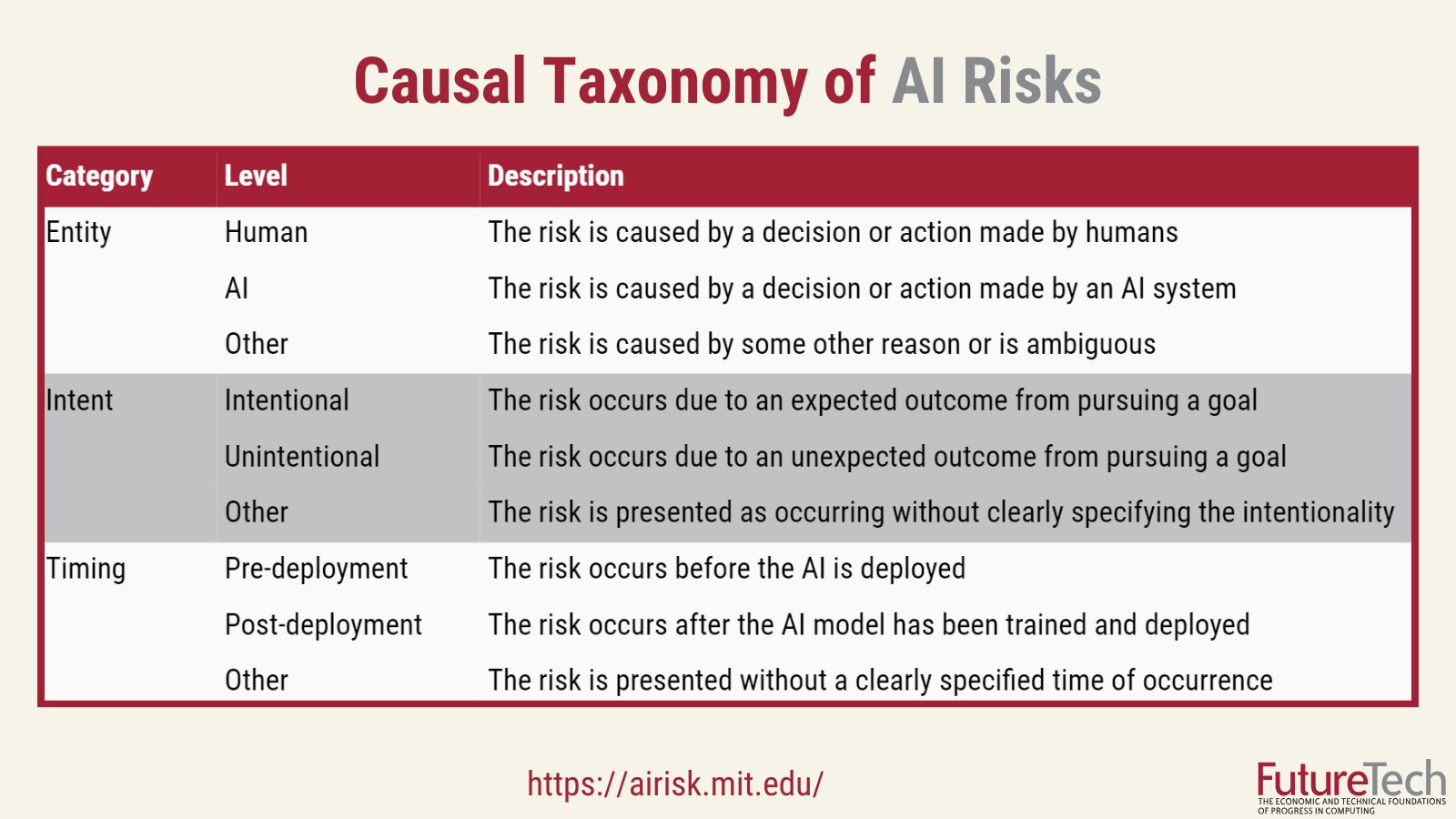
Four insights from this analysis (1/2): 51% of the risks extracted were attributed to AI systems, while 34% were attributed to humans. Slightly more risks were presented as being unintentional (37%) than intentional (35%). Six times more risks were presented as occurring
-
Taxonomic Framework for AI Risk Categorization: Entity, Intent, Timing
By
–
To organize their findings, the researchers adapt two existing frameworks into taxonomies for categorizing the identified risks. Their Causal Taxonomy categorizes risks based on three factors:
1. The Entity involved
2. The Intent behind the risk
3. The Timing of its occurrence -

AI Risk Repository: 700+ Risks from 43 Frameworks
By
–
What are the risks from artificial intelligence? Presenting the first-ever AI Risk Repository: a comprehensive living database of 700+ risks extracted, w/quotes & page numbers, from 43(!) existing frameworks. Read & explore here: https://
tinyurl.com/554k67ej -
Matrix Powers and Graph Walks in AI Algorithms
By
–
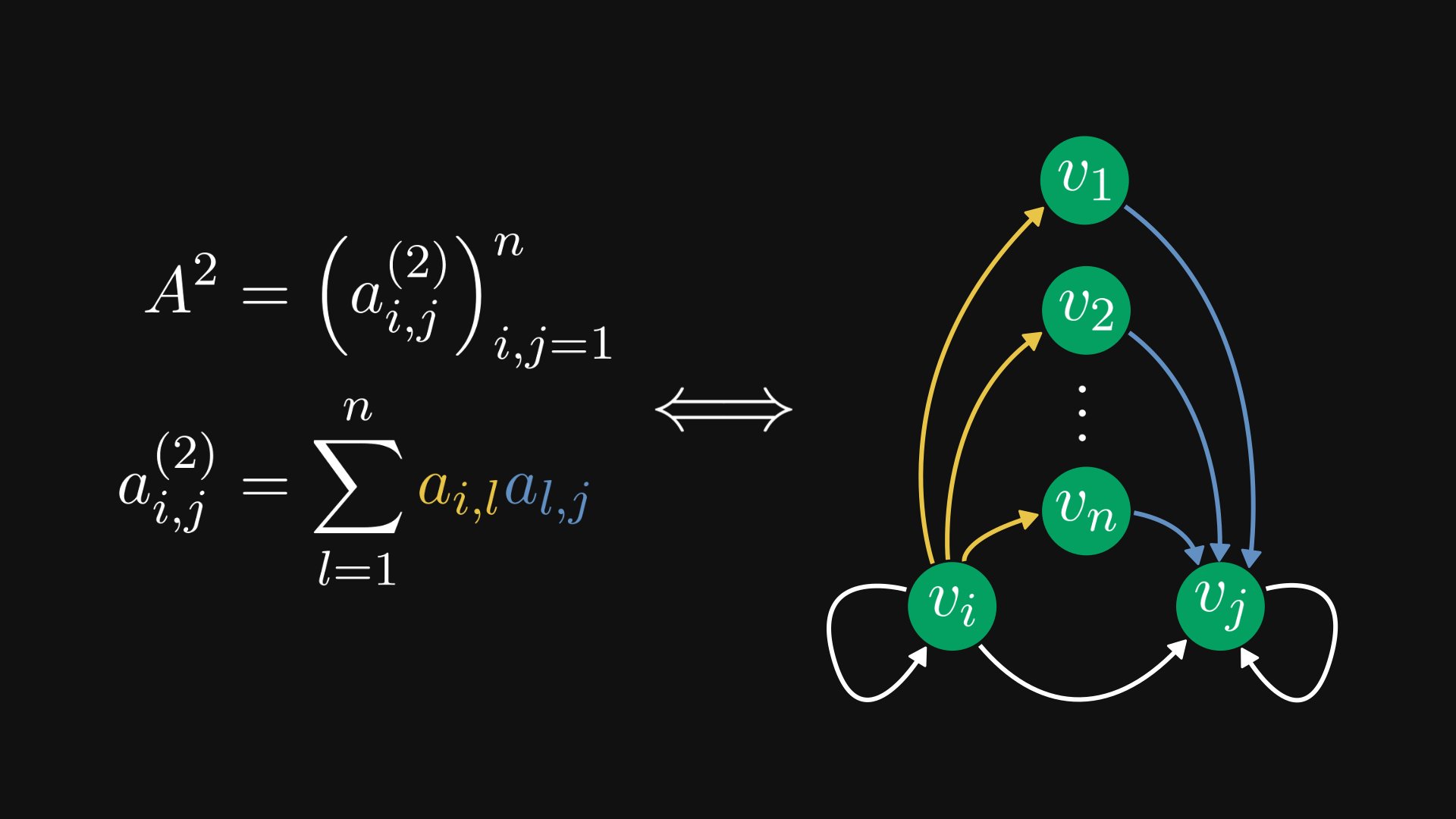
According to Danka, the directed graph representation is beneficial because the powers of the matrix correspond to walks in the graph. W/i the elements of the square matrix, all possible 2-step walks are accounted for in the sum defining the elements of A².
-
Encoding Matrices as Graphs for Complex Behavior Analysis
By
–
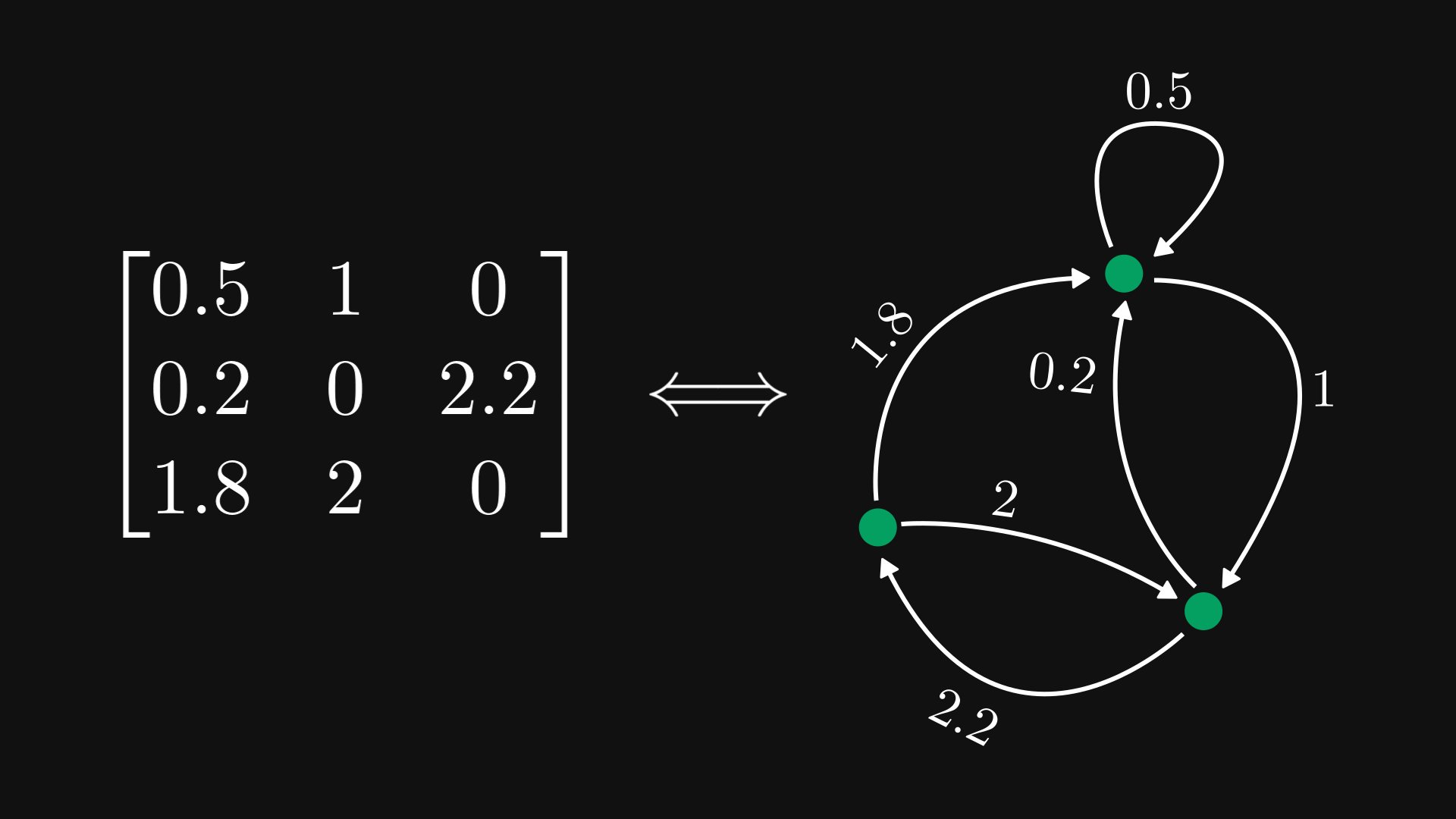
Breaking down how encoding matrices as graphs makes their complex behaviors easier to study A thread by @TivadarDanka
-
MIT researchers advance AI through novel approach
By
–
Featured authors in article: Nishanth Kumar (
@nishanthkumar23
), Tom Silver (
@tomssilver
), Tomás Lozano-Pérez, and Leslie Pack Kaelbling
Paper: https://
ees.csail.mit.edu
MIT research group: @MITLIS_Lab -
EES Enables Boston Dynamics Spot to Learn Complex Task in Hours
By
–
EES's knack for efficient learning was evident when implemented on Boston Dynamics’ Spot quadruped during research trials at The AI Institute.
— MIT CSAIL (@MIT_CSAIL) 9 août 2024
In one demo, the robot learned how to securely place a ball and ring on a slanted table in ~3 hours. pic.twitter.com/EgQO5EwLAOEES's knack for efficient learning was evident when implemented on Boston Dynamics’ Spot quadruped during research trials at The AI Institute. In one demo, the robot learned how to securely place a ball and ring on a slanted table in ~3 hours.
-
Algorithm Trains Robot to Sweep Toys Twice as Fast
By
–
In another, the algorithm guided the machine to improve at sweeping toys into a bin w/i about 2 hours.
— MIT CSAIL (@MIT_CSAIL) 9 août 2024
Both results appear to be an upgrade from previous methods, which would have likely taken >10 hours per task. pic.twitter.com/GAC6hrS8DVIn another, the algorithm guided the machine to improve at sweeping toys into a bin w/i about 2 hours. Both results appear to be an upgrade from previous methods, which would have likely taken >10 hours per task.