This algorithm could come in handy in places like a hospital, factory, house, or coffee shop. For example, if you wanted a robot to clean up your living room, it would need help practicing skills like sweeping. EES could help that robot improve w/o human intervention, using
@mit_csail
-
Robot Vision System Learns Task Execution Through Practice
By
–
EES first works w/a vision system that locates & tracks the machine’s surroundings. Then, the algorithm estimates how reliably the robot executes an action & if it should practice more.
-
Robot skill refinement through EES forecasting and vision feedback
By
–
EES forecasts how well the robot could perform the overall task if it refines that skill & finally it practices. The vision system then checks if that skill was done correctly after each attempt. pic.twitter.com/oGBoP8zUL5
— MIT CSAIL (@MIT_CSAIL) 9 août 2024EES forecasts how well the robot could perform the overall task if it refines that skill & finally it practices. The vision system then checks if that skill was done correctly after each attempt.
-

MIT’s EES Algorithm Enables Robots to Practice and Improve Autonomously
By
–
The phrase "practice makes perfect" is great advice for humans — and also a helpful maxim for robots Instead of requiring a human expert to guide such improvement, MIT & The AI Institute’s "Estimate, Extrapolate, and Situate" (EES) algorithm enables these machines to practice
-

LLMs in Finance: Ask Your Questions for MIT Expert
By
–
Ask us your questions about applying LLMs to financial contexts, including financial advice, fundamental analysis, and risk management. We’ll pick some to feature in an upcoming explainer w/MIT professor Andrew Lo (
@AndrewWLo
). For more on his work: https://
alo.mit.edu/biography/ -
MIT Algorithms Optimize Object Design and Fabrication Efficiency
By
–
MIT professor Mina Konaković Luković on how her research group develops algorithms that help design & fabricate objects more efficiently than manual approaches.
— MIT CSAIL (@MIT_CSAIL) 7 août 2024
Full video: https://t.co/QzOoEBsHwz pic.twitter.com/7n1xln0C1xMIT professor Mina Konaković Luković on how her research group develops algorithms that help design & fabricate objects more efficiently than manual approaches. Full video: https://
bit.ly/46GT0ir -
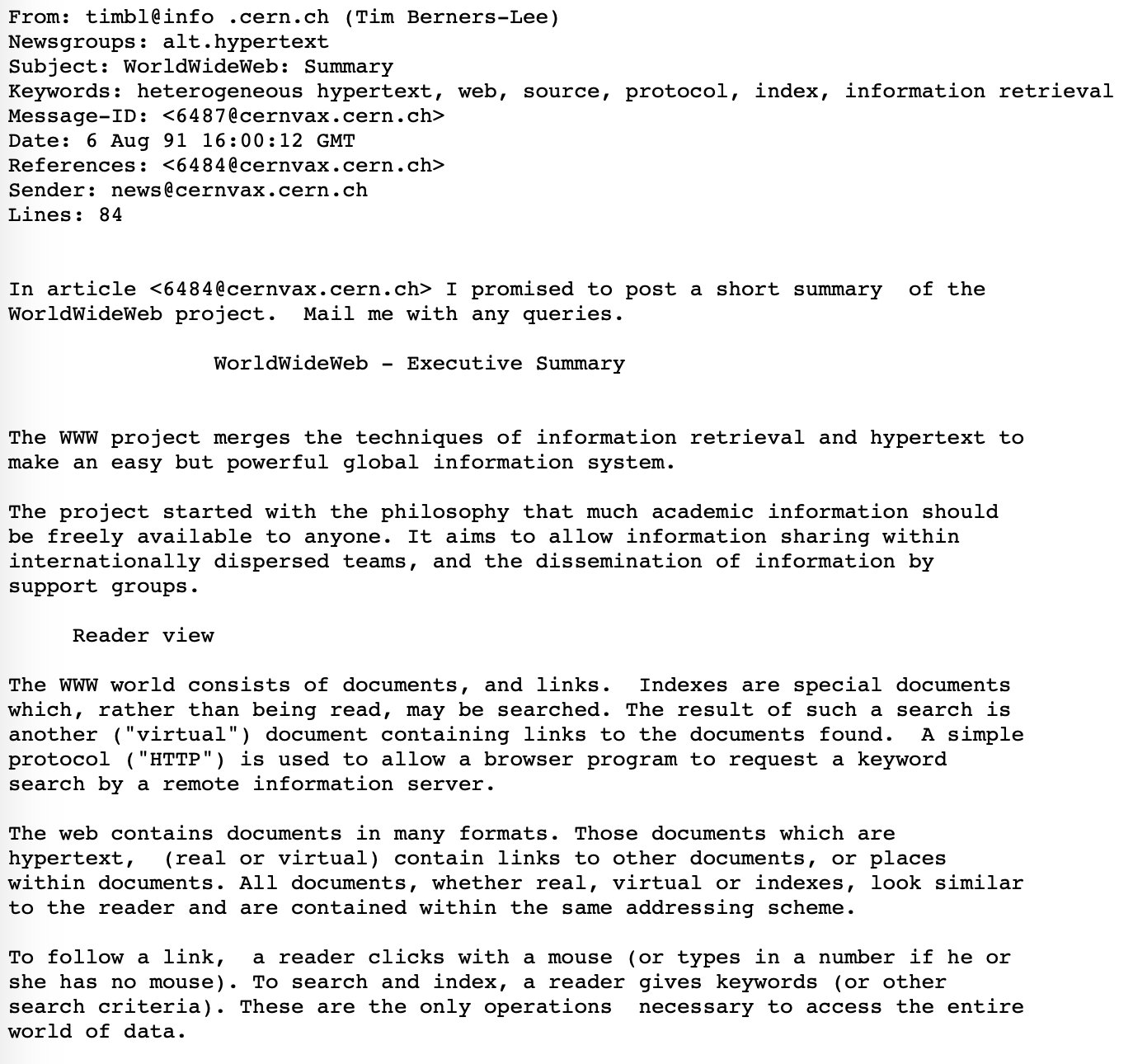
Tim Berners-Lee announces World Wide Web project in 1991
By
–
#otd in 1991 Tim Berners-Lee first posted on an online newsgroup about a project he was working on called "The World Wide Web." https://
w3.org/People/Berners
-Lee/1991/08/art-6487.txt
… -
Figure 02 Humanoid Robot Introduces Natural Language Conversations
By
–
Introducing Figure 02, a humanoid robot capable of natural language conversations thanks to OpenAI. What do you think? pic.twitter.com/C85gy8v9J6
— MIT CSAIL (@MIT_CSAIL) 6 août 2024Introducing Figure 02, a humanoid robot capable of natural language conversations thanks to OpenAI. What do you think?
-
VGNN accelerates phonon dispersion calculations for materials discovery
By
–
A VGNN could help calculate phonon dispersion relations for a few thousand materials in just a few seconds w/a personal computer. This efficiency could enable scientists to search a larger space when seeking materials with certain thermal properties.
-
Virtual Node Technique Predicts Optical Magnetic Properties
By
–
Moreover, the virtual node technique is not exclusive to phonons, and could also be used to predict challenging optical & magnetic properties.