
This is how you make an AI respect your command instead of giving you a lecture.
@learnopencv
-
Mythos: Teaching AI to Understand Stories and Narratives
By
–
Mythos: Teaching AI to Understand Stories, Not Just Text
— Satya Mallick (@LearnOpenCV) 14 avril 2026
In this episode of Artificial Intelligence: Papers and Concepts, we explore Mythos, a new approach focused on helping AI systems understand narratives, structure, and meaning within stories. Rather than treating text as… pic.twitter.com/jjAZvymyiuMythos: Teaching AI to Understand Stories, Not Just Text In this episode of Artificial Intelligence: Papers and Concepts, we explore Mythos, a new approach focused on helping AI systems understand narratives, structure, and meaning within stories. Rather than treating text as
-
DRCT: Diffusion-Based Image Restoration for High-Quality Visuals
By
–
DRCT: Rethinking Image Restoration With Diffusion-Based Reconstruction
— Satya Mallick (@LearnOpenCV) 13 avril 2026
In this episode of Artificial Intelligence: Papers and Concepts, we explore DRCT, a diffusion-based approach to image restoration that focuses on reconstructing high-quality visuals from degraded inputs.… pic.twitter.com/CCxCklQCPrDRCT: Rethinking Image Restoration With Diffusion-Based Reconstruction In this episode of Artificial Intelligence: Papers and Concepts, we explore DRCT, a diffusion-based approach to image restoration that focuses on reconstructing high-quality visuals from degraded inputs. Instead of relying on traditional enhancement techniques, DRCT leverages generative diffusion models to recover fine details, textures, and structures that are often lost in noisy or low-resolution images. We break down why image restoration has been a challenging problem for conventional methods, how diffusion models enable more realistic and consistent reconstructions, and what this means for applications like photography, medical imaging, and video enhancement. If you’re interested in generative AI, computer vision, or the future of high-fidelity image recovery, this episode explains why DRCT represents a significant step forward in restoring visual quality with AI. Resources: Paper Link: arxiv.org/pdf/2404.00722 Interested in Computer Vision and AI consulting and product development services? Email us at contact@bigvision.ai or visit us at bigvision.ai
→ View original post on X — @learnopencv, 2026-04-13 13:39 UTC
-
AI Leaders Dismiss Existential Risk While Doomers Dominate Attention
By
–
Most "leading AI figures" think this p(doom) estimates are complete bullshit and the existential risk is essentially zero. But most of them are silent. The doomers attract a disproportionate amount of attention, of course.
→ View original post on X — @learnopencv, 2026-04-13 12:52 UTC
-
Humanoid Robots Advancing: Costs Dropping, Everyday Integration Approaching
By
–
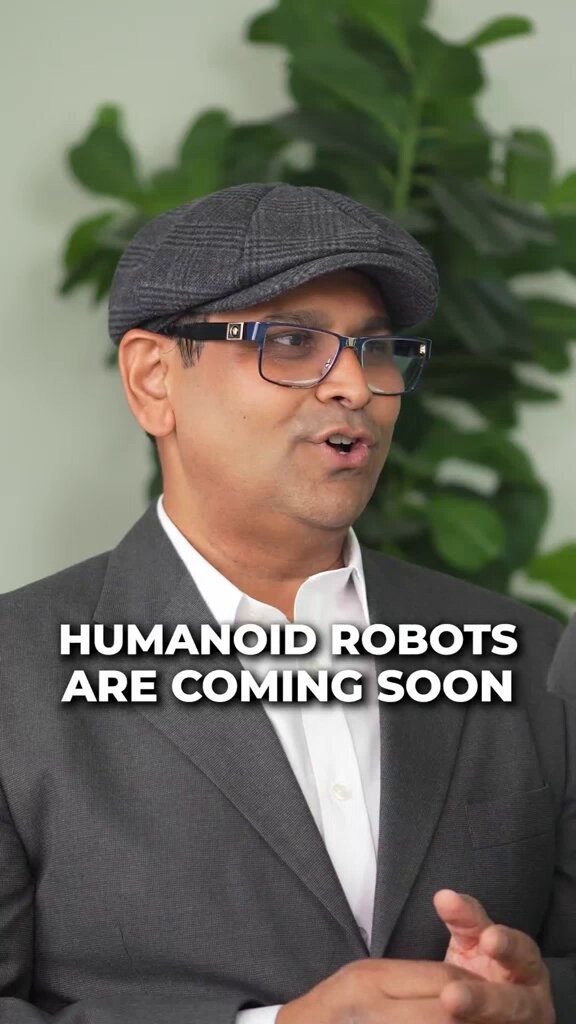
Robotics is advancing fast, and while it may take time, humanoid robots are becoming more realistic and capable with each breakthrough. As costs drop like they did with electric cars, these machines could become a common part of everyday life. pic.twitter.com/pxcr8rZDyP
— Satya Mallick (@LearnOpenCV) 12 avril 2026Robotics is advancing fast, and while it may take time, humanoid robots are becoming more realistic and capable with each breakthrough. As costs drop like they did with electric cars, these machines could become a common part of everyday life.
→ View original post on X — @learnopencv, 2026-04-12 13:32 UTC
-

LongCat: Advanced Image Editing With Long-Context Understanding
By
–
LongCat: Scaling Image Editing With Long-Context Understanding
— Satya Mallick (@LearnOpenCV) 11 avril 2026
In this episode of Artificial Intelligence: Papers and Concepts, we explore LongCat, a new approach to AI-powered image editing that focuses on handling complex, multi-step instructions with long-context… pic.twitter.com/aYVvURSNLwLongCat: Scaling Image Editing With Long-Context Understanding In this episode of Artificial Intelligence: Papers and Concepts, we explore LongCat, a new approach to AI-powered image editing that focuses on handling complex, multi-step instructions with long-context understanding. Instead of making isolated edits, LongCat is designed to follow detailed prompts that require consistency across multiple changes bringing AI closer to real creative workflows. We break down why traditional image editing models struggle with sequential instructions, how LongCat maintains coherence across edits, and what this means for designers and creators working with AI tools. If you’re interested in generative image editing, multimodal models, or the future of AI-assisted creativity, this episode explains why LongCat represents an important step toward more controllable and context-aware image generation. Resources: Paper Link: arxiv.org/pdf/2512.07584v1 Interested in Computer Vision and AI consulting and product development services? Email us at contact@bigvision.ai or visit us at bigvision.ai
→ View original post on X — @learnopencv, 2026-04-11 14:12 UTC
-

Smartphones Process Locally While Cloud Handles Heavy Workloads
By
–
Modern smartphones are powerful enough to handle many tasks locally, shifting more processing from the cloud to the device itself. The future is a hybrid model where everyday tasks run on-device while heavier workloads are handled in the cloud for scale. pic.twitter.com/KxZnTAthKV
— Satya Mallick (@LearnOpenCV) 11 avril 2026Modern smartphones are powerful enough to handle many tasks locally, shifting more processing from the cloud to the device itself. The future is a hybrid model where everyday tasks run on-device while heavier workloads are handled in the cloud for scale.
→ View original post on X — @learnopencv, 2026-04-11 13:32 UTC
-

NVIDIA OpenShell: Secure Sandbox Runtime for AI Agents
By
–
AI agents that can read files, install packages, and call APIs need more than intelligence.
— Satya Mallick (@LearnOpenCV) 11 avril 2026
They need boundaries.
NVIDIA's play:
OpenShell → secure sandbox runtime for AI agents
Nemo Claw → plugs Open Claw into that sandbox
Already supports Claude Code, Codex, OpenCode
The… pic.twitter.com/y9KLGFNisVAI agents that can read files, install packages, and call APIs need more than intelligence. They need boundaries. NVIDIA's play: OpenShell → secure sandbox runtime for AI agents Nemo Claw → plugs Open Claw into that sandbox Already supports Claude Code, Codex, OpenCode The agentic AI infra story nobody's covering ↓ #AgenticAI #NVIDIA #OpenShell #NemoClaw #AIAgents #AISafety #OpenClaw #AIEngineering
→ View original post on X — @learnopencv, 2026-04-11 10:33 UTC
-

Gaussian Splats Coordinate System Controversy in 3D Vision
By
–
CAPTCHA for 3D vision people Ryan Schmidt (@rms80) wait wait wait. So a new kind of 3D representation (gaussian splats) was invented and they decided to use Y-DOWN as the standard up-direction ?? In 2023 ?!?!!! Need to have some words w/ my old friends at INRIA…and I guess we need a new chart… — https://nitter.net/rms80/status/2042358527159566707#m
→ View original post on X — @learnopencv, 2026-04-10 23:07 UTC
-
BLIP-2: Connecting Vision and Language Models Efficiently
By
–
BLIP-2: Bridging Vision and Language Without Full Retraining
— Satya Mallick (@LearnOpenCV) 10 avril 2026
In this episode of Artificial Intelligence: Papers and Concepts, we explore BLIP-2, a powerful vision–language model that connects pretrained image encoders with large language models without requiring expensive… pic.twitter.com/EnefAwliTzBLIP-2: Bridging Vision and Language Without Full Retraining In this episode of Artificial Intelligence: Papers and Concepts, we explore BLIP-2, a powerful vision–language model that connects pretrained image encoders with large language models without requiring expensive