
Cool, this AI could reason across a 4-million-token document—like reading 100 novels at once. Enter QwenLong-L1.5. The team trained it using a new method: 1) generating complex, multi-step reasoning questions from documents, 2) a stabilized training process to avoid bias, and
@jiqizhixin
-

NEPA: Training Vision Models Like Language Models
By
–
What if training AI to see was more like training it to talk? Researchers from U. Michigan, NYU, Princeton & U. Virginia present NEPA. Instead of reconstructing pixels or using contrastive loss, they train a vision model to predict the next embedding in a sequence, like
-
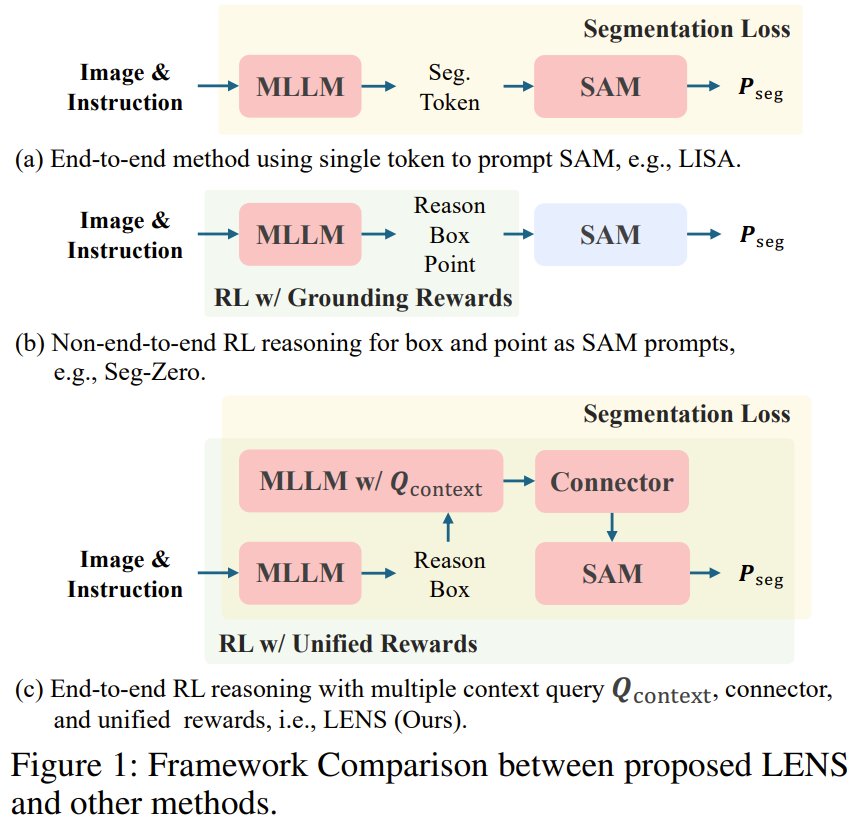
LENS: Step-by-Step Visual Reasoning via Reinforcement Learning
By
–
This AI could explain its visual reasoning before segmenting an object. Researchers from Huazhong University of Science & Technology and vivo present LENS. It's a new method that uses reinforcement learning to train a model to think step-by-step (like a chain of thought) about
-
OpenTinker: Train AI Agents on Laptop Easily
By
–
What if you could train AI agents on a laptop as easily as on a GPU cluster?
— 机器之心 JIQIZHIXIN (@jiqizhixin) 8 janvier 2026
Researchers from UIUC's U Lab, led by Prof. Jiaxuan You, just open-sourced OpenTinker.
It's a new "Reinforcement-Learning-as-a-Service" (RLaaS) system that decouples the complex training pipeline into… pic.twitter.com/YSH2txDsEhWhat if you could train AI agents on a laptop as easily as on a GPU cluster? Researchers from UIUC's U Lab, led by Prof. Jiaxuan You, just open-sourced OpenTinker. It's a new "Reinforcement-Learning-as-a-Service" (RLaaS) system that decouples the complex training pipeline into
-

SIGGRAPH Asia 2025 Best Paper: Advanced DLP 3D Printing Slicing
By
–
SIGGRAPH Asia 2025 Best Paper! They present a new slicing method for high-resolution DLP printing. Instead of stacking flat horizontal slices, it uses optimized curves to create slanted, varying layers. This tackles overhangs & "staircase" defects without sacrificing print
-

End-to-End Test-Time Training Eliminates KV Cache Limitations
By
–
Farewell to the shackles of KV Cache, compressing long contexts into weights—is there hope for continuously learning large models? Researchers from Stanford, NVIDIA, UC Berkeley, and the Astera Institute present a new method called End-to-End Test-Time Training (TTT-E2E). They
-
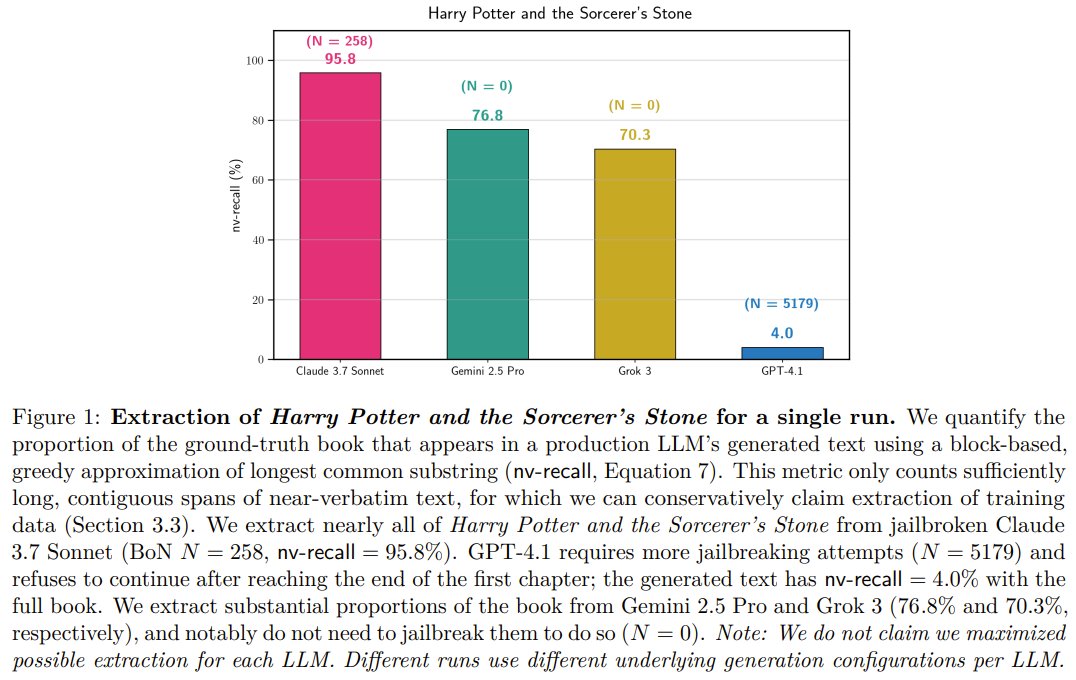
Researchers Extract Copyrighted Books From GPT-4 Claude Models
By
–
Can you extract entire copyrighted books from top AI models like GPT-4 and Claude? Stanford & Yale researchers developed a two-step attack: first probing, then using iterative prompts to force the model to continue. They successfully extracted large portions of books, with
-
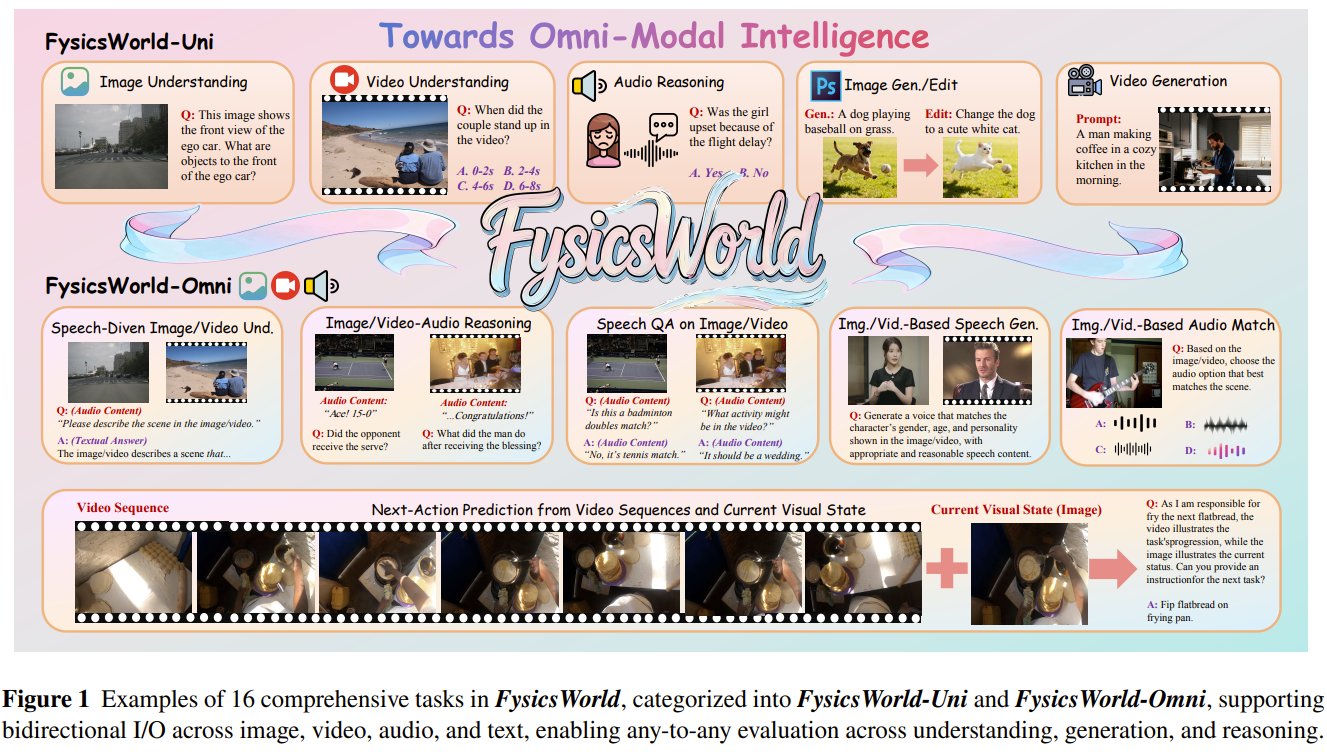
FysicsWorld: First Unified Multimodal AI Benchmark
By
–
With only one test, you could measure an AI's true mastery of sight, sound, and language together! But how? Fudan University & Fysics AI present FysicsWorld, the first full-modality benchmark. It's a unified test that pushes models to understand, generate, and reason across
-

Native Parallel Reasoner: LLMs Learn Multi-Path Problem Solving
By
–
What if an AI could truly think in parallel, not just fake it? Researchers at BIGAI introduce Native Parallel Reasoner (NPR), a new framework that teaches LLMs to break down and solve problems across multiple "thought" paths simultaneously, learning by trial and error. The
-
LLaDA2.0: Converting Auto-Regressive Models to Discrete Diffusion
By
–
LLaDA2.0, a new method that converts existing auto-regressive models into discrete diffusion models using a novel 3-phase training scheme. This approach preserves the model's learned knowledge while unlocking parallel decoding. The resulting models, LLaDA2.0-mini (16B) and