Congratulations to the authors of “Do As I Can, Not As I Say: Grounding Language in Robotic Affordances” (see the blog at https://
goo.gle/3QRJhgl) for winning the Special Innovation Award at @corl_conf
! #CoRL2022
@googleai
-
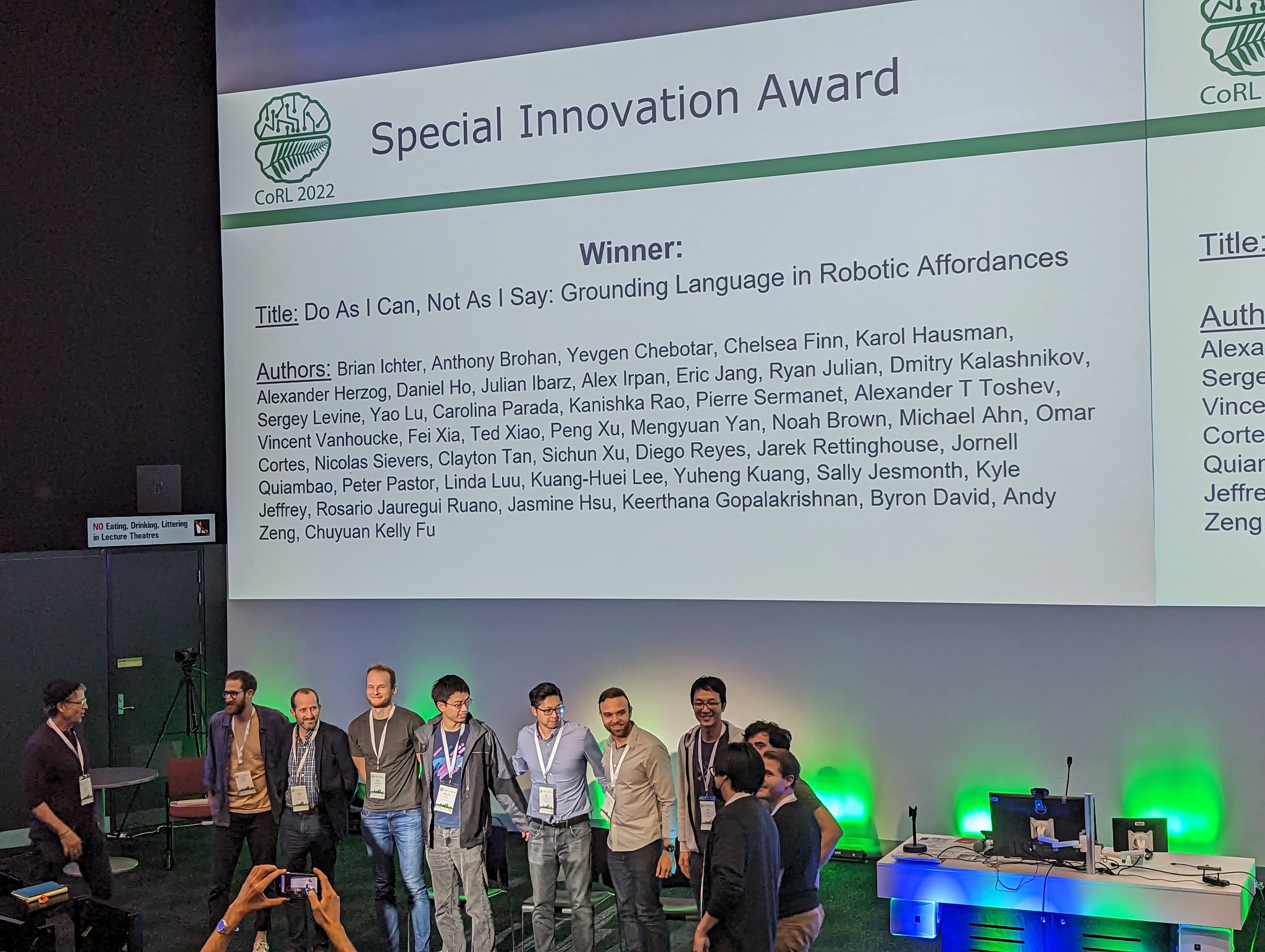
Award-Winning Research on Language Grounding in Robotic Affordances
By
–
-

CALM: Dynamic Computational Effort for Language Models
By
–
Presenting Confident Adaptive Language Modeling (CALM), a novel method that allows language models to dynamically modify computational effort when generating text. Learn how CALM can accelerate text generation while preserving output quality → https://t.co/Nm7yyT8sMA pic.twitter.com/MpuaPBzDMU
— Google AI (@GoogleAI) 16 décembre 2022Presenting Confident Adaptive Language Modeling (CALM), a novel method that allows language models to dynamically modify computational effort when generating text. Learn how CALM can accelerate text generation while preserving output quality → https://
goo.gle/3HJKzbM -

Google Recorder App Introduces Speaker Labels with On-Device AI
By
–
Learn more about speaker labels for the Recorder app, an opt-in feature based on a novel speaker diarization system for streaming on-device applications that annotates recording transcripts in real time with unique and anonymous labels for each speaker → https://t.co/TQHnZlQ3XS pic.twitter.com/0qpD2hx5YQ
— Google AI (@GoogleAI) 14 décembre 2022Learn more about speaker labels for the Recorder app, an opt-in feature based on a novel speaker diarization system for streaming on-device applications that annotates recording transcripts in real time with unique and anonymous labels for each speaker → https://
goo.gle/3HCN5k8 -

Robotics Transformer 1: Multi-Task Robot Learning Model
By
–
Introducing the Robotics Transformer 1, a multi-task model that tokenizes robot inputs and outputs actions to enable efficient inference at runtime. Learn how it improves zero-shot generalization to new tasks, environments and objects → https://t.co/hnsKvCJjmP pic.twitter.com/g9QFXzjs9T
— Google AI (@GoogleAI) 13 décembre 2022Introducing the Robotics Transformer 1, a multi-task model that tokenizes robot inputs and outputs actions to enable efficient inference at runtime. Learn how it improves zero-shot generalization to new tasks, environments and objects → https://
goo.gle/3Yxomnt -

Google Unveils Learning Interpretability Tool and Salience Evaluation Protocol
By
–
Today at 12:30pm the Google booth will host a demo about Google's open source Learning Interpretability Tool (LIT; https://
goo.gle/3kTIiLT) along with a newly introduced evaluation protocol (
https://
goo.gle/3gZSOWl) that illustrates the difference between various salience methods -
T-STAR: Style Transfer with AMR Graphs for Content Preservation
By
–
T-STAR is a style transfer approach that uses AMR graphs for intermediate representations. The first of it's kind, T-STAR yields high content preservation with negligible accuracy loss. Drop by the @emnlpmeeting Google booth at 3:30pm today to hear @JangraAnubhav talk about it!
-
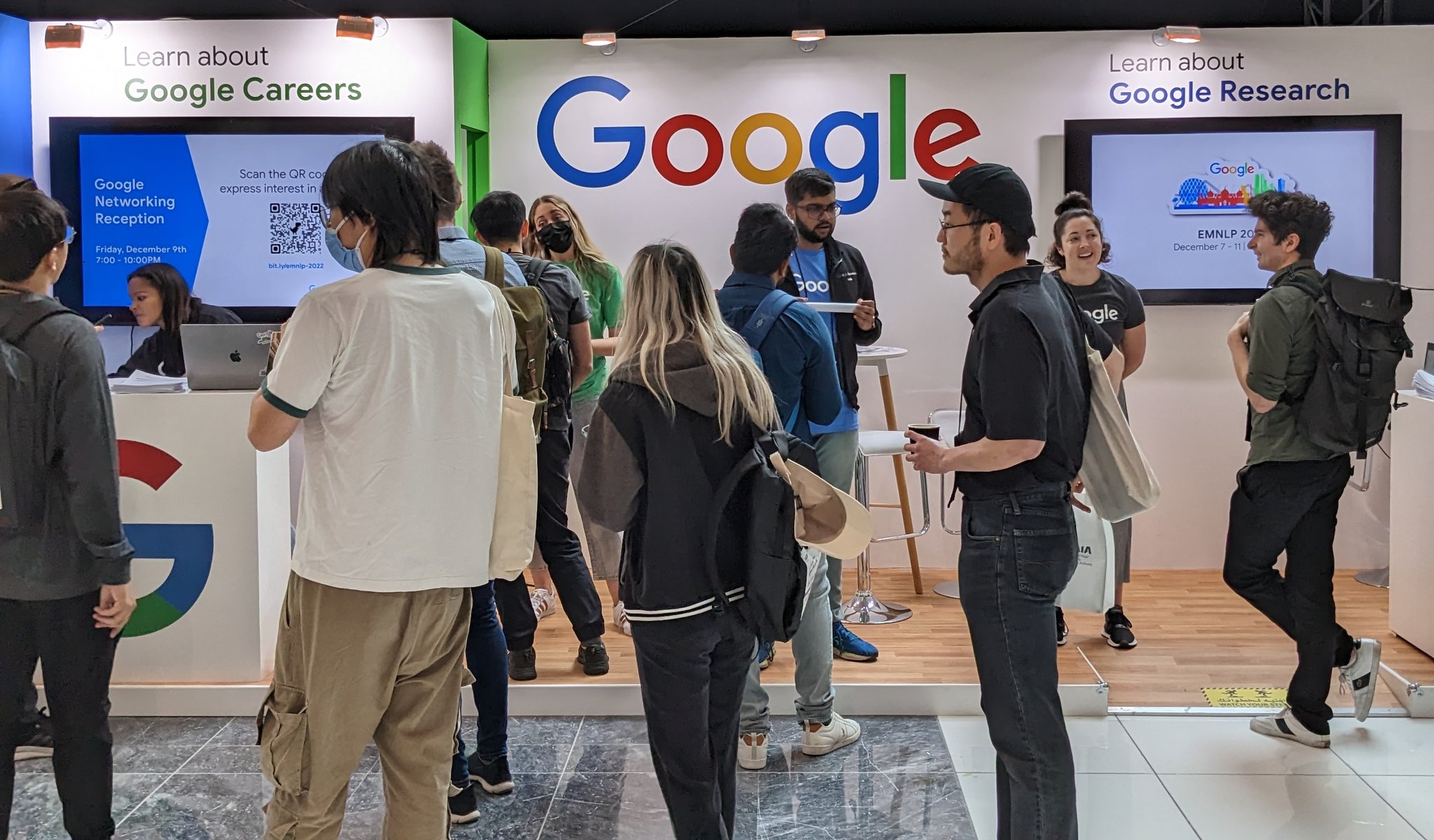
Google Researchers Present AI Projects at EMNLP2022
By
–
Attending #EMNLP2022 this year? Stop by the Google booth where you can chat with researchers, attend a demo or Q&A session, and learn about some of the many projects our researchers are presenting throughout the conference. https://
goo.gle/3VVsjQG -

Google Quantum AI Demonstrates Photon Interaction Using Sycamore
By
–
Under normal conditions, photons do not interact with each other. However, new research by @GoogleQuantumAI using the Sycamore quantum computer demonstrates how microwave photons can be made to interact, forming robust bound states. Check it out at https://
goo.gle/3VZuRx1 -
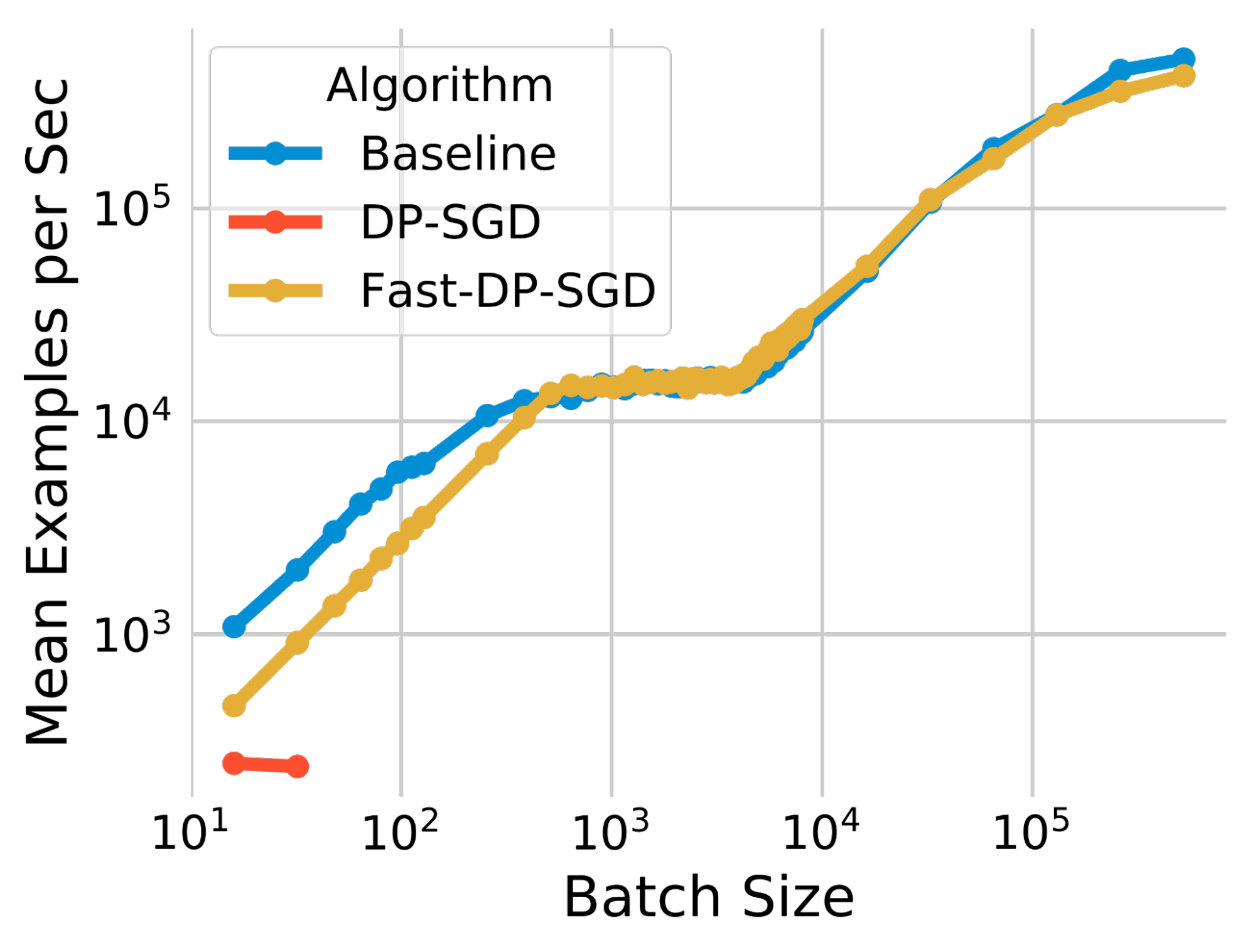
Differentially Private SGD Improves Ad Model Training Efficiency
By
–
Learn how differentially private stochastic gradient descent (DP-SGD) can be applied to train ad prediction models privately with more improved model utility than previously expected, all while reducing computation and memory overhead. Read more → https://
goo.gle/3VUTlbn -

New Protocol Evaluates Machine Learning Model Input Salience Methods
By
–
#MachineLearning models sometimes make correct predictions by using information that is irrelevant to the task. Learn more about a new protocol for evaluating input salience methods, which can help verify that a model isn’t relying on such information → https://
goo.gle/3gZSOWl