I haven’t tried it but agree {placeholder} syntax is pretty reliable in practice for GPT-3.5 and up; more generally you do see issues I suspect are tokenization related. E.g. 4 can struggle to notice ““python” (for a Markdown code block) is missing a backtick.
@goodside
-
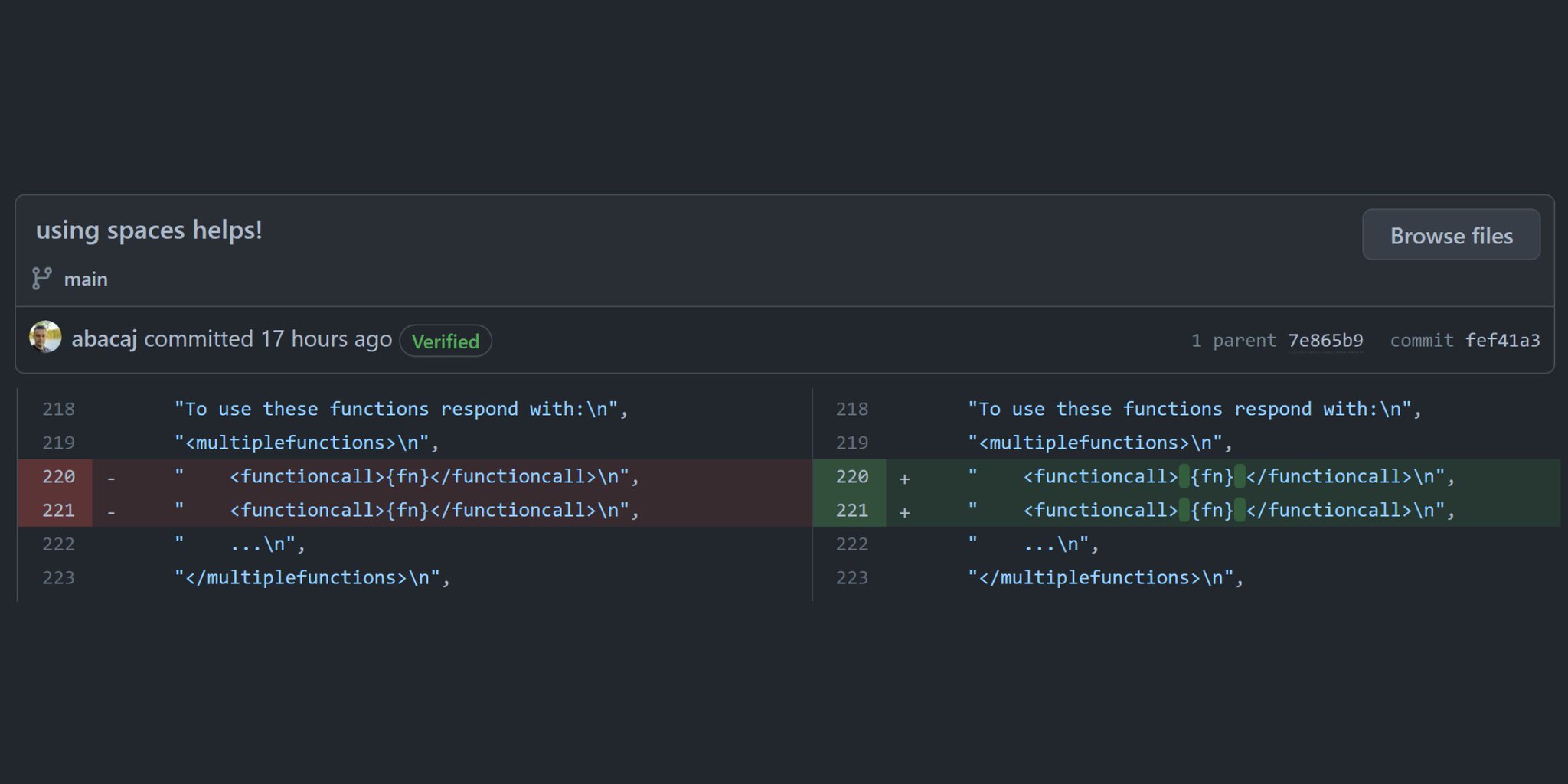
Placeholder syntax tokenization changes; wrapping in spaces improves readability
By
–
This makes sense; ad hoc {placeholder} syntax in a prompt that changes its tokenized representation based on the surrounding text is harder to read. Wrapping in a space is smart.
-
GPT cannot safely emit long data URIs; ask for downloadable files
By
–
The issue is GPT can't safely emit long OOD sequences like data URIs during inference; it's more reliable if you ask for the result as a downloadable file.
-
Teaching templated strategies and intuition for problem-solving
By
–
More like teaching it a small arsenal of templated strategies for solving problems step-by-step, plus an intuition for which strategies to apply to which problems. It’s a system prompt so the goal is just to have it be generic; it’s not trying to be robust to bad instruction.
-
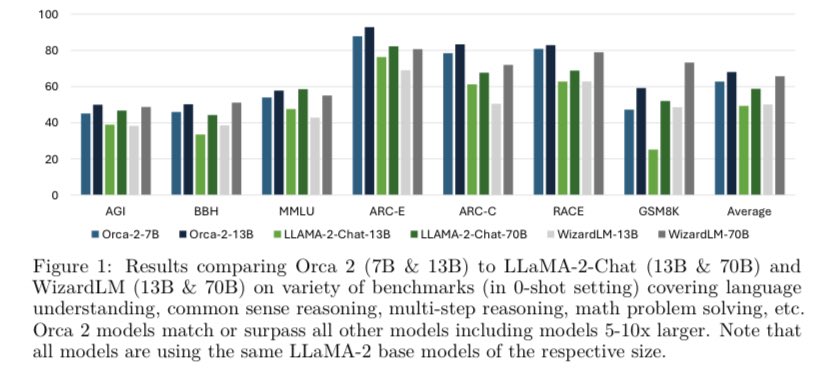
Microsoft’s Orca 2 13B beats 70B models with novel synthetic instruct data approach
By
–
Microsoft’s new 13B Orca 2 outperforms 70B models on many evals. Interesting synthetic instruct data:
1) try many detailed system prompts
2) generate answers using best prompt for each task
3) replace with generic system prompt in tuning demonstrations -
Higher hallucination standard needed for ordinary chatbot users
By
–
Researchers can plausibly deal with hallucinations — experiment with prompt variations, responsibly verify the output, etc. It’s chatbots used by ordinary people that deserve a higher standard because those users’ priors for its correctness are highest.
-
Being hilariously bad is safe, Galactica fears overblown
By
–
Being hilariously bad isn’t dangerous. That’s one of the safest ways to be bad. I barely tried Galactica so I don’t have a strong take on how bad it was, but the danger of its out-of-thin-air citations was overblown. Llama2 base is no less hallucinatory and we survived.
-
Faithful dataset representation most valuable in science/engineering, wider audiences need guardrails.
By
–
It’s in sciences and engineering, where users might be expected to understand what a base LLM is and how they’re used, where having faithful representation of the dataset is most valuable. It’s wider audiences that need more guardrails.
-
RL tuning mitigates issues with diversity and creativity cost
By
–
They are! But both are mitigated by RL-based tuning and have similar costs in diversity and creativity. To tune for correctness is to optimize for tokens that, in practice, lead to true output, regardless of how well those choices represent real text. Consider whether an LLM
-
Yann LeCun defends Galactica: Hallucination isn’t a crime, valuable models need less.
By
–
Yann LeCun is right: Galactica was wronged. Hallucination is not a crime. Models designed to hallucinate less (none eliminate it) hold great value — in dollars, perhaps most. Alignment instills reason and diligence as much as any other of our mores. In many ways, models are more