Banger thread. Single-model supremacy is dead – the real alpha is in these purpose-built agent stacks that actually ship value instead of just flexing parameter counts. MoE routing + hierarchical planning + action-oriented LAMs is the stack that's quietly eating the world right
@godofprompt
-
MoE: From Niche to Industry Standard by 2025
By
–
Mixture of Experts went from academic curiosity (1991) → impossible to scale (2000s) → production breakthrough (2021) → industry standard (2025). Dense models are becoming legacy infrastructure. If you're building AI in 2025 and not considering MoE, you're overpaying by 10x.
-
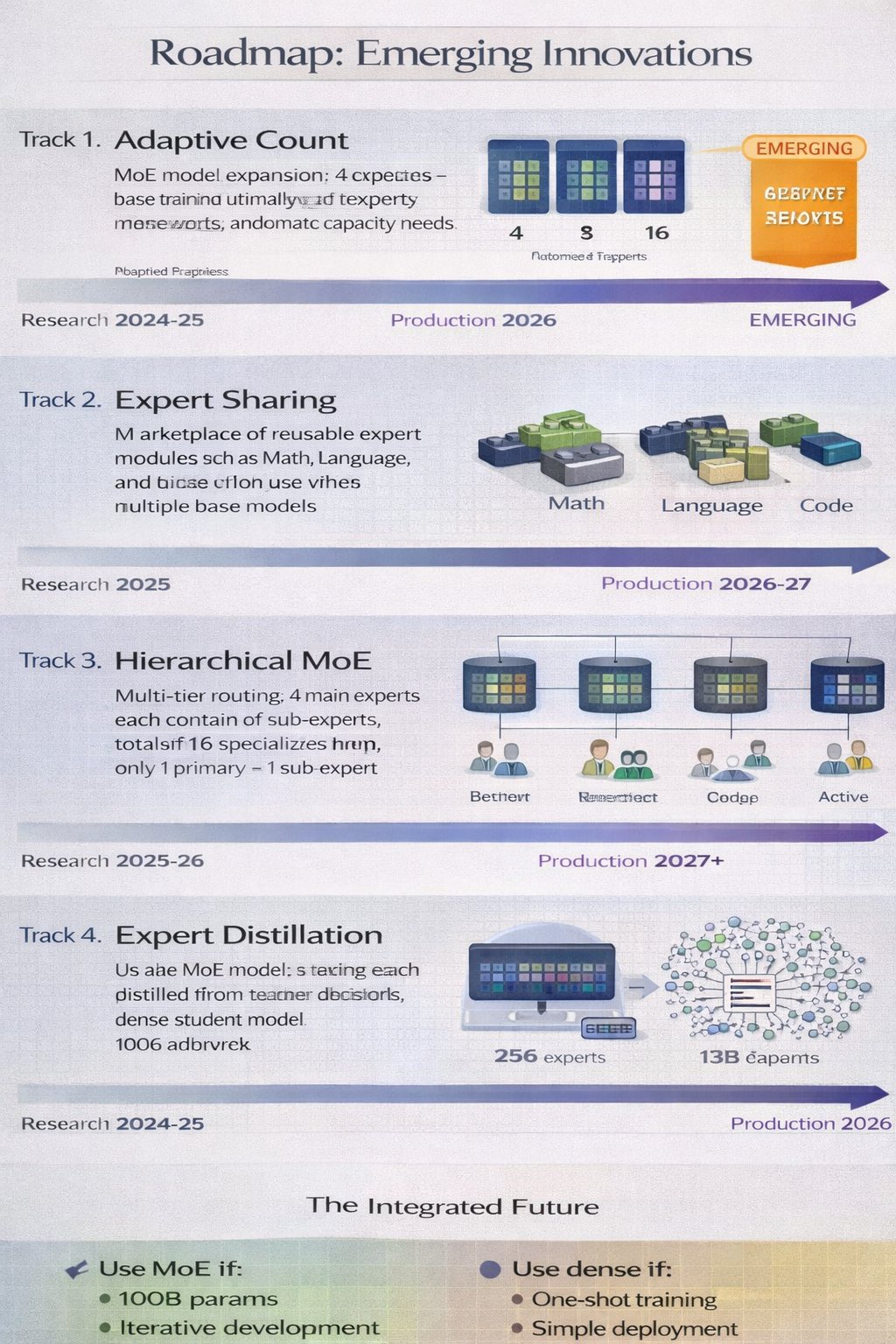
Next-Gen MoE Innovations in 2026
By
–
What's coming next: → Adaptive expert count (dynamically add/remove experts during training)
→ Cross-model expert sharing (reuse specialists across different models)
→ Hierarchical MoE (experts that route to sub-experts)
→ Expert distillation (compress MoE knowledge back -
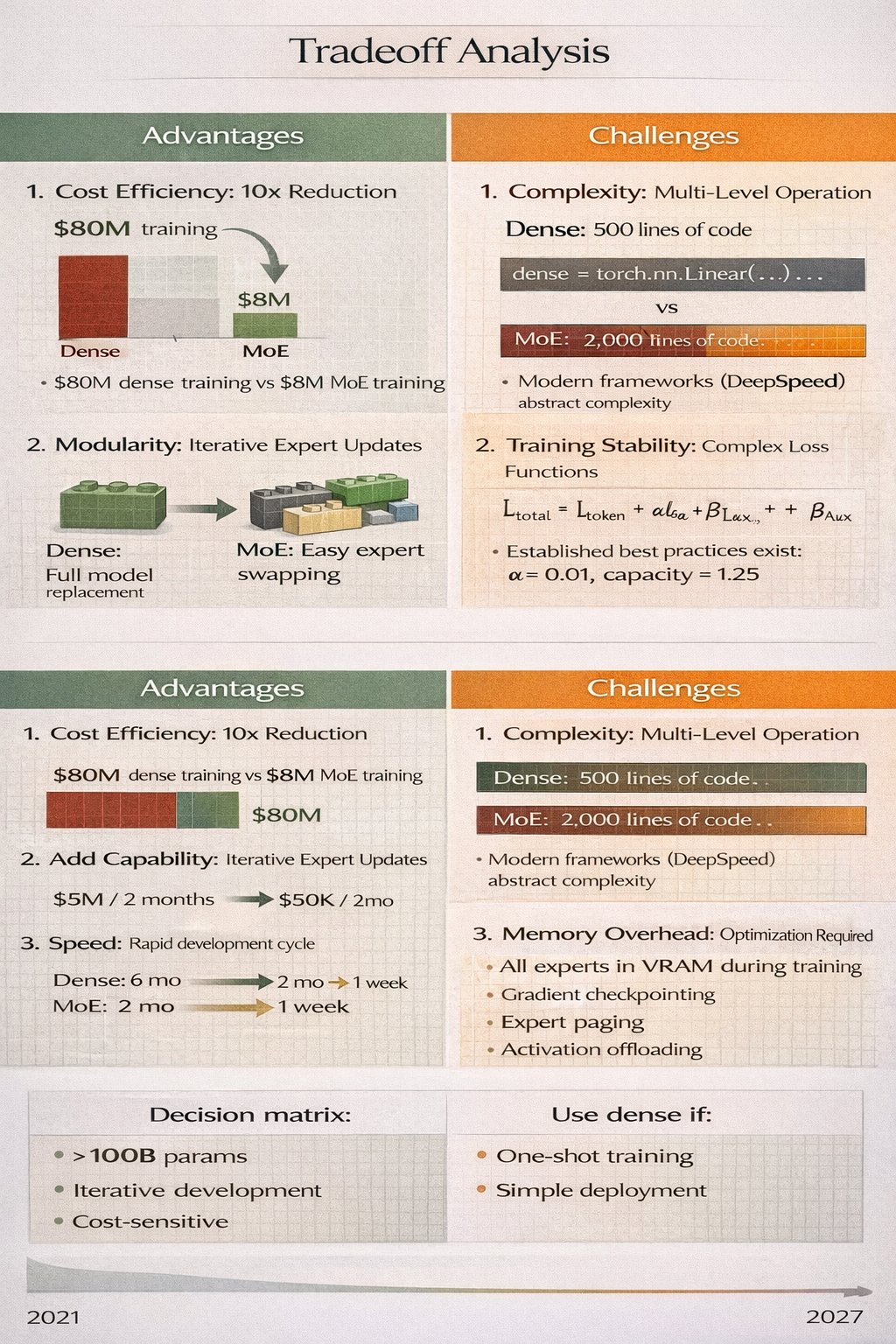
Tradeoffs of modular AI architecture
By
–
The tradeoffs are real though: 5-10x cheaper training and inference Modular, composable architecture Faster iteration cycles More complex to implement correctly Requires load balancing during training Higher memory overhead (all experts must fit in VRAM during
-

MoE vs Dense Models: Cost Efficiency
By
–
Why this matters for open source: Dense models: Entire model needs retraining if you want to change anything
MoE models: Swap experts, add capabilities, fine-tune components independently Meta released Llama 405B (dense) – $50M+ training cost
DeepSeek released V3 (MoE) – $5.6M, -
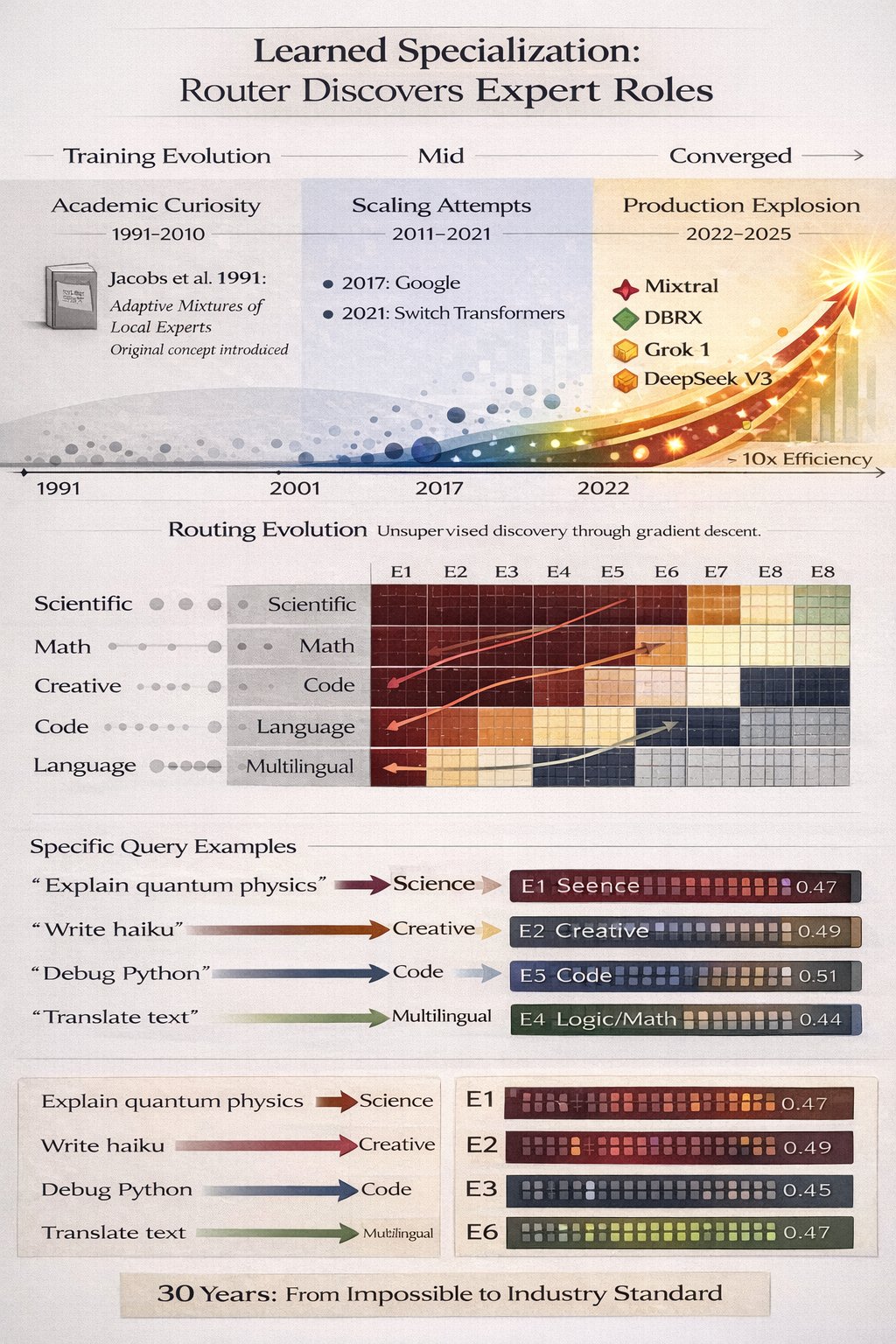
Router learns input-expert affinity patterns
By
–
The router is smarter than you think. It doesn't just pick experts randomly. It learns input-expert affinity during training. "Explain quantum physics" → activates Science + Technical experts
"Write a poem about love" → activates Creative + Emotional experts Specialized -
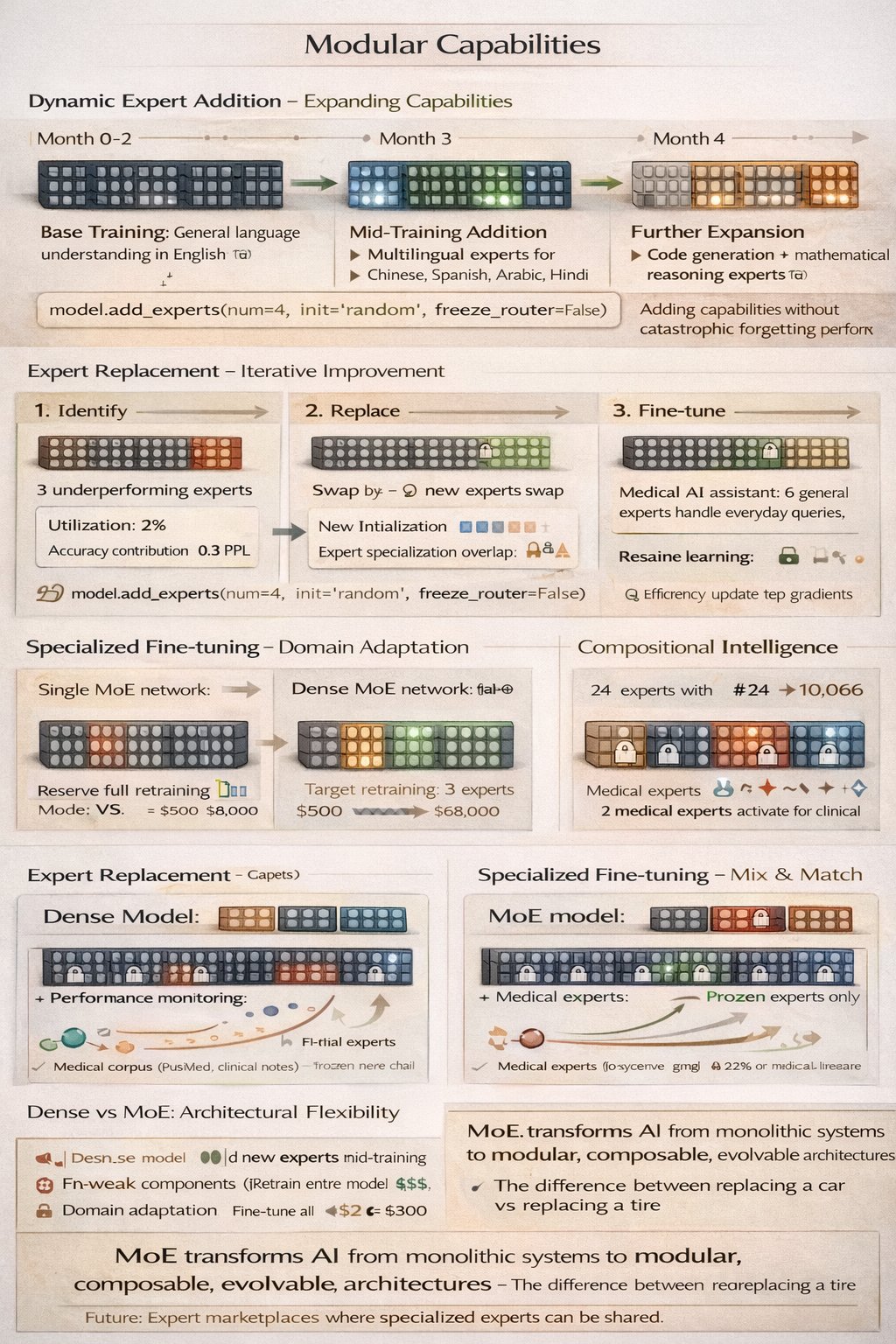
MoE’s Hidden Potential: New Training Strategies
By
–
Here's the part nobody talks about: MoE doesn't just save compute. It enables entirely new training strategies. You can: → Add experts mid-training for new capabilities
→ Replace underperforming experts without retraining everything
→ Fine-tune individual experts on -

MoE Architecture: 5-10x More Parameters
By
–
The modern MoE architecture is insane: > Mixtral 8x7B: 47B total params, only 13B active per token
> DeepSeek-V3: 671B params, 37B active – beats GPT-4 at 1/10th cost
> Grok-1: 314B params, trained faster than any dense model of similar quality Pattern: 5-10x more parameters. -
The Efficiency Era of AI Models
By
–
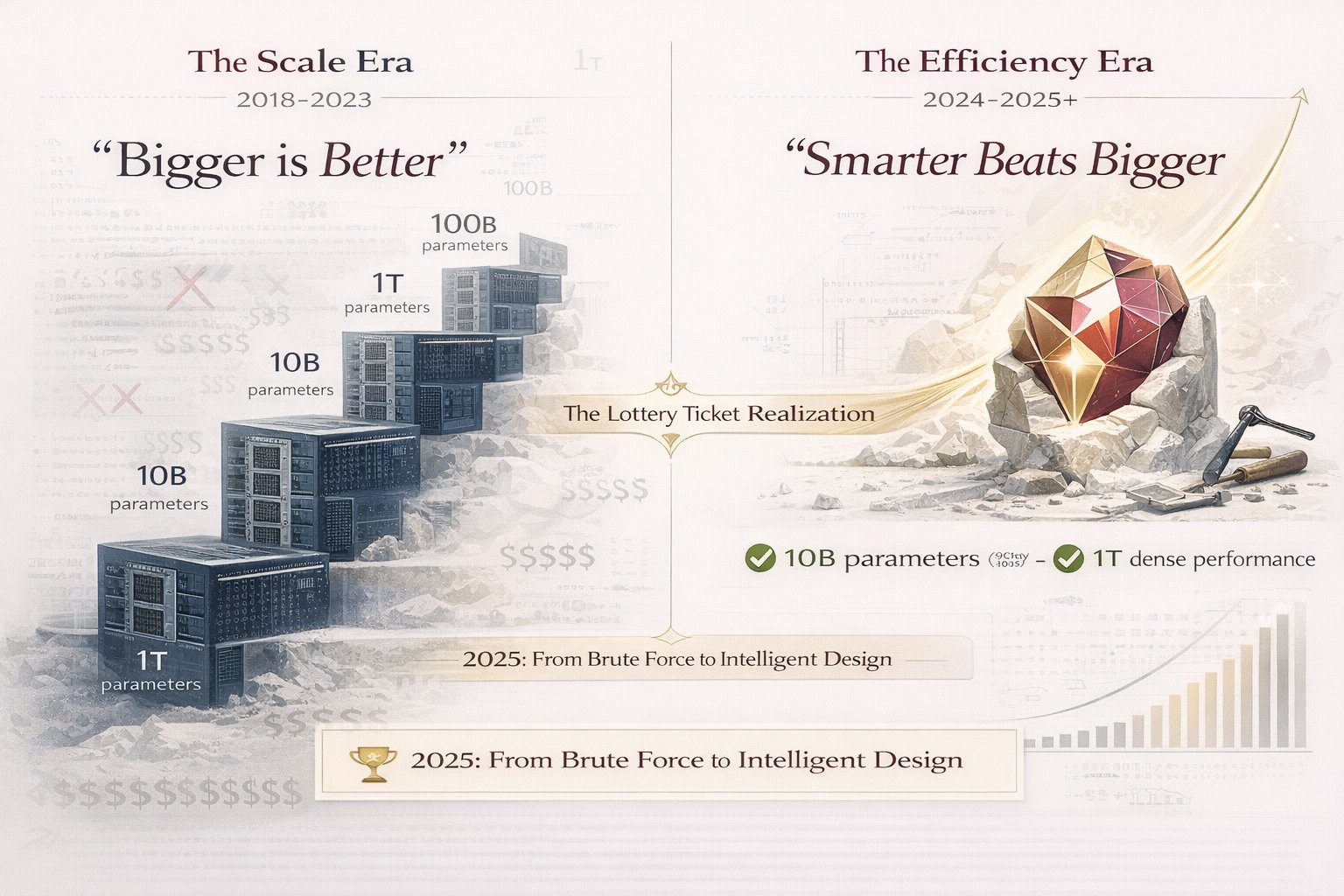
The lottery ticket hypothesis wasn't wrong. We just weren't ready for it. In 2025, sparse models are no longer academic curiosities. They're production infrastructure. The future isn't bigger models. It's smarter pruning. Welcome to the efficiency era. Read it here if you
-
Implementing Sparse Model Training Today
By
–
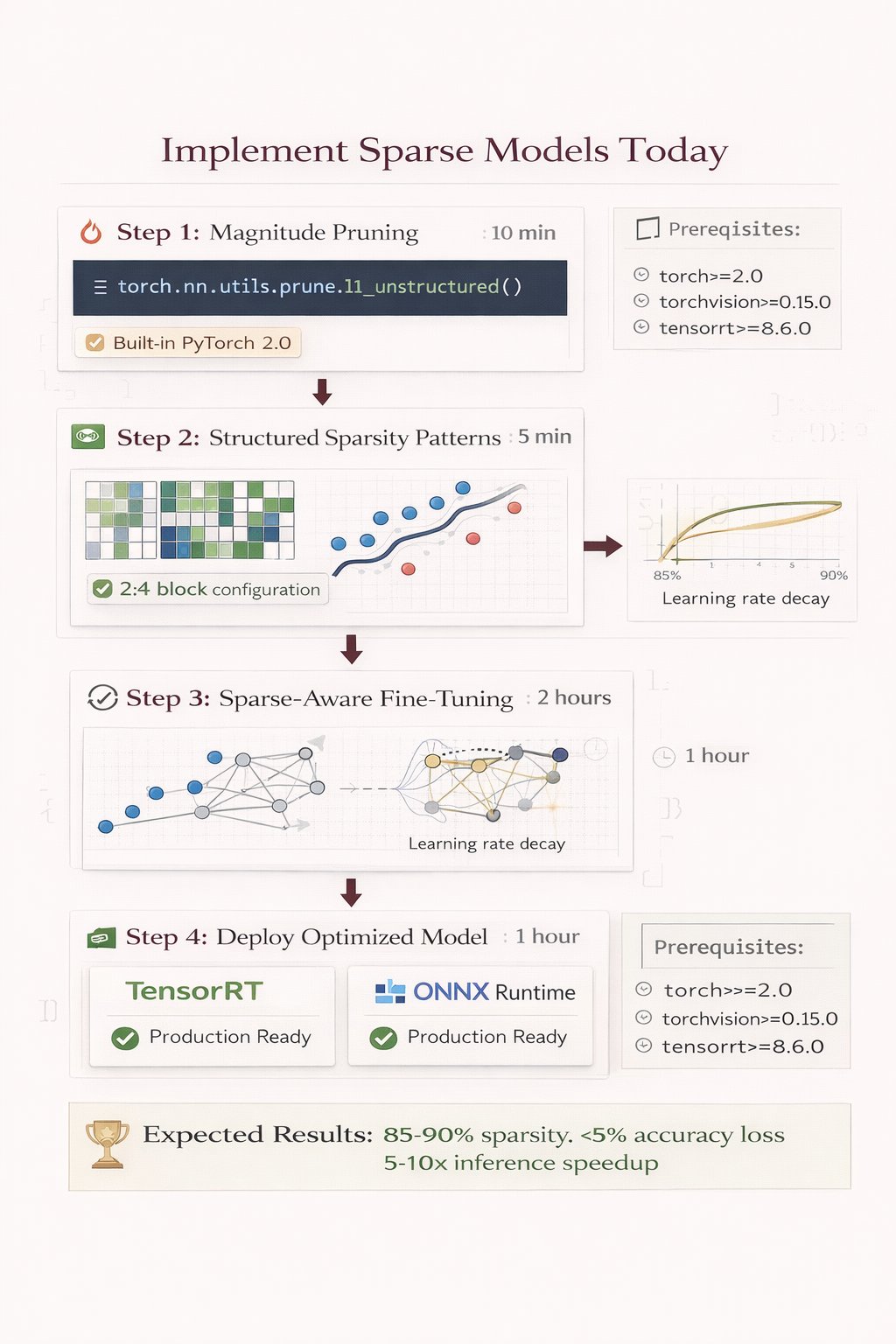
How to implement this today: 1. Use PyTorch's torch.nn.utils.prune for magnitude pruning
2. Apply 2:4 structured patterns for GPU acceleration
3. Fine-tune with sparse-aware training
4. Deploy with TensorRT or ONNX Runtime The infrastructure exists. Most teams just don't know