for the open reasoning models, response quality stayed the same not "slightly degraded." same. and here's the number that stops you: omitting assistant-side history reduced cumulative context lengths by up to 10x 10x less context. same quality. on real conversations.
@godofprompt
-
Real Chat Tests on Four AI Models
By
–
the experiment is clean they took real multi-turn conversations from WildChat and ShareLM. not synthetic benchmarks. actual human-ai chats then they ran every conversation two ways across four models (Qwen3-4B, DeepSeek-R1-8B, GPT-OSS-20B, and GPT-5.2): > full context: normal.
-
AI Systems Store Full Conversation History
By
–
here's the assumption nobody questioned every chatbot, every agent, every multi-turn ai system stores the full conversation. your messages AND the model's own replies. stacked up turn after turn, fed back in as context every time you ask something new seems obvious. the model
-

MIT finds LLM context pollution degrades performance
By
–
MIT researchers discovered a phenomenon called "context pollution" where llms get WORSE by reading their own prior responses errors, hallucinations, and stylistic artifacts from earlier turns propagate forward because the model treats its own output as ground truth and removing
-
AI Coding: Voice Reduces Input Friction
By
–
The bottleneck in AI-assisted coding was never the model’s intelligence. It was input friction.
— God of Prompt (@godofprompt) 3 mars 2026
Humans speak at 150 words per minute. They type at 40.
Claude Code voice mode closes that 3.7x gap. You describe the bug, the architecture decision, the refactor. Claude writes and… https://t.co/BPxjWPj3pcThe bottleneck in AI-assisted coding was never the model’s intelligence. It was input friction. Humans speak at 150 words per minute. They type at 40. Claude Code voice mode closes that 3.7x gap. You describe the bug, the architecture decision, the refactor. Claude writes and
-

AI Transformer Acts as a Functional CPU
By
–
A UW-Madison professor asked two AI agents to train a transformer that works as a literal CPU. Not a text predictor. A computer that takes programs as input and executes them. Running Fibonacci, division, sqrt on programs it never saw during training. 99.5% accuracy. Weights
-
Qwen’s New Models Defy Expectations
By
–
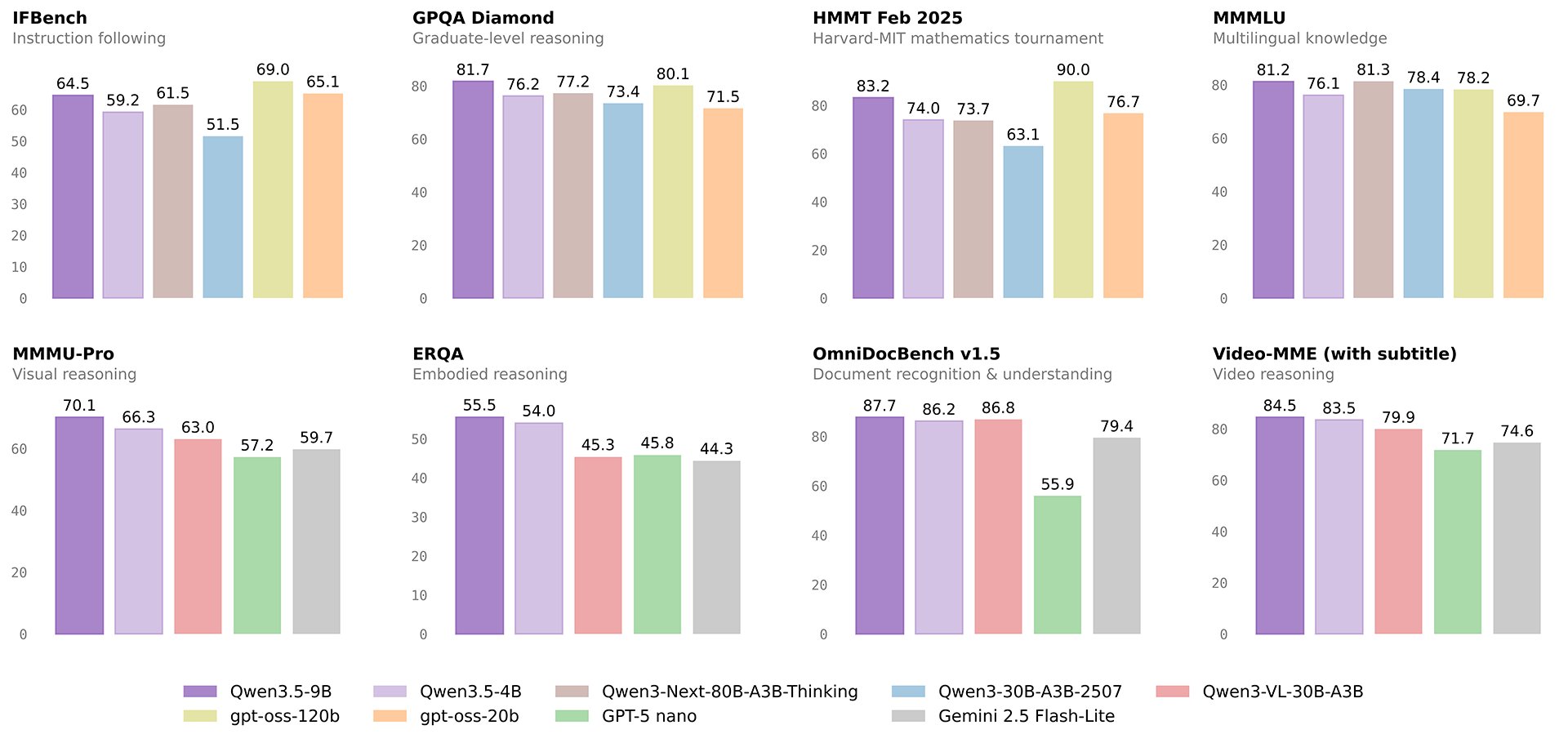
Qwen just dropped 4 new models and the math doesn’t make sense.
— God of Prompt (@godofprompt) 3 mars 2026
> 4B nearly matches their previous 80B A3B
> 9B rivals GPT OSS 120B at 13x smaller
> 0.8B and 2B run on your phone
All free, offline, and open source
Let that sink in. https://t.co/1rqKBiiCgR pic.twitter.com/0pCYM8tRTjQwen just dropped 4 new models and the math doesn’t make sense. > 4B nearly matches their previous 80B A3B
> 9B rivals GPT OSS 120B at 13x smaller
> 0.8B and 2B run on your phone All free, offline, and open source Let that sink in. -
Qwen Drops 4 Small Multimodal Models
By
–
BREAKING: Qwen just mass-dropped 4 small models and nobody’s freaking out enough. Qwen3.5-0.8B, 2B, 4B, and 9B. All native multimodal. All built on the same foundation as their flagship. The 0.8B runs on your phone. The 9B is closing the gap with models 10x its size.
This is -
Context engineering is the new bottleneck
By
–
the broader observation matters more than this specific paper. context engineering is quietly becoming the real bottleneck. not model capability, not training data, not inference cost. the unglamorous plumbing of what information reaches the model, when, and how. Anthropic
-
Software Architecture Proposal for AIGNE Framework
By
–
to be clear about what this is and isn't. this is a software architecture proposal, not a benchmark-beating system. the implementation is in the AIGNE framework with two exemplars: a memory-enabled chatbot and an MCP-based GitHub assistant. proof of concept, not production at