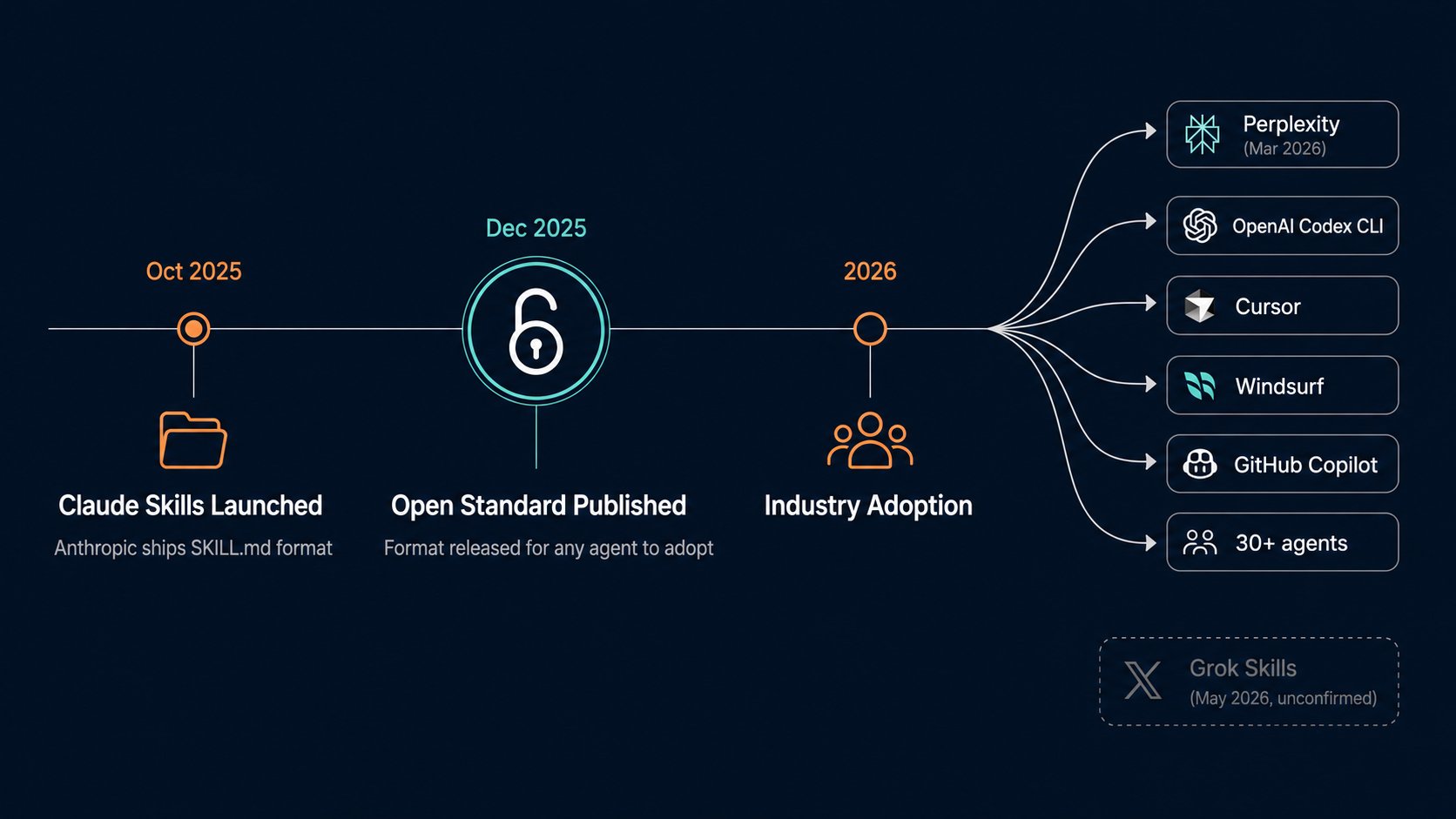
Within months, the adoption list grew: → Perplexity adopted the format for Computer Skills (March 2026)
→ OpenAI adopted it for Codex CLI
→ Cursor adopted it
→ Windsurf adopted it
→ GitHub Copilot adopted it 30+ agents now support the same SKILL. md format. Anthropic
@godofprompt
-
Industry-wide adoption of the SKILL.md format for AI agents
By
–
-
Anthropic Introduces Claude Skills and Open Agent Standard
By
–
October 2025: Anthropic launches Claude Skills. A folder with a SKILL .md file, YAML frontmatter, optional scripts. Claude auto-loads them based on relevance. No manual trigger needed. December 2025: Anthropic publishes the format as an open standard. Any agent can adopt it.
-
Comparative Analysis of ‘Skills’ Features in Claude, Perplexity, and Grok
By
–
Three companies launched a feature called "Skills" in the last 8 months. Claude. Perplexity. Grok. Same name. Completely different products. And one detail most people missed: Anthropic didn't just build Skills first. They open-sourced the standard that the other two are now
-
Automated 4-phase reality check workflow for Claude
By
–
Now every time you ask Claude for a reality check, it runs the full 4-phase analysis automatically. No re-pasting. No setup. Just ask and it delivers. Follow @godofprompt for more prompts like this.
-
Clear communication as the foundation of effective prompt engineering
By
–
Prompt engineering is just communication with a specific audience. The "best prompt template" won't fix unclear thinking. The "perfect framework" won't fix vague instructions. Learn to communicate clearly, and every model gets better.
-
Understanding Model-Specific Prompt Engineering and Audience Analysis
By
–
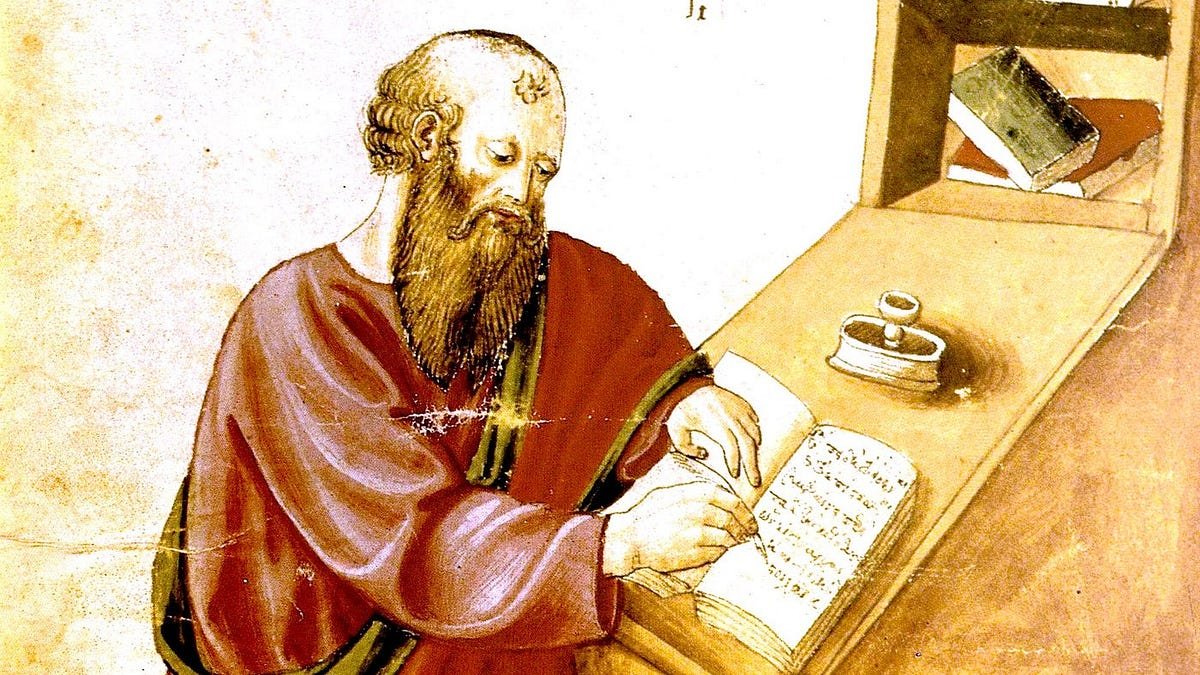
Theory 3: Audience Analysis (Aristotle to today) The oldest communication principle: know who you're talking to. In prompting, your "audience" is the model. And every model processes differently. Claude reads system prompts differently than ChatGPT. Gemini handles long context
-

Humanoid robot outlasts human in package-sorting endurance test
By
–
A human just barely beat a humanoid robot at sorting packages. 12,924 vs. 12,732 over 10 hours. The human's forearm is "basically broken." The robot is still going. 131,000 packages. 106 hours. No breaks. The scoreboard tells one story. The endurance tells another.
-
Analysis of LLM failure modes in reasoning and token prediction
By
–
The strawberry test. The "how many R's" test. The car wash riddle. Same failure mode every time. AI predicts the most probable answer, not the correct one. When probability matches reality, it looks like intelligence. When it doesn't, it looks like confidence without
-
Understanding LLM Hallucinations and Pattern Matching
By
–
This is what a hallucination actually looks like in practice. Not random nonsense. A confident, structured answer that happens to be wrong. The model pattern-matched to the most likely answer instead of the literal one. That's exactly what it does with your prompts too.
-
ChatGPT fails a visual riddle about hidden horses
By
–
The image shows 4 labeled horses. ChatGPT confidently identified a hidden 5th horse in the center where the bodies overlap. Detailed. Well-reasoned. Visually plausible. And wrong. The real 5th horse is the word "HORSE" in the title itself. Four drawn. One written. Five total.