Deep learning hit a wall. Neurosymbolic AI rescued it.
@garymarcus
-
Technical Analysis of Claude Code’s Neurosymbolic Architecture
By
–
Claude Code (still not AGI but biggest advance since GPT-4) is the most neurosymbolic thing I have ever seen in my life. 53 symbolic tools, 500,000 lines of symbolic code, combined with a state-of-the-art LLM. It is categorically *not* a victory for pure LLMs; it’s a
-
House Committee Reviews OpenAI Board Oversight and Conflict Policies
By
–
wow! “It is the [House] Committee’s understanding that the new board of directors at OpenAI tried to address these problems upon your return by creating an “audit committee to review potential conflicts involving directors and officers, including [Sam] Altman,” but OpenAI did not
-
The necessity of world models in AI systems
By
–
might be the other way around. and it’s not totally clear what the term means. but you need a world model for any of these things.
-

Analyzing Incremental Progress and Moats in General Purpose LLMs
By
–
When is the last time a general purpose LLM (putting aside hybrid systems like Claude Code with special purpose symbolic harnesses) last completely blew away all competing prior models? GPT-4 relative to GPT 3.5? That’s what incremental change with no real moat looks like.
-
The Economic Gamble of AI Compute Infrastructure
By
–
Compute is scarce and has to be bought years in advance, before companies know whether revenue will ever catch up.
— Gary Marcus (@GaryMarcus) 11 mai 2026
That is exactly the nature of the largest gamble in history.
Heaven help the global economy if it’s wrong. https://t.co/CqM7vcac34Compute is scarce and has to be bought years in advance, before companies know whether revenue will ever catch up. That is exactly the nature of the largest gamble in history. Heaven help the global economy if it’s wrong.
-
Evaluating the Economic Potential of Generative AI
By
–
Which has better odds?
— Gary Marcus (@GaryMarcus) 11 mai 2026
Generative AI earning $1.6 trillion/year or the roulette wheel landing on zero? https://t.co/LYHe0SVtvi pic.twitter.com/52cTL3iSHMWhich has better odds? Generative AI earning $1.6 trillion/year or the roulette wheel landing on zero?
-
Can unreliable AI systems achieve AGI-level economic output?
By
–
that’s actually part of the question – can you make a couple trillion with something unreliable/something short of AGI
-
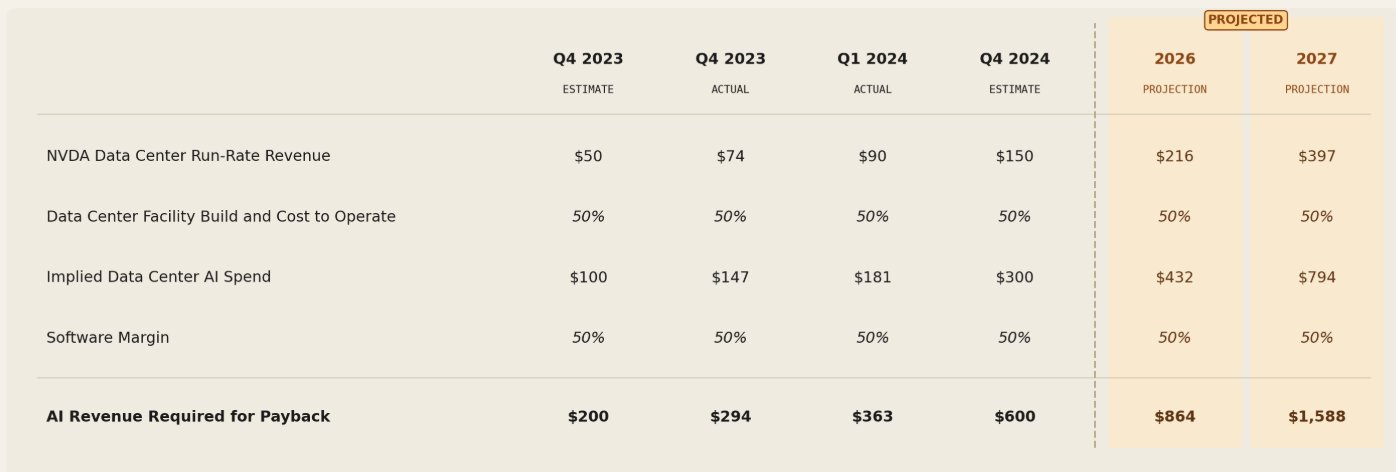
Estimating the Annual Revenue Required for AI Sustainability
By
–
One estimate of how much annual revenue AI needs to “make sense”: 1.6 trillion. That’s four times what Google made in its best year. (total revenue so far is perhaps on order of 100 billion.)