The Inverse Care Law. The people who need medical care the most tend to get the least access.
It will take deliberate and extensive efforts for medical AI not to exacerbate health inequities, by @ejosipcar We've seen some examples where AI reduced inequities and need to build
@erictopol
-
Inverse Care Law: Medical AI risks exacerbating health inequities
By
–
-
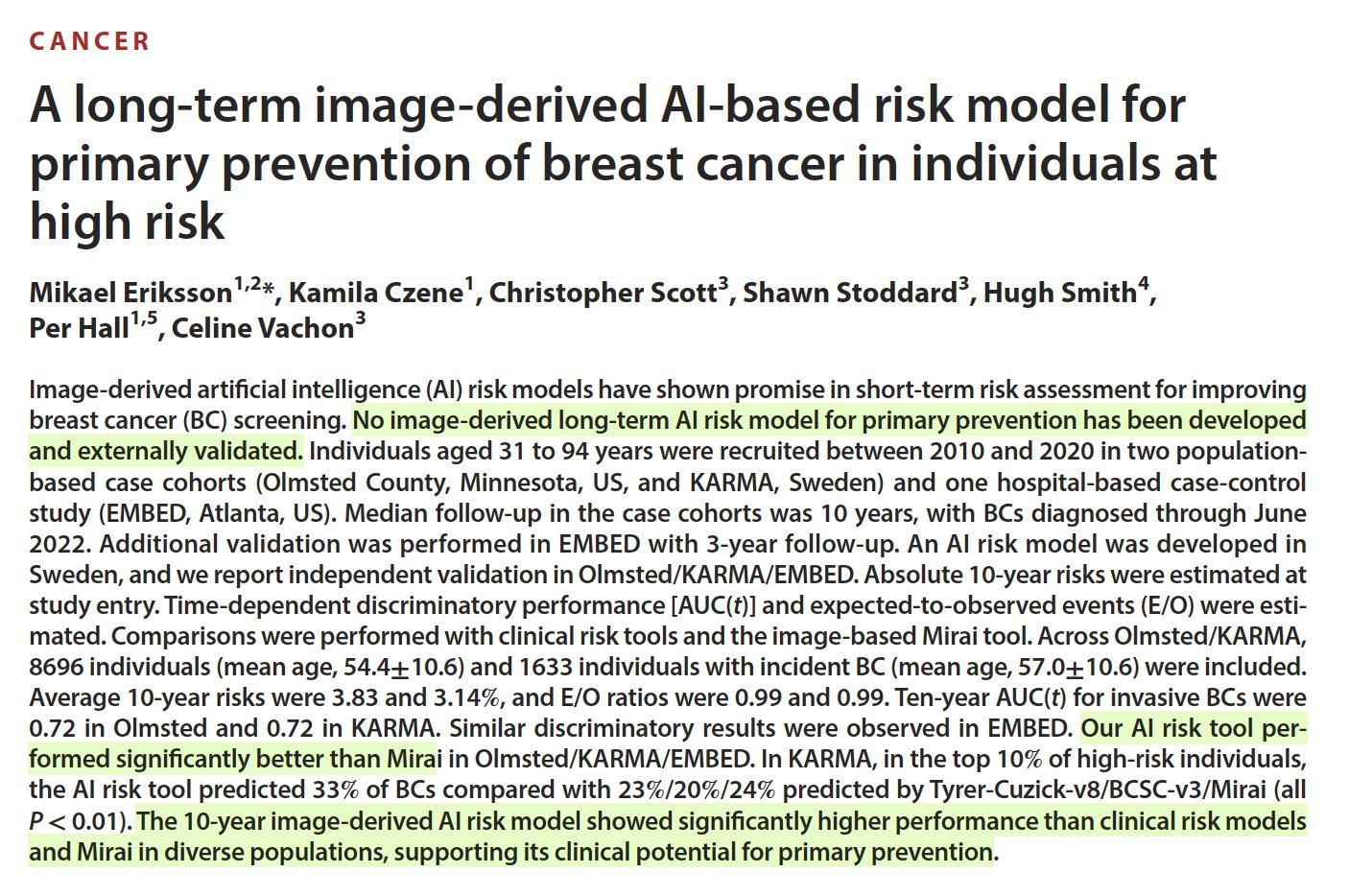
AI-Driven Medical Scan Analysis for Disease Prevention
By
–
Using AI of a medical scan to achieve primary prevention of disease over the next decade in people at high-risk @ScienceTM https://
science.org/doi/10.1126/sc
itranslmed.ady7414
… -
Nature Editorial on the Role and Impact of AI Scientists
By
–
Important editorial @Nature on the new "AI-scientist" papers
"AI scientists can and should empower human
researchers. They cannot and should not replace them." https://
nature.com/articles/d4158
6-026-01551-3
… -
AI MouseMapper: Whole-body 3D model assesses cell-level perturbations across systems
By
–
An AI foundation whole-body 3D model that assesses perturbations (such as obesity) across multiple systems (such as immune, neural) at the cell level. This is MouseMapper. Imagine HumanMapper someday @Nature @erturklab https://t.co/jsg3VMzOqg pic.twitter.com/tktuINis2W
— Eric Topol (@EricTopol) 20 mai 2026An AI foundation whole-body 3D model that assesses perturbations (such as obesity) across multiple systems (such as immune, neural) at the cell level. This is MouseMapper. Imagine HumanMapper someday @Nature @erturklab https://
nature.com/articles/s4158
6-026-10535-2
… -
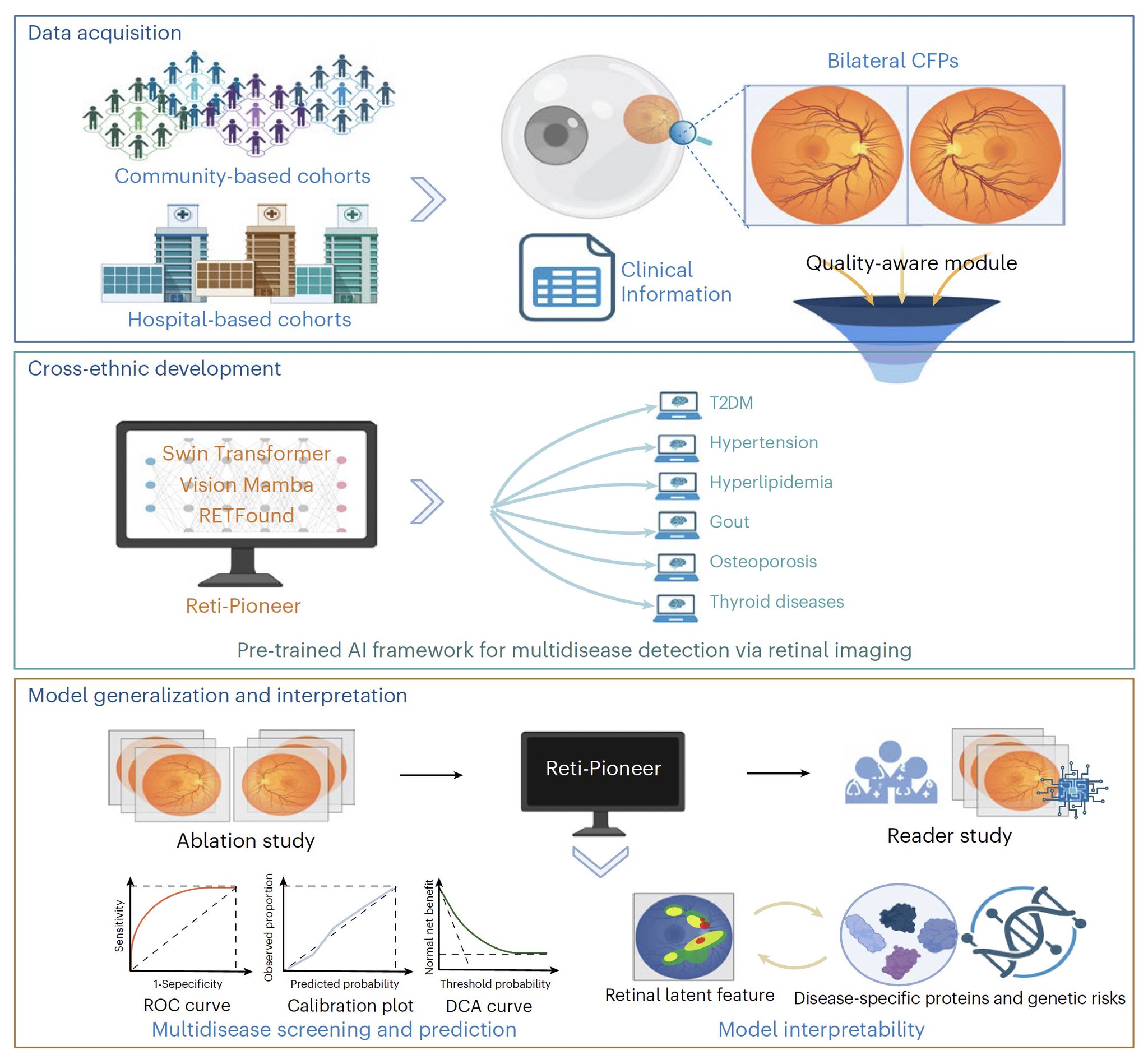
AI tool enables rapid screening for multiple systemic diseases using retinal photos
By
–
“The [AI] tool presented here will enable rapid screening for multiple systemic diseases using retinal photographs, and it is a step forward in the evolution of oculomics from experimental research to real-world clinical practice.” —Editorial Team, @NatureMedicine
-
Study finds modern AI models achieve 50% pass rate on Turing test
By
–
A paper published @PNASNews today: "three current AI systems achieve a pass rate of at least 50% in a standard Turing test"
The systems were GPT-4o, LLaMa-3.1, and GPT-4.5
All over 1-2 years old. -

Impact and risks of LLM-driven scientific productivity
By
–
At the same time concerns about uncritical adoption, need for guard rails “There is growing evidence that LLM-driven increases in scientific productivity often come at a cost.”
https://
nature.com/articles/d4158
6-026-01557-x
… -
Multi-agent AI systems accelerate biomedical discovery and drug design
By
–
A big day for multi-agent AI to accelerate biomedical discovery, hypothesis generation, designing experiments with proof points of new candidate drugs (cancer, fibrosis, macular degeneration, antimicrobial resistance, and more)
2 @Nature reports @GoogleDeepMind @FutureHouseSF -

ChatCPR AI Outperforms 911 Dispatchers in Simulation Study
By
–
Now there's a ChatCPR that outperforms 911 dispatchers in simulation testing @JAMAInternalMed https://
jamanetwork.com/journals/jamai
nternalmedicine/fullarticle/2848650
… -
AI Model Predicts Alzheimer’s Outcomes from MRI and Demographics
By
–
A single MRI + demographics + AI predicts current and future cognitive scores and outcomes for Alzheimer’s disease