AI for colonoscopy and mammography are the best proven successes of medical AI, through randomized trials and real-world studies, yet they are not being used. But what is widely adapted is the unproven stuff. https://
erictopol.substack.com/p/the-paradox-
of-medical-ai-implementation
…
@erictopol
-
Proven AI for Colonoscopy and Mammography Unused
By
–
-
AI diagnosis needs prospective rigorous assessment for real-world tasks
By
–
Yes. Widely relying on this for patient diagnosis and management w/o prospective, rigorous assessment for real world tasks until now.
As the authors point out: "scale, alignment and cross-domain reasoning may outweigh domain-specific
tuning as determinants of medical competency -

65% of US physicians use OpenEvidence with 27 million prompts in April
By
–
>65% of US physicians use OpenEvidence, with 27 million prompts in April https://
nbcnews.com/tech/tech-news
/openevidence-ai-doctor-medical-physician-login-app-what-npi-uptodate-rcna341064
… -

General AI models outperform specialized medical sources in study
By
–
For medical information, general AI frontier models (Google, OpenAI, Anthropic) outperformed specialized @EvidenceOpen and @UpToDate as assessed by 12 US clinicians, randomized and blinded to which model and extensive testing/benchmarks. This was not anticipated.
-

AI reduces brain tumor diagnosis from 12 days to 12 minutes
By
–
Reducing brain tumor diagnosis from 12 days to 12 minutes with AI.
Predicting methylation pattern from path slides.
Outperformed 5 neuropathologists @NatureCancer @MoritzGerstung https://
nature.com/articles/s4301
8-026-01186-3
… -
AI Detects Breast Cancer Risk Years Before from Normal Mammograms
By
–
AI of radiologist read as normal mammograms shown to detect high-risk of breast cancer out several years
"Artificial intelligence scores from sequential
mammograms in individuals diagnosed with breast cancer showed elevated scores up to 10 years before diagnosis"
a retrospective -
AI-detected artery inflammation dramatically increases cardiac mortality risk
By
–
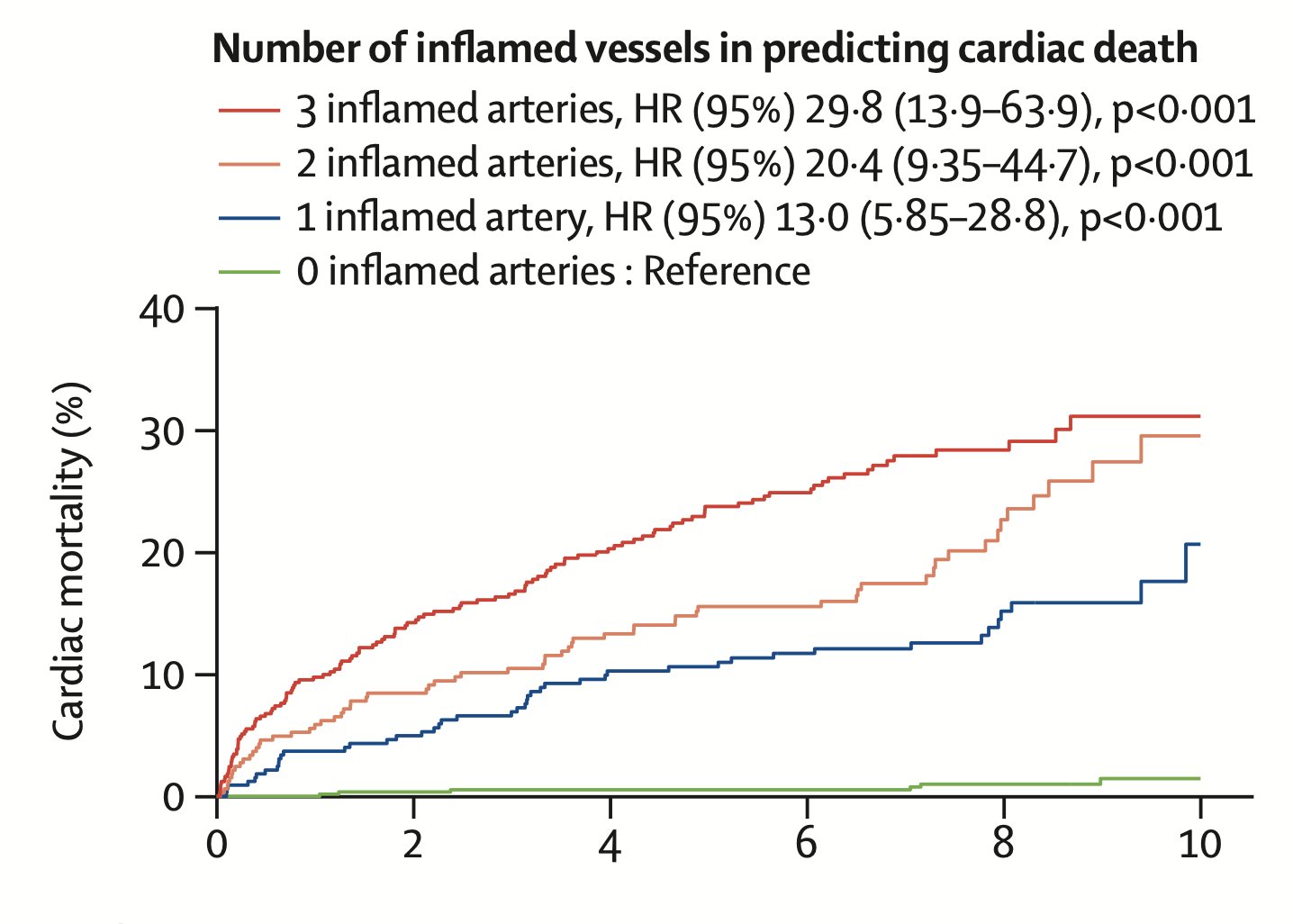
The study cited in the article that I considered a wake-up call found a 13-fold risk of cardiac mortality with 1 inflamed artery, which rose to nearly 30-fold when all 3 arteries were inflamed, as determined by AI of non-invasive CT angio imaging https://
thelancet.com/article/S0140-
6736(24)00596-8/fulltext
… -
Annual AI copilot screening saves $1.32M and gains 14.73 QALYs per 100k
By
–
A cost-effectiveness assessment of using AI in disease screening (modeling)
"Implementing an annual ‘copilot’ strategy in all ages would save US$1.32 million while gaining 14.73 quality-adjusted life years over a lifetime [per 100,000 people]"
"Our findings demonstrate the -
Machine learning identifies 14-protein signature predicting lung cancer risk and therapy response.
By
–
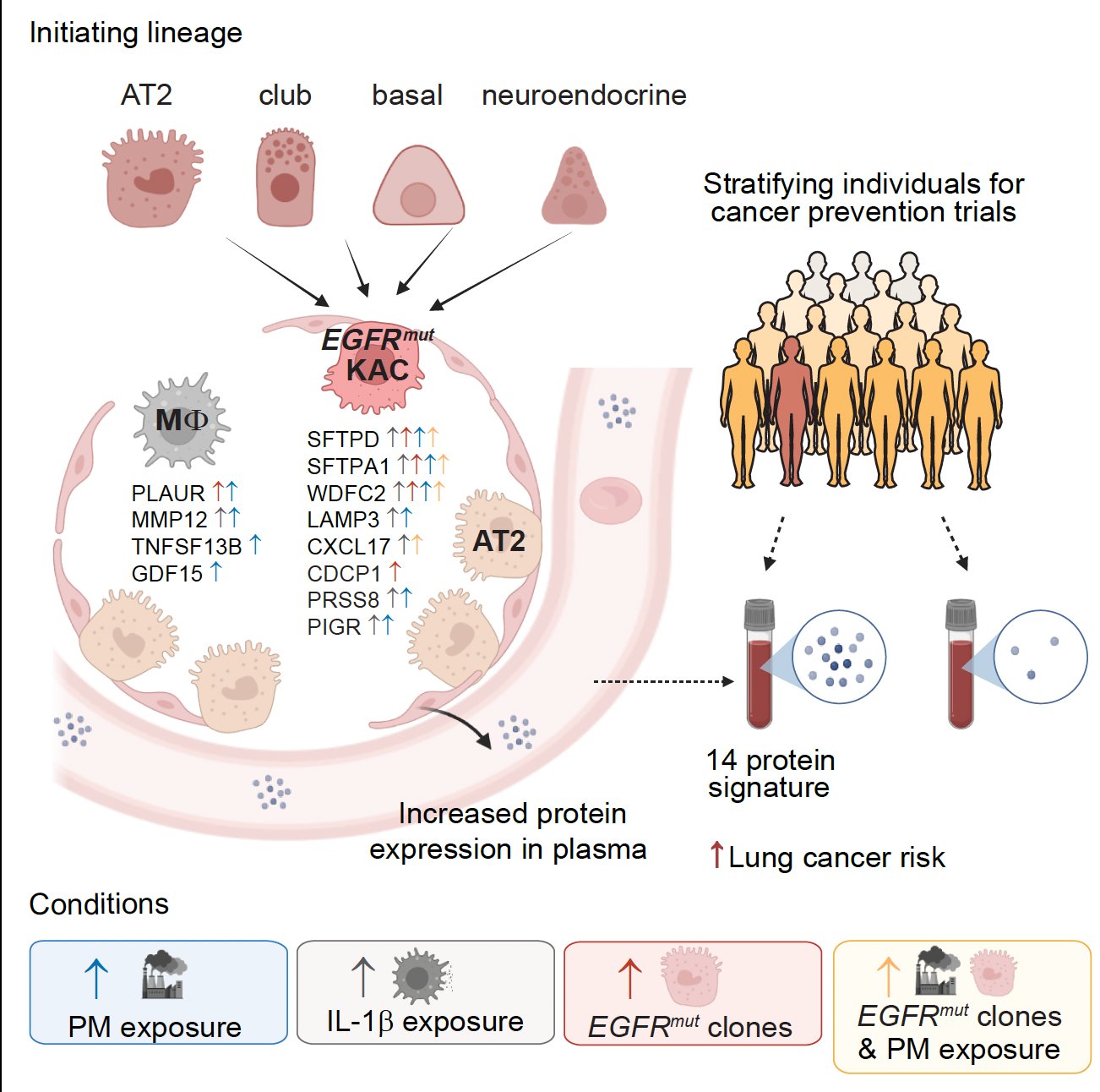
A very impressive study for how we could prevent lung cancer more than 5 years before it is diagnosed. Using machine learning, discovery of a 14-plasma protein signature of risk that predicts responsiveness to an antibody therapy to interleukin, IL-1β
Validated across 8 cohorts -
Administration working on pathway to regulate independent AI doctors
By
–
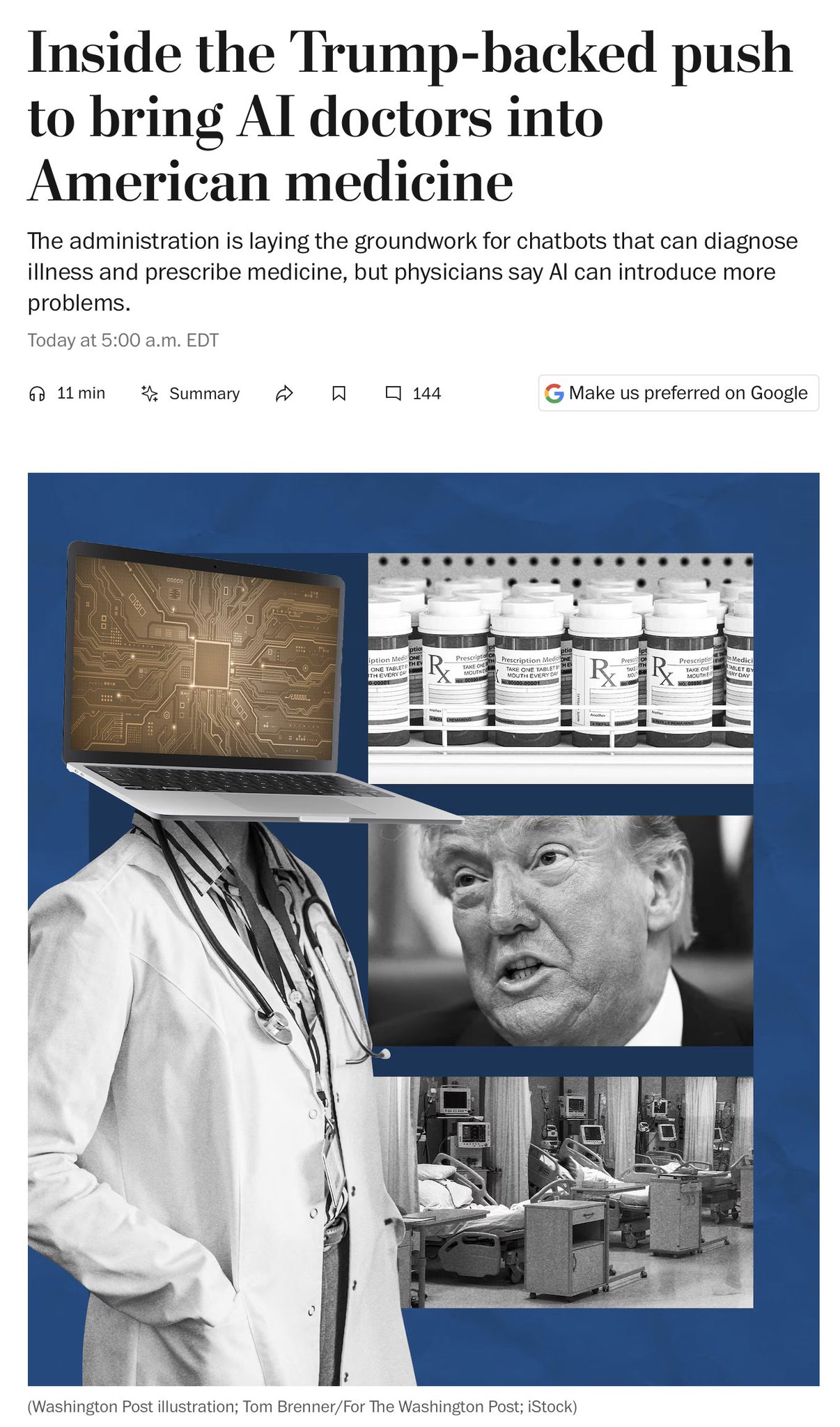
"Administration figures are working a pathway to regulate independent AI doctors." by @lizzadwoskin gift link https://
wapo.st/4x74KaP