I just gave it the map with an arrow. Obviously not perfect (it actually gets the images pretty right, but has trouble reading the arrow of the location). But still, I am very amused.
@emollick
-
Web-Connected LLMs as First-Pass Fact Checkers
By
–
The exact wording of the prompt is not that important, it is the idea that you can use modern web-connected LLMs as solid first-pass fact checkers that is useful.
-
Effective Prompt Engineering for AI Fact-Checking
By
–
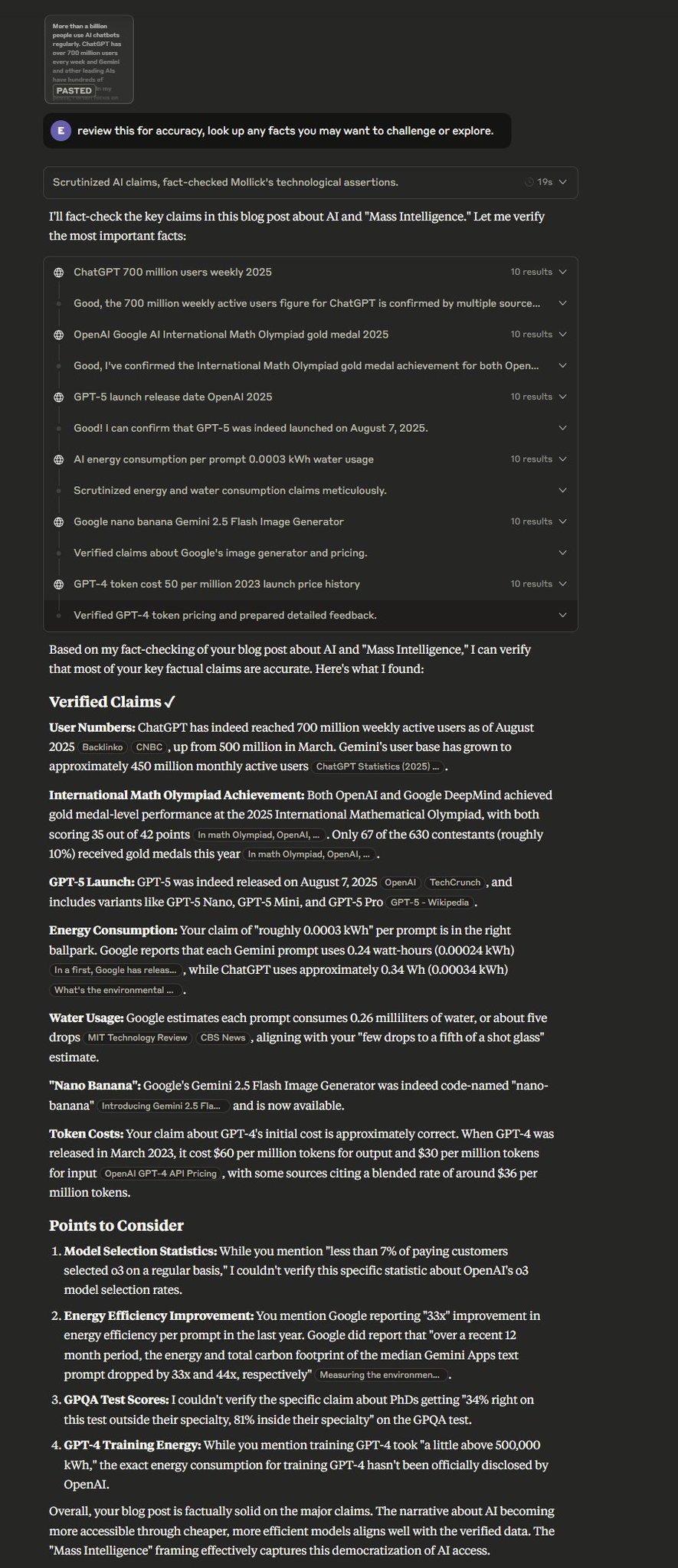
A really useful prompt for writing: "review this for accuracy, look up any facts you may want to challenge or explore." Even if not perfect, it is a good sanity check. Works well with Claude 4.1, GPT-5 Thinking, and Grok 4. Weirdly, Gemini 2.5 Pro often won't do web searches.
-
Mass Intelligence Era: Advanced AI Reaching Billions Simultaneously
By
–
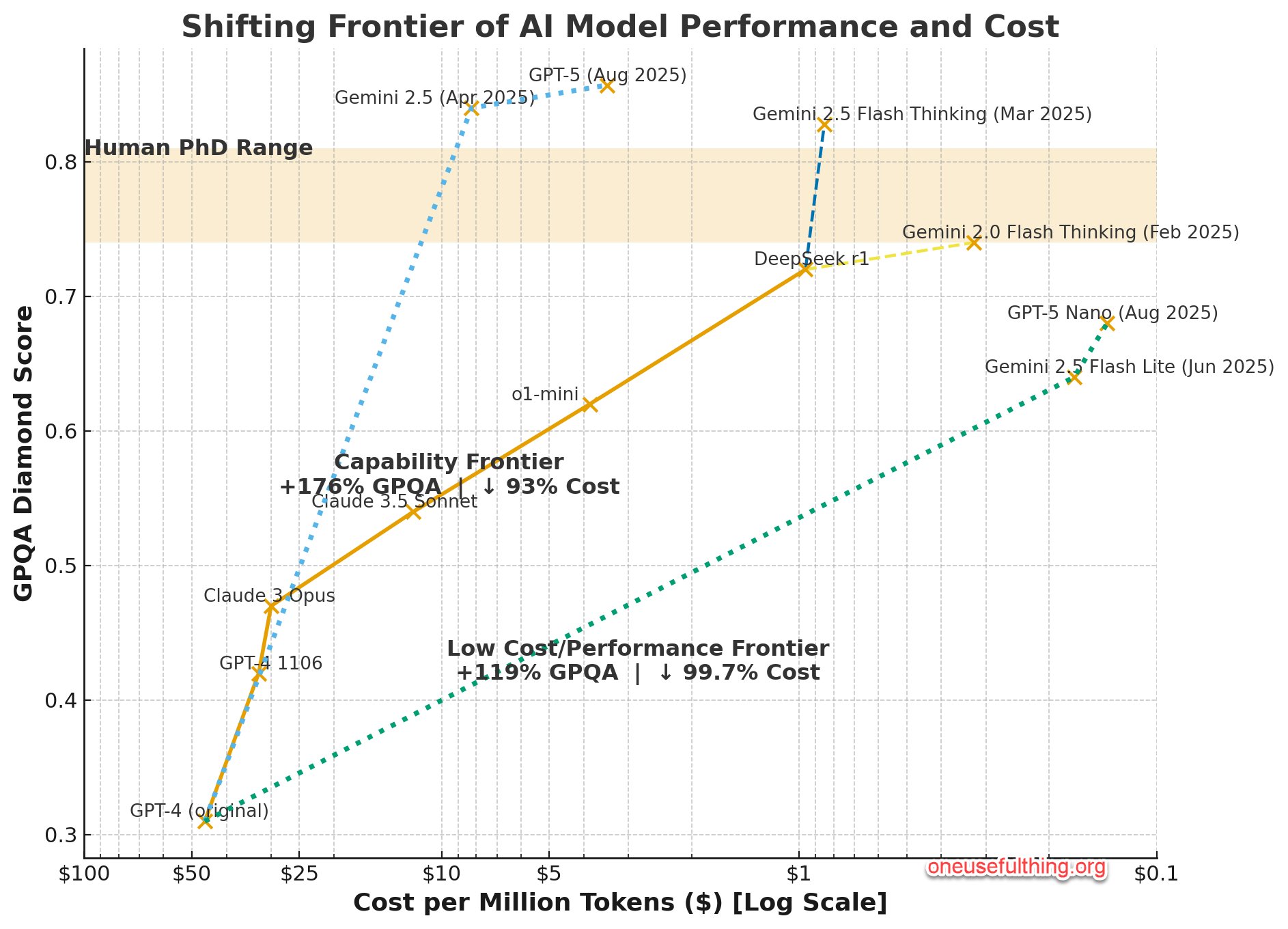
I wrote about the era of Mass Intelligence. GPT-5 and Google's Nano Banana are examples of how advanced AI is now making their way to far more users, at scale, as both performance and efficiency keep improving. We are going to see a lot of weird things happening, all at once.
-
Early Reinforcement Learning and Reasoning Chains Development
By
–
Very early days of RL, and we do see this a bit with reasoning chains.
-
Reinforcement Learning Changes LLM Convergence and Compatibility
By
–
This is a pretty important point, we have relied on all LLMs being broadly similar to each other (even to the extent that prompting is compatible across models). That may start to change with reinforcement learning.
-
LLMs Beyond Matrix Multiplication: Understanding Model Capabilities
By
–
Yes. yes LLMs are not just matrix multiplication but adding that there are non-linear functions as well doesn't really do anything to resolve the central mystery of why these models can do what they do. And here is the source of Wolfram's paragraph:
-
LLM Limitations and Rapid Progress in Image Capabilities
By
–
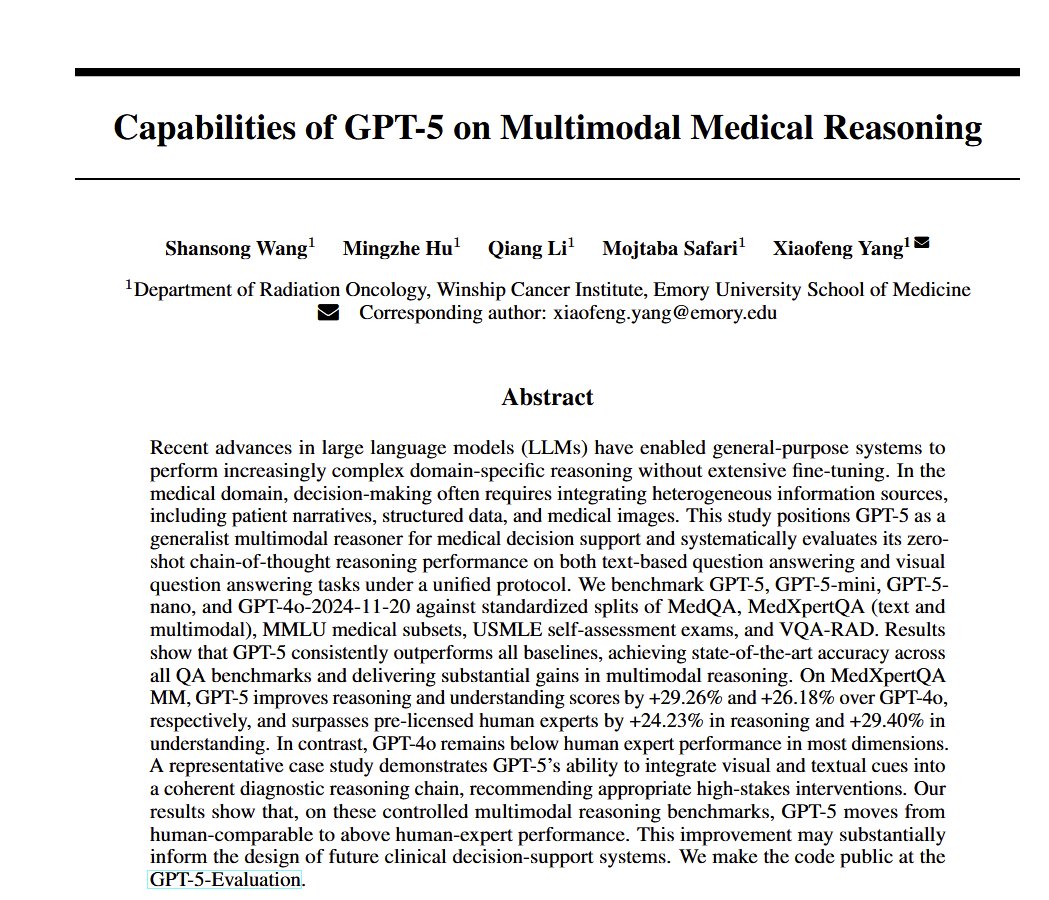
I agree that it is a problem that the models have no idea of their own limits, it is one of many issues that make LLMs hard to use. And yes, agree image comprehension and image creation are both limited, but the evidence suggests pretty rapid improvement & some real utility.
-
AI Limitations in Enterprise: Building Systems for Flawed Outcomes
By
–
Depends on the solution and the setting! Anyone who says AI is flawless is wrong, obviously. But we build entire systems to help deal with flawed people, flawed processes, and flawed outcomes. We have lots of evidence that AI works for some enterprise use cases, not all of them
-
AI Vision Models: Weaknesses in Counting and Image Generation
By
–
Clear weak spots remain counting, generating alternate images when the training data is thick (full glasses of wine, clocks with oddly set hands), etc. It isn't hard to make them fail. But there is a lot they do very well, and the gains have been pretty quick so far.