We are reaching the part of the business cycle where this article seems prophetic. When luck plays a big role in success, the winners are often those who got lucky after taking massive risks. If you learn from them, you learn the wrong lessons. More: https://
open.substack.com/pub/oneusefult
hing/p/when-survivorship-bias-meets-superstitious?utm_source=direct&r=i5f7&utm_campaign=post&utm_medium=web
…
@emollick
-

Survivorship Bias in Business Cycles: Learning Wrong Lessons
By
–
-

Consistent Management: Key to Reducing Workplace Stress
By
–
We can get used to anything at work except inconsistency. Bosses that are sometimes fair, but not always, cause us more stress than ones who are always unfair. Look for good managers "with self-discipline & who think before they act." They are consistent. https://
terry.uga.edu/sites/default/
files/inline-files/Matta_Scott_Colquitt_Koopman__Passantino_2017_AMJ.pdf
… -
Survivorship Bias and Superstition in Startup Learning
By
–
Learning from successful founders & companies often leads us into traps. We pick bad examples and learn the wrong lessons. Worse, even knowing that we make these mistakes doesn't seem to help much. I discuss the research, and some potential solutions: https://
open.substack.com/pub/oneusefult
hing/p/when-survivorship-bias-meets-superstitious?r=i5f7&utm_campaign=post&utm_medium=web
… -
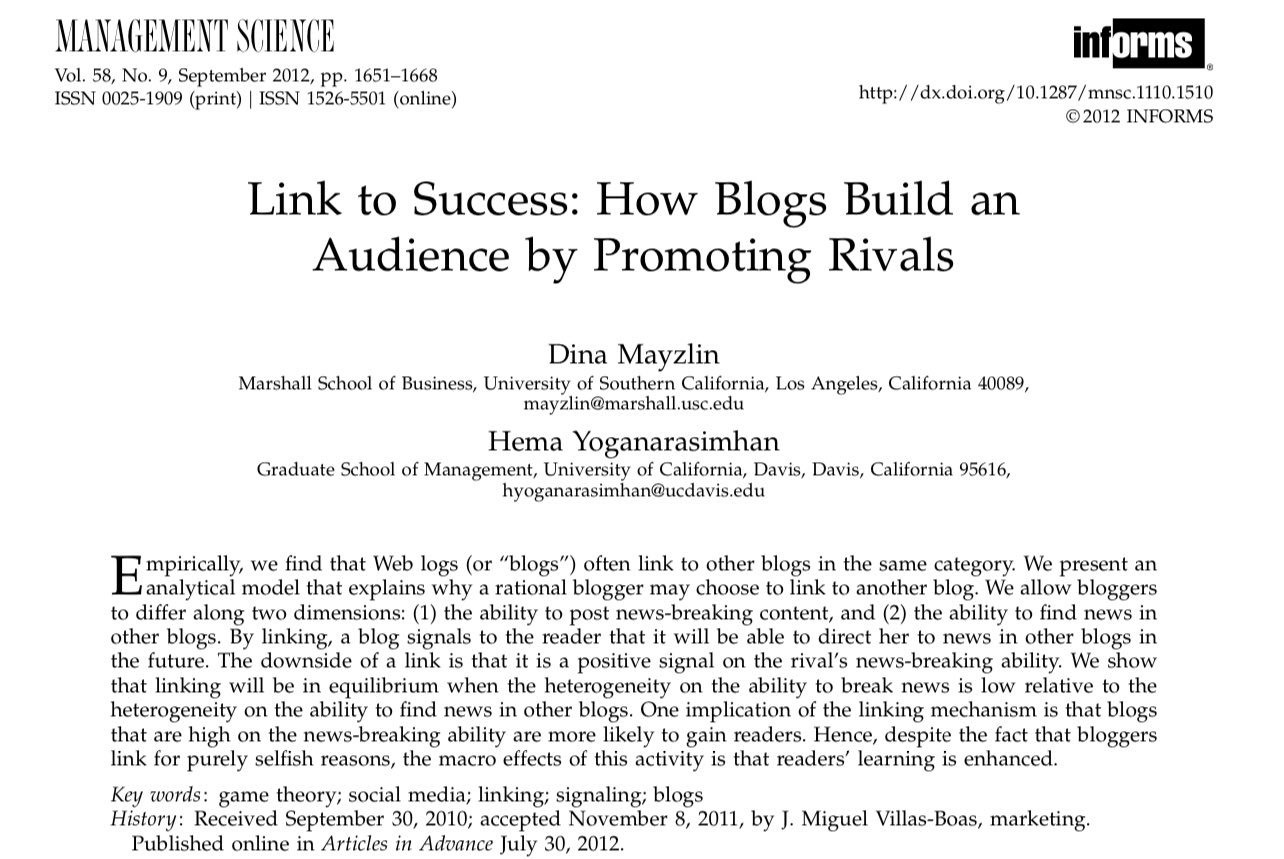
Newsletter strategy: linking competitors signals expertise
By
–
Corporate strategy for newsletter & Substack writers! If you span diverse areas you should link a lot to competitor newsletters (you seem like a more insightful guide), if you are in an area where things change fast, like sports, don’t link to others (you’ll seem to break news).
-

Sarcasm Detection Limits: Why Humans Struggle Online
By
–
The Twitter blue check parody explosion hits humans in a communication weak spot: we can’t tell what is sarcastic in written communication! Even worse, we absolutely think we can, but when tested we are no better than chance. Plus, older people are even worse than younger ones.
-
Understanding Opportunity Cost: Swedish Economists’ Key Insight
By
–
A survey of every Swedish economist found the economics concept that would benefit the most people to understand is "opportunity cost." It is what you give up when you make a choice. Not just what you don’t buy, but also what you could have done by saving for later. Relevant!
-
Verified Accounts Identity Stakes Fact Checking Online Trust
By
–
Note that I said “triaged.” I wasn’t believing everything someone with a blue check wrote, obviously. But verified accounts had reputations & real identities that gave them stakes. And it made checking identities easier. And thus I could check their facts & biases more easily.
-
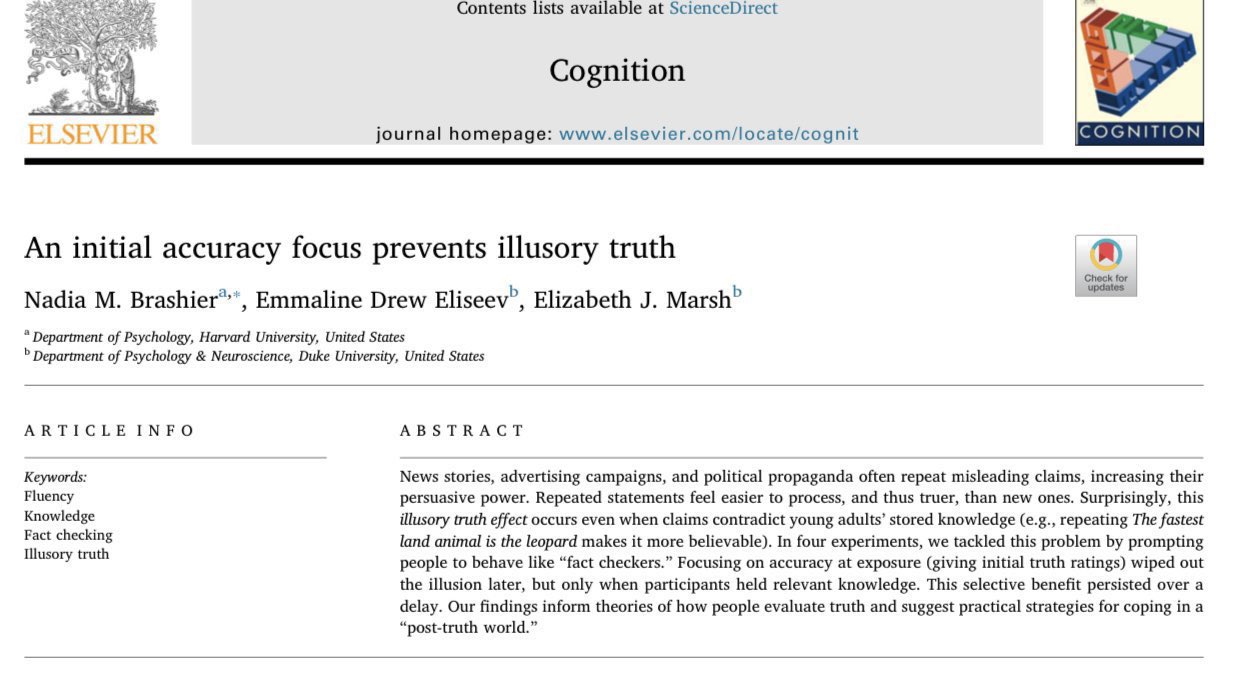
Twitter Blue Checks Removed: Impact on Misinformation Detection
By
–
As a Twitter user, dealing with the end of using blue check marks as a source of information is weird. They were a major way that I unconsciously triaged the credibility of posts. I wonder if this will hurt our misinformation detection is subtle ways, beyond just impersonation.
-
Team Size, Collaboration Costs, and Collective Intelligence
By
–
So I posted to my new Substack about two graphs that should haunt every manager: as team size grows, there are more opportunities for collaboration, but also an increase in slacking & communication costs. The solution? Increase collective intelligence. https://
oneusefulthing.substack.com/p/the-problem-
of-management-in-two?sd=pf
… -
Randomized Controlled Trial Results Methodology Discussion
By
–
I dunno, the paper is a randomized controlled trial, and reports a ton of different results. Given the methodology, I am not seeing why the underlined sections make it a "yawn."