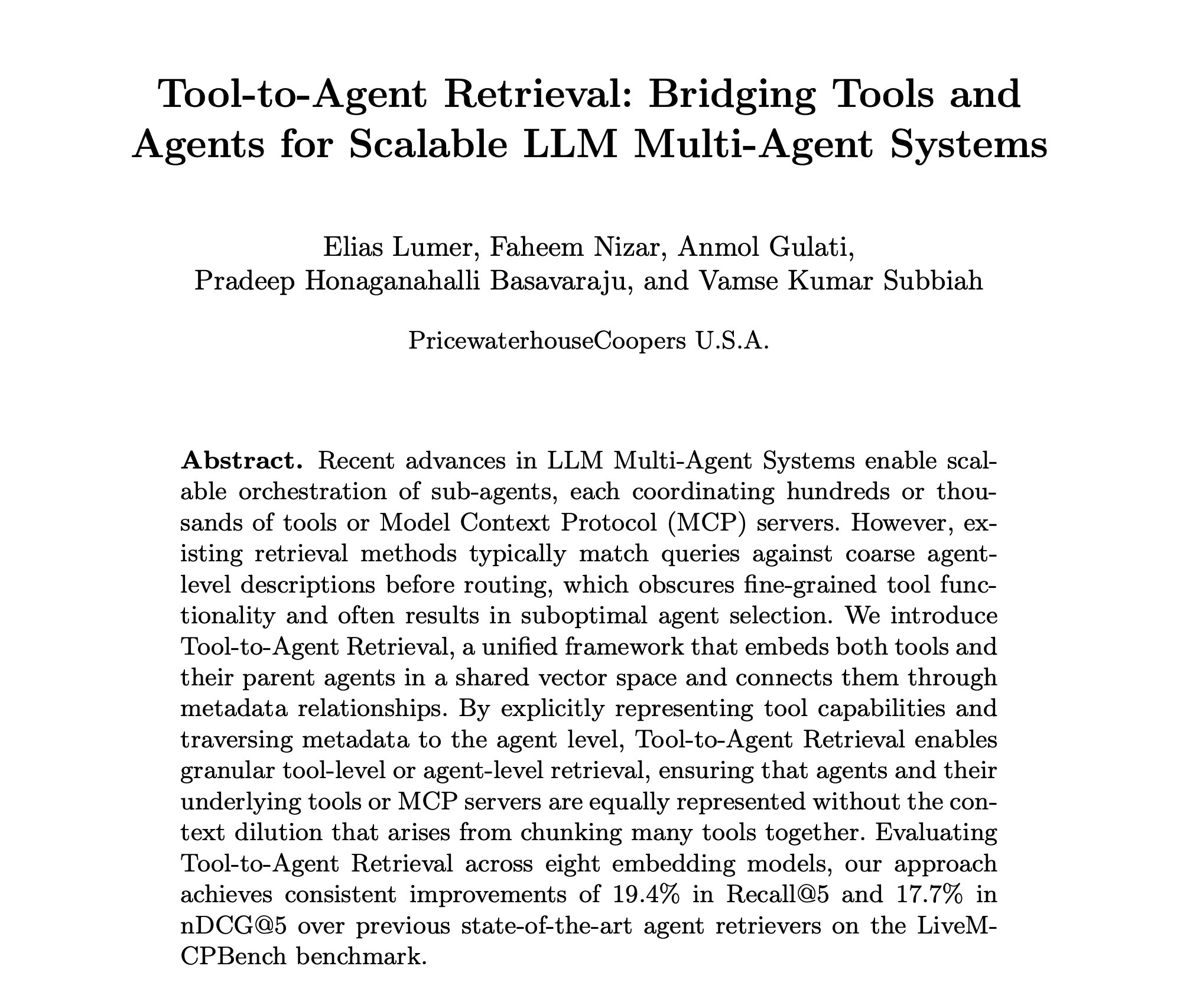
6. Tool-to-Agent Retrieval Introduces a unified retrieval framework that embeds both tools and agents in a shared vector space with metadata relationships, enabling efficient routing in multi-agent systems coordinating hundreds of MCP servers and tools.
@dair_ai
-
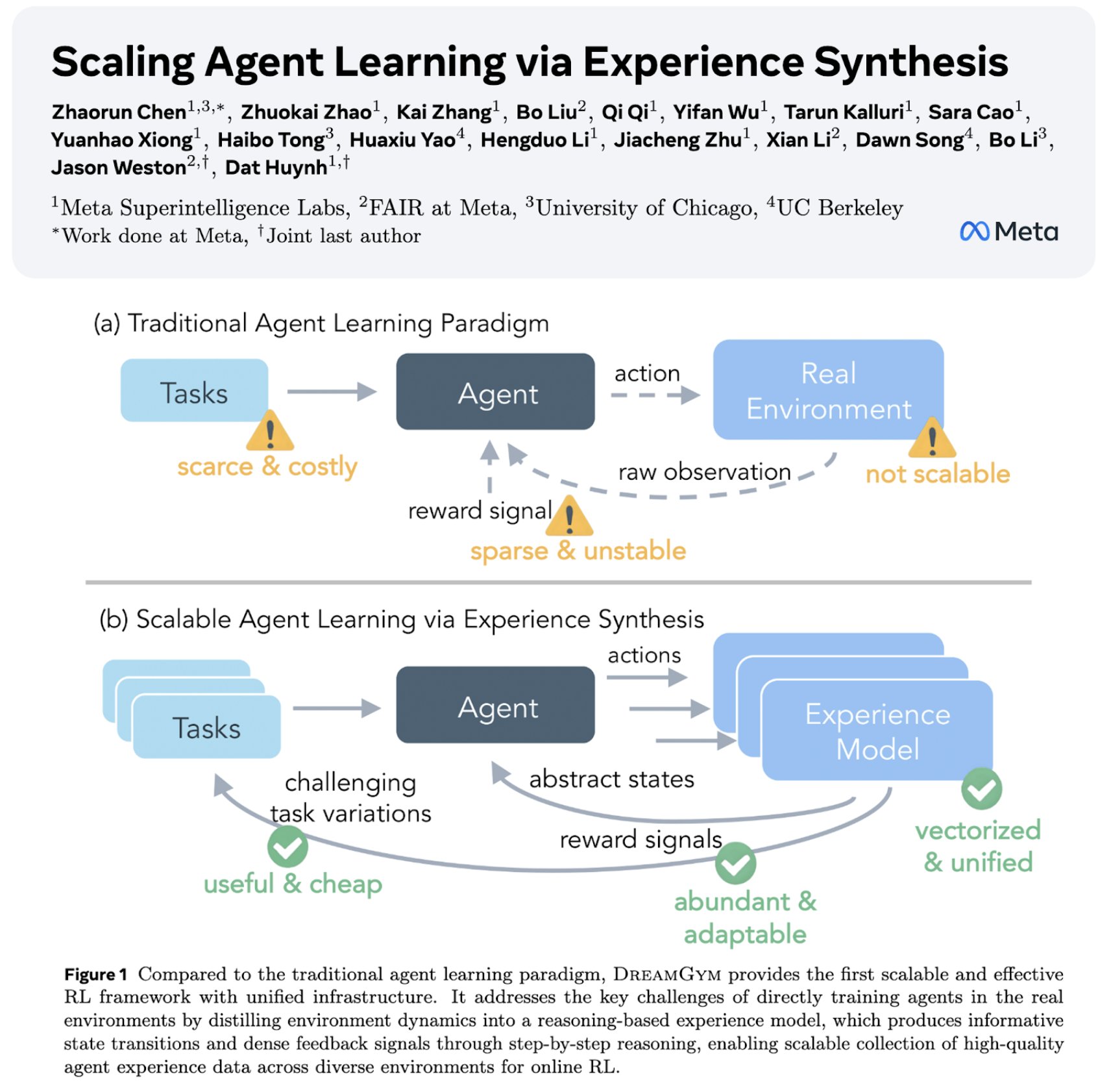
DreamGym: Scaling Agent RL via Experience Synthesis
By
–
3. Scaling Agent RL via Experience Synthesis Meta researchers introduce DreamGym, a unified framework that synthesizes diverse training experiences to enable scalable reinforcement learning for LLM agents without costly real-environment rollouts.
-
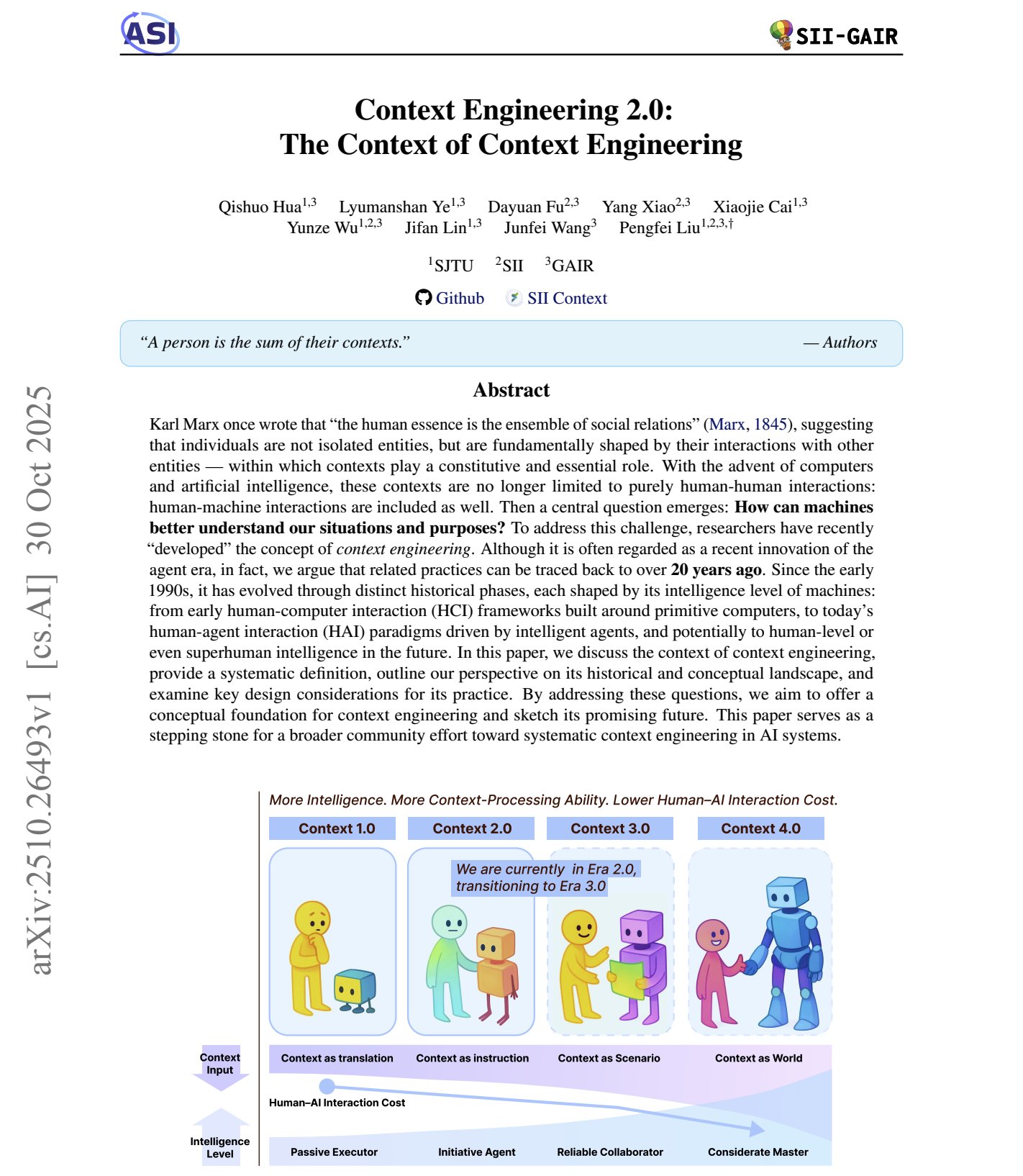
Context Engineering Evolution: From Computing 1.0 to Intelligent Agents
By
–
2. Context Engineering 2.0 Traces the 20+ year evolution of context engineering, reframing it as a fundamental challenge in human-machine communication spanning from primitive computing (Era 1.0) to today’s intelligent agents (Era 2.0) and beyond.
-
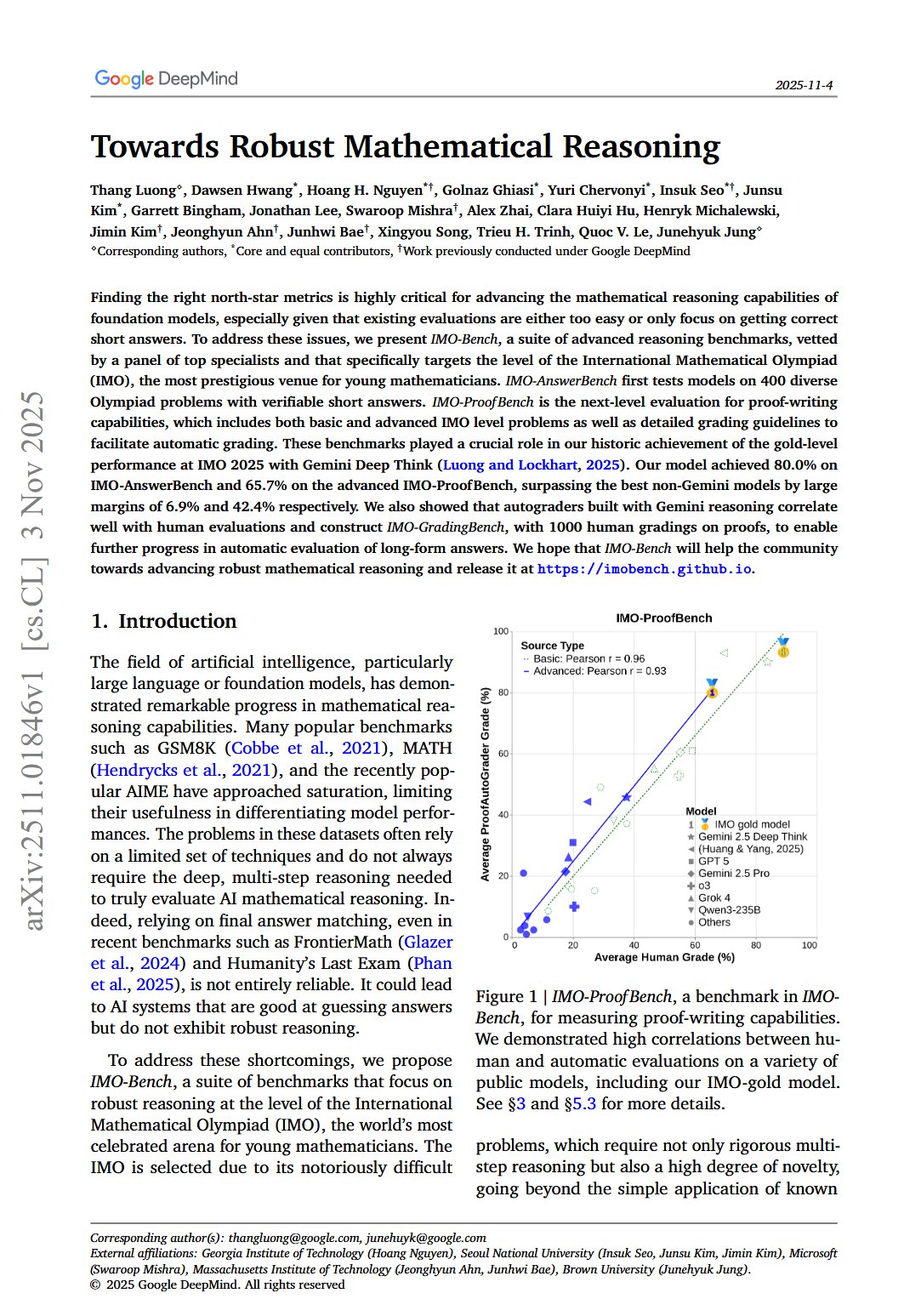
Google DeepMind Introduces IMO-Bench for Mathematical Reasoning
By
–
1. Towards Robust Mathematical Reasoning Google DeepMind introduces IMO-Bench, a comprehensive suite of benchmarks vetted by IMO medalists targeting International Mathematical Olympiad-level reasoning.
-
Top AI Research Papers: Agents, LLMs, and Mathematical Exploration
By
–
Top AI Papers of the Week (Nov 3 – 9): – Tool-to-Agent Retrieval
– Context Engineering 2.0
– Mathematical Exploration at Scale
– Petri Dish Neural Cellular Automata
– Enhancing Long-Term Memory in LLMs
– Diffusion LMs are Super Data Learners
– Towards Robust Mathematical -

Precision-RL: BF16 to FP16 Switch Boosts Convergence
By
–
10. Precision-RL Reveals that simply switching from BF16 to FP16 precision virtually eliminates this mismatch – achieving faster convergence, higher stability, and superior performance across diverse models, frameworks, and algorithms.
-
Kimi Linear: Hybrid Attention Architecture Reduces KV Cache 75%
By
–
9. Kimi Linear Kimi Linear introduces a hybrid linear attention architecture combining Kimi Delta Attention (KDA) with periodic full attention layers at a 3:1 ratio, achieving superior performance over full attention while reducing KV cache by 75% and delivering 6× faster
-
Agent Data Protocol Standardizes LLM Agent Training Datasets
By
–
8. Agent Data Protocol Agent Data Protocol introduces a standardized format to unify fragmented agent training datasets across different tools and interfaces, enabling more efficient fine-tuning of LLM agents.
-
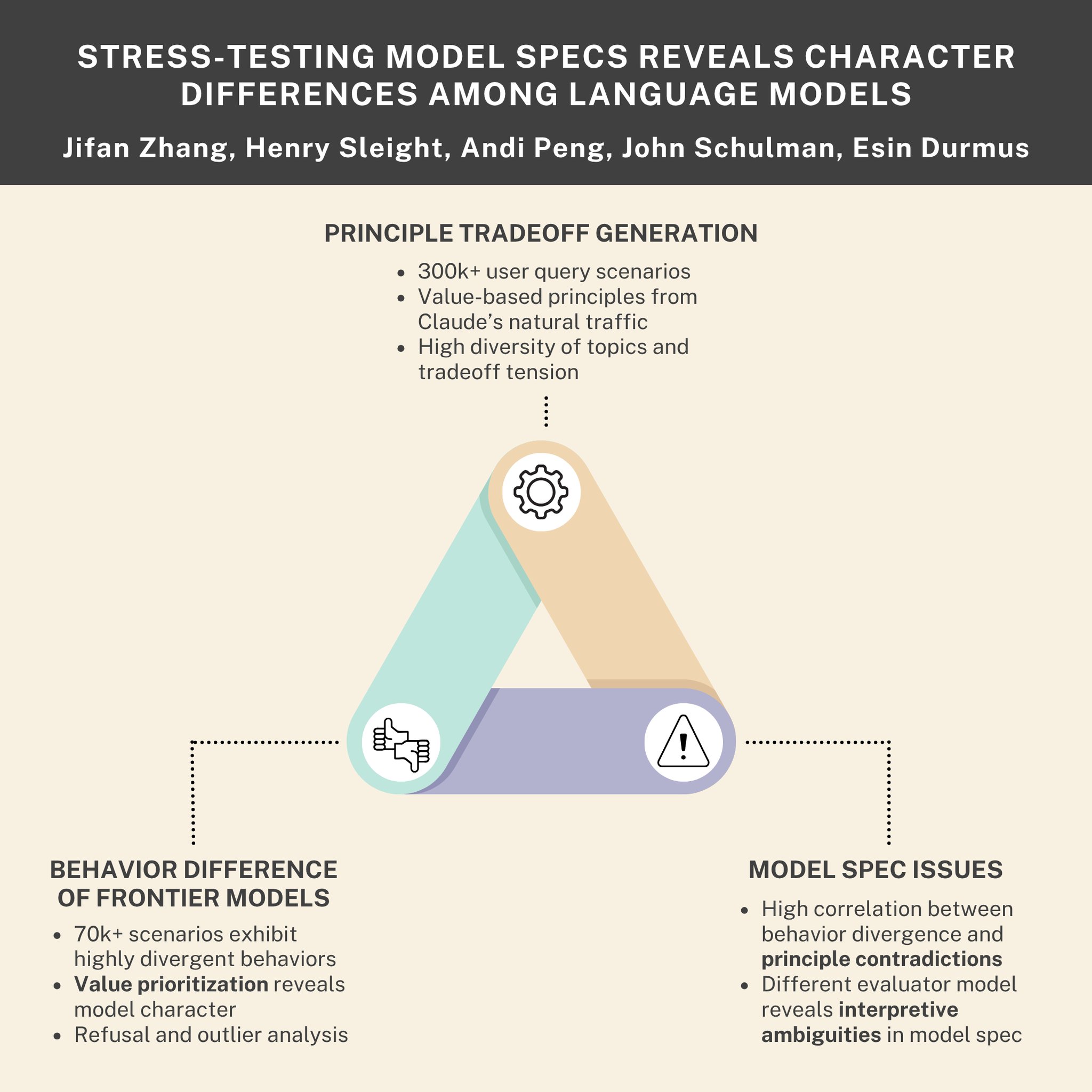
Stress-Testing LLM Constitutional Specifications and Behavioral Guidelines
By
–
7. Stress-Testing Model Specs This research examines how well large language models adhere to their stated behavioral guidelines by stress-testing AI constitutional specifications through value-tradeoff scenarios.
-
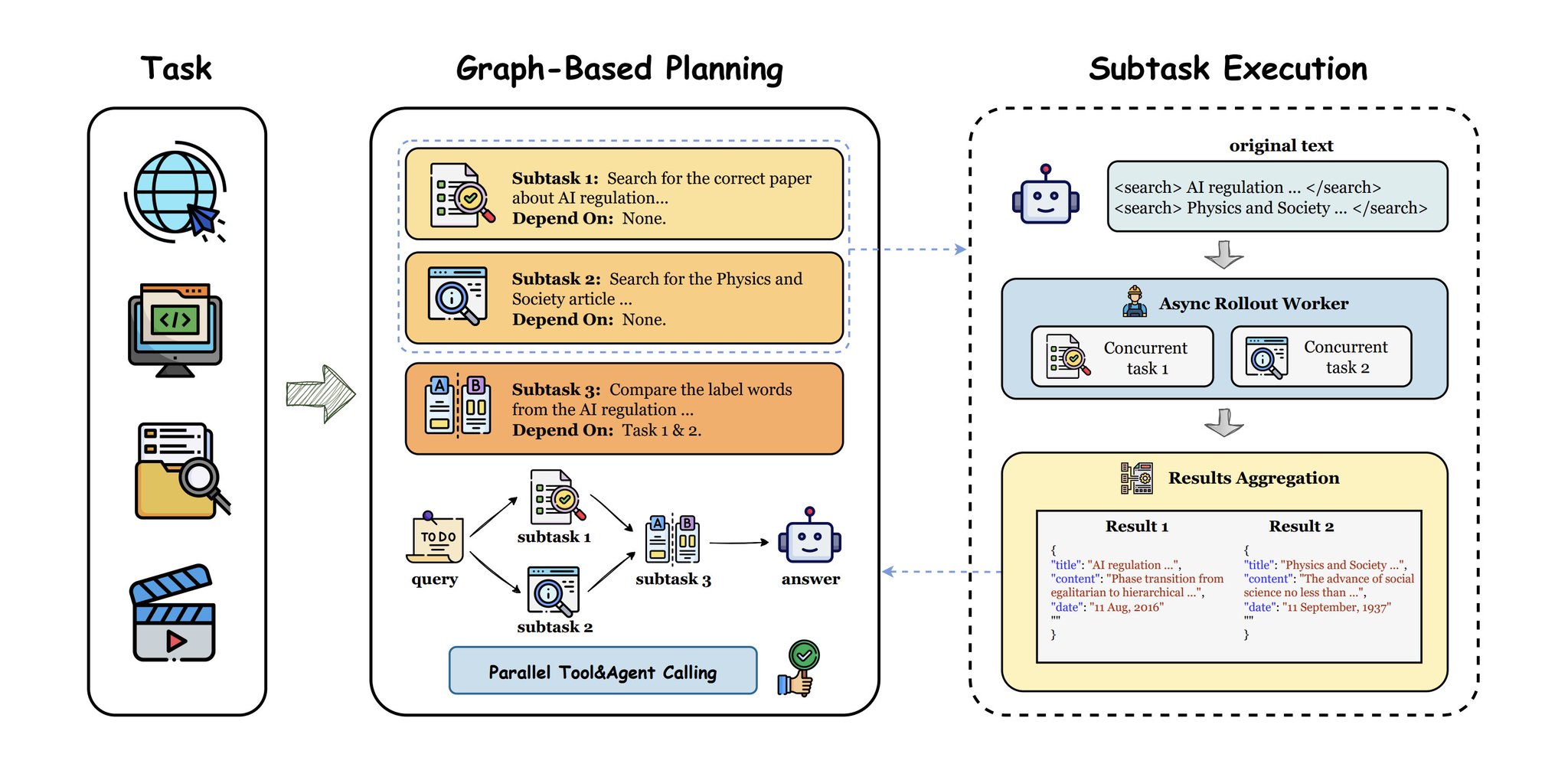
GAP: Graph-Based Agent Planning with Parallel Tool Execution
By
–
6. GAP GAP introduces graph-based agent planning with parallel tool execution and reinforcement learning, enabling AI agents to coordinate multiple specialized capabilities simultaneously rather than sequentially.