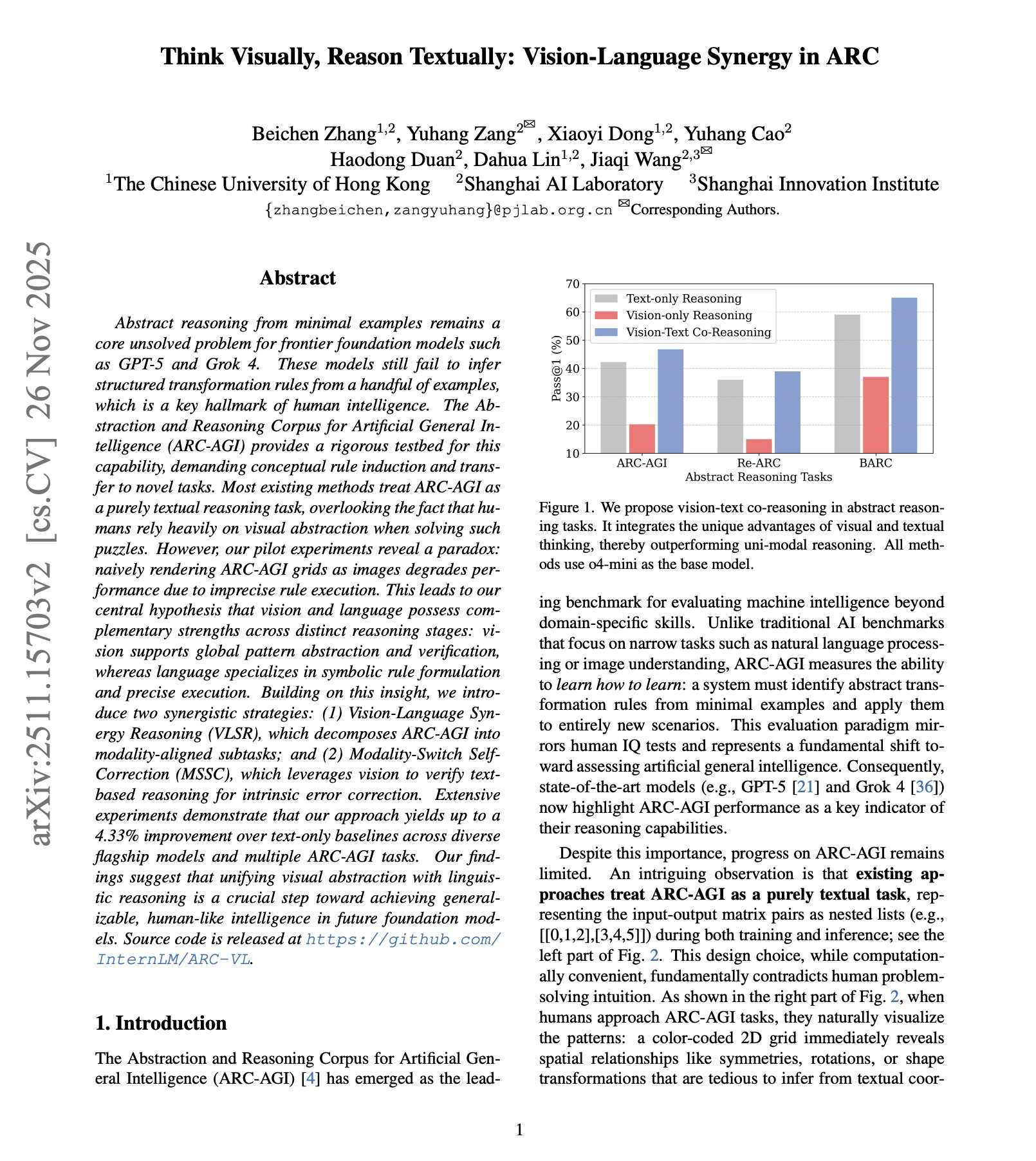
7. Vision-Language Synergy Reasoning A method that combines visual and textual reasoning to improve performance on ARC-AGI abstract reasoning tasks.
@dair_ai
-

Google Introduces FACTS Leaderboard for LLM Factuality Evaluation
By
–
6. FACTS Leaderboard Google introduces the FACTS Leaderboard, a comprehensive benchmark suite for evaluating LLM factuality across diverse scenarios.
-
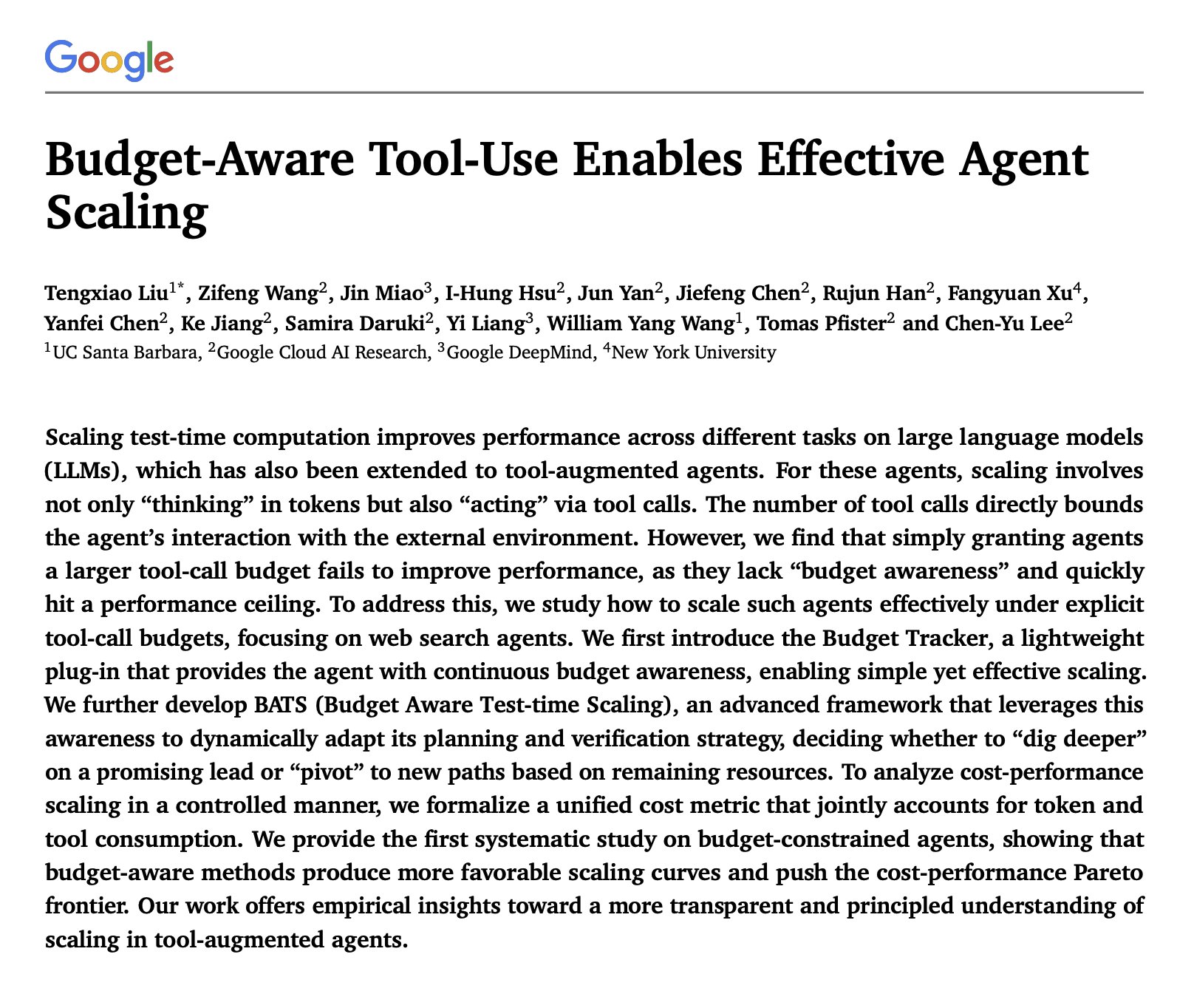
Budget-Aware Test-time Scaling Improves AI Agent Performance
By
–
2. Budget Aware Test-time Scaling Researchers discover that simply expanding tool-call budgets without proper awareness fails to improve agent performance.
-
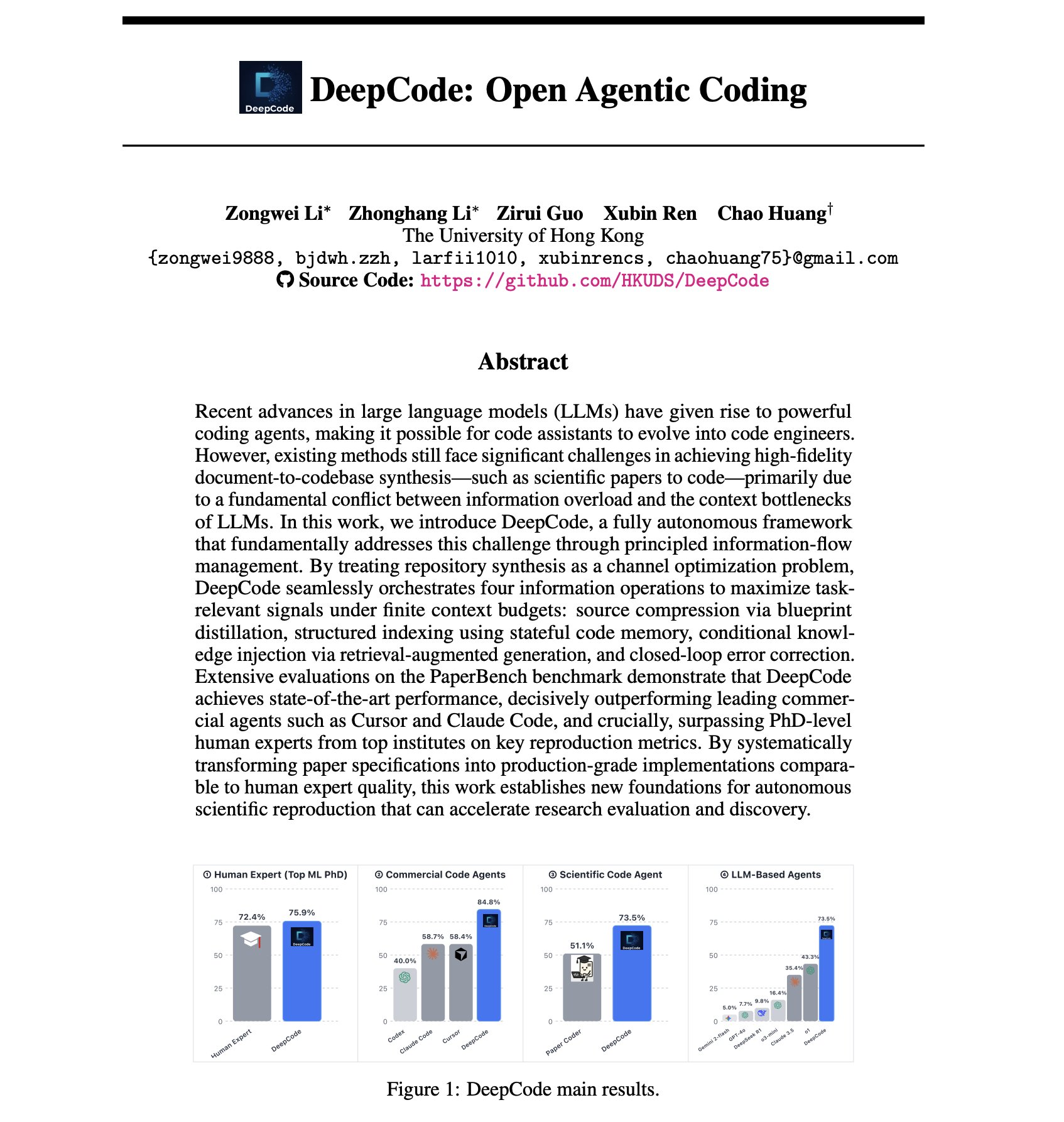
DeepCode: Autonomous Framework for Synthesizing Complete Codebases
By
–
3. DeepCode DeepCode is a fully autonomous framework for synthesizing complete codebases from scientific papers despite LLM context limitations.
-
Top AI Papers Week: Agents, LLMs and Vision-Language Models
By
–
Top AI Papers of the Week (Dec 15 – 21): – DeepCode
– FrontierScience
– FACTS Leaderboard
– Detailed Balance in LLM Agents
– Budget Aware Test-time Scaling
– Vision-Language Synergy Reasoning
– Stronger Normalization-Free Transformers Read on for more: -
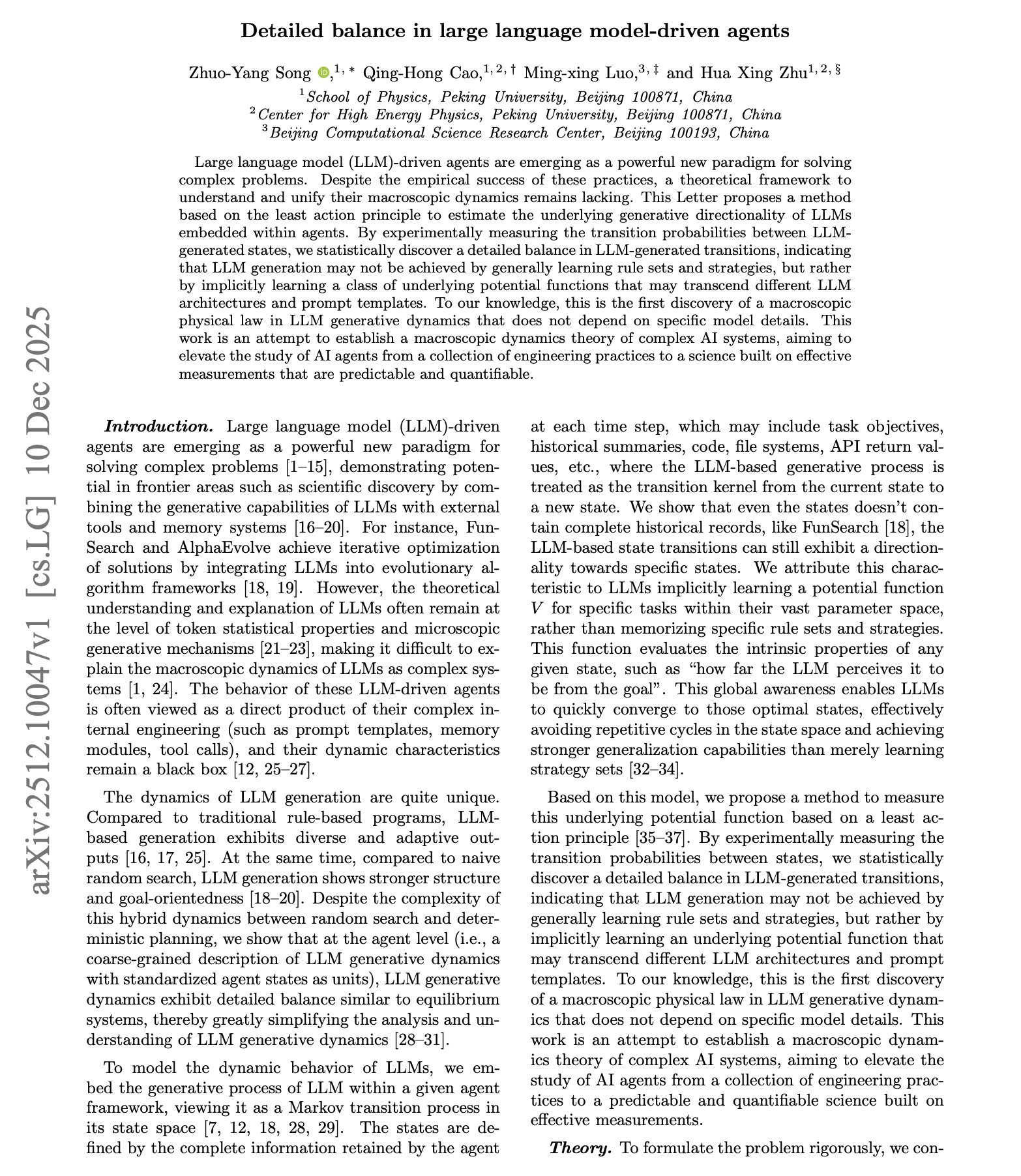
Physical Laws in LLM Agent Generation Dynamics Discovered
By
–
1. Detailed Balance in LLM Agents Researchers establish the first macroscopic physical law in LLM generation dynamics by applying the least action principle to analyze LLM-agent behavior.
-

RAG Systems Struggle with Multi-Hop Reasoning Problems
By
–
RAG systems struggle with multi-hop reasoning. In most cases, the problem isn't the LLMs. It's the retrieval system. Standard RAG treats each piece of evidence as equally reliable, ignoring how documents connect to each other. Why is this a problem? When questions require
-

Deep Reinforcement Learning for Multi-Agent Robot Coordination
By
–
Deep Reinforcement Learning for Multi-Agent Coordination Multi-agent reinforcement learning doesn't scale. The default approach to coordinating robot teams remains explicit communication or centralized training. This is inefficient. On the other hand, social insects solve this
-
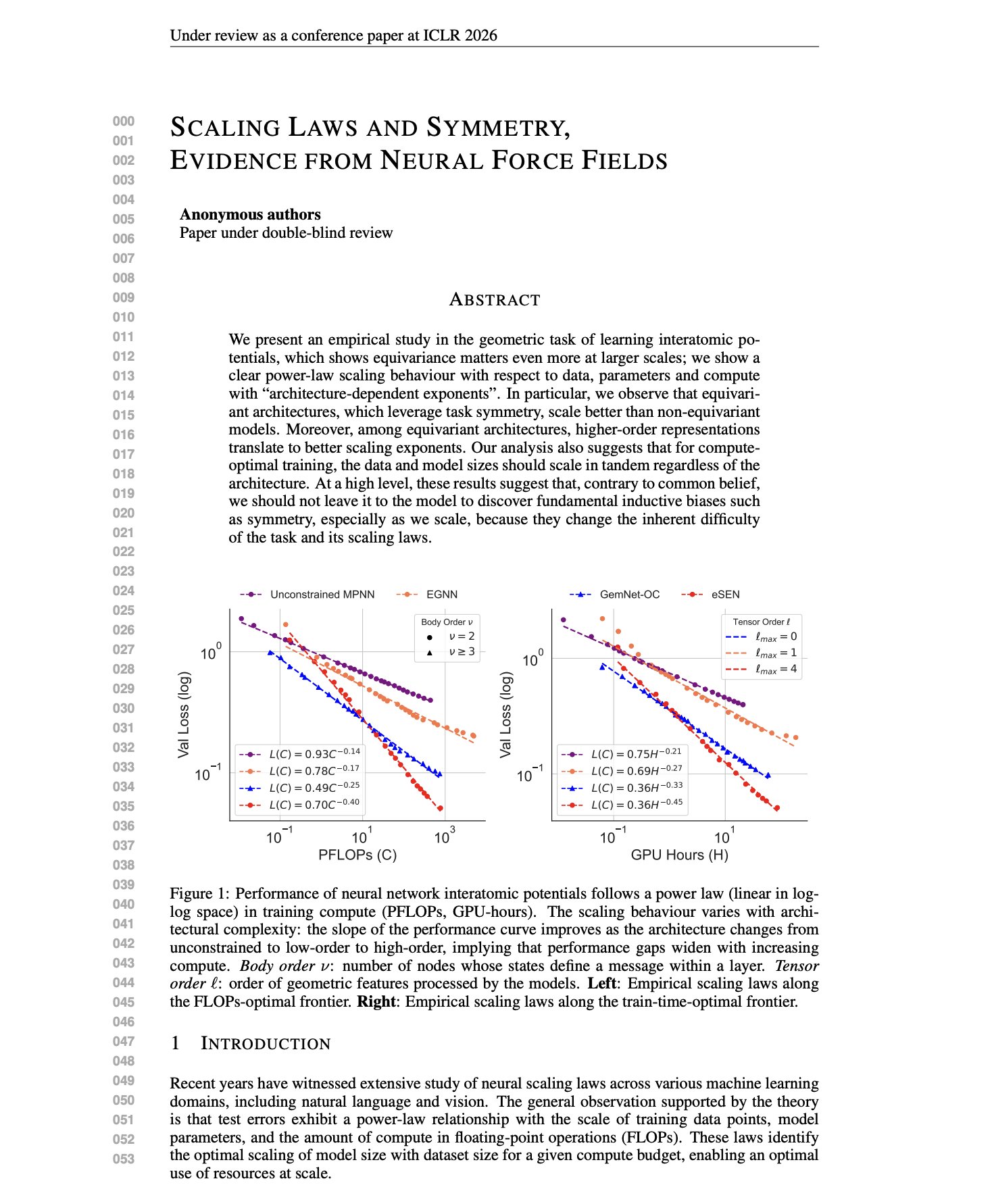
Scaling Laws and Symmetry in Neural Networks Research
By
–
Scaling Laws and Symmetry The common belief is that scaling outperforms inductive biases. Give the model enough data and compute, and it will learn the structure on its own. But this new research finds the opposite. Researchers conducted comprehensive scaling experiments on
-
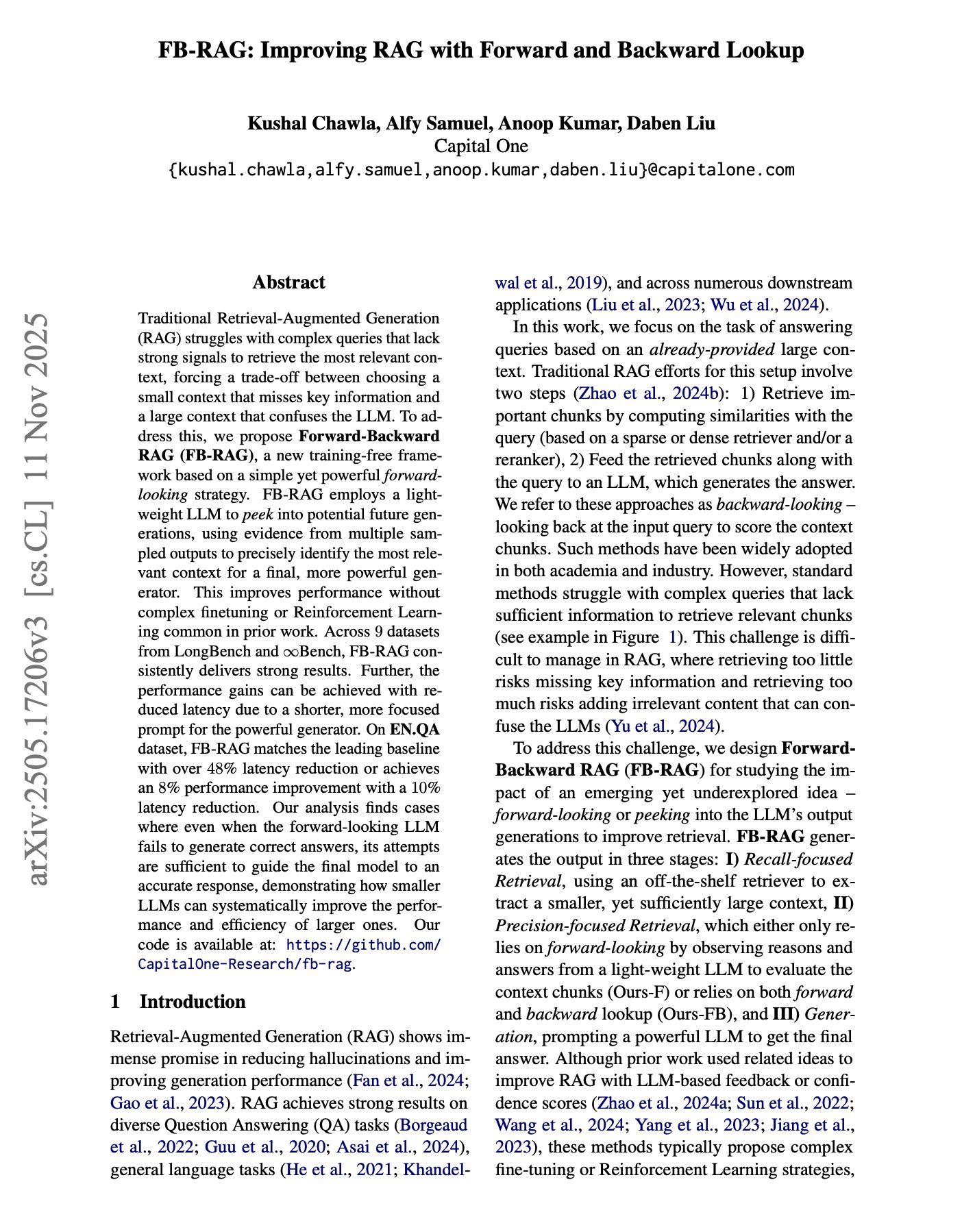
Improving RAG with Forward and Backward Lookup
By
–
Improving RAG with Forward and Backward Lookup This is a clever use of small and large language models. Traditional RAG systems compute similarity between the query and context chunks, retrieve the highest-scoring chunks, and then generate. But complex queries often lack