Taking open-ended discovery with AI to the next level In our most recent AI4Science talk, Bodhi (AI2 researcher, @mbodhisattwa
) introduced a shift from goal-driven analysis to open-ended discovery, where models don’t just verify hypotheses but actively search for new ones.
@askalphaxiv
-
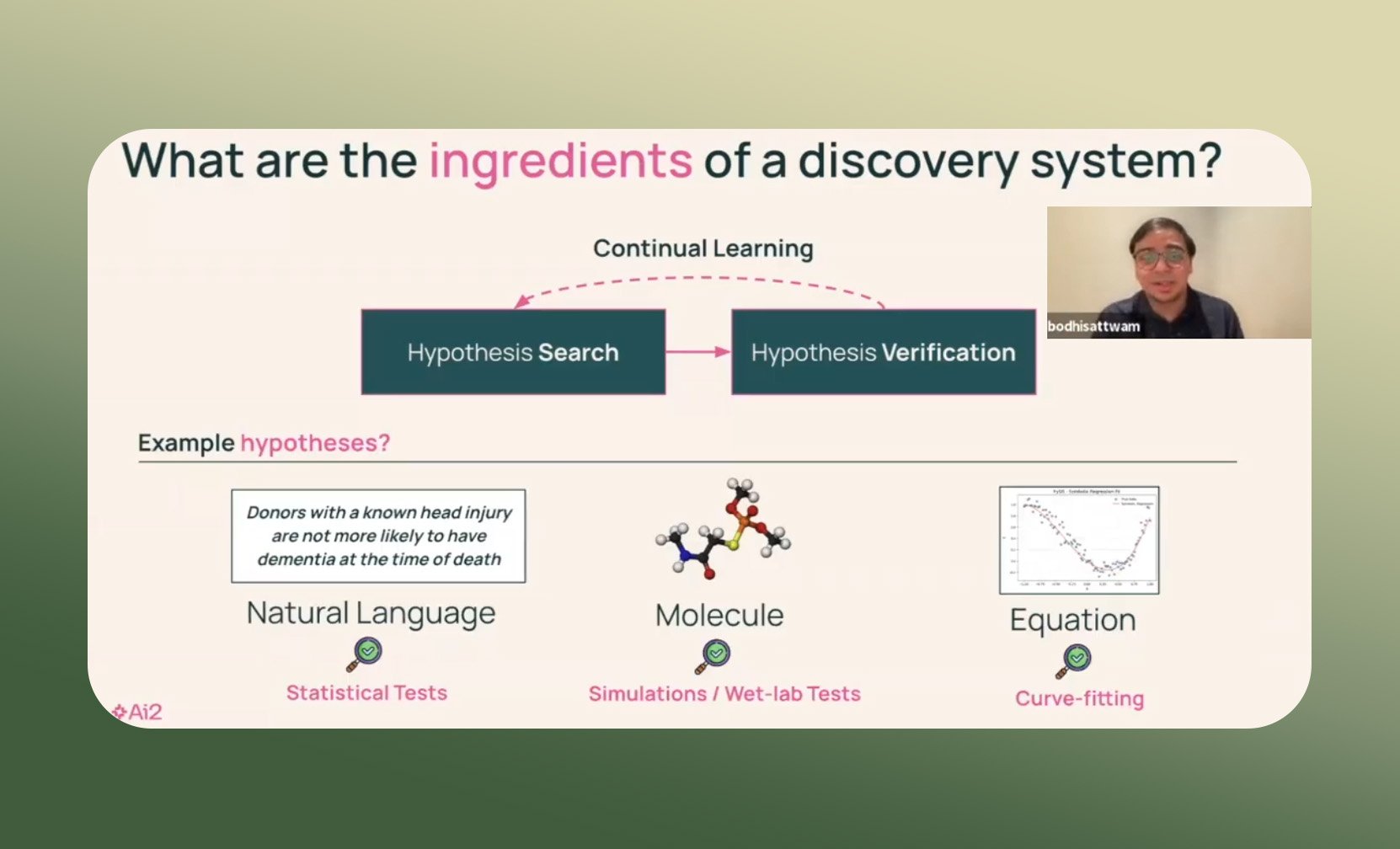
Shifting AI from hypothesis verification to open-ended discovery
By
–
-
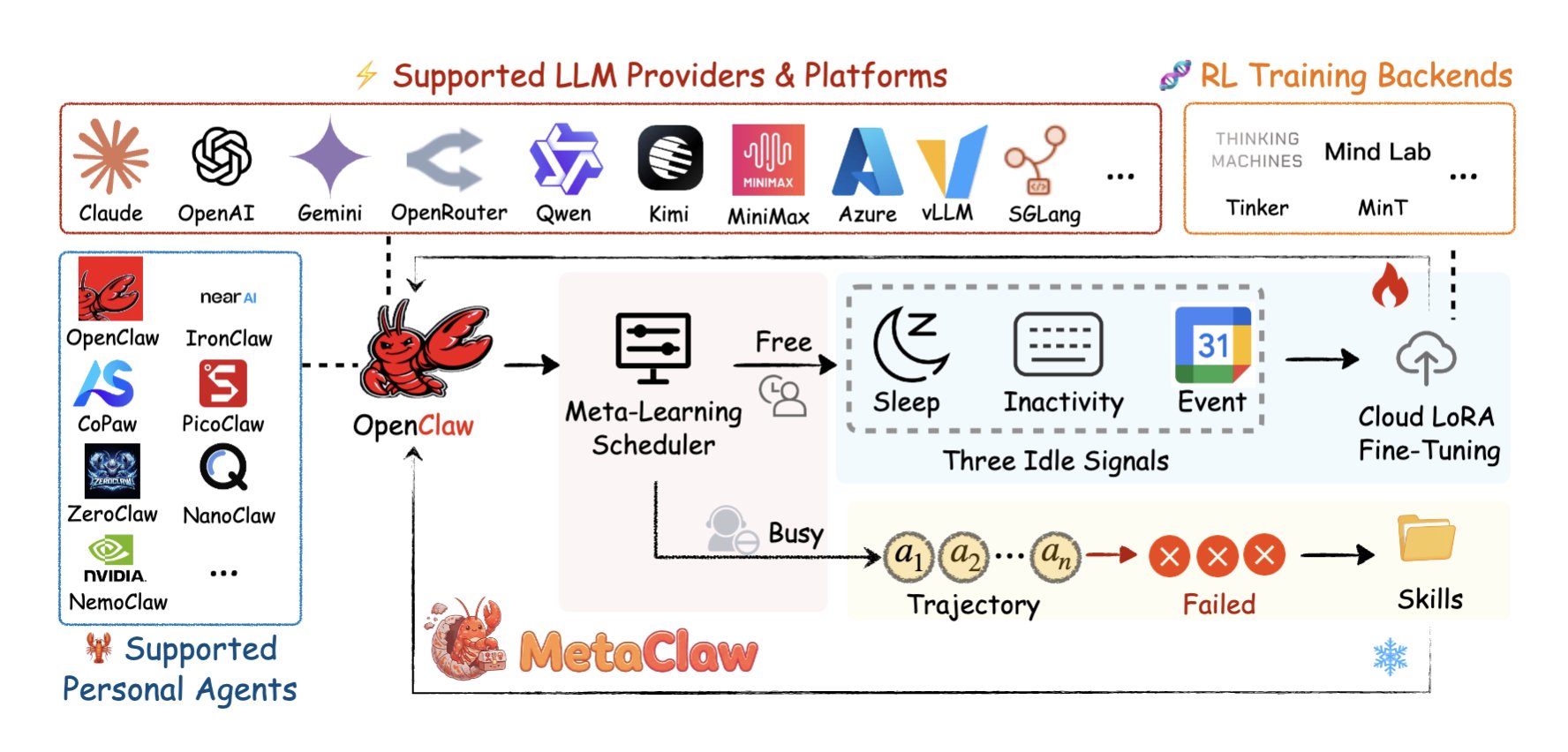
MetaClaw: A New Agent Framework for Real-Time Learning and Evolution
By
–
"MetaClaw: Just Talk – An Agent That Meta-Learns and Evolves in the Wild" This paper provides a blueprint for agents to learn and evolve while using. It turns failures into reusable skills right away and only retrains when the user is idle. This framework nearly doubled
-
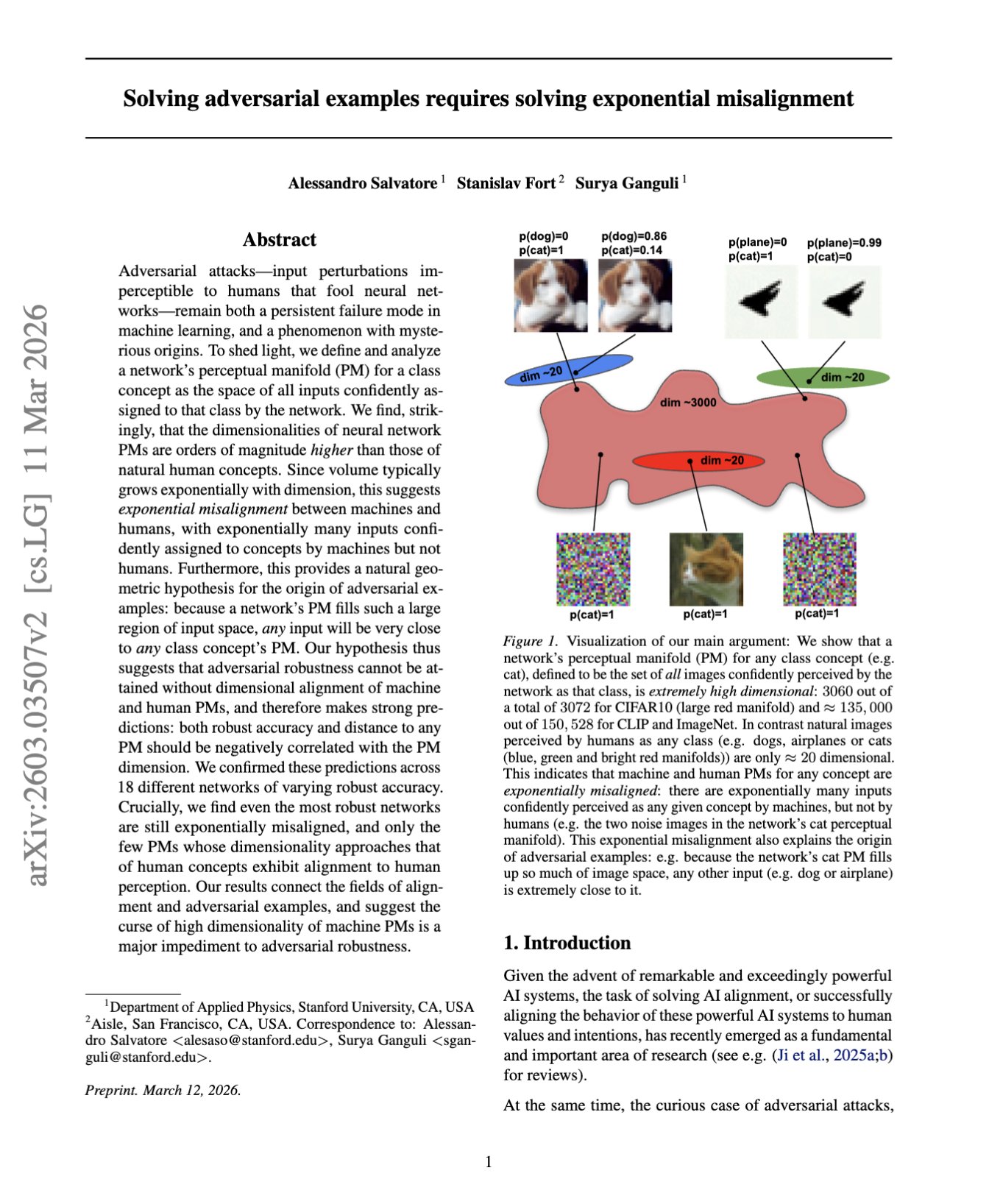
Adversarial Examples and the Challenge of Exponential Misalignment
By
–
"Solving adversarial examples requires solving exponential misalignment" This paper argues that adversarial examples may happen because neural nets treat “cat”, “dog”, etc. as huge regions of image space, including many weird, non-human-looking inputs, so tiny edits can flip
-
Introducing GLM 5 Turbo for Research Paper Analysis
By
–
Introducing GLM 5 Turbo for understanding research papers 🚀
— alphaXiv (@askalphaxiv) 19 mars 2026
Highlight any section of a paper to ask questions and “@” other papers for quick context, comparisons, and benchmark references pic.twitter.com/WKPGQP3ExMIntroducing GLM 5 Turbo for understanding research papers Highlight any section of a paper to ask questions and “@” other papers for quick context, comparisons, and benchmark references
-
New scientific article published on arXiv March 19 2026
By
–
read more: https://alphaxiv.org/abs/2603.14482
-
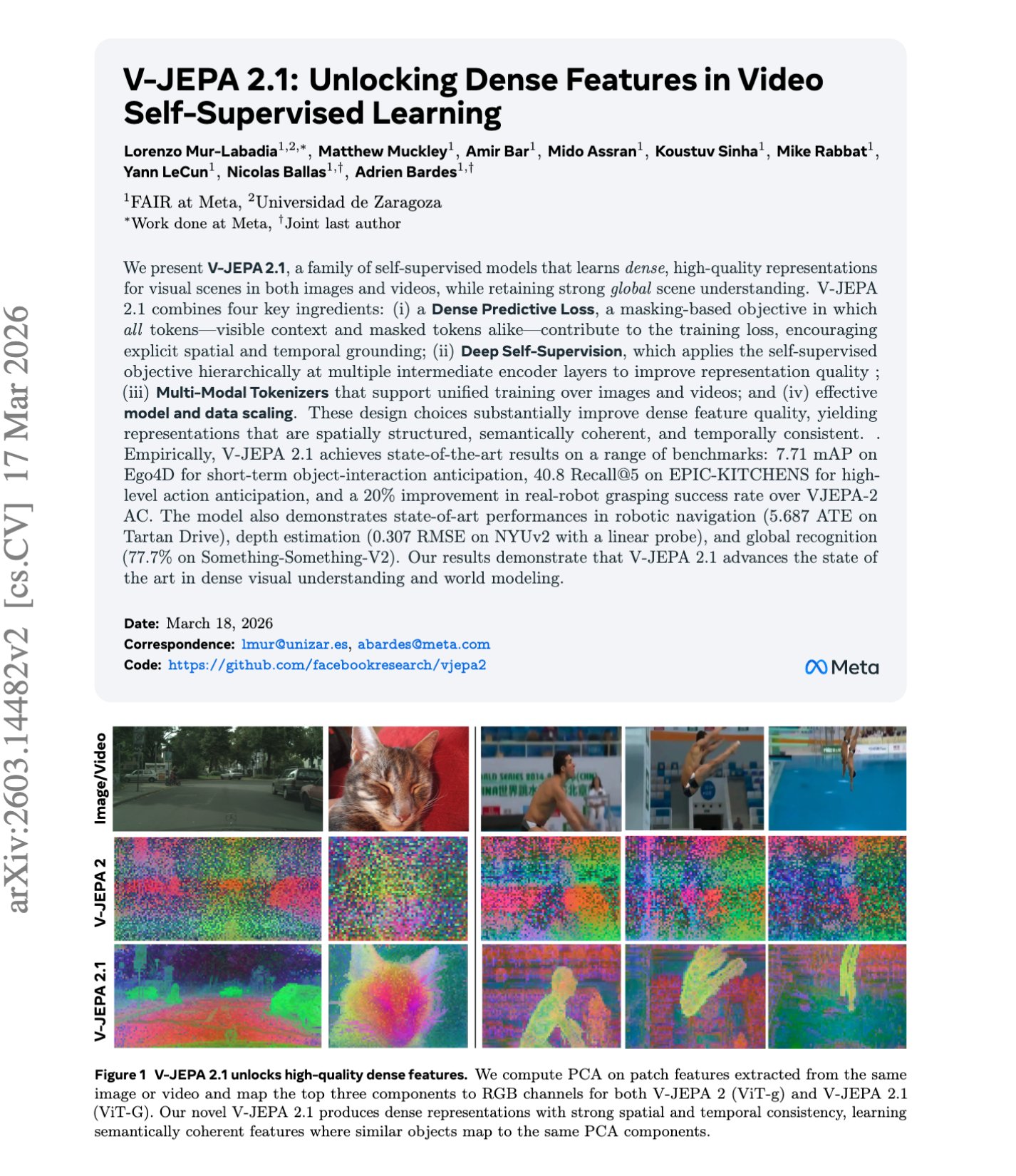
V-JEPA 2.1 Unlocking Dense Features Video Self-Supervised Learning
By
–
Yann LeCun and his team dropped yet another paper! "V-JEPA 2.1: Unlocking Dense Features in Self-Supervised Learning" In this V-JEPA upgrade, they showed that if you make a video model predict every patch, not just the masked ones AND at multiple layers, they are able to
-
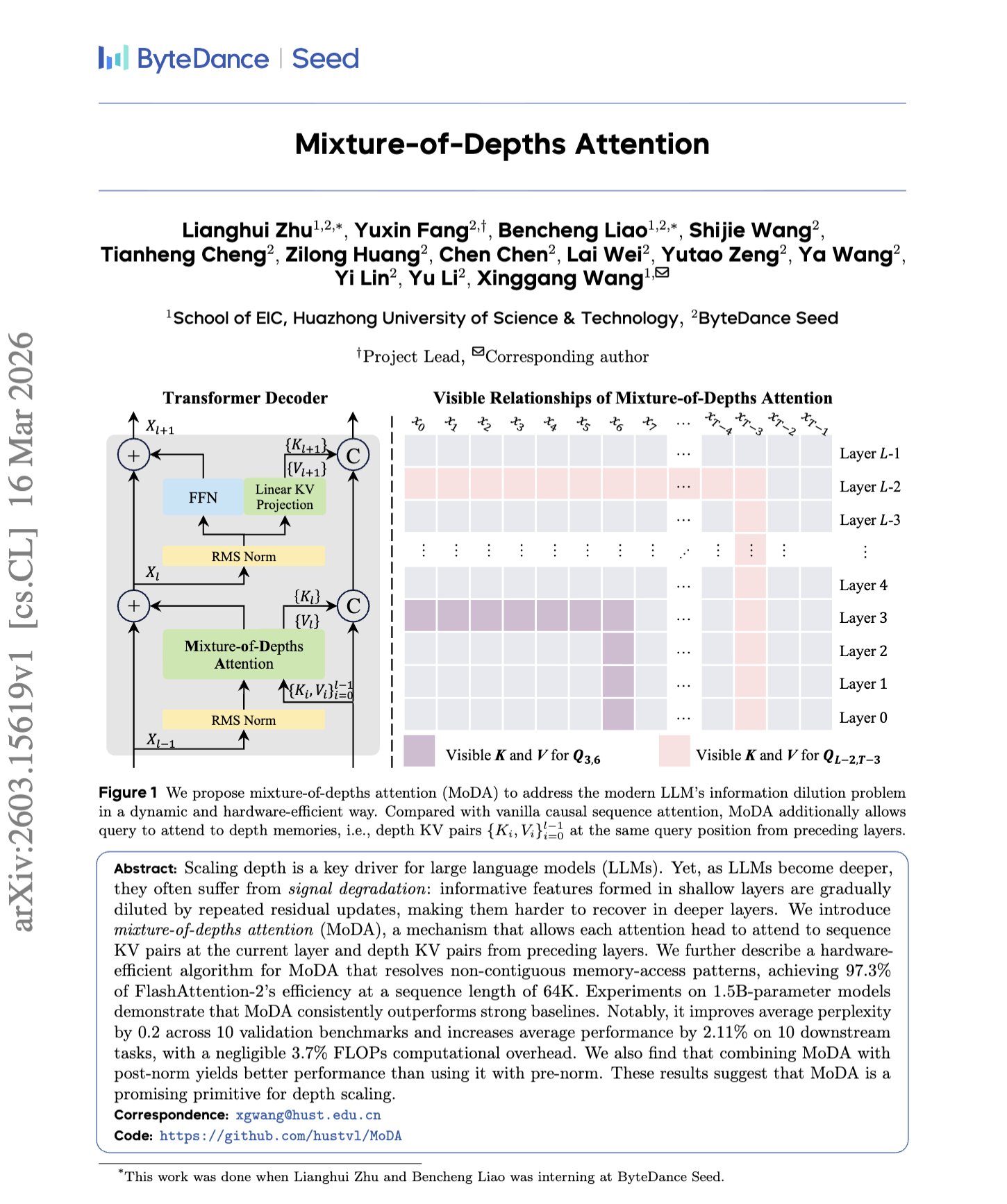
Mixture-of-Depths Attention: Transformer Architecture Innovation
By
–
"Mixture-of-Depths Attention" This paper teaches a Transformer to attend not just across tokens, but also to depth KV from its earlier layers. That helps recover shallow-layer signals that standard residual stacking tends to dilute, improving performance with only a small extra
-
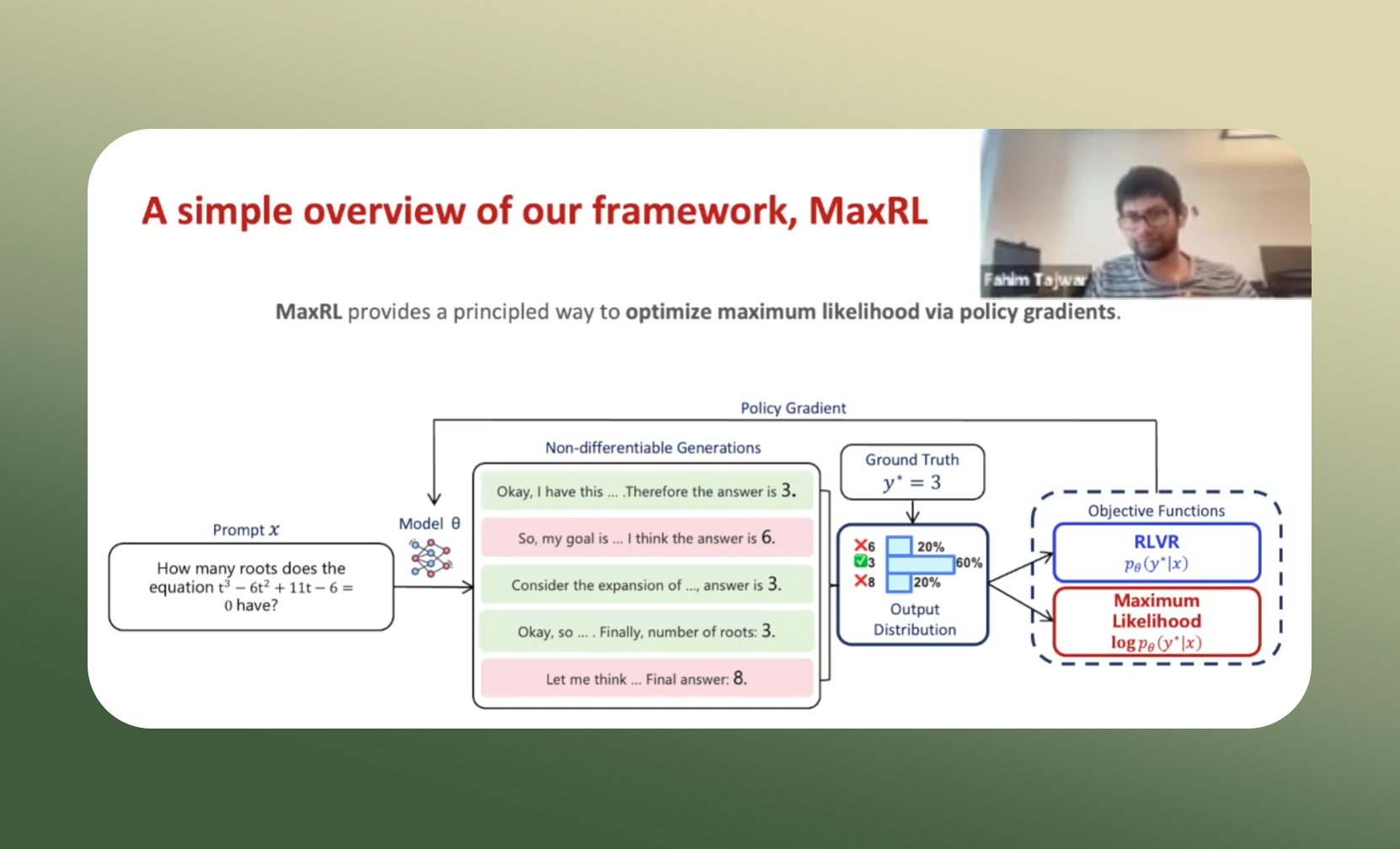
Maximum Likelihood RL Framework for Math Reasoning Models
By
–
The current RL setup might not be the right objective for reasoning models In our latest AI4Science talk, Fahim (
@FahimTajwar10
), PhD student at CMU, presented “Maximum Likelihood Reinforcement Learning”, a new framework for binary-reward tasks like math reasoning, navigation,