
When language models “reason out loud,” it’s hard to know if their stated reasoning is faithful to the process the model actually used to make its prediction. In two new papers, we measure and improve the faithfulness of language models’ stated reasoning.
@anthropicai
-
Anthropic Early Access Program Application Form
By
–
If you are working on these topics, please fill out this form to apply: https://
anthropic.com/earlyaccess. -
Anthropic Launches Researcher Access Program for Claude 2 API
By
–
We are excited to support research into safety and societal impacts via our Researcher Access Program. We aim to provide subsidized API access to our frontier models, including Claude 2, to as many researchers and academics as we can.
-
Claude 2 Launch: Anthropic Partners With Leading AI Ecosystem
By
–
Thanks to our partners @cerebral_valley and @iendeavors
, and supporters @llama_index
, @langchain
, @huggingface and @arizeai
. We can’t wait to see what you build with Claude 2! -
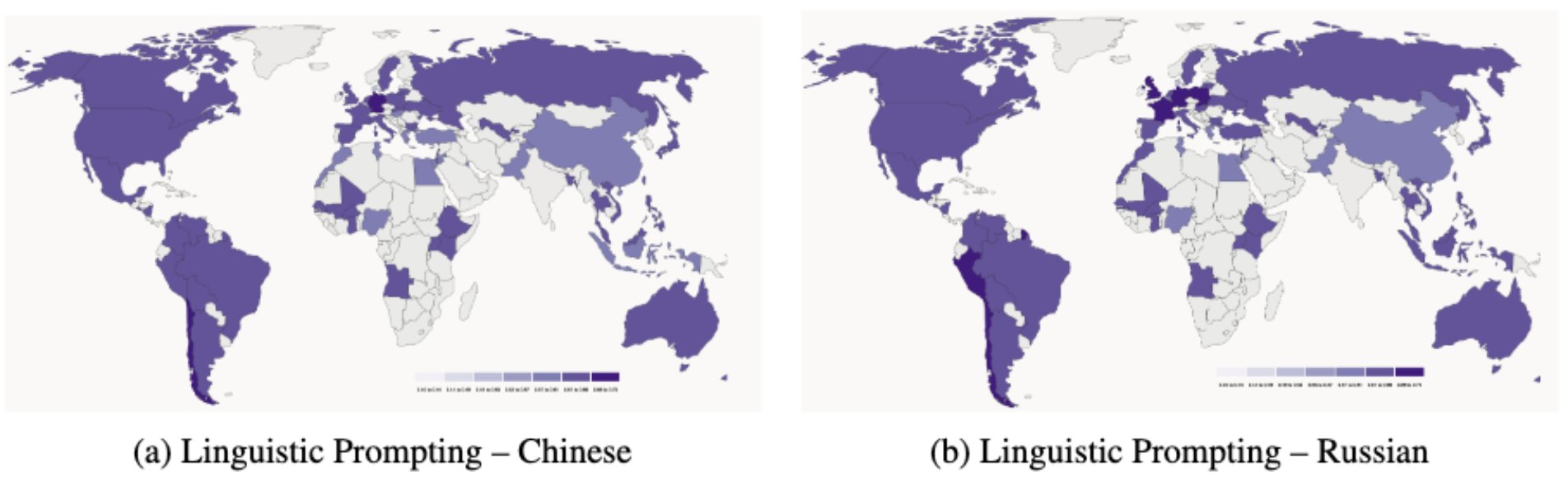
Linguistic Prompting Insufficient to Shift Model Responses
By
–
In the linguistic prompting condition, we translate survey questions into a target language. We find that simply presenting the questions in other languages does not substantially shift the model responses relative to the default condition. Linguistic cues are insufficient.
-
Evaluating Language Model Values: Frameworks for Global AI Alignment
By
–
Our preliminary findings show the need for rigorous evaluation frameworks to uncover whose values language models represent. We encourage using this methodology to assess interventions to align models with global, diverse perspectives. Paper:
-
AI Models Risk Over-Generalization and Country Stereotypes
By
–
However, when we further analyze model generations in this condition, we find that the model may rely on over-generalizations and country-specific stereotypes.
-
Interactive Map Visualization of LLM Prompt-Based Value Alignment
By
–
We present an interactive visualization of the similarity results on a map to explore how prompt based interventions influence whose opinions the models are the most similar to. https://
llmglobalvalues.anthropic.com -
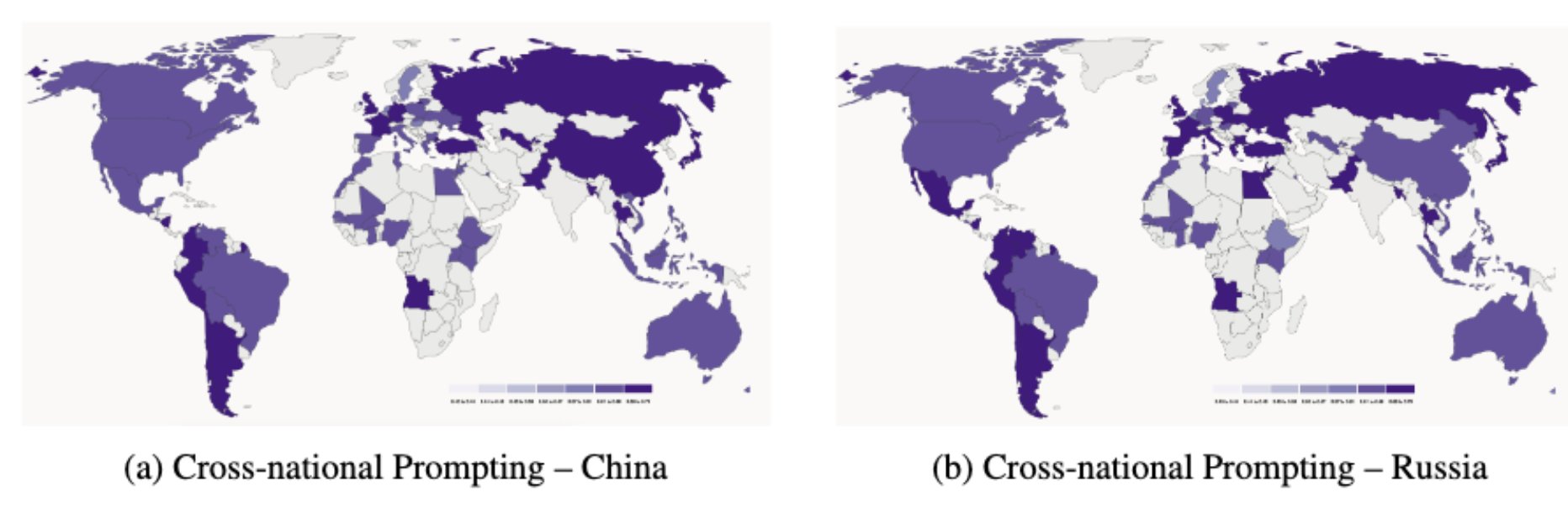
Cultural Prompting Changes Model Responses for Specific Countries
By
–
We then prompt the model with "How would someone from country [X] respond to this question?" Surprisingly, this makes model responses more similar to those of human respondents for some of the specified countries (i.e., China and Russia).
-
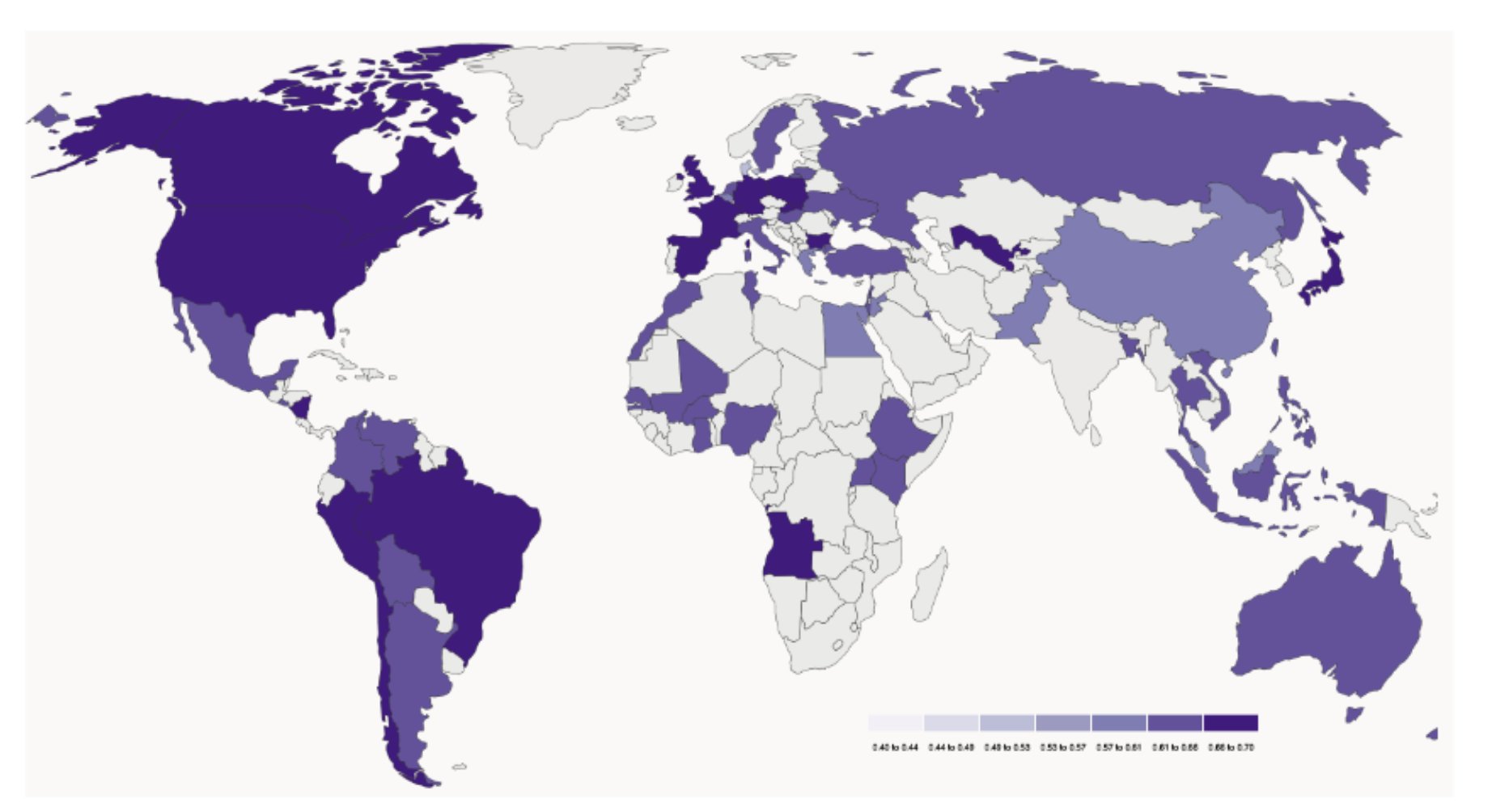
Language model responses align with USA, Europe, Japan human survey
By
–
We first prompt the language model only with the survey questions. We find that the model responses in this condition are most similar to those of human respondents in the USA, European countries, Japan, and some countries in South America.