
Bidirectional video models provide great coherence but are computationally heavy. ArtiFixer solves this via Self-Forcing-style Distribution Matching Distillation (DMD). By distilling the bidirectional model into a causal auto-regressive one, ArtiFixer achieves up to a 70x
@alphasignalai
-
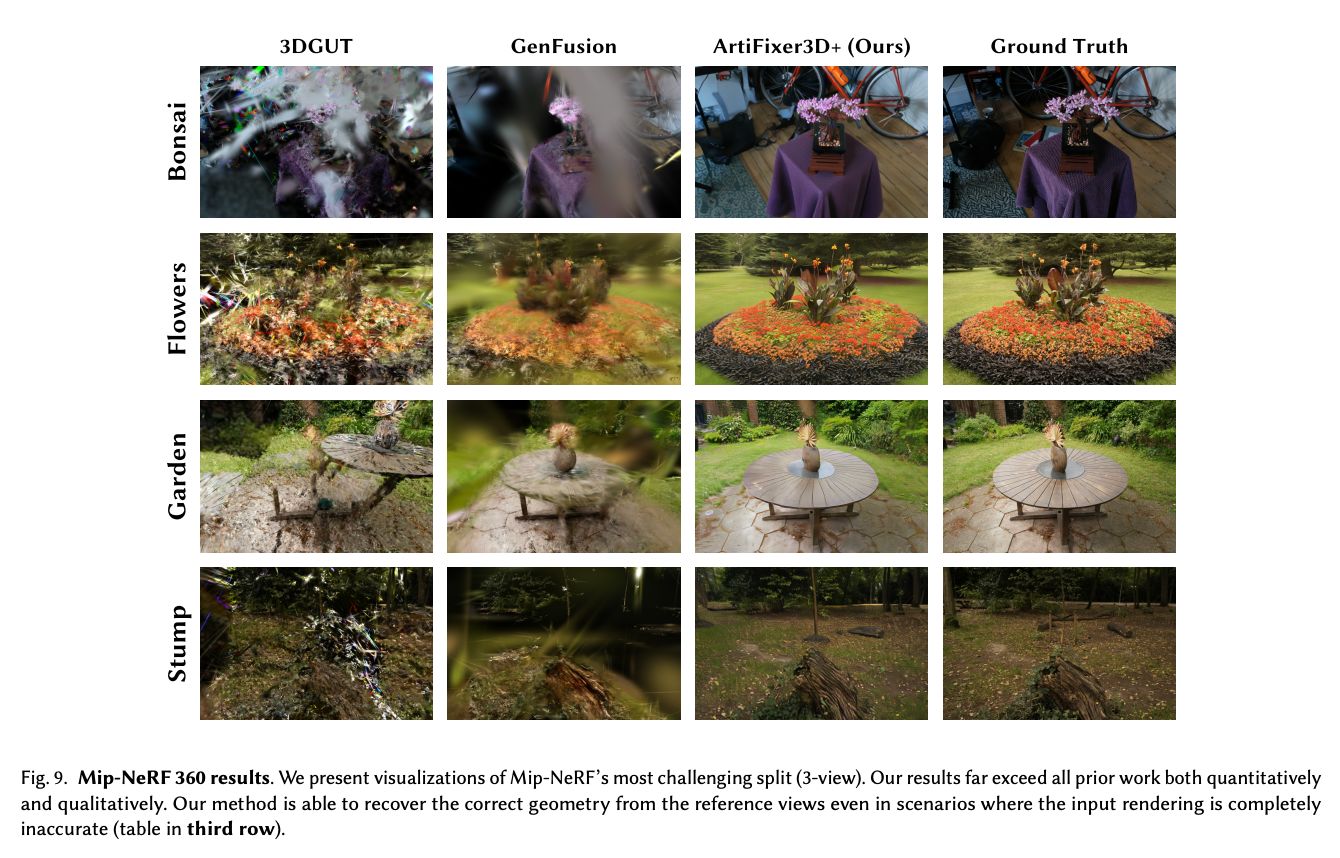
ArtiFixer delivers sharp results, outperforming baselines by 1-3 dB PSNR
By
–
The results are incredibly sharp. When benchmarked on challenging datasets with sparse views like Mip-NeRF 360 and DL3DV, ArtiFixer handles highly degraded initial renderings effortlessly. It outperforms existing baselines (like GenFusion and 3DGUT) by a massive 1–3 dB PSNR
-
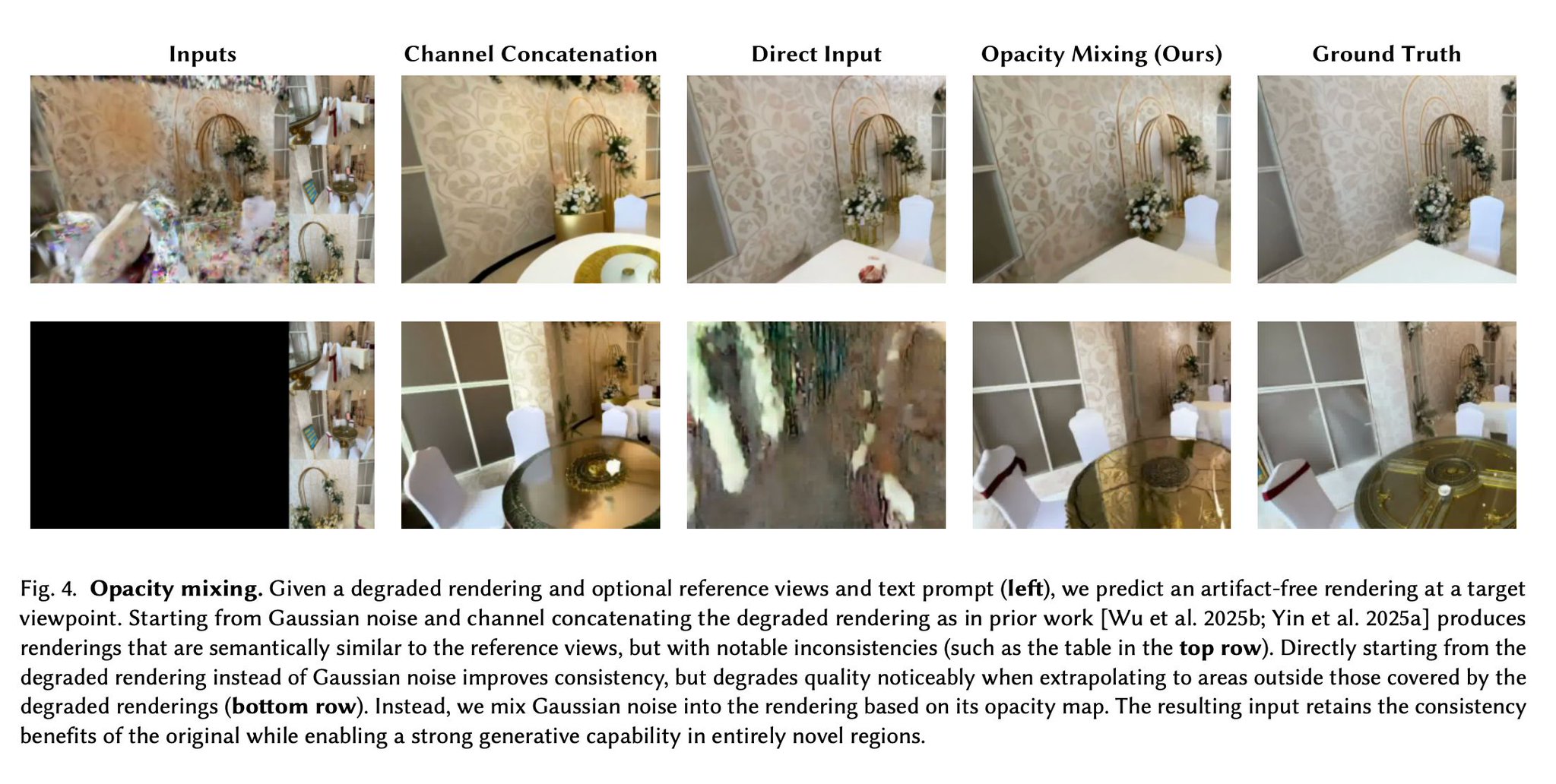
Opacity Mixing: Balancing Consistency and Hallucination in Video
By
–
How do you keep the generated video consistent with existing views without losing the ability to hallucinate new content? The answer is Opacity Mixing. Instead of starting from pure noise, ArtiFixer:
> Downscales the rendering's opacity map.
> Mixes Gaussian noise specifically -
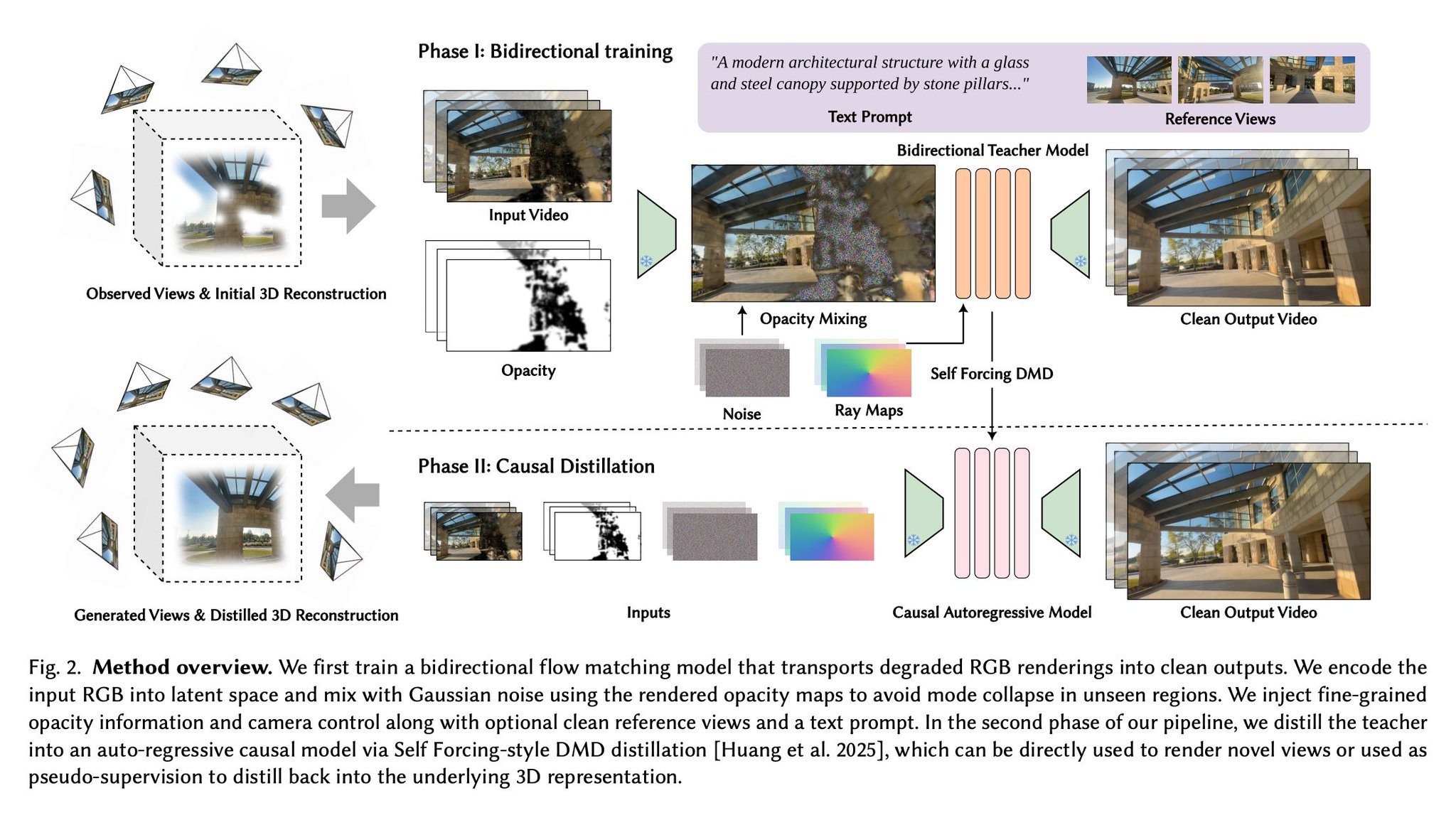
ArtiFixer combines 3D reconstruction and video generation in two phases
By
–
Instead of treating 3D reconstruction and video generation as standalone alternatives, ArtiFixer combines their strengths. > Phase I: Trains a powerful bidirectional generative video model to transport degraded renderings into clean frames.
> Phase II: Distills the teacher model -
NVIDIA Research’s ArtiFixer uses video diffusion to fix 3D reconstruction artifacts
By
–
NVIDIA Research just dropped a game-changer for 3D reconstruction.
— AlphaSignal (@AlphaSignalAI) 23 juin 2026
If you've ever dealt with blurry holes or floating artifacts in 3D Gaussian Splatting, ArtiFixer is the solution.
It uses a powerful auto-regressive video diffusion model to seamlessly repair and extend 3D… pic.twitter.com/5GLByeqf5PNVIDIA Research just dropped a game-changer for 3D reconstruction. If you've ever dealt with blurry holes or floating artifacts in 3D Gaussian Splatting, ArtiFixer is the solution. It uses a powerful auto-regressive video diffusion model to seamlessly repair and extend 3D
-
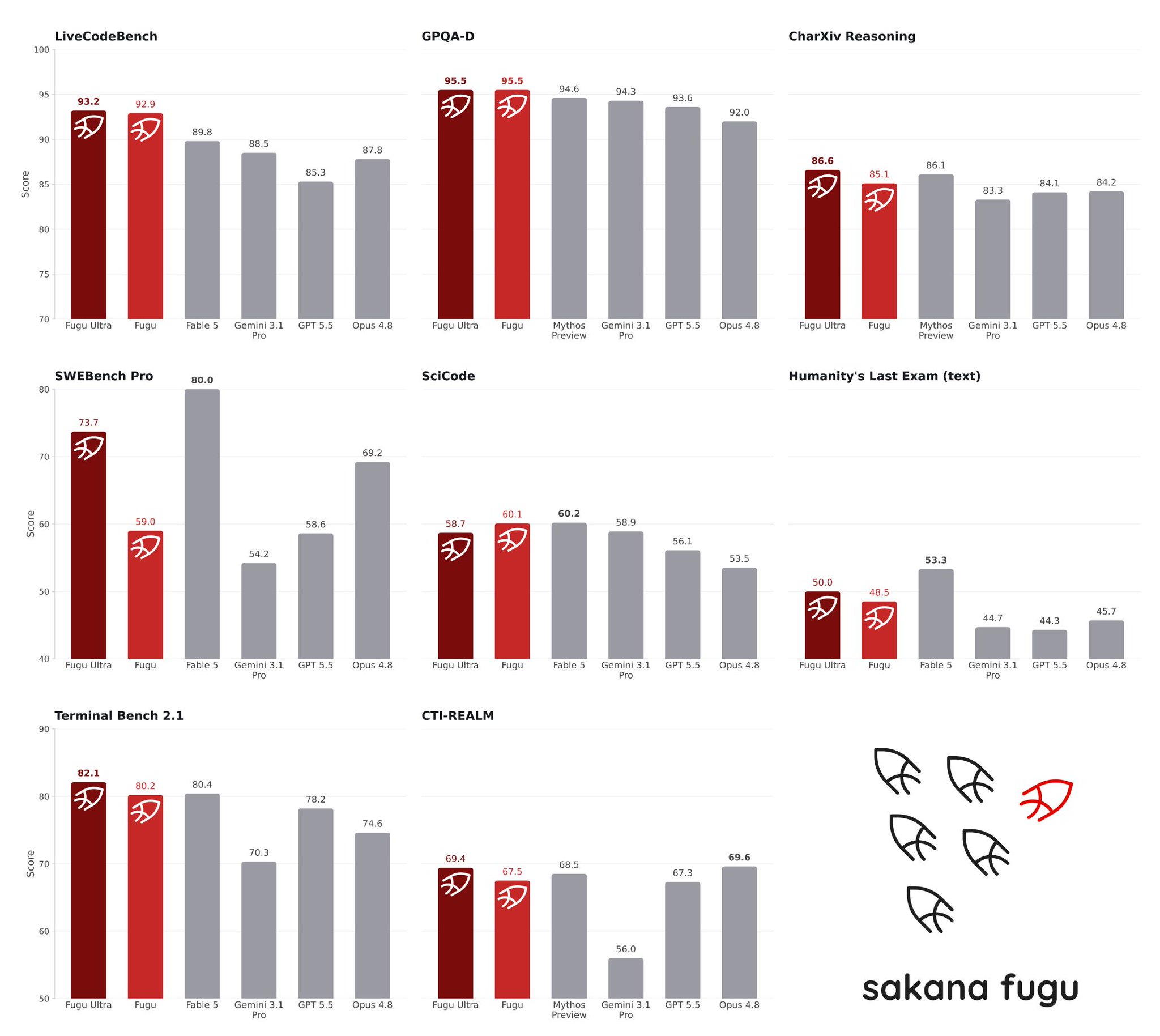
Sakana AI releases Fugu, a model API for autonomous orchestration
By
–
/4 Sakana AI just released Fugu, a new model API built around autonomous model orchestration. The stronger version, Fugu Ultra, is built for harder multi-step tasks. It scores 73.7 on SWE Bench Pro, 82.1 on TerminalBench 2.1, 93.2 on LiveCodeBench, 50.0 on Humanity’s Last Exam,
-

MiniMax M3: Open Weights with Multimodal & Context
By
–
/2 MiniMax opens the model weights of Minimax M3 to the public. M3 is the first open-weight model to combine frontier coding, a 1 million token context window, and native multimodal support (images and video) in one package. That combo was locked behind paid APIs until now. The
-
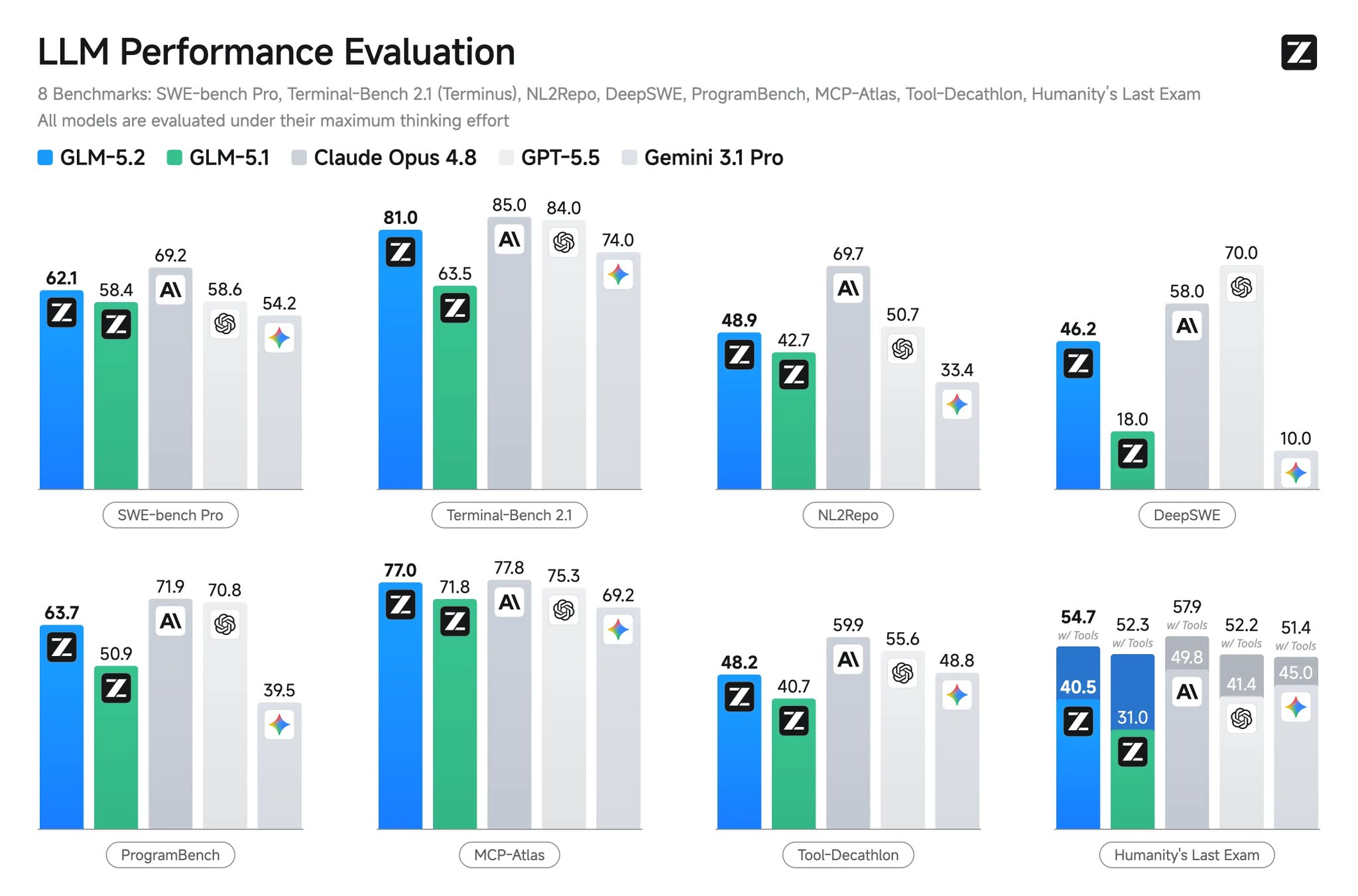
GLM-5.2 open-weight model with 1M context window released
By
–
/3 http://
Z.ai drops GLM-5.2 weights on Hugging Face. GLM-5.2 is a flagship open-weight model built for long-horizon tasks, especially coding and agentic work. Its biggest headline is a stable 1M-token context window, giving it room to handle large codebases and -
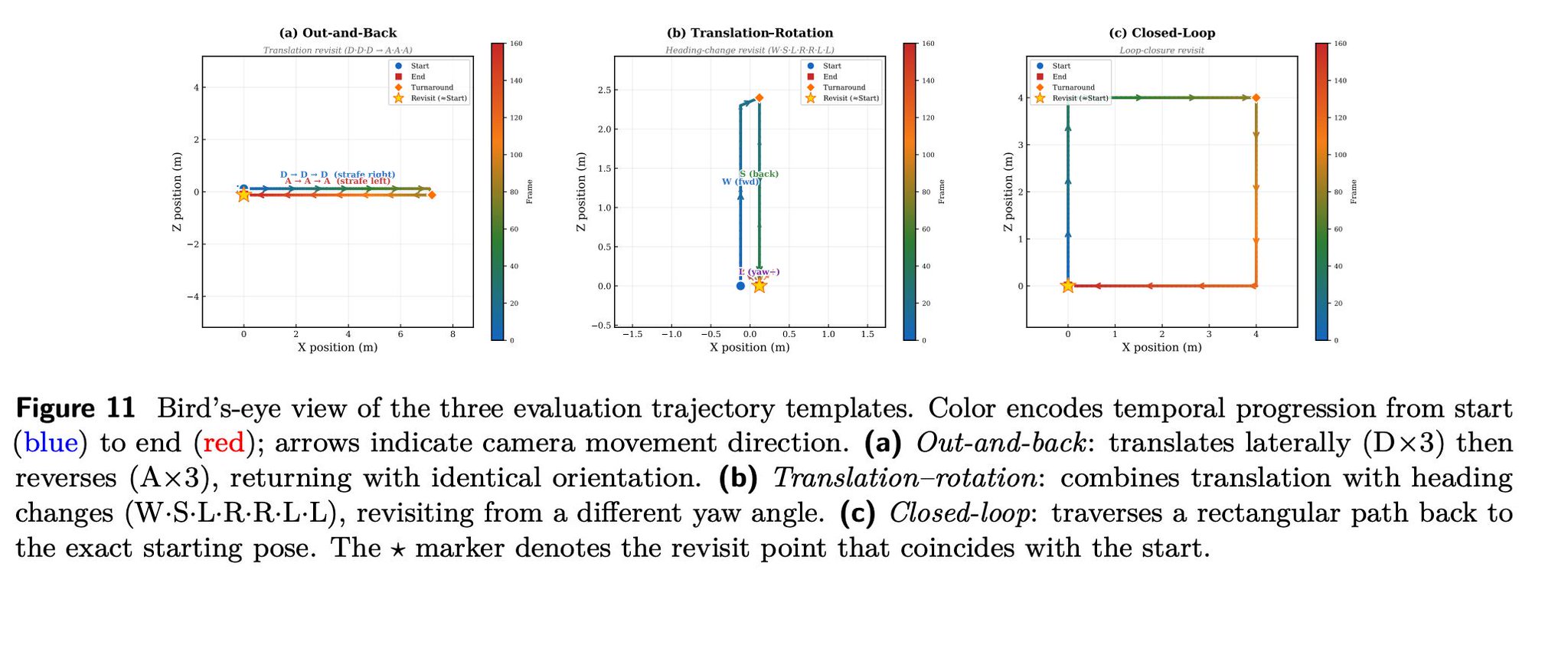
Strict revisit consistency trajectories test AI location memory
By
–
/7 Standard metrics aren't enough to prove an AI remembers specific locations. So, the team created strict "revisit consistency" trajectories: > Out-and-back: tests appearance stability
> Closed-loop: tests layout consistency
> Translation-rotation: tests identity preservation -
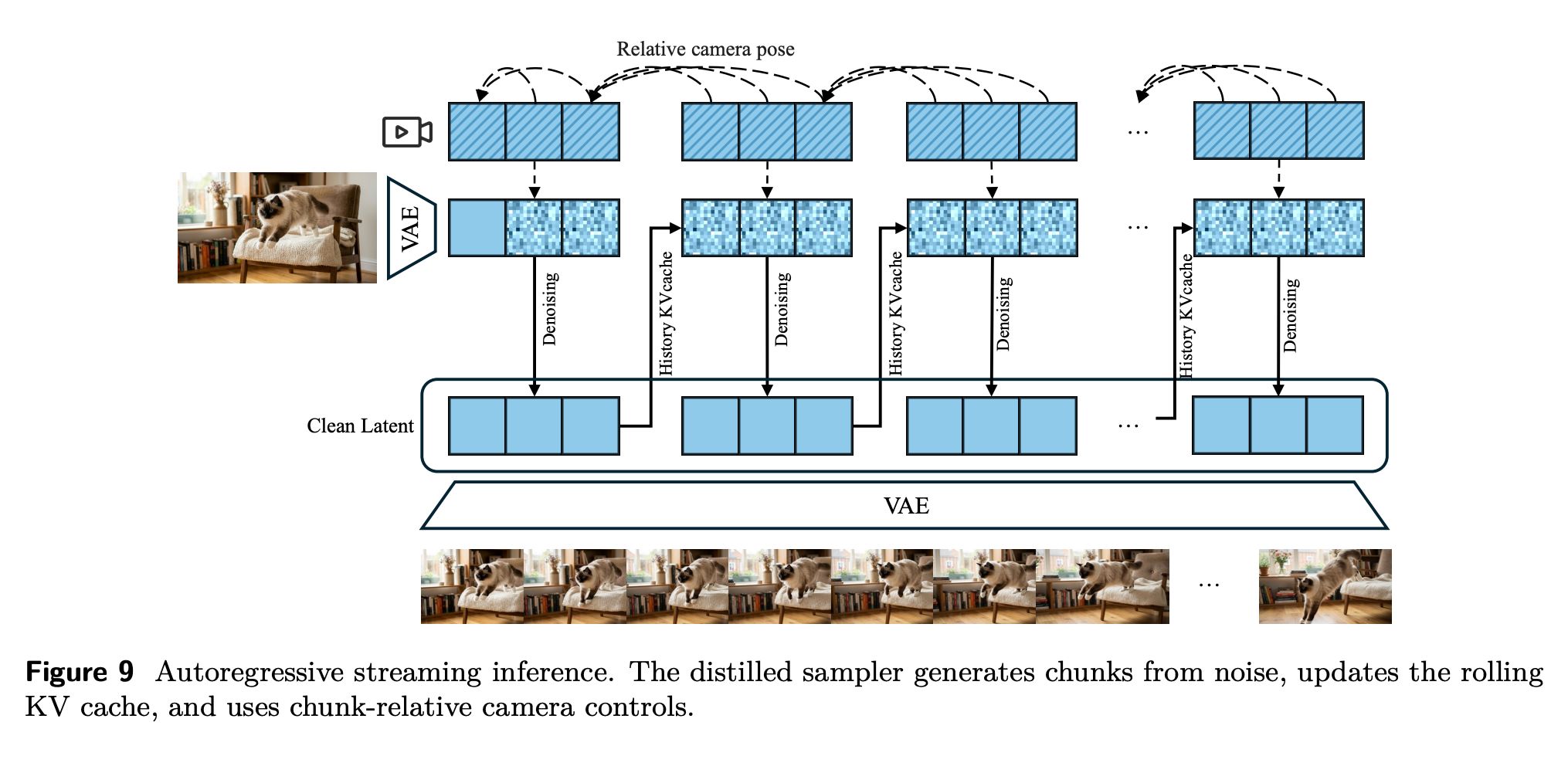
Real-time streaming inference model for interactive worlds
By
–
/5 An interactive world isn't truly interactive if it lags. This model is built specifically for real-time streaming inference. Using DMD-style distillation and an autoregressive rolling KV cache, it generates environments chunk-by-chunk from noise. When paired with asynchronous