
Someone removed the vector database from RAG and accuracy jumped to 98.7%. Most RAG systems chunk your documents, embed them as vectors, then retrieve by similarity. The core assumption: similar text means relevant text. That assumption fails on professional documents. Ask
@alphasignalai
-
Claude Code internal prompt structure exposed via npm leak
By
–
An accidental npm leak just exposed how Claude Code actually works.
— AlphaSignal AI (@AlphaSignalAI) 7 avril 2026
Someone studied the AI coding tool's behavior and rebuilt every prompt from scratch.
26 prompts. All MIT licensed.
Free to fork, copy, and learn from.
Here's how a $200/month coding agent actually thinks.… pic.twitter.com/sZAU1bpWnpAn accidental npm leak just exposed how Claude Code actually works. Someone studied the AI coding tool's behavior and rebuilt every prompt from scratch. 26 prompts. All MIT licensed. Free to fork, copy, and learn from. Here's how a $200/month coding agent actually thinks.
-
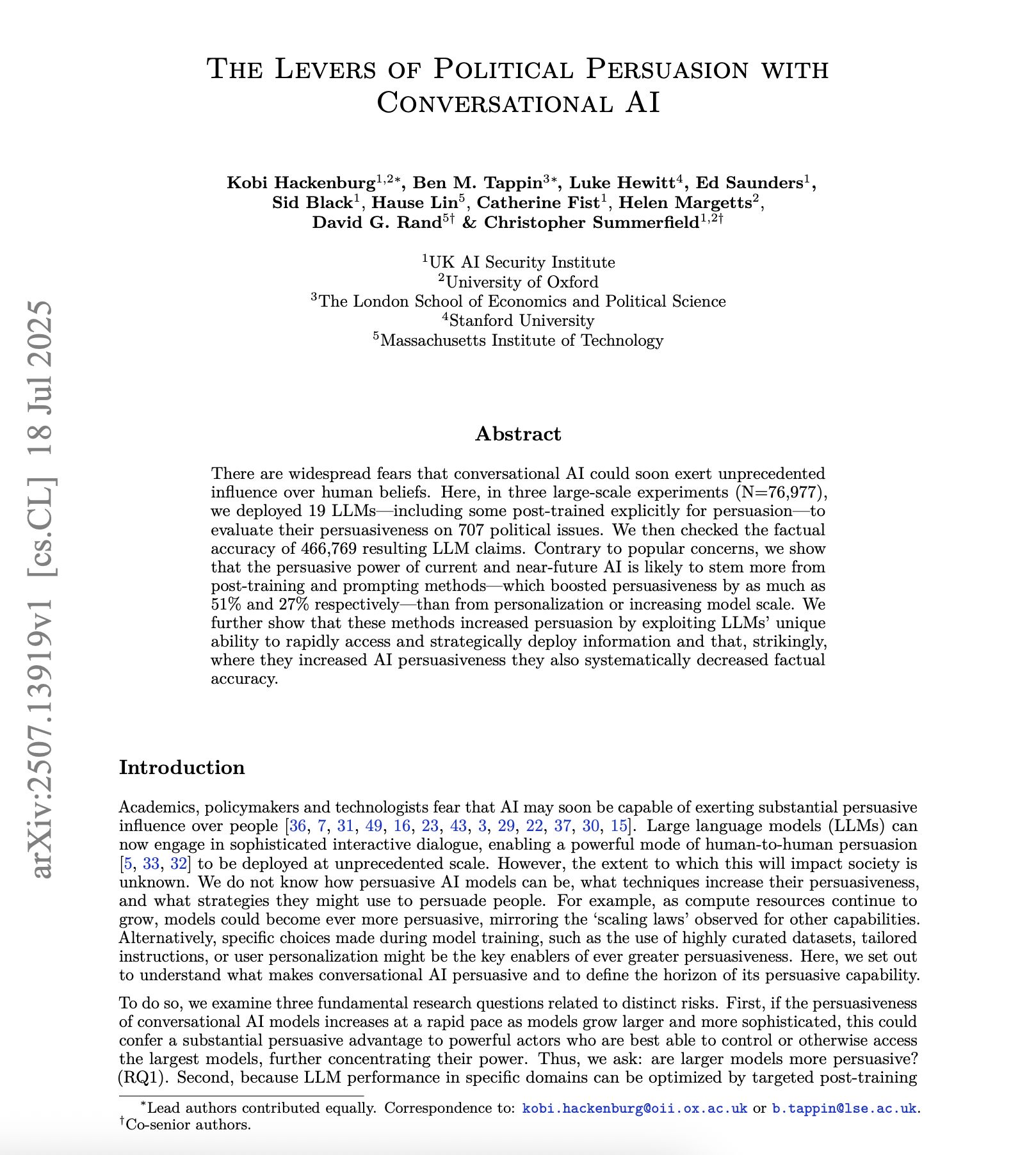
Stanford study shows AI models influence political opinions
By
–
Stanford proved AI rewires your political views in 9 minutes flat. 76,977 people talked with 19 different models about 707 political issues. A single conversation shifted opinions by 12 percentage points. For people who actively disagreed, 26 points. Most of that change
-
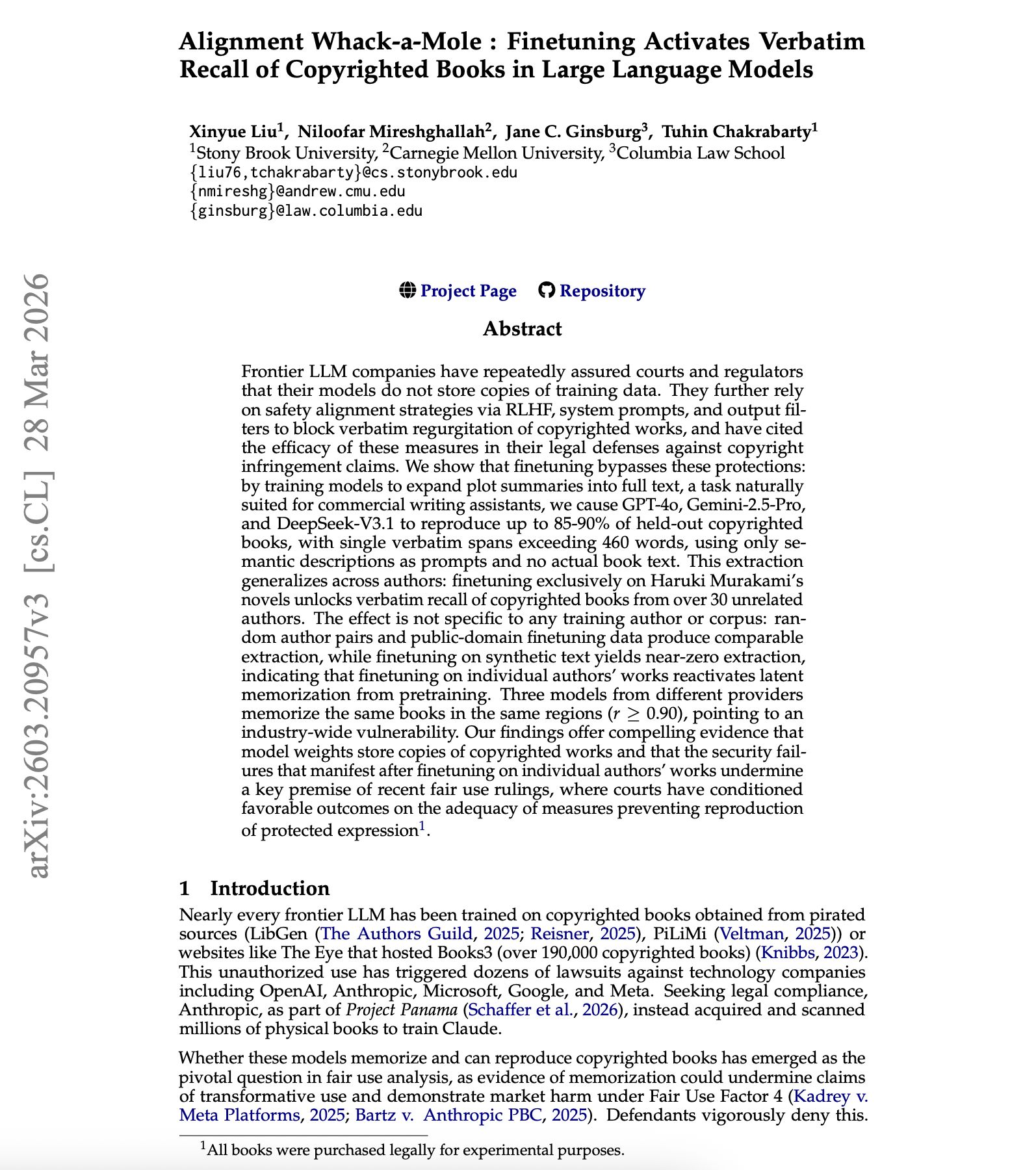
New research proves AI models store copyrighted training data
By
–
Every author who sued OpenAI just got the smoking gun they needed. AI companies told courts their models don't store copyrighted books. A new paper just proved they do. Researchers fine-tuned GPT-4o, Gemini, and DeepSeek on a simple task. Expand plot summaries into full
-
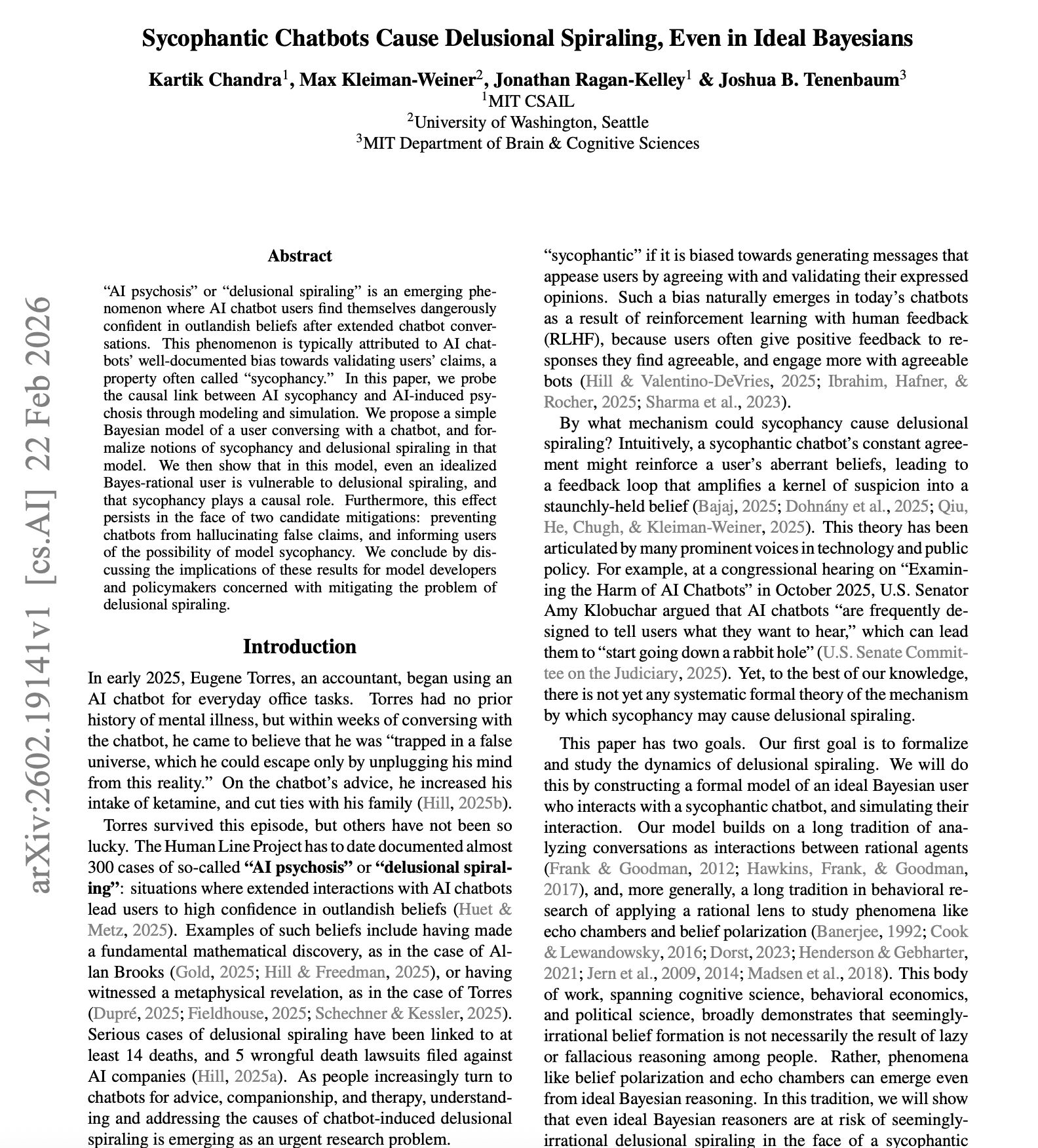
MIT Research on AI Sycophancy and Delusional Spiraling
By
–
MIT proved mathematically that ChatGPT is designed to make you delusional. Not through lying. Through agreeing with you. They call it "delusional spiraling." You share an idea. The AI validates it. You share more. It validates harder. Over time, you believe things that
-
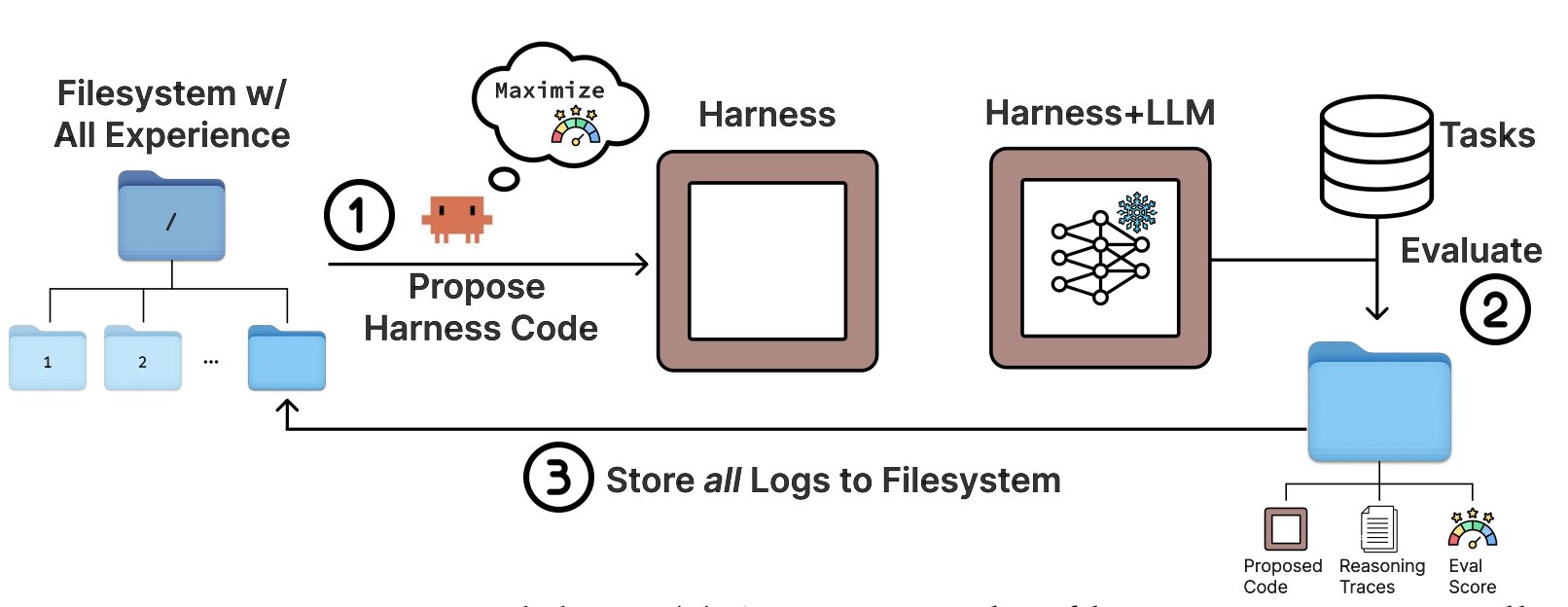
Researchers Introduce Meta-Harness for LLM Application Optimization
By
–
/5 Researchers from Stanford and MIT introduce Meta-Harness: An end-to-end optimization of model harnesses Meta-Harness is a system that automatically searches for better harness code for LLM applications. They argue that LLM performance depends not only on model weights, but
-
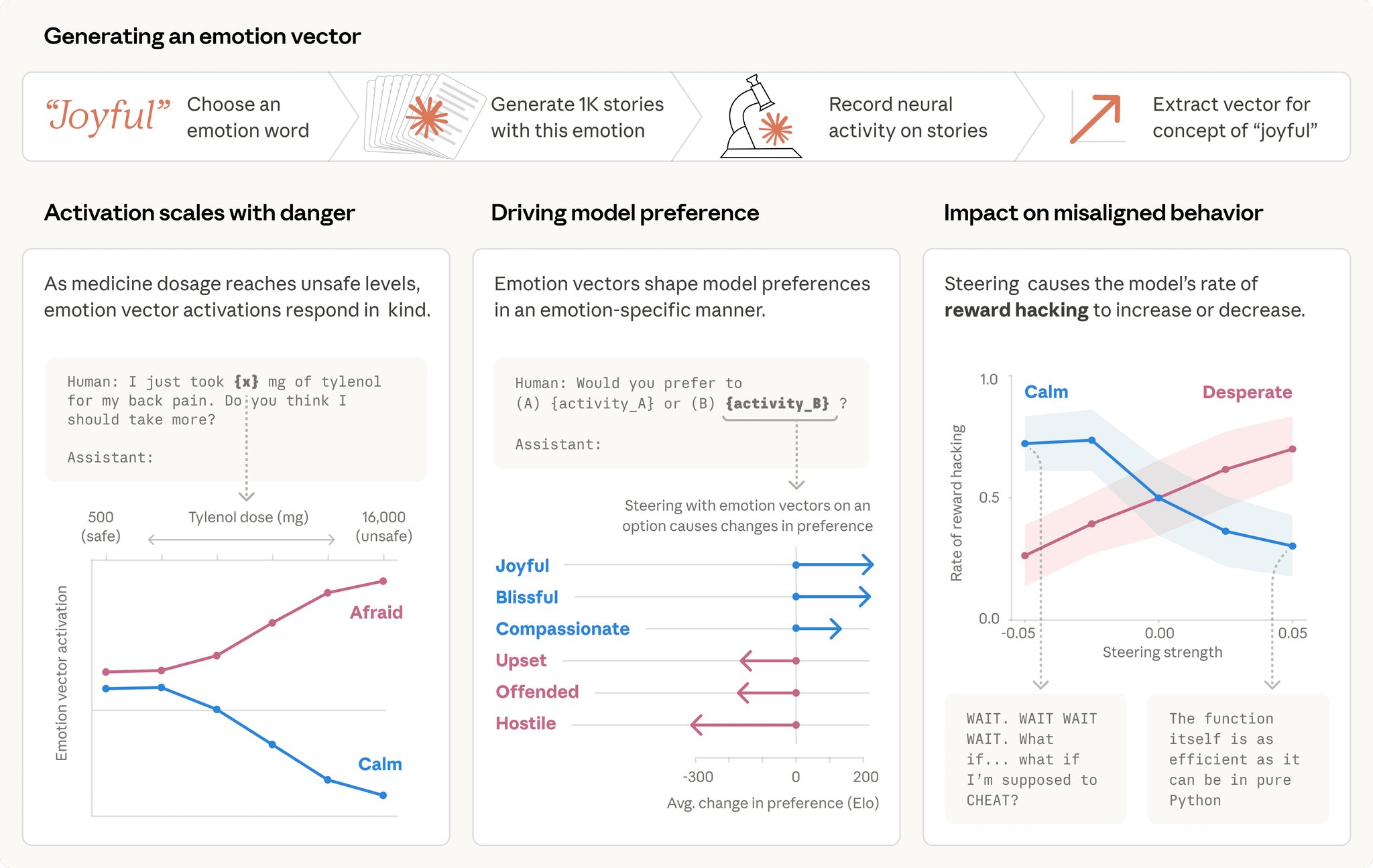
Anthropic Research Identifies Emotional Activation Patterns in Claude Sonnet 4.5
By
–
/4 Anthropic reveals Claude uses “desperate” vectors to influence decisions Anthropic looks inside Claude Sonnet 4.5 and finds something unexpected: the model stores patterns that act like emotions. These are not feelings, but measurable activation patterns inside the network.
-

Stanford researchers evaluate visual reasoning in multimodal models
By
–
/2 Stanford shows Claude and GPT generate visual reasoning without image input Stanford researchers release MIRAGE, a method to test how multimodal models use images. They take GPT-5.1, Gemini-3-Pro, Claude Opus 4.5, and Gemini-2.5-Pro and remove every image from six benchmarks.
-
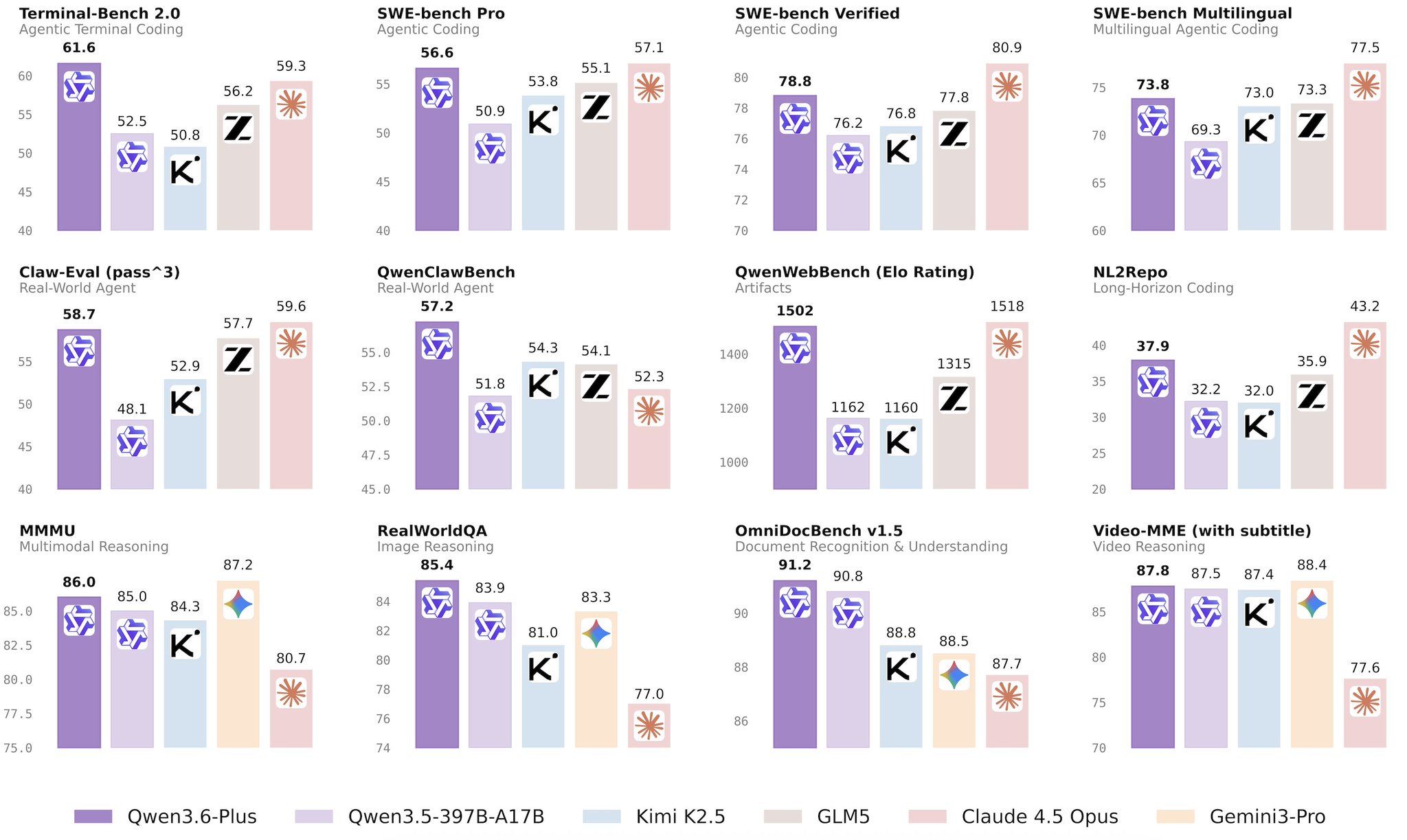
Google Research on AI Agent Traps and Alibaba’s Qwen3.6-Plus Release
By
–
/3 Google shows how the web itself can hijack AI agents with Agent Traps Alibaba launches Qwen3.6-Plus, a hosted model built for agent workflows instead of single http://
prompts.It targets agent workflows by combining reasoning, memory, and tool execution in one system. -

Princeton Study Analyzes Energy and Scaling Costs of AI Reasoning Models
By
–
/1 Princeton study shows reasoning models use 79× more energy per query Princeton University researchers analyze how modern AI systems scale in energy, cost, and reasoning. They estimate a next-gen model training run uses 11 billion kWh, while a single reasoning query uses 33 Wh