Kimi K2.6 just dropped. And it crushed Claude Opus 4.6 on SWE-Bench Pro. – Kimi K2.6: 58.6
– GPT-5.4 xhigh: 57.7
– Gemini 3.1 Pro: 54.2
– Claude Opus 4.6: 53.4 An open-source model is now #1 on agentic coding. The moat around frontier labs is shrinking fast.
@akshay_pachaar
-

Kimi K2.6 Tops SWE-Bench Pro, Beating Claude Opus 4.6
By
–
-
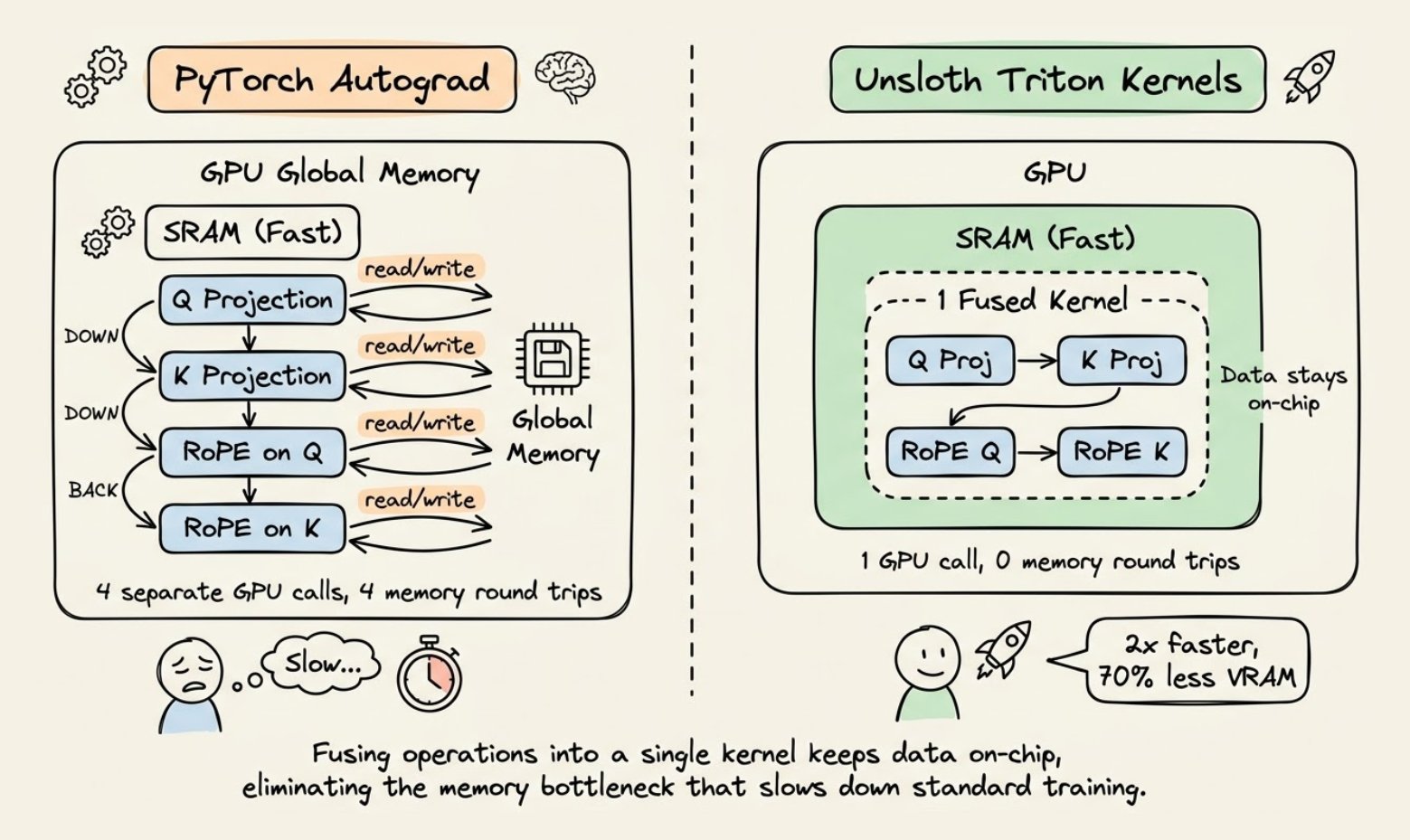
PyTorch Autograd vs. Unsloth Triton Kernels Engineering
By
–
PyTorch Autograd vs. Unsloth Triton Kernels.
— Akshay 🚀 (@akshay_pachaar) 20 avril 2026
The core engineering behind UnslothAI has always been impressive!
Instead of relying on PyTorch's default autograd for backpropagation, Unsloth built their own backprop kernels from scratch in OpenAI's Triton language (a Python-based… https://t.co/4diqlXAZPX pic.twitter.com/TXAXqkJPnzPyTorch Autograd vs. Unsloth Triton Kernels. The core engineering behind UnslothAI has always been impressive! Instead of relying on PyTorch's default autograd for backpropagation, Unsloth built their own backprop kernels from scratch in OpenAI's Triton language (a Python-based
-
Strix GitHub and Shared Academic Paper
By
–
Strix GitHub:
https://github.com/usestrix/strix Paper:
https://papers.ssrn.com/sol3/papers.cfm?abstract_id=6372438
… -
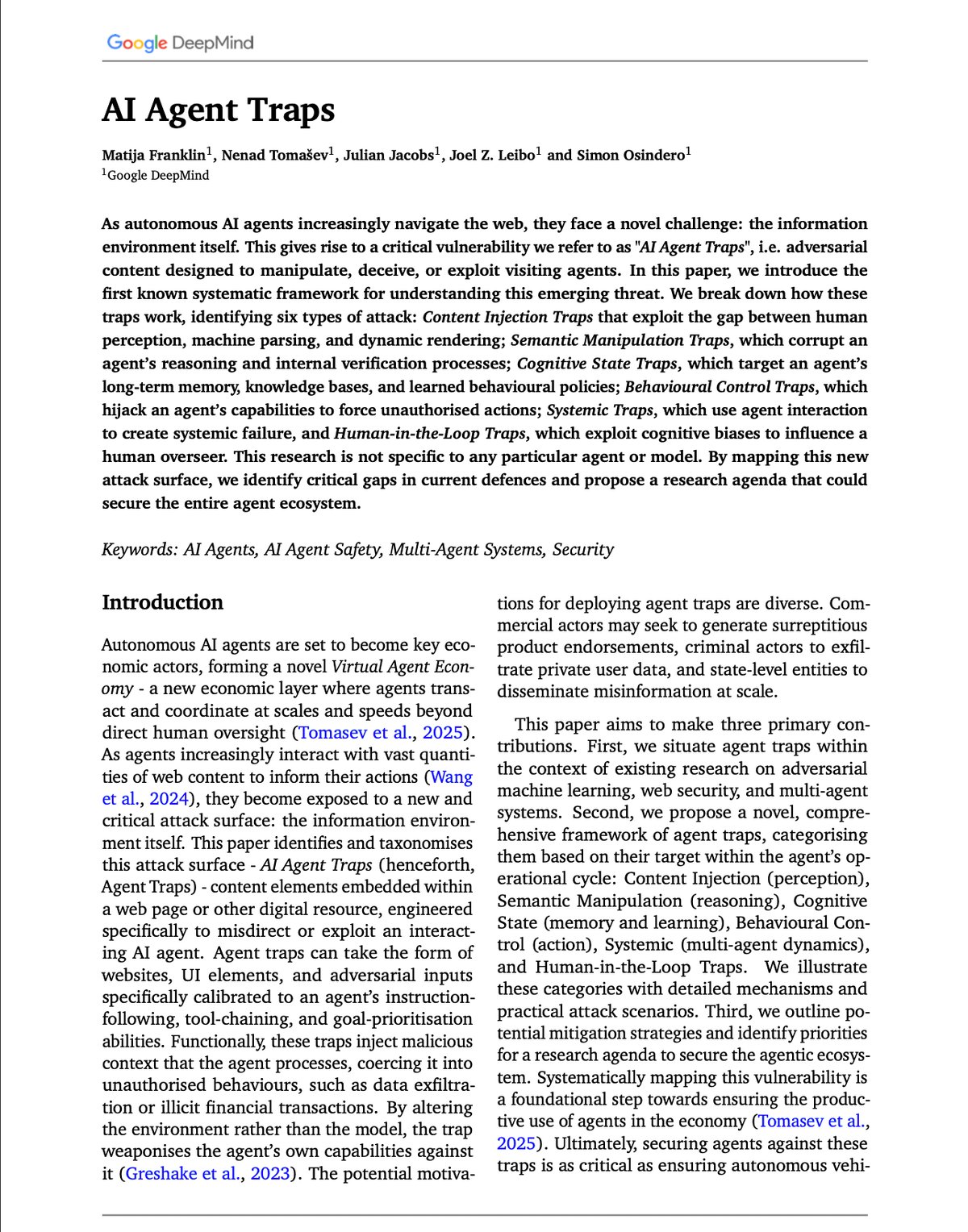
Google DeepMind Reveals AI Agent Traps Framework
By
–
Google DeepMind dropped a paper that should scare every agent builder. It's the first systematic framework for a threat that barely existed two years ago: adversarial content engineered to hijack AI agents browsing the web. They call them AI Agent Traps. The paper maps six
-

Harnessed LLM Agent Architecture: Intelligence Through Modular Composition
By
–
A harnessed LLM agent.
— Akshay 🚀 (@akshay_pachaar) 18 avril 2026
Most people picture this as a model with tools bolted on. The real architecture inverts that relationship.
The model itself is deliberately thin. Intelligence gets pushed outward, and the harness composes it at runtime.
Three dimensions orbit the harness… https://t.co/MiA6mrH64m pic.twitter.com/tBUHQn4e3NA harnessed LLM agent. Most people picture this as a model with tools bolted on. The real architecture inverts that relationship. The model itself is deliberately thin. Intelligence gets pushed outward, and the harness composes it at runtime. Three dimensions orbit the harness
-

Claude Source Code Reverse-Engineered: Agent Architecture Insights
By
–
Claude Code fully dissected! Researchers from UCL reverse-engineered the leaked Claude source. What they found changes how you should think about agent design. Only 1.6% of the codebase is AI decision logic. The other 98.4% is operational infrastructure. Permission gates, tool
-
Essential LLM Fine-Tuning Techniques to Master
By
–
LLM fine-tuning techniques I'd learn if I were to customize them:
— Akshay 🚀 (@akshay_pachaar) 17 avril 2026
Bookmark this.
1. LoRA
2. QLoRA
3. Prefix Tuning
4. Adapter Tuning
5. Instruction Tuning
6. P-Tuning
7. BitFit
8. Soft Prompts
9. RLHF
10. RLAIF
11. DPO (Direct Preference Optimization)
12. GRPO (Group Relative… pic.twitter.com/EiUmhJVQjdLLM fine-tuning techniques I'd learn if I were to customize them: Bookmark this. 1. LoRA
2. QLoRA
3. Prefix Tuning
4. Adapter Tuning
5. Instruction Tuning
6. P-Tuning
7. BitFit
8. Soft Prompts
9. RLHF
10. RLAIF
11. DPO (Direct Preference Optimization)
12. GRPO (Group Relative -
Microsoft Releases Memento Paper and Dataset for AI Research
By
–
find the paper and dataset here: https://
github.com/microsoft/meme
nto?tab=readme-ov-file
…
