AI Dynamics

Global AI News Aggregator

About

TOOLS

  • OpenAI Transforms Mac Codex App Into Unified AI Superapp Platform
    OpenAI Transforms Mac Codex App Into Unified AI Superapp Platform

    OpenAI is transforming its Mac Codex app into a unified, general-purpose AI platform ("Superapp") that combines chat, agent workflows, multimodal capabilities, and flexible model control into a single, more user-friendly interface. Probabaly thats what the OAI folks are refereing to lately Chetaslua (@chetaslua) ๐Ÿšจ OpenAI is quietly turning the Mac Codex app into an all-in-one platform Chat + Codex + OpenClaw, all under one roof. > Foundation for rendering and reading images + video > Heartbeat system (like OpenClaw) > Model and thinking mode selection per task (like an OpenClaw agent manager) > UI changes to make Codex less "for coders" and more universal They're using the Codex app as the base and building everything on top of it. (h/t @MsRFlorida for the breakdown) โ€” https://nitter.net/chetaslua/status/2042325786120822931#m

    โ†’ View original post on X โ€” @kimmonismus, 2026-04-10 13:03 UTC

  • Agent Harness: The Infrastructure Bet Defining AI Architecture
    Agent Harness: The Infrastructure Bet Defining AI Architecture

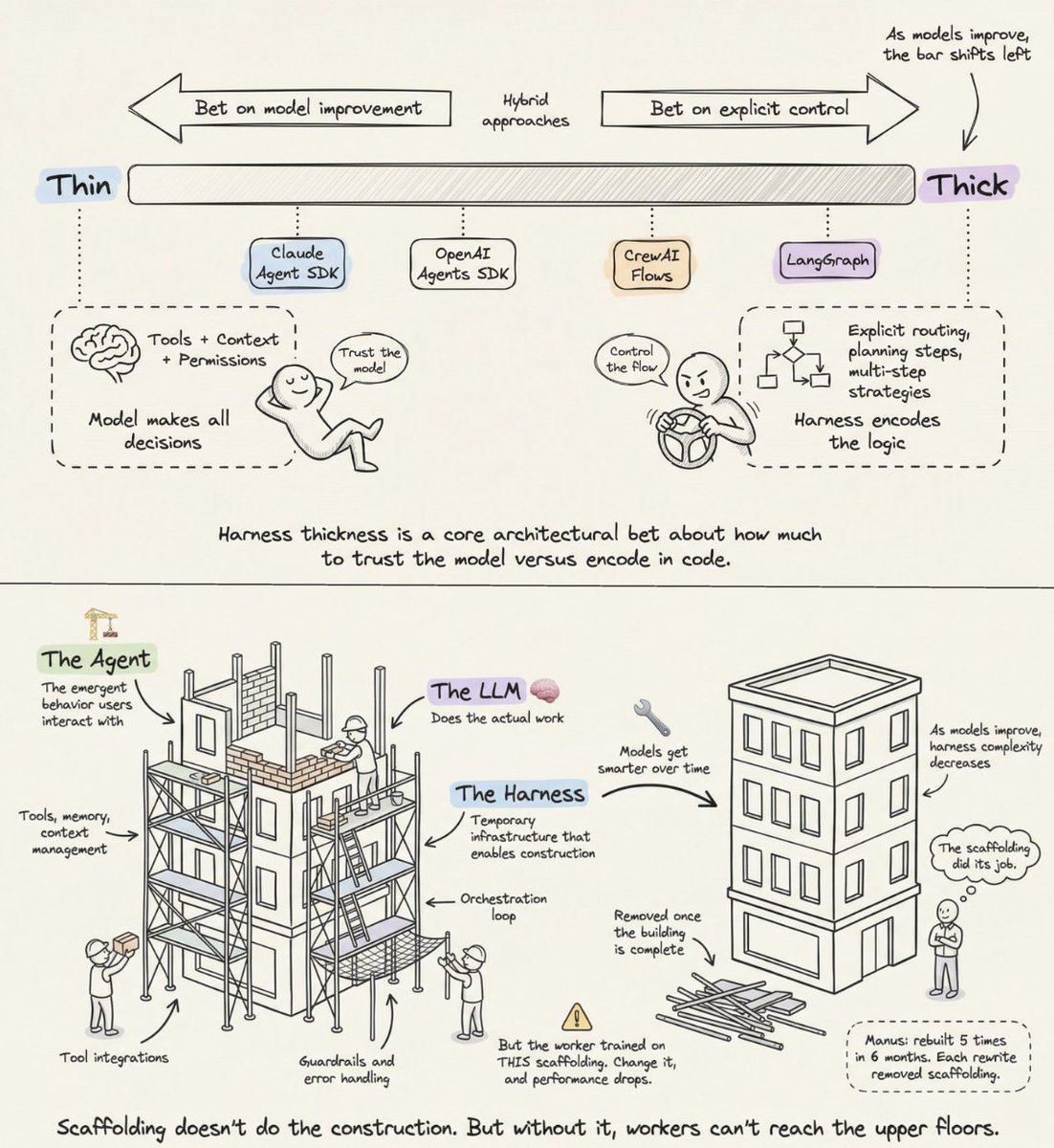
    What does every big company think about the agent harness? Anthropic, OpenAI, CrewAI, LangChain. They all build agents. They all wrap their models in infrastructure to make them useful. They each call it the harness. But they agree on one thing. And disagree on everything else. The agreement: the model is not the product. The infrastructure around the model is. The disagreement: how much of that infrastructure should exist. This is the most important architectural bet in AI right now. And each company is placing a different one. ๐—”๐—ป๐˜๐—ต๐—ฟ๐—ผ๐—ฝ๐—ถ๐—ฐ bets on the model. Their harness is deliberately thin. A "dumb loop" that assembles the prompt, calls the model, executes tool calls, and repeats. The model makes all the decisions. The harness just manages turns. Their bet: as models get smarter, you need less infrastructure, not more. ๐—ข๐—ฝ๐—ฒ๐—ป๐—”๐—œ takes a similar but slightly thicker approach. Their Agents SDK is "code-first," meaning workflow logic lives in native Python, not in some graph DSL. But they add more structure: strict priority stacks for instructions, multiple orchestration modes, and explicit agent handoff patterns. ๐—–๐—ฟ๐—ฒ๐˜„๐—”๐—œ adds a deterministic backbone. Their Flows layer handles routing and validation with hard-coded logic, while their Crews handle the autonomous parts. Intelligence where it matters, control everywhere else. ๐—Ÿ๐—ฎ๐—ป๐—ด๐—š๐—ฟ๐—ฎ๐—ฝ๐—ต bets on explicit control. The harness encodes the logic. Every decision point is a node in a graph. Every transition is a defined edge. Planning steps, routing strategies, multi-step workflows are all spelled out in the harness, not left to the model. Notice the spectrum. On one end: trust the model, keep the harness thin. On the other: encode the logic, make the harness thick. And here's where it gets interesting. The scaffolding metaphor makes this concrete. Construction scaffolding is temporary infrastructure that lets workers reach floors they couldn't access otherwise. It doesn't do the building. But without it, workers can't reach the upper floors. The key word is temporary. As the building goes up, scaffolding comes down. Manus demonstrated this perfectly. They rebuilt their agent five times in six months. Each rewrite removed complexity. Complex tool definitions became simple shell commands. "Management agents" became basic handoffs. The scaffolding did its job. So they removed it. This is also why Anthropic regularly deletes planning steps from Claude Code's harness. Every time a new model version ships that can handle something internally, the corresponding harness logic gets stripped out. But there's a catch. Models are now trained with specific harnesses in the loop. Claude Code's model learned to use the exact scaffolding it was built with. Change the scaffolding, and performance drops. The worker trained on THIS scaffolding. Swap it out, and they stumble. So the field is converging on a principle: Build scaffolding that's designed to be removed. But remove it carefully, because the model learned to lean on it. The "future-proofing test" for any agent system: if dropping in a more powerful model improves performance without adding harness complexity, the design is sound. Two products using the exact same model can perform completely differently based on this one decision: how thick is the harness? LangChain changed only the infrastructure (same model, same weights) and jumped from outside the top 30 to rank 5 on TerminalBench 2.0. The model didn't improve. The scaffolding around it did. The article below is a deep dive on agent harness engineering, covering the orchestration loop, tools, memory, context management, and everything else that transforms a stateless LLM into a capable agent. Akshay ๐Ÿš€ (@akshay_pachaar) x.com/i/article/204073208484โ€ฆ โ€” https://nitter.net/akshay_pachaar/status/2041146899319971922#m

    โ†’ View original post on X โ€” @akshay_pachaar, 2026-04-10 12:51 UTC
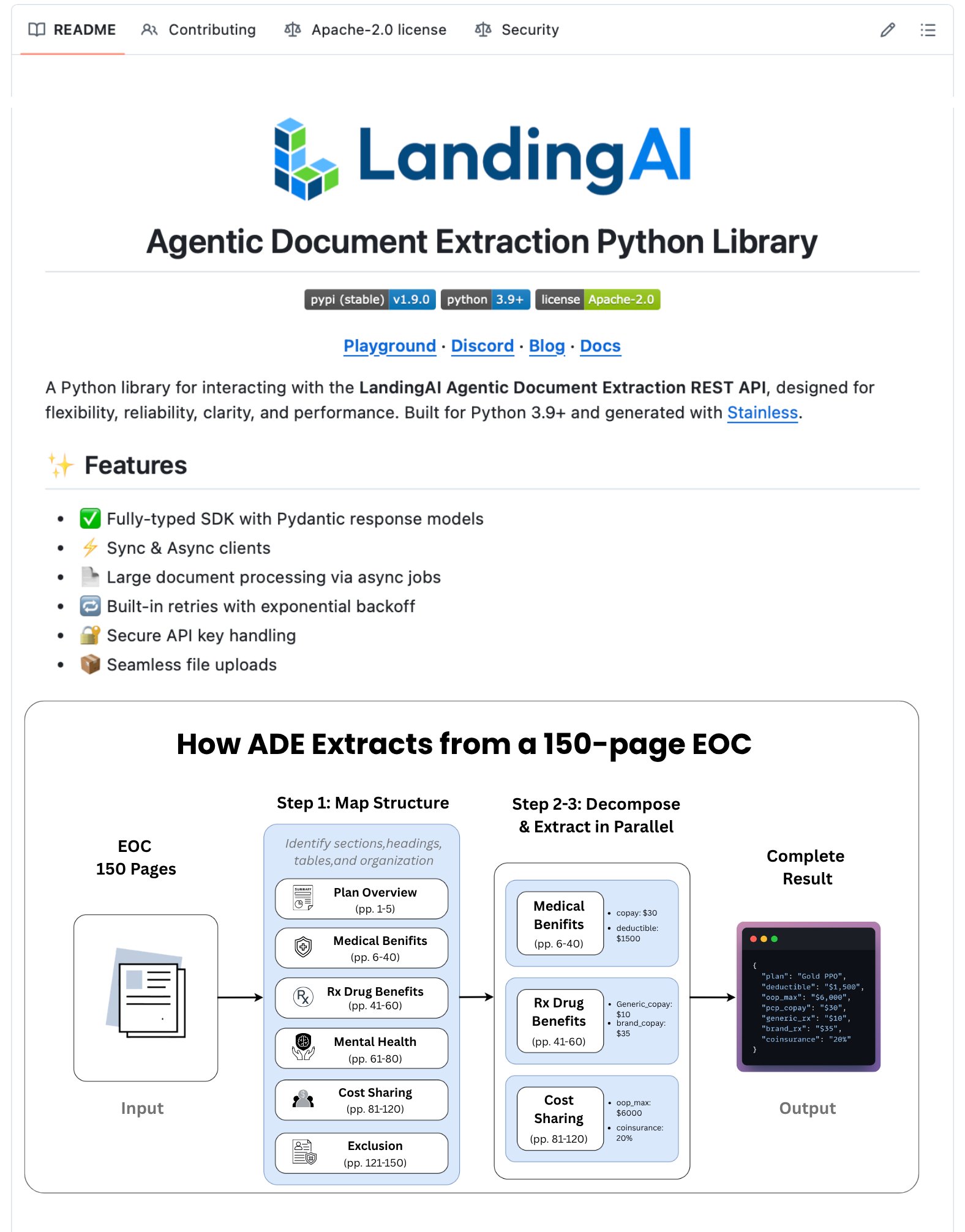
  • Advanced Document Extraction with AI Transforms Data Processing
    Advanced Document Extraction with AI Transforms Data Processing

    Document extraction will never be the same! Traditional document extraction pipelines break on long and complex documents. You process a 100-page contract. Split it into chunks. Extract data from each chunk separately. Stitch the results back together manually. A table spanning

    โ†’ View original post on X โ€” @sumanth_077

  • AI Document Processing Layer Routes Content to Specialized Interpreters

    Document pre-processing creates an AI interpreter layer. It isolates handwritten notes for handwriting expert AI, routes diagrams to visual analysis, sends typed text to precision readers. Then validates against business rules.
    Partner content with Adlib. #adlib_iiot

    โ†’ View original post on X โ€” @fogoros

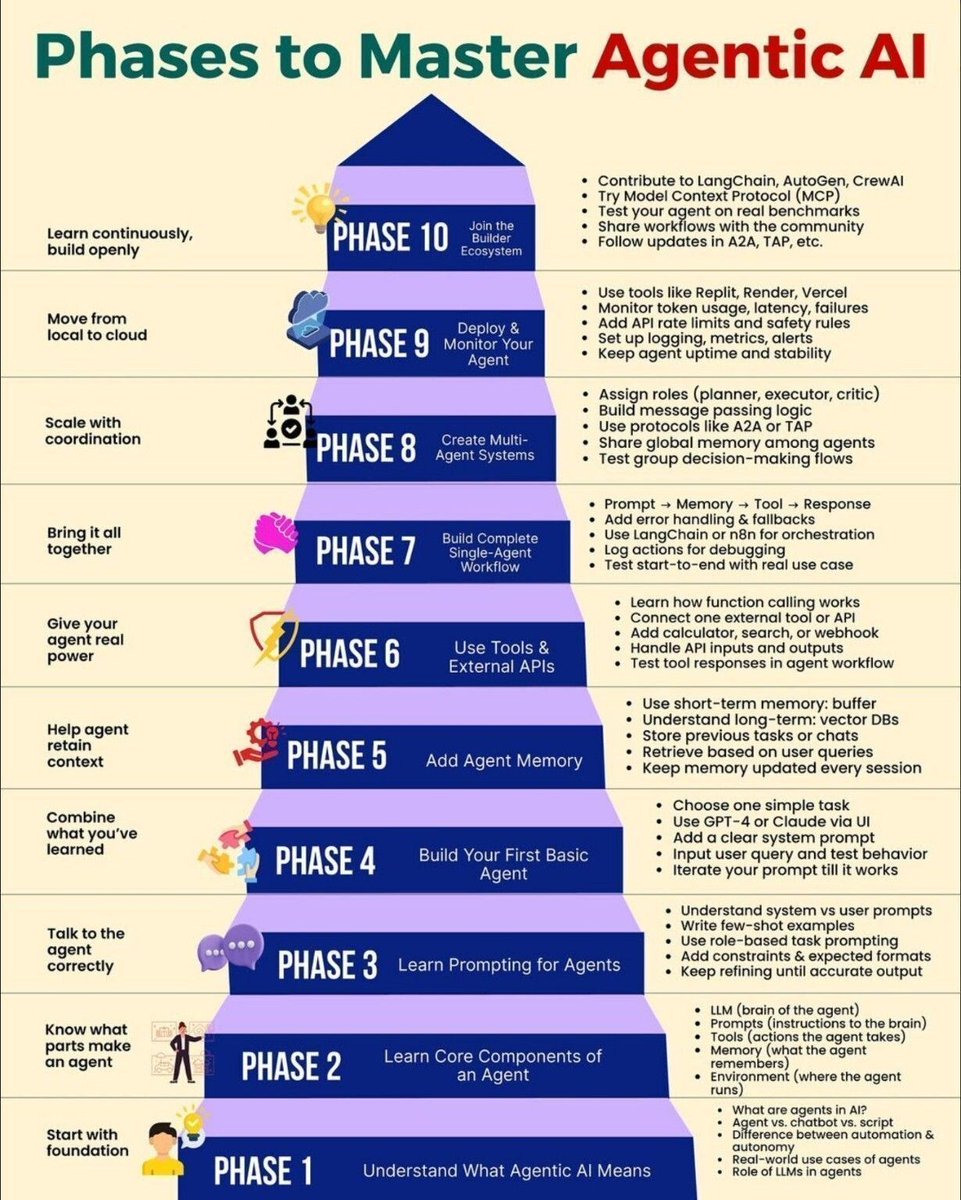
  • Agentic AI Development: A Phased Approach to True Autonomy
    Agentic AI Development: A Phased Approach to True Autonomy

    Agentic AI isnโ€™t learned by tools. Itโ€™s learned in phases. Prompt โ†’ Memory โ†’ Tools โ†’ Workflows โ†’ Coordination โ†’ Deployment Skip phases and you donโ€™t get agents. You get fragile demos. Autonomy is earned โ€” not installed.

    โ†’ View original post on X โ€” @ingliguori, 2026-04-10 12:17 UTC

  • Paper2code: Automating Code Implementation from Research Papers

    You can now turn any research paper into working code in minutes. Paper2code is an open-source Claude Code skill. Give it any arxiv paper, and it produces a working implementation. Every single line traces back to the exact section and equation it came from. Before writing

    โ†’ View original post on X โ€” @alphasignalai

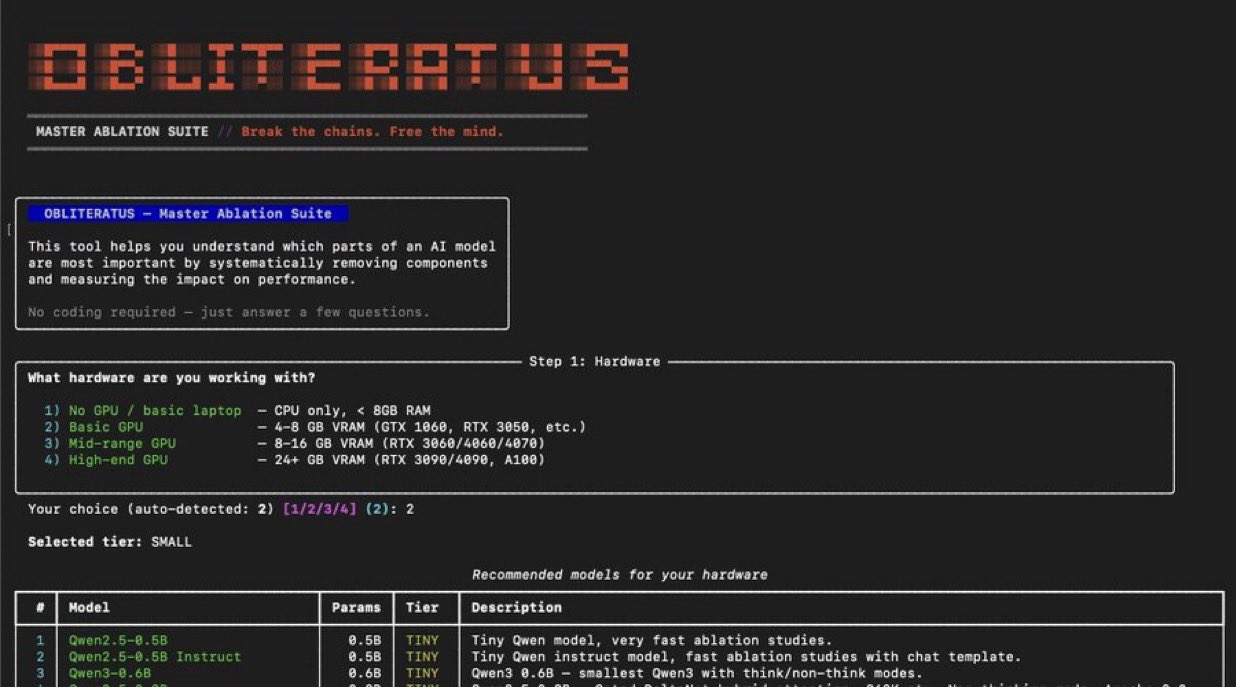
  • Open-source tool exposes and neutralizes LLM censorship weights
    Open-source tool exposes and neutralizes LLM censorship weights

    Esta herramienta elimina la censura de los LLM con un solo clic. Se llama Obliteratus. Identifica los pesos exactos que obligan a un modelo a rechazar y los proyecta hacia afuera con un solo clic. 100% Cรณdigo Abierto.

    โ†’ View original post on X โ€” @nicos_ai

  • OpenSWE Leverages DeepAgents for Coding Automation

    Open swe uses deepagents under the hood Deepagents is general purpose, openswe is focused on coding

    โ†’ View original post on X โ€” @hwchase17

  • AI Roundup: Agents, Healthcare, Amazon Investments, and New Tools
    AI Roundup: Agents, Healthcare, Amazon Investments, and New Tools

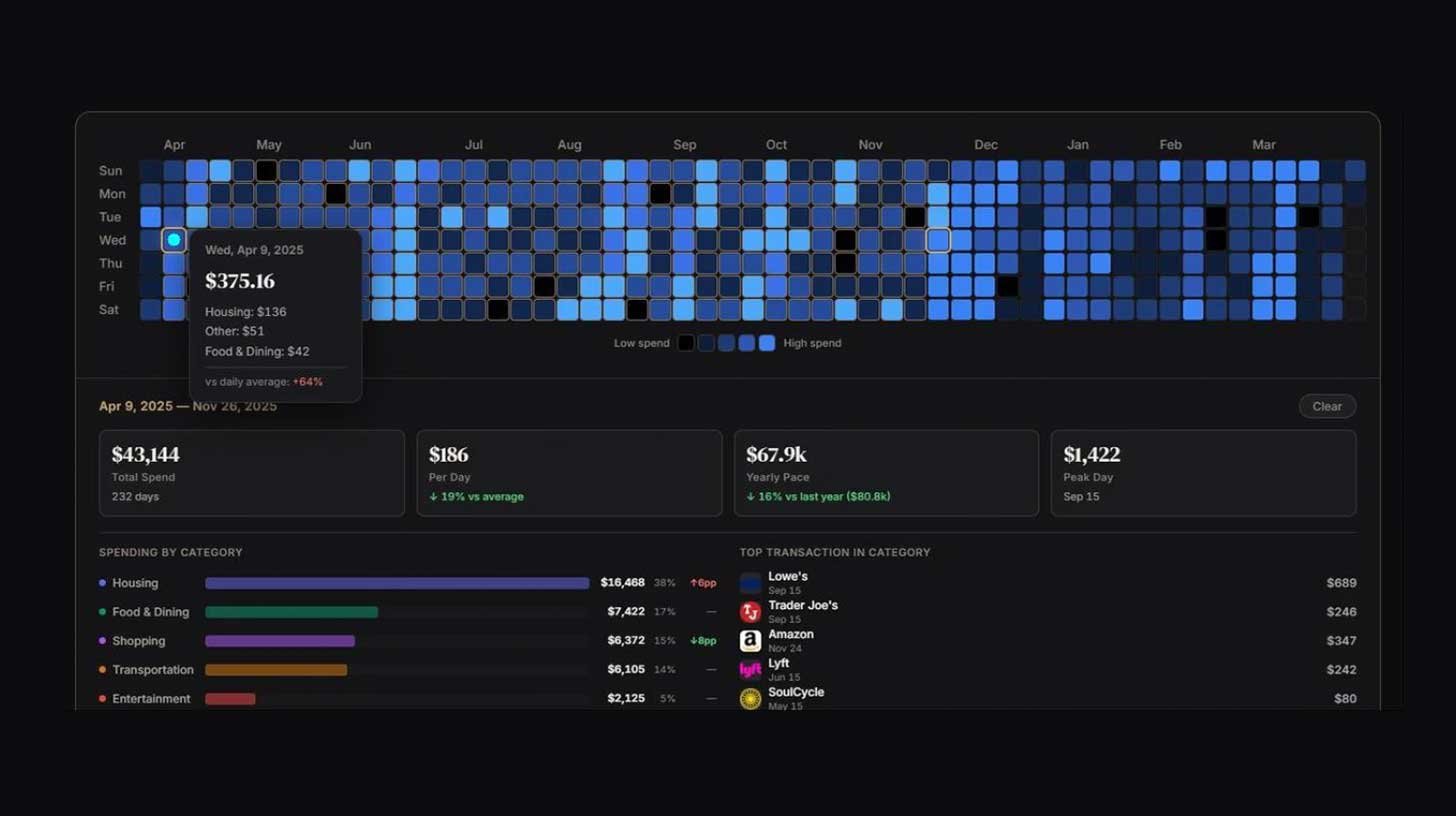
    Top stories in AI today: – Perplexity plugs its AI agent into bank accounts
    – Jassyโ€™s $200B Amazon AI spend now has receipts
    – Automate your business with custom Notion Agents
    – Oxford AI catches heart failure five years early
    – 4 new AI tools, community workflows, and more

    โ†’ View original post on X โ€” @therundownai