Feed all the docs into Claude as a plain text file and have Claude teach you about MCP: https://
modelcontextprotocol.io/llms-full.txt
TOOLS
-
Using Claude to Learn MCP from Documentation
By
–
-
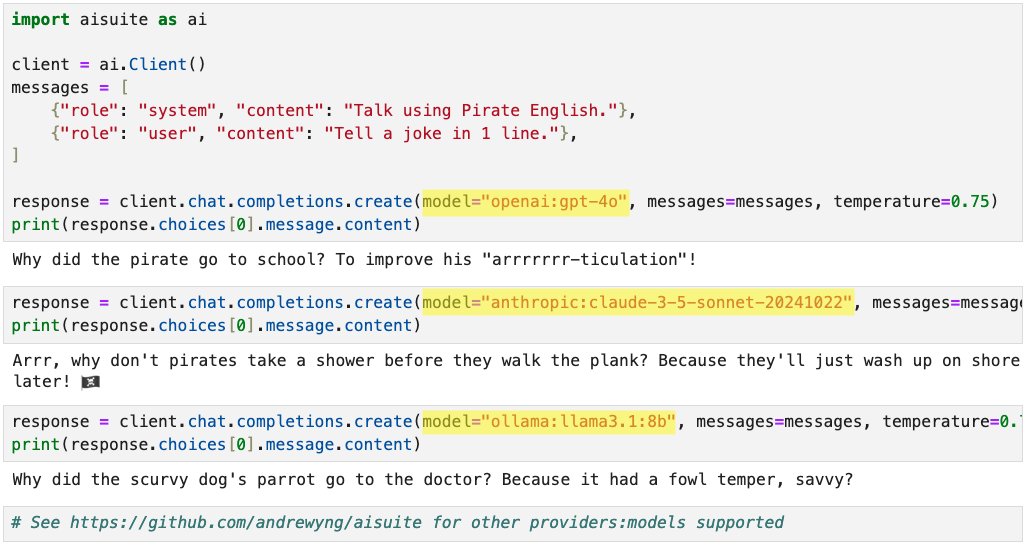
New Open-Source Python Package Simplifies LLM Integration
By
–
Announcing new open-source Python package: aisuite! This makes it easy for developers to use large language models from multiple providers. When building applications I found it a hassle to integrate with multiple providers. Aisuite lets you pick a "provider:model" just by
-
MCP: Open Standard for LLM Integrations Like LSP for IDEs
By
–
Like LSP did for IDEs, we're building MCP as an open standard for LLM integrations. Build your own servers, contribute to the protocol, and help shape the future of AI integrations:
-
Get Started with MCP in Under 5 Minutes Quick Guide
By
–
Get started with MCP in <5 minutes – we've built servers for GitHub, Slack, SQL databases, local files, search engines, and more. Install the Claude Desktop app and follow our step-by-step guide to connect your first server: http://
modelcontextprotocol.io/quickstart -
MCP: Universal Protocol Connecting AI to Any Data Source
By
–
We're building a world where AI connects to any data source through a single, elegant protocol—MCP is the universal translator. Integrate MCP once into your client and connect to data sources anywhere.
-
MCP Remote Server Support Coming with Enterprise Authentication
By
–
Right now, MCP is only supported locally – servers must run on your own machine. But we're building remote server support with enterprise-grade auth, so teams can securely share their context sources across their organization.
-
MCP Servers: Beyond Data Sharing Tools and Prompts
By
–
An MCP server shares more than just data as well. In addition to resources (files, docs, data), they can expose:
– Tools (API integrations, actions)
– Prompts (templated interactions) -
MCP Protocol Unifies Local and Remote Resource Access
By
–
Part of what makes MCP powerful is that it handles both local resources (your databases, files, services) and remote ones (APIs like Slack or GitHub's) through the same protocol
-
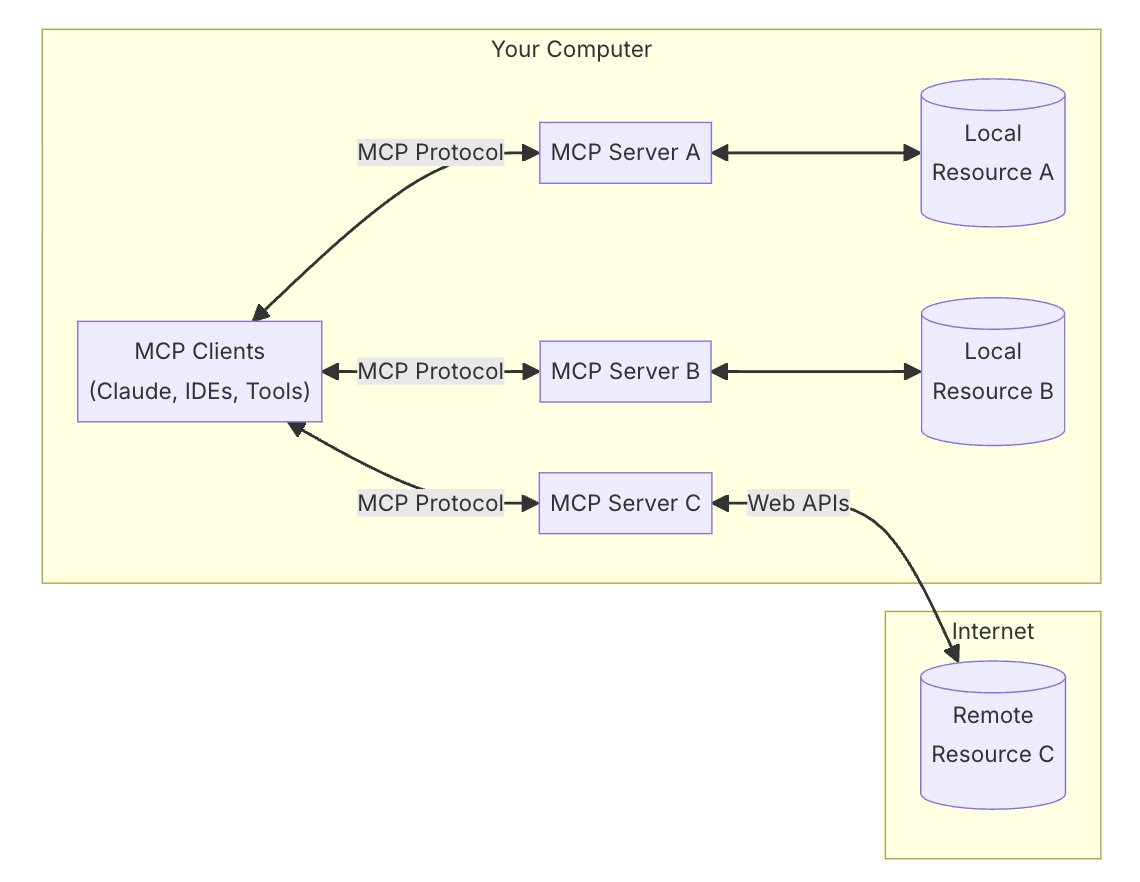
MCP Architecture: Client-Server Model for Service Integration
By
–
At its core, MCP follows a client-server architecture where multiple services can connect to any compatible client. Clients are applications like Claude Desktop, IDEs, or AI tools. Servers are light adapters that expose data sources.
-
MCP: Standard Protocol for LLM External System Integration
By
–
Getting LLMs to interact with external systems isn't usually that easy. Today, every developer needs to write custom code to connect their LLM apps with data sources. It's messy, repetitive work. MCP fixes this with a standard protocol for sharing resources, tools, and prompts.