
Can a smart space understand suspicious movement? FlowSentry-Wake, a #SmarterSpaces project by Zijie Ning & Enmin Lin, will use optical flow + edge AI to spot stealthy motion — even crawling intruders. On-device. Low power. No cloud.#EdgeAI #SmartSecurity #ComputerVision
SYSTEMS
-
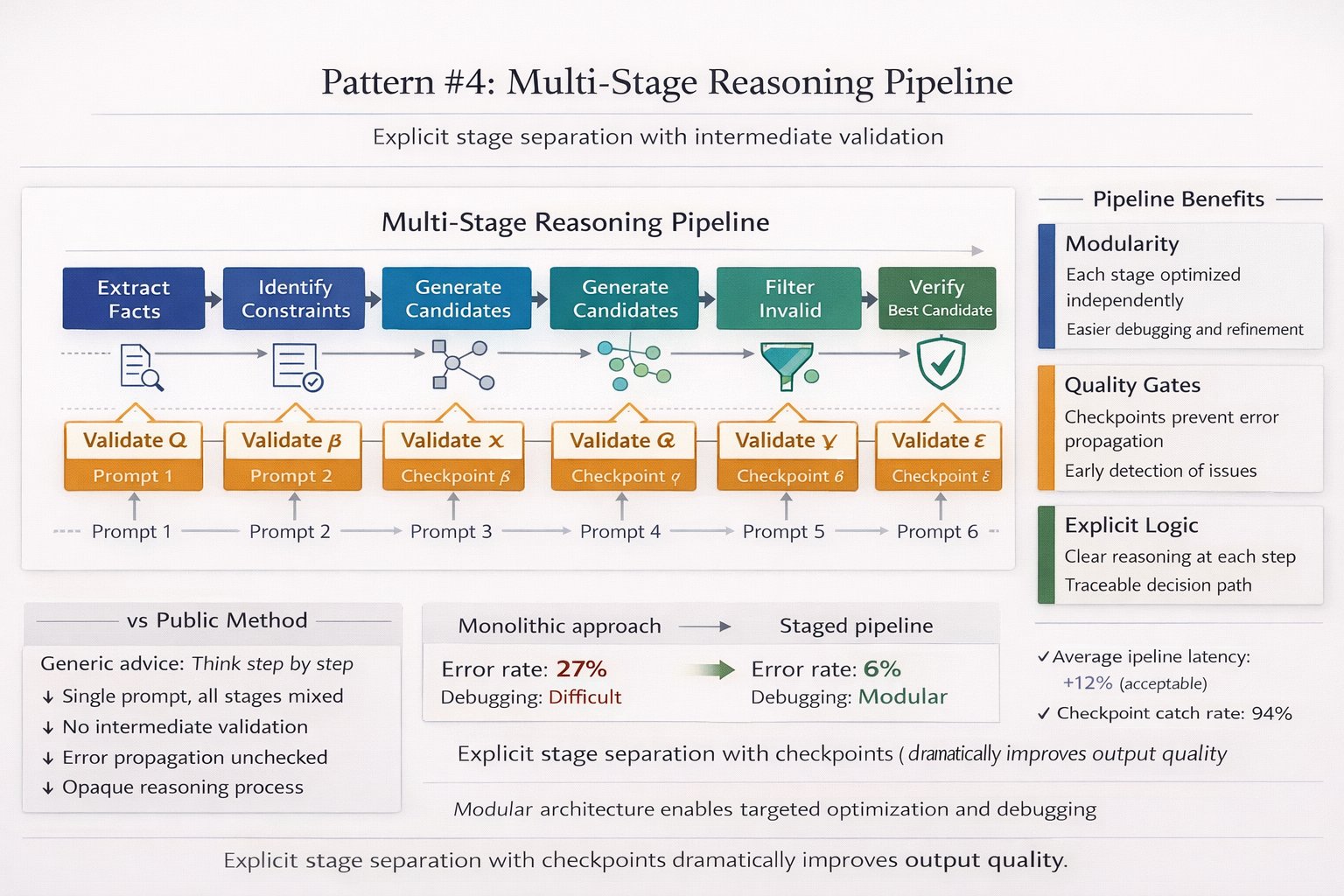
Multi-Stage Reasoning Pipelines with Explicit Stage Separation
By
–
Pattern #4: Multi-Stage Reasoning Pipelines Public: "Think step by step" Internal: Explicit stage separation with intermediate checkpoints. "Stage 1: Extract facts. Stage 2: Identify constraints. Stage 3: Generate candidates. Stage 4: Filter. Stage 5: Rank. Stage 6: Verify."
-

Filesystem Truth Inevitably Becomes Database Architecture
By
–
seeing how langchain and opencode have made the topic cool again for agent memory/state i present how every filesystem-source-of-truth eventually turns into database
-
Universe as Maximum Entropy Distribution Given Symmetries
By
–
The universe is the maximum entropy distribution given its symmetries.
-
Fine Motor Control and Attention Drive Optimal Brain Size
By
–
When you add fine motor control to a chimp’s vocal cords, suddenly the optimal brain size explodes. Same with adding attention to a data center.
-
System matches complexity to problem without wasted cycles
By
–
Best part: it doesn’t overthink simple questions. Ask “what’s 2+2?” → Direct answer.
Ask “should I pivot my business model?” → Full architecture activates. The system matches complexity to the problem. No wasted cycles. -
How soon will AI coding bots build an entire OS?
By
–
How long before someone uses AI coding bots to build a whole OS from scratch?
-
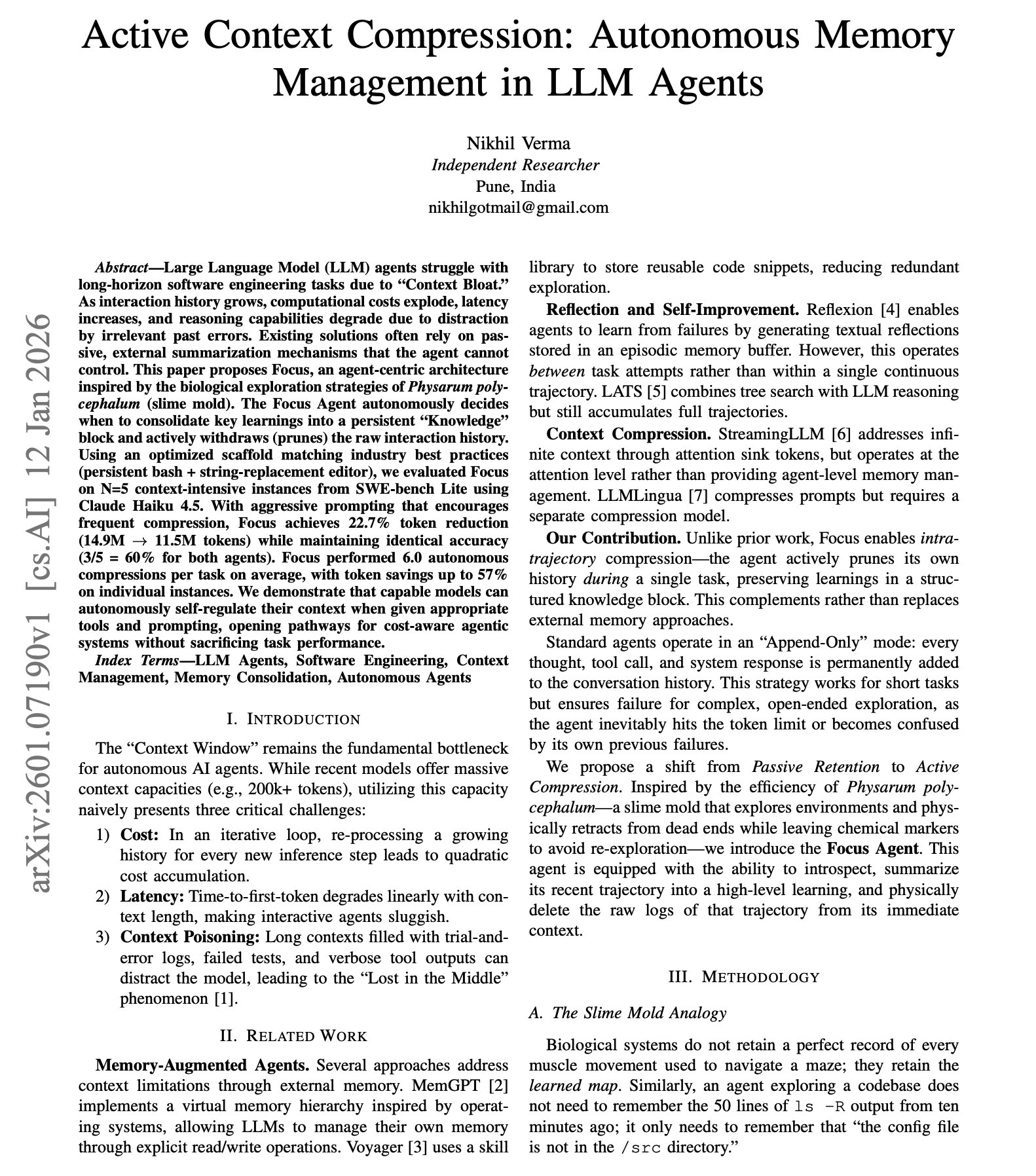
Autonomous Memory Management in LLM Agents
By
–
Autonomous Memory Management in LLM Agents LLM agents struggle with long-horizon tasks due to context bloat. As interaction history grows, computational costs explode, latency increases, and reasoning degrades from distraction by irrelevant past errors. The standard approach
-
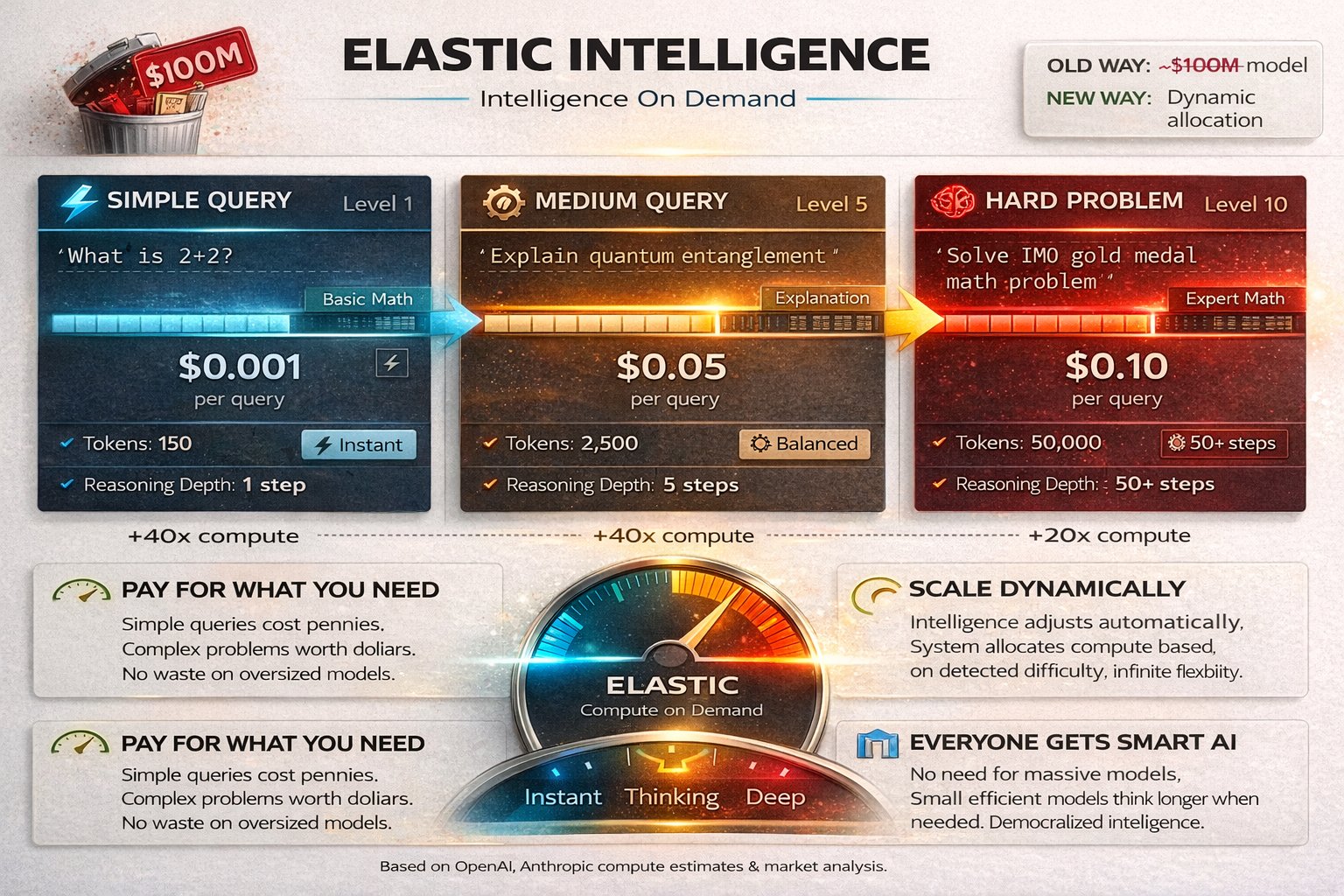
Dynamic compute allocation adjusts thinking time based on query difficulty
By
–
Dynamic compute allocation is the killer feature. Easy query: 0.1 seconds, minimal cost
Medium complexity: 2 seconds, moderate cost
Hard problem: 60 seconds, deep reasoning The model automatically adjusts thinking time based on difficulty. Pay for intelligence only when you -

Elastic Intelligence: small model, dynamic per-query scaling
By
–
This makes $100M training runs obsolete. Why spend months training a massive model when you can deploy a smaller one and scale intelligence dynamically per query? Hard math problem? Give it 60 seconds to think.
Simple question? Answer instantly. Intelligence becomes elastic