
/5 Learning is Forgetting: LLM Training As Lossy Compression This research proposes that LLMs are best understood as systems of lossy compression, where training functions by retaining only the data relevant to the model's objective. Using Information Bottleneck theory, the
RESEARCH
-

TriAttention: Trigonometric KV Cache Compression for Long-Context LLMs
By
–
/4 TriAttention: Trigonometric KV Compression for Efficient Long Reasoning LLMs TriAttention is a novel KV cache compression method designed to optimize long-context reasoning in LLMs by addressing memory bottlenecks. The researchers discovered that pre-RoPE query and key
-

In-Place Test-Time Training Enables Dynamic Adaptation in Deployed LLMs
By
–
/3 In-Place Test-Time Training for Large Language Models Standard LLMs cannot learn new information after deployment. To solve this, researchers built In-Place Test-Time Training (In-Place TTT), a "drop-in" solution that adds dynamic adaptation to existing models without
-

Netflix Open-Sources VOID Framework for Video Object Removal
By
–
/1 Netflix presents VOID, an open-source framework enabling video object removal with updated motion Netflix introduces VOID, an open-source framework that removes objects from videos and updates the physical interactions they cause. Most tools only fill in pixels behind
-
Meta’s Neural Computer Model Runs Computation and Memory Internally
By
–
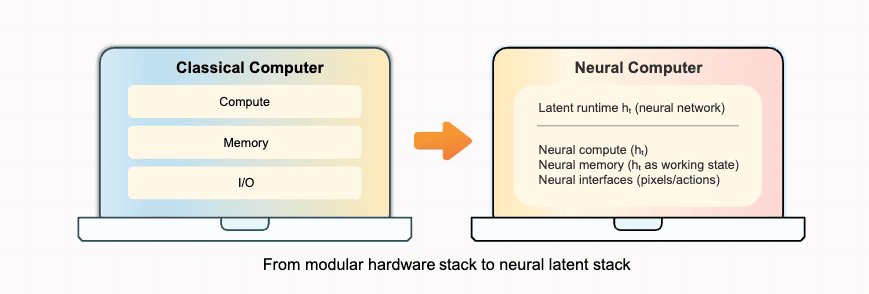
/2 Meta presents Neural Computer, a model that runs computation, memory, and I/O inside one learned system Meta AI proposes a shift from models that use computers to models that act as computers. Instead of calling APIs or tools, the model executes tasks directly from learned
-
Top AI Research Papers of the Week April 6-12
By
–
Top Papers of the Week (April 6 – 12) 1. Netflix's Object and Interaction Deletion (VOID)
2. Meta AI's Neural Computer 3. In-Place Test-Time Training
4. TriAttention: Efficient Long Reasoning with Trigonometric KV Compression
5. Learning is Forgetting: LLM Training As -
Nvidia hits physics constraints on node die architecture
By
–
Nvidia hitting physics constraints on node die architecture is the signal that the scaling laws conversation is about to get a lot more complicated at the infrastructure level.
-
Three-case framework for AI problem analysis and implications
By
–
The three-case framework is the right way to think about this. Regression, intentional optimization, and user psychology are genuinely distinct problems with different implications.
-
Psychology of AI Review Processes Improves Output Quality
By
–
The psychology here is solid. Telling Claude that another model will review the output raises the perceived stakes and tends to produce more careful, thorough work.
-
Anthropic Effort Default Change Causes Measurable Accuracy Drop
By
–
The effort default change from high to medium that Anthropic confirmed is real and measurable. A 15-point accuracy drop in days on a specific benchmark needs a citation.