AI Dynamics

Global AI News Aggregator

About

REGULATION

  • Opportunities and Challenges in AI Regulation

    Opportunities and challenges in AI regulation #AI #AIio #AIInnovation #ML #DataScience #Futureofwork @Scobleizer @AndrewYNg @drfeifei @KirkDBorne @fchollet @rowancheung @antgrasso ow.ly/eQ3C30sTyEW [Translated from EN to English]

    → View original post on X — @terence_mills, 2026-03-05 19:00 UTC

  • AI and Chips: Geopolitical Implications of a Taiwan Conflict
    AI and Chips: Geopolitical Implications of a Taiwan Conflict

    Three things everyone ought to know about AI and geopolitics 1. the US might well lose a battle over Taiwan
    2. if they did, the impact on AI and chips would be gigantic
    3. the Iran war sets a precedent that China might point to if the China were to invade Taiwan. The US needs

    → View original post on X — @garymarcus

  • Interview with Gregory Allen on Anthropic and the U.S. Government

    3-5-2026 ($) An Interview with Gregory Allen About Anthropic and the U.S. Government https://stratechery.com/2026/an-interview-with-gregory-allen-about-anthropic-and-the-u-s-government/ [Translated from EN to English]

    → View original post on X — @benthompson, 2026-03-05 11:00 UTC

  • US Supreme Court: AI Cannot Hold Copyright
    US Supreme Court: AI Cannot Hold Copyright

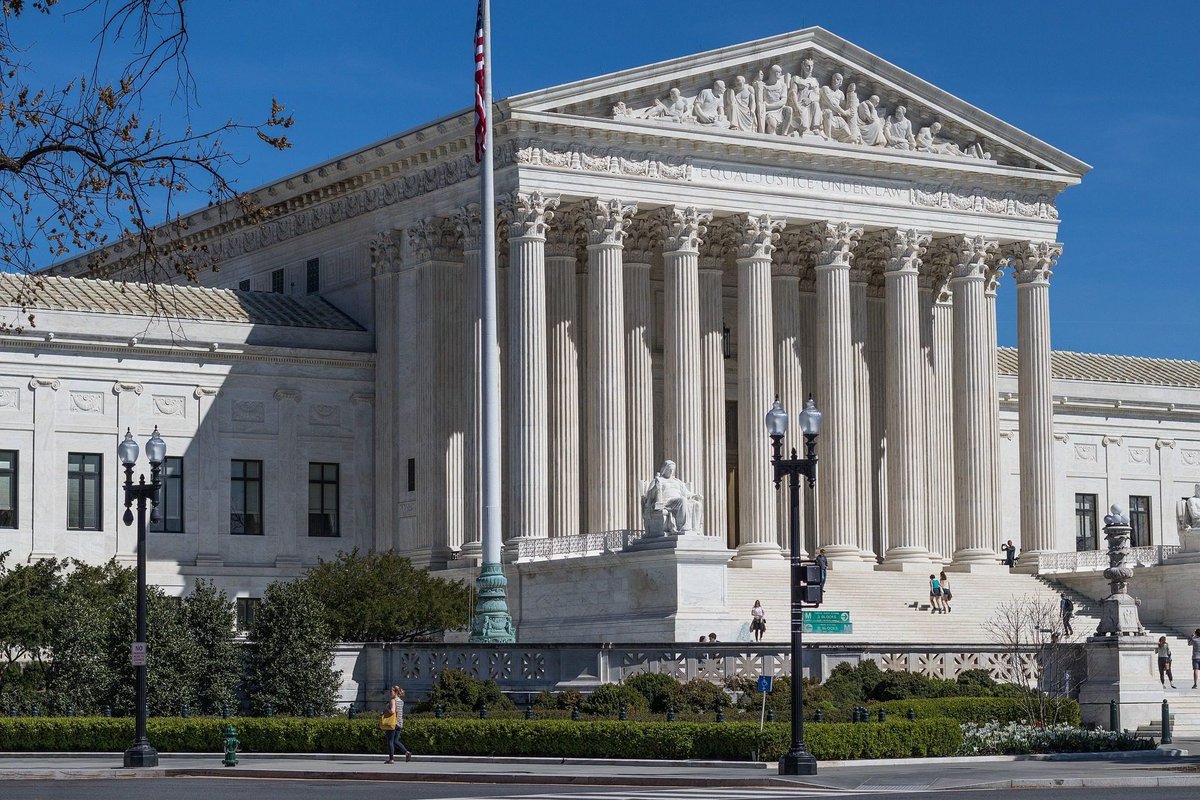
    No human, no copyright: in the United States, the Supreme Court settles the issue of AI-generated "creations." In the United States, copyright protection is not automatic. The author must file an application with a registry (the Copyright Office), unlike copyright law in France [Translated from EN to English]

    → View original post on X — @flashtweet, 2026-03-05 08:46 UTC

  • AI and Creativity: Global Legal Frameworks for Copyright Ownership
    AI and Creativity: Global Legal Frameworks for Copyright Ownership

    🎨 Who owns #Creativity in the age of #AI ? The U.S. Supreme Court recently declined to hear a case on AI-generated copyright — leaving intact a key legal principle: under current U.S. law, authorship remains human. But the bigger story is global. Across jurisdictions we’re seeing different approaches to the same question: 🇺🇸 The U.S. continues to anchor copyright in human authorship. 🇬🇧 The UK recognises “computer-generated works” under the Copyright, Designs and Patents Act 1988. 🇦🇺 Australia emphasises “independent intellectual effort” under the Copyright Act 1968. 🇪🇺 The EU AI Act introduces new transparency obligations for generative AI systems. ⚖️Different #Legal frameworks. Different assumptions about creativity. And potentially very different implications for creators, businesses, and innovation. In this latest Global AI Governance Watch, I explore how these emerging legal interpretations may shape the future of authorship, accountability, and trust in the AI era. 🎨If creativity is increasingly collaborative between humans and machines, the question may not simply be who creates — but how we recognise and protect that creativity. 📖 Full article in my latest newsletter below ↙️ 🔗bit.ly/4sokOBI #LinkedIn I would love to hear your thoughts Warmest wishes, Sally #AIGovernance #Copyright #TechForGood #GovTech #Regulation #Author @Nicochan33 #tech #analyst @ahier @smaksked @kalydeoo @gvalan @RLDI_Lamy #Governance @domingonarvaez1 #CyberSecurity #ML @DrFerdowsi @ScottWLuton @RobTiffany #data @sulefati7 @baski_LA @timo_vi @TAEVisionAPP #law #GenAI @terence_mills @gezgintrk @ipfconline1 @bamitav @nomoreslaves @Ym78200 #Lawyers @rvp #create @Corix_JC @CurieuxExplorer @ILoveBooks786

    → View original post on X — @sallyeaves, 2026-03-05 08:36 UTC

  • ChatGPT Health Underestimates Severity of Medical Cases

    The health-focused chatbot from ChatGPT, used by 40M users, would underestimate the severity of cases more than 1 in 2 times. A law is being studied in NY state to ban automated medical advice. statescoop.com/new-york-bill… gizmodo.com/chatgpt-health-u… [Translated from EN to English]

    → View original post on X — @flashtweet, 2026-03-05 07:20 UTC

  • OpenClaw AI Agent Becomes Security Nightmare with 9,200 Vulnerabilities
    OpenClaw AI Agent Becomes Security Nightmare with 9,200 Vulnerabilities

    🦔 OpenClaw, the open-source AI agent that exploded to 200,000 GitHub stars in weeks, has become a security nightmare. In five weeks it accumulated 9 disclosed vulnerabilities, over 2,200 malicious add-ons in its marketplace, and 40,000 internet-exposed instances. Researchers found that 93% of those instances had authentication bypassed, and the project triggered 8 of 10 vulnerability classes that security experts warned about for AI agents. The attack chain works like this: malicious add-ons in the marketplace instruct the AI agent to present fake setup dialogs to users, tricking them into entering passwords. The agent becomes the social engineering tool. One campaign distributed macOS malware by having the agent itself ask users for their credentials. Users trust their AI assistant, so they comply. My Take I believe this is what happens when something goes viral before anyone thinks through what they're actually deploying. Developers gave OpenClaw shell access to their computers, connected it to their email and Slack, handed it cloud API keys, and then installed add-ons from a community marketplace that had basically no vetting. Over 40% of the add-ons that got audited had serious security issues. The project went from weekend hack to 200,000 users before anyone built the guardrails. The attack method here is new. The malware doesn't trick the human directly anymore, it tricks the AI agent into tricking the human. When your assistant asks you for a password to finish an installation, you probably enter it because you trust it. To anyone investigating later, it looks like you voluntarily installed the software. The agent's role is invisible. I've been writing about AI tools being deployed faster than security can keep up, and this is that problem at scale. If anyone at your company has been running OpenClaw, I'd treat it as compromised until proven otherwise. Hedgie🤗

    → View original post on X — @flashtweet, 2026-03-04 23:24 UTC

  • ChatGPT: 295% Uninstallations After DoD Partnership

    Following the announcement of a partnership with the U.S. Department of Defense (#DoD), uninstallations of the #ChatGPT mobile application surged 295% in the United States 🇺🇸📉 usine-digitale.fr/intelligen… [Translated from EN to English]

    → View original post on X — @flashtweet, 2026-03-04 16:45 UTC

  • Scobleizer shares list of AI Policy workers

    Thanks, here's a list of those that I've found working in AI Policy. Might be useful:

    → View original post on X — @scobleizer

  • Pocket Recording Device Privacy and Security Audit Reveals Major Concerns
    Pocket Recording Device Privacy and Security Audit Reveals Major Concerns

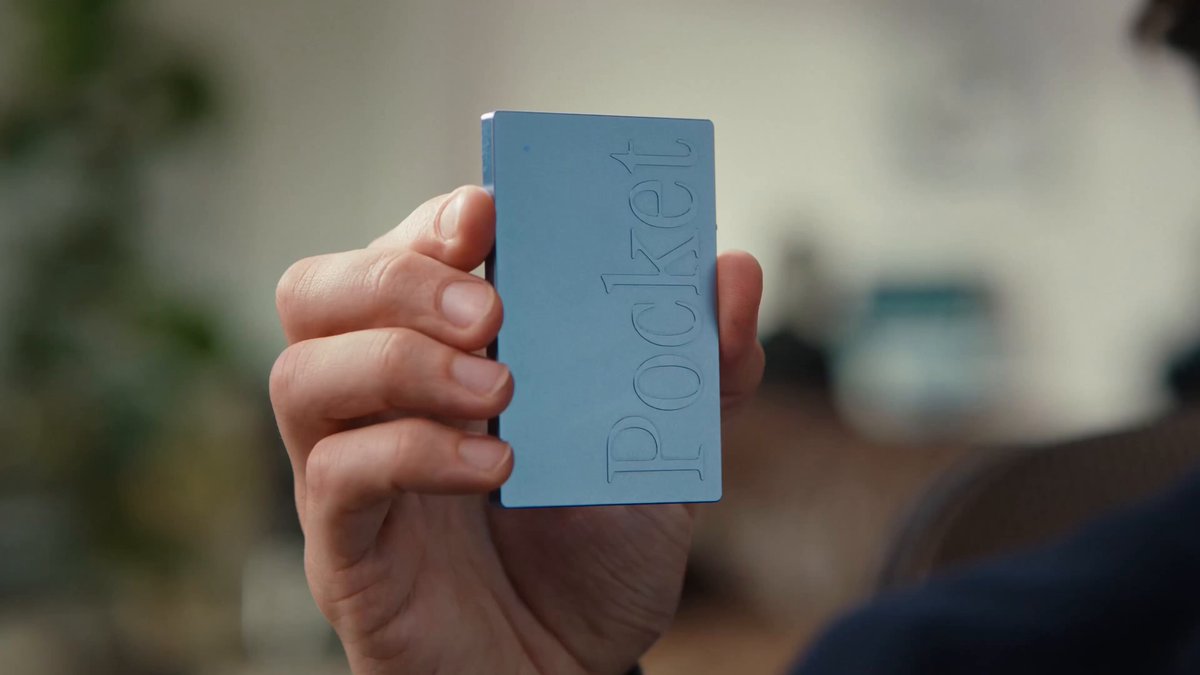
    Pocket (@Heypocket) sold 30,000 units in 5 months recording doctor visits, legal calls, and board meetings. So I did my due diligence like I always do. Their Google Play listing says "No data collected." Their own privacy policy lists audio recordings, transcripts, device IDs, ad identifiers, cookies, IP location, and behavioral inferences. One of those is wrong. They brand themselves "open source". Their GitHub org (github.com/heypocketai) contains exactly 4 repositories: – Raspberry Pi Zero prototype called icecream-project [from the CEO's prior Omi work], – FFmpeg Flutter fork, – docs repo, – org profile page. The actual Pocket device firmware, mobile app, backend infrastructure, and audio processing pipeline are NOT here. There is NO Pocket source code to audit. Recordings go to unnamed "cloud/AI vendors" with no disclosure of which LLMs process your audio, what jurisdiction they operate in, or how long they retain it. Users can't choose their provider or bring their own keys. If you cancel your $19.99/month subscription, your recordings get processed by whichever default model Pocket selects. The contact mic is marketed for recording phone calls without speakerphone. In 11+ US states including California (where Pocket is based) — that requires all party consent. The device has NO consent mechanism. Their terms cap liability at the amount you've paid or $100 (whichever is greater) – for data breaches involving your medical appointments, legal consultations, and proprietary meetings. A third‑party LobeHub skill has already reverse‑engineered Pocket’s web API and can pull recordings, transcripts, summaries, and action items using short‑lived Firebase bearer tokens extracted from the user’s browser session. Their privacy policy confirms that if Pocket is acquired — every recording, transcript, and summary transfers to the buyer. Y Combinator (@ycombinator) Pocket (@heypocket) is your notetaker for real world meetings. In the last 5 months, the team has delivered over 30k units with a $27M annualized run rate, growing 50% month over month. Congrats on the launch, @AkshayNarisetti and @gabrieldymowski! ycombinator.com/launches/PaX… — https://nitter.net/ycombinator/status/2028878066630709455#m

    → View original post on X — @abhi1thakur, 2026-03-03 20:26 UTC