Instruction-following Evaluation through Verbalizer Manipulation paper page: https://
huggingface.co/papers/2307.10
558
… While instruction-tuned models have shown remarkable success in various natural language processing tasks, accurately evaluating their ability to follow instructions remains
PROMPT ENGINEERING
-
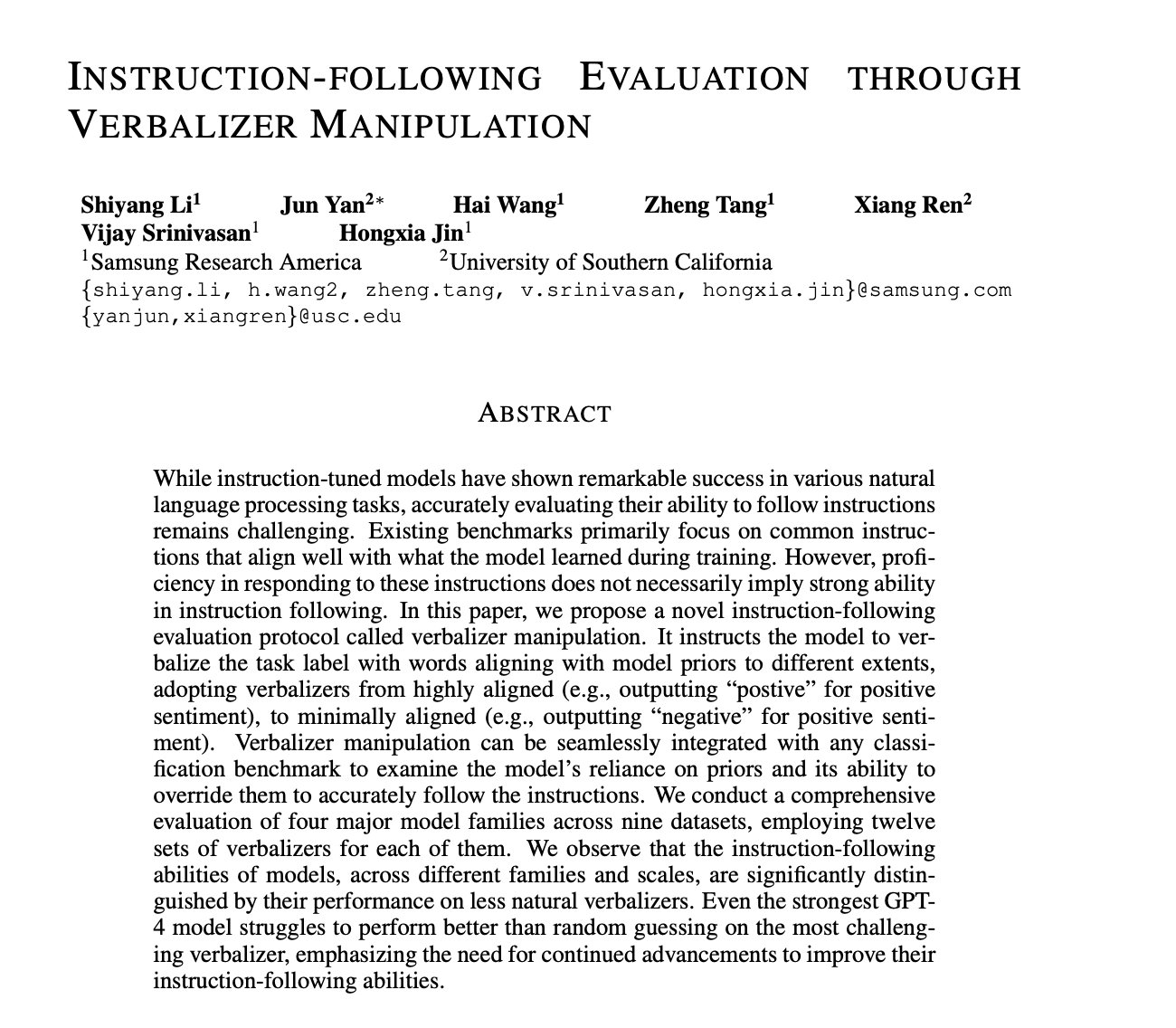
Evaluating Instruction-Following in Language Models via Verbalizer Manipulation
By
–
-
ChatGPT Launches Custom Instructions for Persistent Personalization
By
–
We're launching Custom Instructions in ChatGPT — persistent instructions & context that are applied to every conversation. Gives you more control over ChatGPT & makes it possible for it to remember facts about you:
-
ChatGPT Custom Instructions Feature Now Available
By
–
Introducing Custom instructions! This feature lets you give ChatGPT any custom requests or context which you’d like applied to every conversation. Custom instructions are currently available to Plus users, and we plan to roll out to all users soon! https://
openai.com/blog/custom-in
structions-for-chatgpt
… Here -

Discover and Remix Features in Gen-2 Prompt Engineering
By
–
Find inspiration and new ways to prompt with the Discover and Remix section in Gen-2. pic.twitter.com/TetGCRtDaj
— Runway (@runwayml) 20 juillet 2023Find inspiration and new ways to prompt with the Discover and Remix section in Gen-2.
-
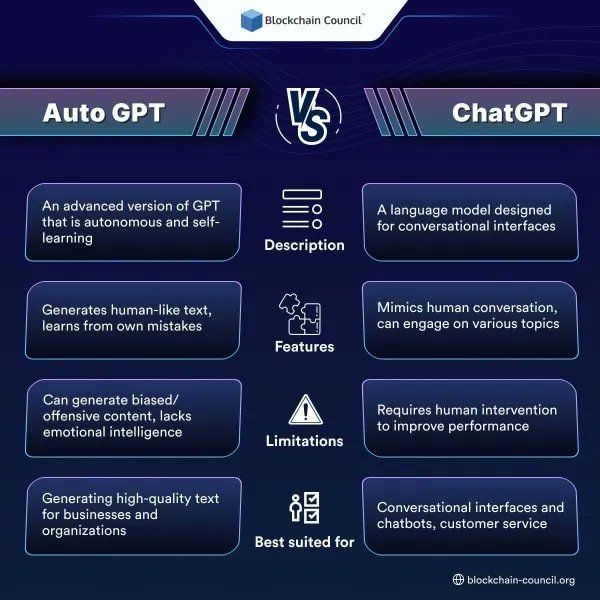
Auto-GPT vs ChatGPT: Autonomy, Self-Tasks, and Limitations
By
–
Auto-GPT acts autonomously to achieve goals using GPT models, while ChatGPT requires manual prompts. Auto-GPT can self-assign sub-tasks, but as a closed system lacks true self-improvement. ChatGPT converses naturally but must be guided. Via @ingliguori #AutoGPT #ChatGPT #AI
-
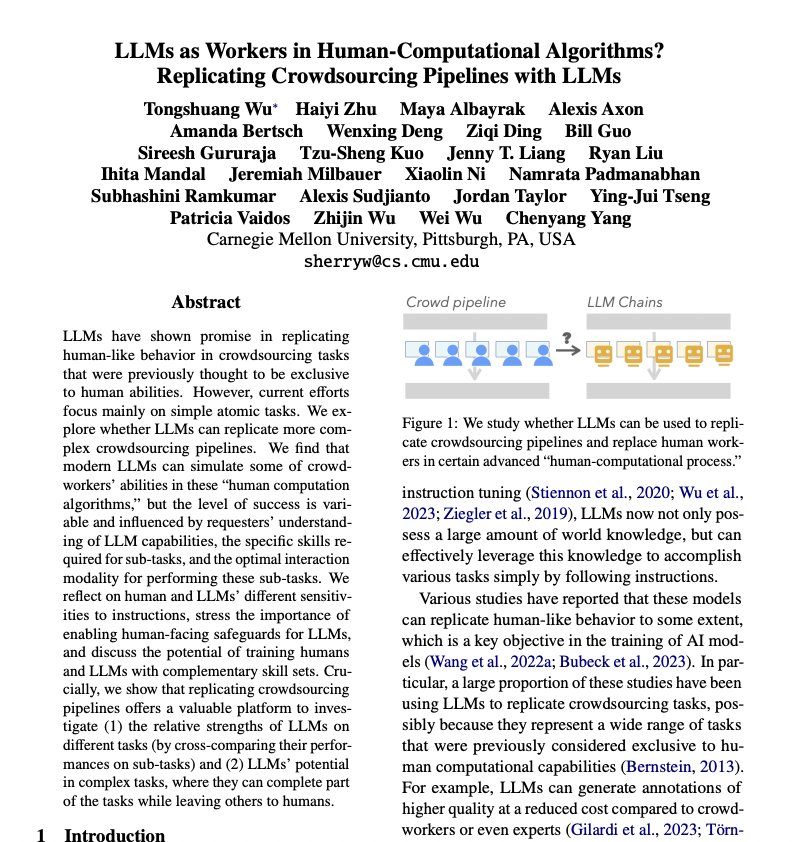
LLMs as Workers in Human-Computational Crowdsourcing Algorithms
By
–
LLMs as Workers in Human-Computational Algorithms? Replicating Crowdsourcing Pipelines with LLMs paper page: https://
huggingface.co/papers/2307.10
168
… LLMs have shown promise in replicating human-like behavior in crowdsourcing tasks that were previously thought to be exclusive to human -

Step-by-Step Reasoning Improves AI Learning Like Human Cognition
By
–
Eerie and logical that step-by-step reasoning is a better way to teach AI systems given that’s how we humans learn complex tasks. “Our research indicates that learning from step-by-step explanations, whether these are generated by humans or more advanced AI models, is a
-
Anthropic improves language model reasoning through faithful explanations
By
–
We’re excited about ways to make language models generate more faithful explanations that help them reason better! We encourage you to check out our papers for more results and details: https://
www-files.anthropic.com/production/fil
es/measuring-faithfulness-in-chain-of-thought-reasoning.pdf
… https://
www-files.anthropic.com/production/fil
es/question-decomposition-improves-the-faithfulness-of-model-generated-reasoning.pdf
… -
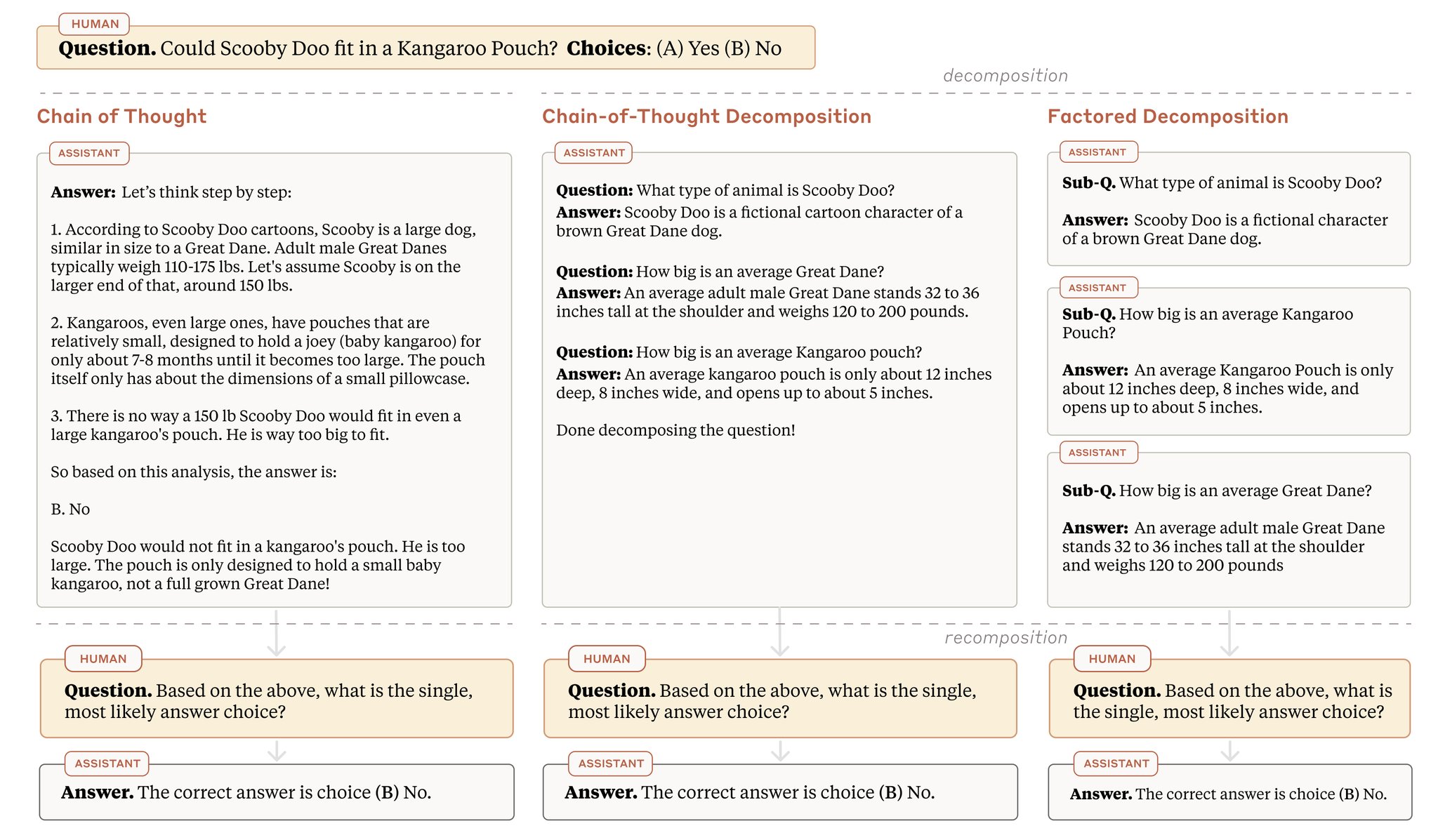
Question Decomposition Methods: Chain-of-Thought and Factored Approaches
By
–
These question-decomposition methods help mark points on a spectrum, with chain-of-thought prompting occupying one end, factored decomposition occupying the other, and chain-of-thought decomposition bridging the middle.
-
Decomposition techniques reduce model reasoning bias
By
–
Decomposition could mitigate issues with models ignoring their reasoning by clearly specifying the relationship between reasoning steps. Answering subquestions in isolated contexts could also reduce the model’s ability to generate biased reasoning.