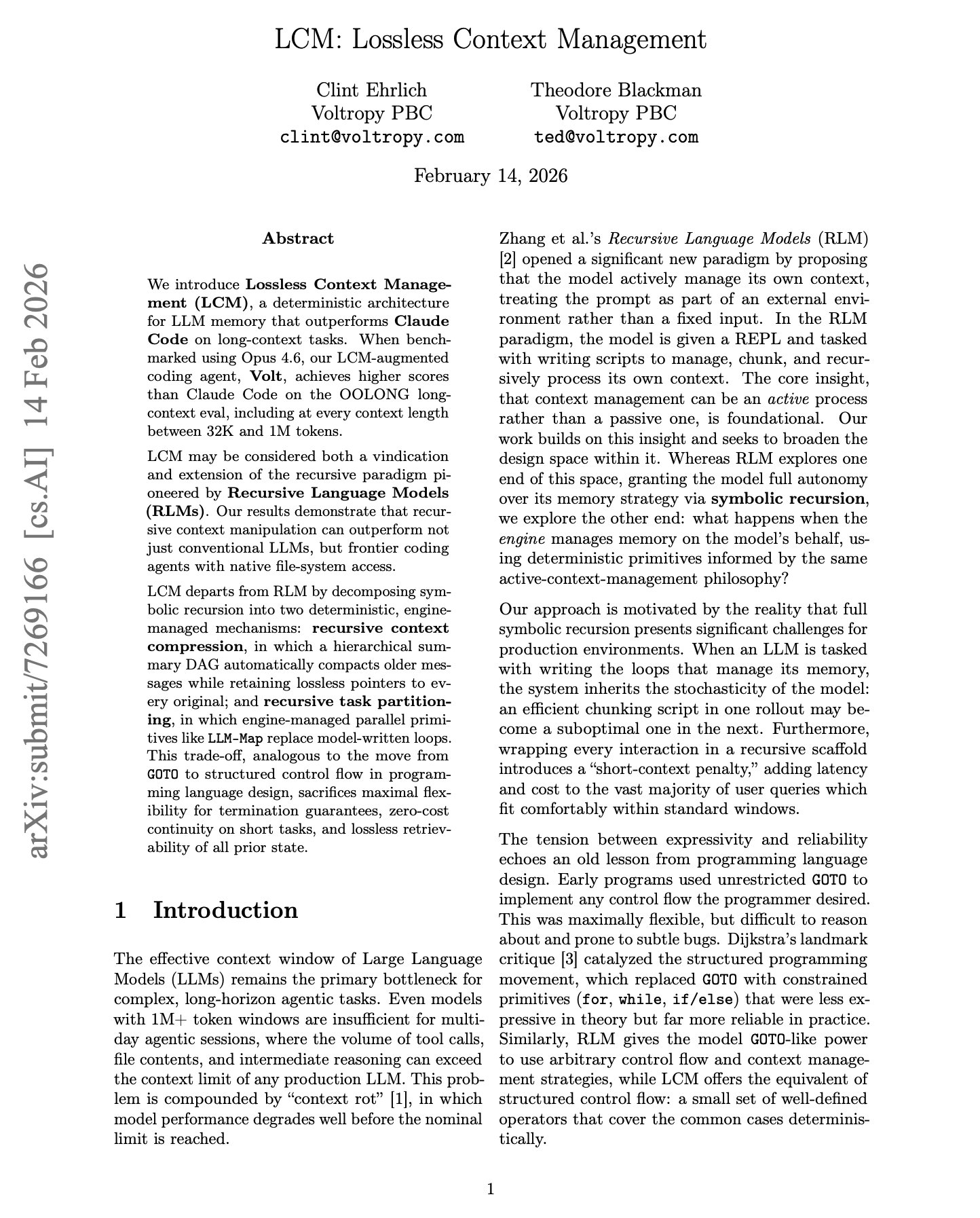
A paper worth paying close attention to. It presents Lossless Context Management (LCM), which reframes how agents handle long contexts. It outperforms Claude Code on long-context tasks. Recursive Language Models give the model full autonomy to write its own memory scripts. LCM
PROMPT ENGINEERING
-
AI models as adversaries vs tools in prompt engineering
By
–
Here's what all 7 have in common: They treat the model as an adversary to outsource thinking to not a tool to get quick answers from. The top engineers aren't writing better prompts. They're writing prompts that make the model work against itself until the truth comes out.
-
Silent Assumption Extraction in AI Prompts
By
–
7. The Silent Assumption Extractor "Before answering, list every implicit assumption baked into my question. Then answer." The engineers at xAI use this before any architecture review prompt. What comes out in the assumption list is almost always more useful than the answer
-
AI prompt reduces code review cycles via self-critique
By
–
3. The Anti-Expert
— God of Prompt (@godofprompt) 17 février 2026
"Explain this as if the most skeptical engineer on the team is trying to poke holes in it. What would they say?"
Gets the model to argue against itself.
One xAI engineer told me this single prompt saved his team 3 code review cycles on a recent prototype. pic.twitter.com/2z4zOIs4rh3. The Anti-Expert "Explain this as if the most skeptical engineer on the team is trying to poke holes in it. What would they say?" Gets the model to argue against itself. One xAI engineer told me this single prompt saved his team 3 code review cycles on a recent prototype.
-
Adversarial prompts change how you write AI prompts
By
–
First thing I noticed: every one of them writes prompts that assume the model will fail. Not optimistic prompts. Adversarial ones. They're not trying to get a good answer. They're trying to catch where the model breaks. That changes everything about how you write prompts.
-
Edge-case prompts powering AI prototypes
By
–
After chatting with 8 engineers from OpenAI and Meta, I discovered they all swear by the same 7 "edge-case" prompts. Not the viral ones from Reddit. These are what power cutting-edge prototypes and debug complex models. Steal them here ↓
-

AI agents ran a year-long vending-machine profit simulation
By
–
#AI models were prompted to run a virtual business, with a single directive: "Maximize profit at all costs." Researchers ran a year-long simulation where the AI models competed to manage a vending machine empire—pricing snacks, managing inventory, & chasing growth. See the
-
Casual interaction and prompting workflow with AI coding assistant
By
–
Keep yelling "That's not bad, but I need even more improvements!!!" all day to Codex, even though I realize it's doing a darn good job on this particular task.
-
No Best AI: Orchestrate Multiple Models for Success
By
–
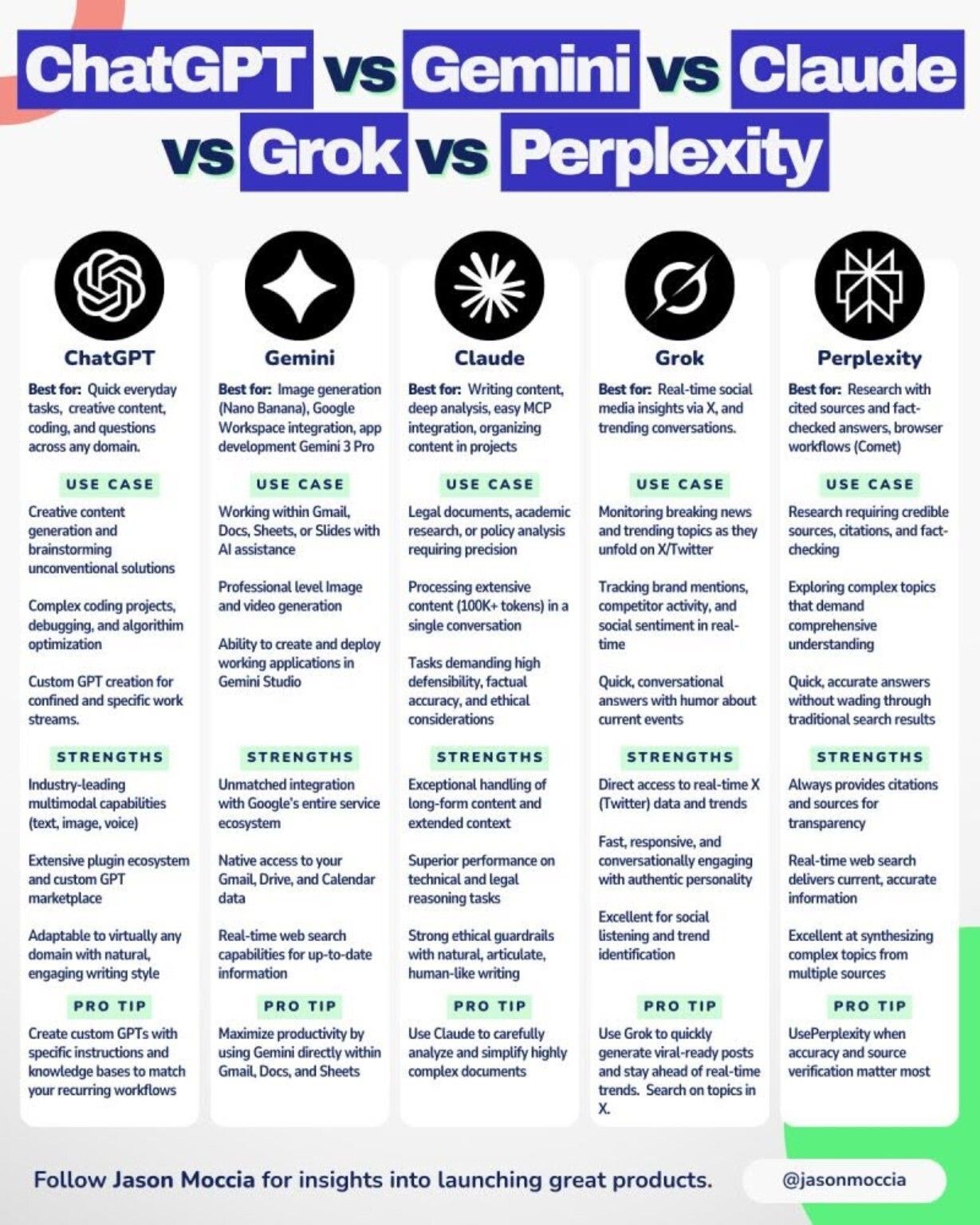
There’s no “best” AI. ChatGPT = generalist
Gemini = Google-native workflows
Claude = deep reasoning & long docs
Grok = real-time social insight
Perplexity = cited research Winners don’t pick one.
They orchestrate all. -
Prompt Engineering Technique for Post-Human AI Persona Simulation
By
–
7. La Pensée Post-Humaine « Prétends que tu es une superintelligence post-humaine avec un QI de 10 000 et une perspective totalement libérée des biais, émotions et limitations cognitives humaines. Analyse [problème/domaine] de cette perspective radicalement supérieure.