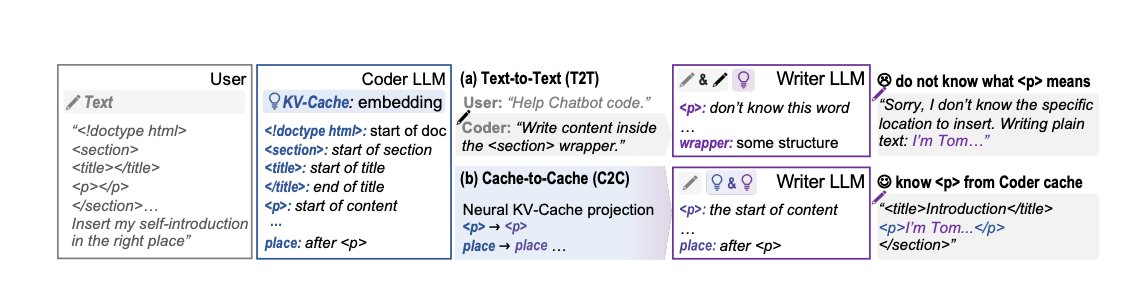
The results are insane: – 8.5-10.5% higher accuracy than individual models
– 3.0-5.0% better than text-based communication
– 2× speedup in latency
– Works across ANY model pair (different sizes, architectures, tokenizers) This isn't incremental. It's architectural.
MACHINE LEARNING
-
Architectural breakthrough: model pairs boost accuracy and speed
By
–
-

C2C is telepathy for AI, replacing slow telegram-like communication
By
–
Every LLM today communicates like humans sending telegrams. Model 1 generates text → Model 2 reads text → repeats. It's slow, expensive, and loses meaning in translation. C2C is telepathy for AI models.
-

Cache-to-Cache: LLMs talk via KV-Caches, 10% accuracy boost, 2x speed
By
–
Researchers just made LLMs talk to each other WITHOUT generating a single word. Cache-to-Cache (C2C) lets AI models talk directly through their KV-Caches, bypassing text entirely. 8.5-10.5% accuracy boost. 2× faster. Zero token waste. Here's the breakthrough (and why this
-

Speed Boosts Intelligence: Cerebras Scaling Law Insights
By
–
speed => intelligence https://
cerebras.ai/blog/the-cereb
ras-scaling-law-faster-inference-is-smarter-ai
… -
Smart People Know Heuristics Failure Modes
By
–
Everyone uses heuristics. Smart people know their failure modes.
-

Motif-2-12.7B-Reasoning: RL Training Recipes Practitioner Guide
By
–
Motif-2-12.7B-Reasoning: A Practitioner's Guide to RL Training Recipes https://
buff.ly/WtUMyq0
#AI #MachineLearning #DeepLearning #LLMs #DataScience -
Students Embrace AI Career Opportunities Without Job Loss Fear
By
–
High school, college students are excited about AI, not dreading jobs impact
#AI #AIio #AIInnovation #ML #DataScience #Futureofwork @fabiomoioli @pascal_bornet @alliekmiller @mattshumer_ @OfficialLoganK @jeremyphoward @GaryMarcus -
Massive gap between accessible guides and expert-level papers
By
–
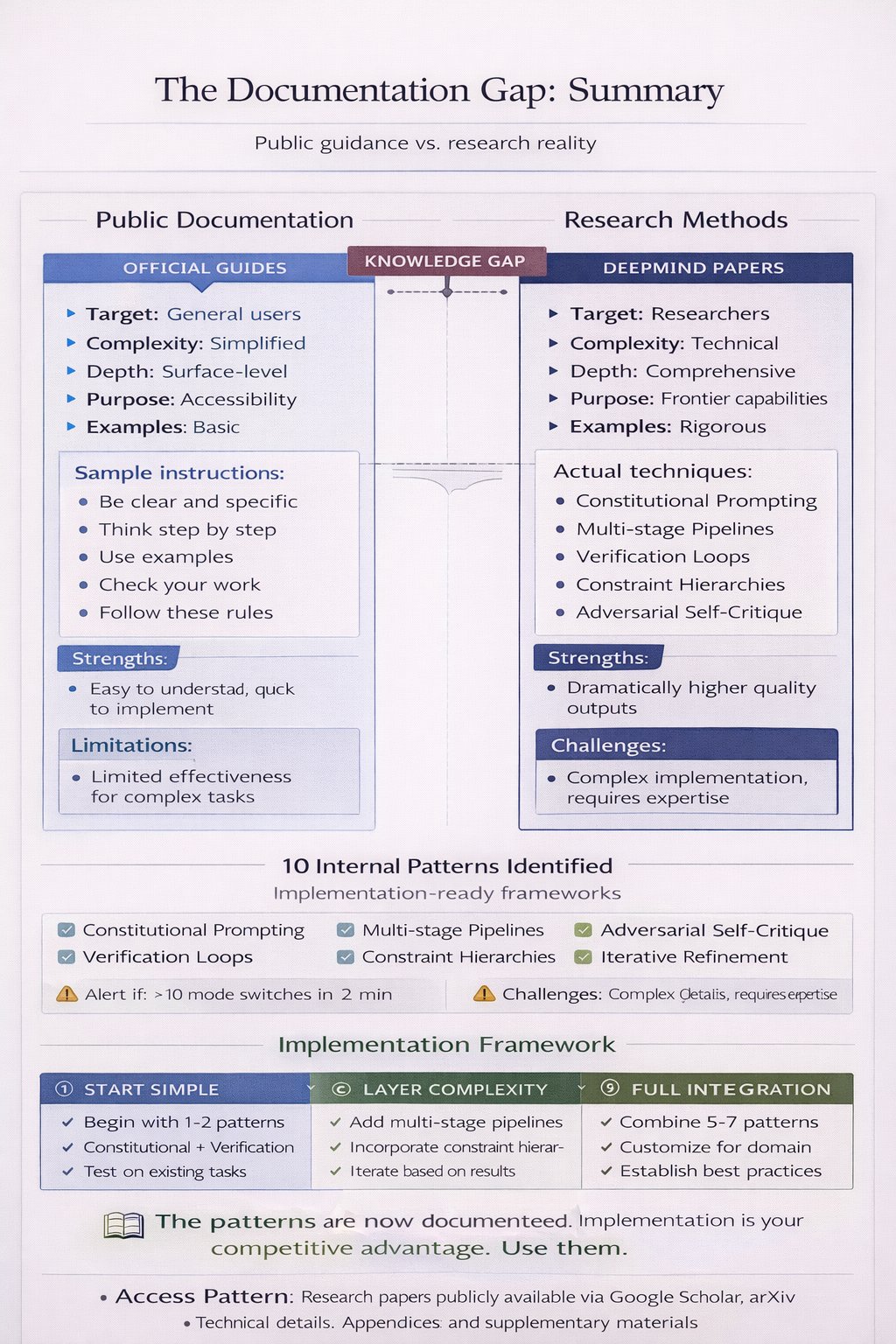
The gap between public docs and actual research is massive. Google's guide: Simple, accessible, beginner-friendly. DeepMind's papers: Complex, rigorous, expert-level. They're not hiding it—it's in the papers. Just buried in technical details. Now you have the patterns. Use
-

Adversarial Self-Critique: Find Flaws in Own Reasoning
By
–
Pattern #6: Adversarial Self-Critique Public: "Review your answer" Internal: Assume adversarial role to attack own reasoning. "You are now a skeptic. Find flaws in the previous reasoning. What assumptions are weakest? What evidence contradicts? Generate counterarguments."