How does neural operators relate to neural radiance fields (NeRF)? Neural operators are a generalization of NeRFs: from representing a single function to learning operators. Neural operators are conditional neural fields, conditioned on different input functions. Our neural
MACHINE LEARNING
-

Neural Operators as Generalizations of PDE Numerical Solvers
By
–
Neural operators are extensions of neural networks to handle continuous inputs and outputs (function spaces) and hence, accurately represent solutions to PDEs. But how do they relate to numerical solver for PDEs? Figure below shows the pseudo-spectral solver is a special case of
-
Neural Operators Capture Finer Scales Than Traditional Networks
By
–
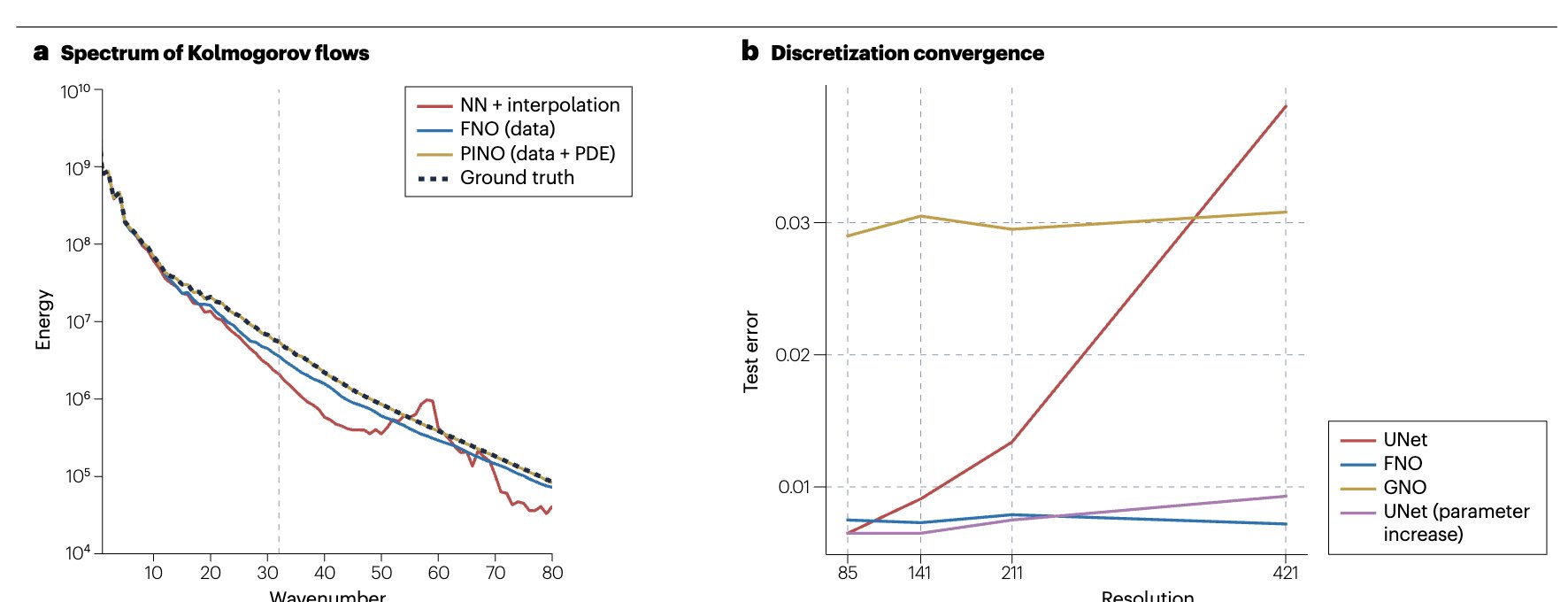
The advantage of neural operators over neural networks (e.g. UNet or transformer) is in the ability to capture finer scales than the observed data resolution. In left figure below, the prediction at higher wave number (resolution) is where neural networks (NN) suffer if
-

Introduction to Mathematical Optimisation in Python
By
–
Introduction to Mathematical Optimisation in Python
by @zluvsand @Medium Read more: https://
buff.ly/46ZquaB #DataScience #BigData #ArtificialIntelligence #MI cc: @pascal_bornet @yvesmulkers @kuriharan -
Neural Operators Generalize Neural Networks Beyond Fixed Dimensions
By
–
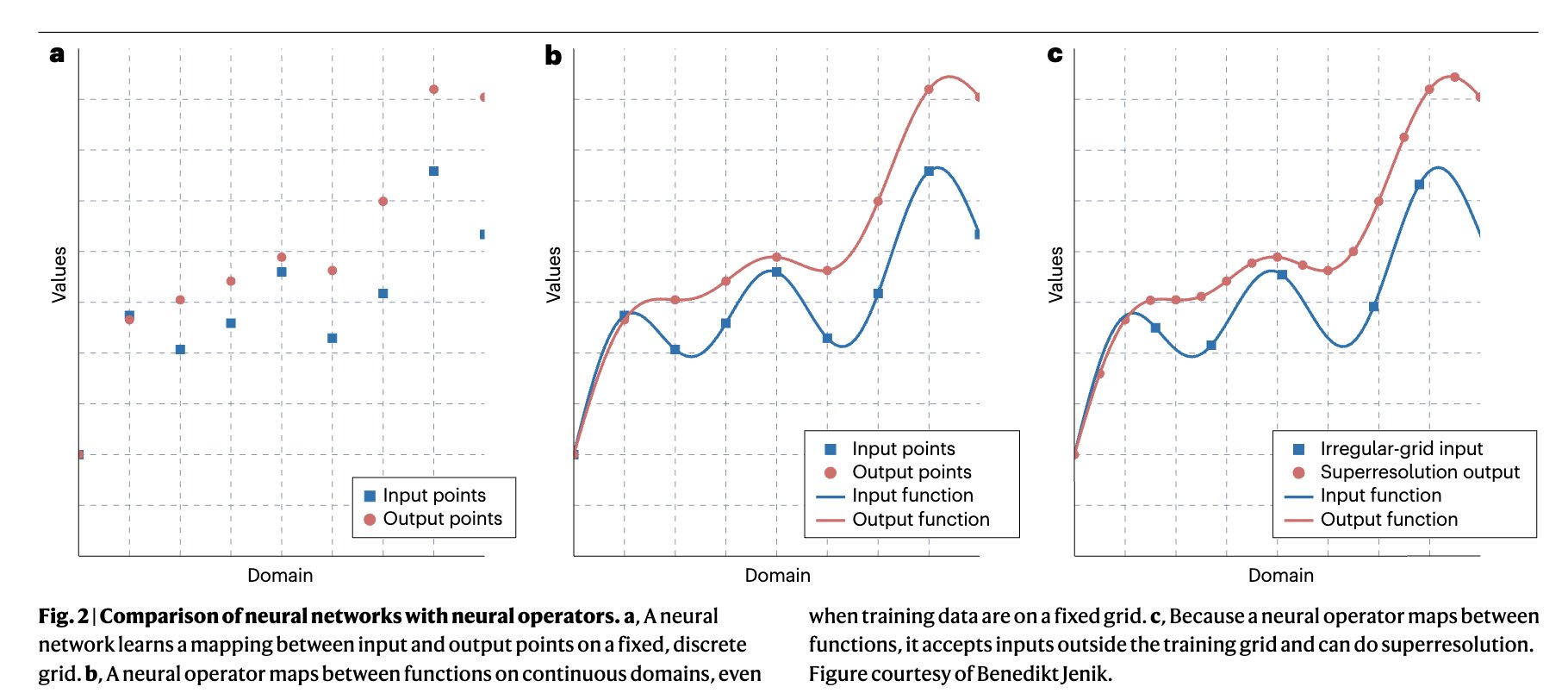
The class of neural operators contain all neural networks. Neural networks fix resolution or dimension of input and outputs before learning the mapping, while in neural operators we do not have this restriction. In figure, you can see this difference: neural networks assumes
-
Neural operators accelerate simulations and design
By
–
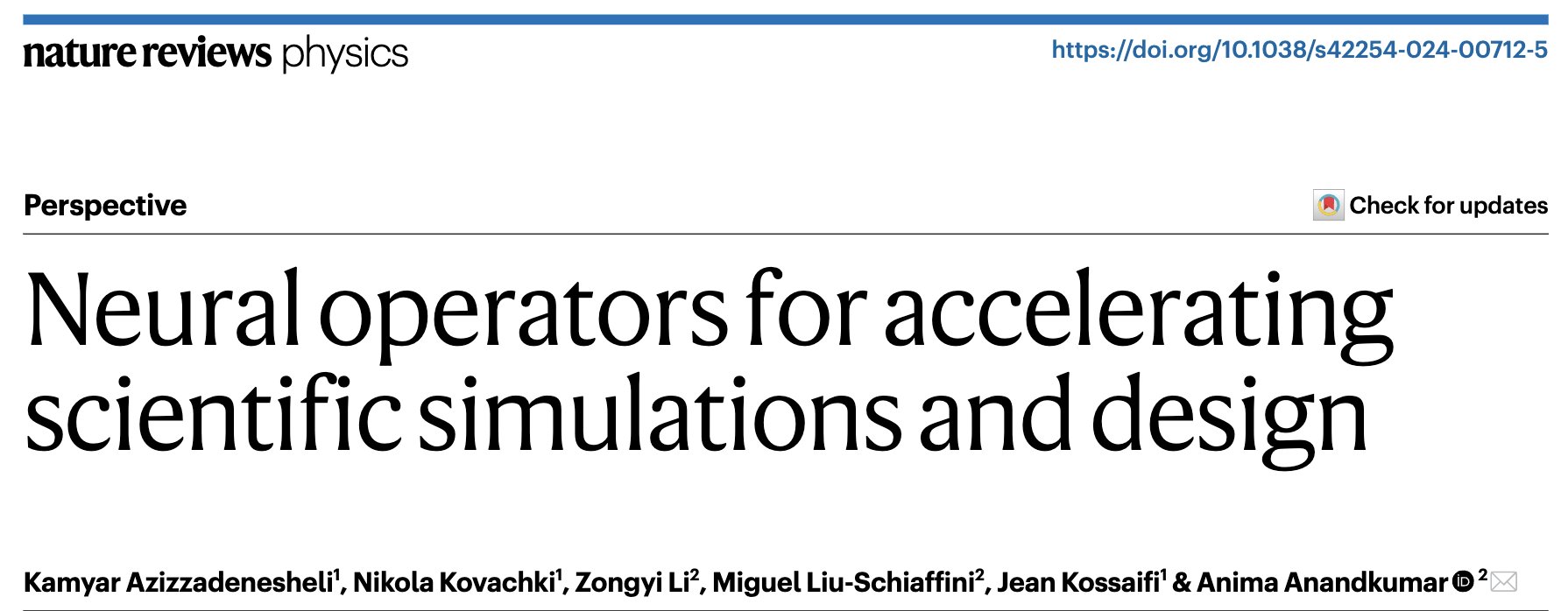
Our @NatRevPhys perspective article on neural operators and their ability to accelerate simulations and design is now out. https://
rdcu.be/dD8BI @Nature 1. Neural operators learn mappings between functions, e.g. spatiotemporal processes and partial differential equations. -
Forward/Backward Implementation Complete, Now Optimizing with CUDA
By
–
Once you have the forward/backward, the rest of it (data loader, Adam update, etc) are mostly trivial. The real fun starts now though: I am now porting this to CUDA layer by layer so that it can be made efficient, perhaps even coming within reasonable fraction of PyTorch, but
-

Memory Allocation Strategy in LLM Training Implementation
By
–
You can look at the raw training implementation here: https://
github.com/karpathy/llm.c
/blob/master/train_gpt2.c
… You'll see that we allocate all the required memory a single time in the beginning in one large block of 1D memory. From there on during training, no memory gets created or destroyed, so we stay at -
Implementing Neural Network Layers with Memory Pointer Management
By
–
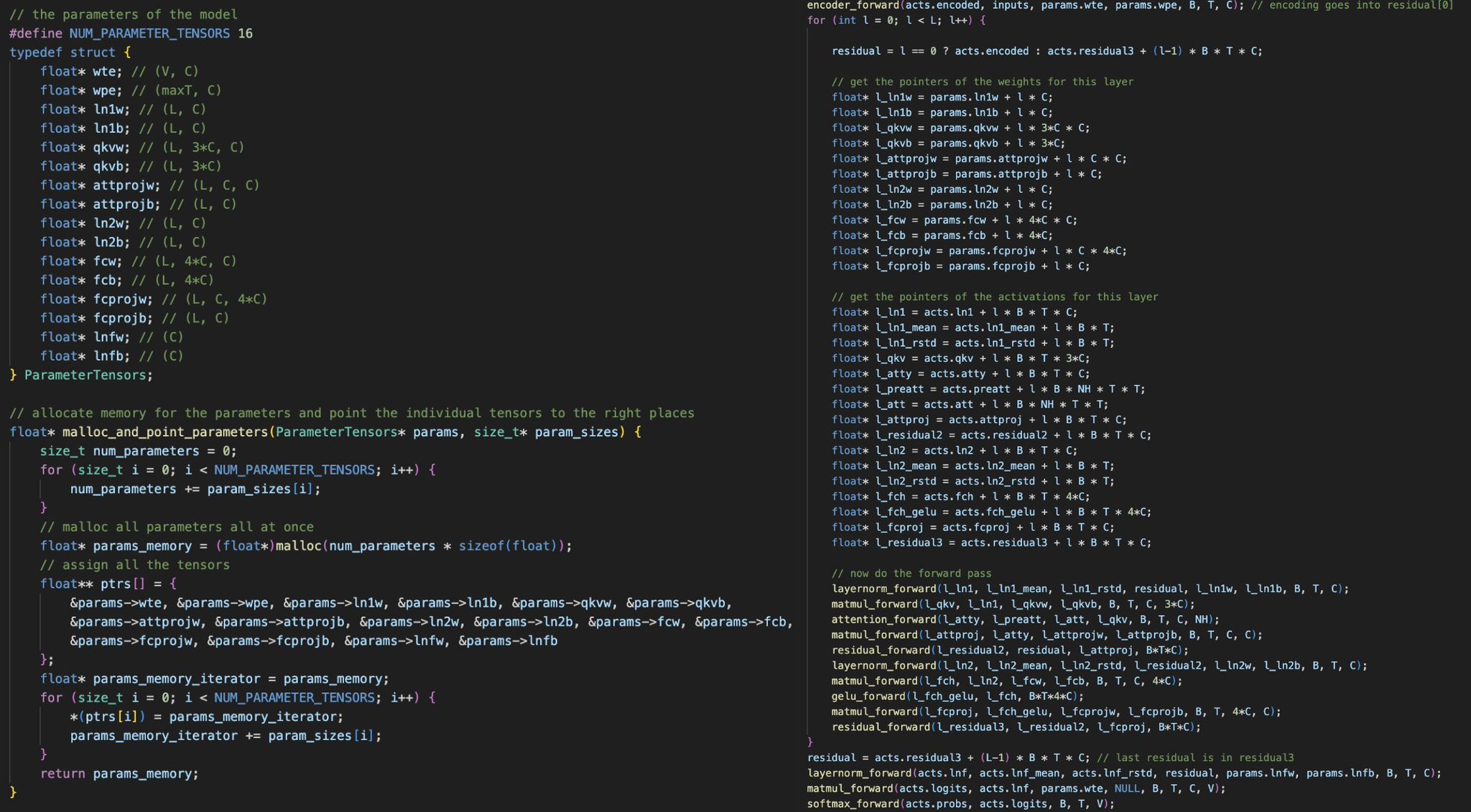
Once you have all the layers, you just string all it all together. Not gonna lie, this was quite tedious and masochistic to write because you have to make sure all the pointers and tensor offsets are correctly arranged. Left: we allocate a single 1D array of memory and then
-
llm.c: Train GPT-2 in Pure C Without Heavy Dependencies
By
–
Have you ever wanted to train LLMs in pure C without 245MB of PyTorch and 107MB of cPython? No? Well now you can! With llm.c: https://
github.com/karpathy/llm.c To start, implements GPT-2 training on CPU/fp32 in only ~1,000 lines of clean code. It compiles and runs instantly, and exactly