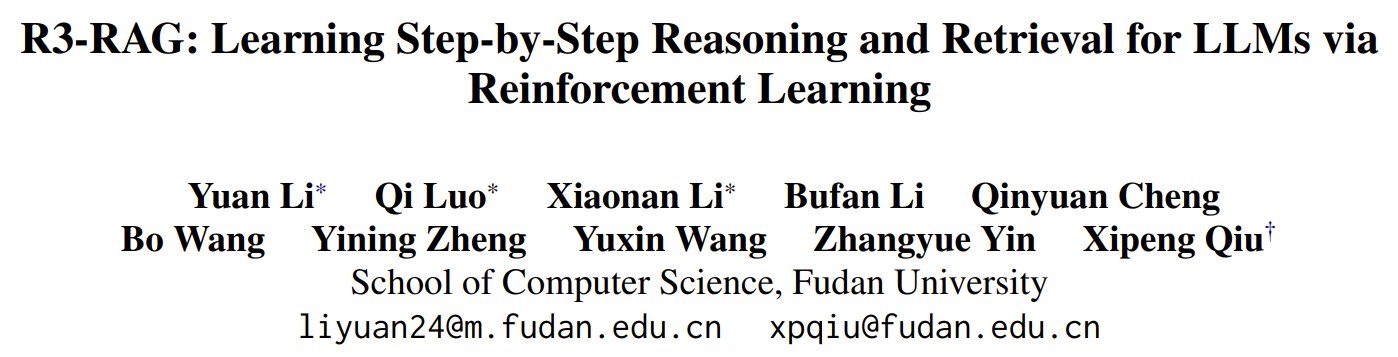
R3-RAG: Learning Step-by-Step Reasoning and Retrieval for LLMs via Reinforcement Learning
Paper: https://
arxiv.org/pdf/2505.23794
.pdf
…
Code: https://
github.com/Yuan-Li-FNLP/R
3-RAG
…
MACHINE LEARNING
-
R3-RAG: Reinforcement Learning for LLM Reasoning and Retrieval
By
–
-
R3-RAG: Teaching LLMs to Think and Retrieve Step by Step
By
–
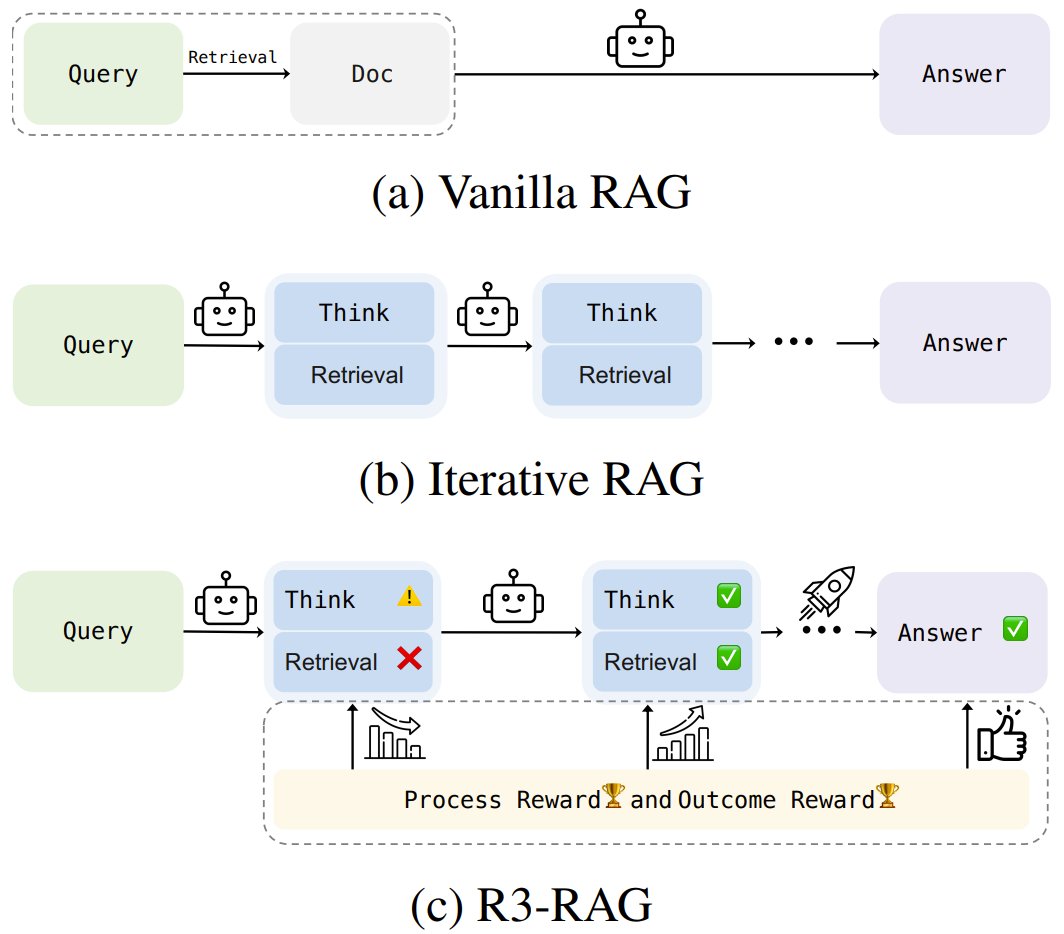
R3-RAG: Teaching LLMs to Think and Retrieve Step by Step R3-RAG is a reinforcement learning-enhanced RAG framework that teaches the LLM how to reason and retrieve in tandem—not just pull documents, but think while doing it. The key ideas include Cold Start Pretraining and
-

Sakana AI Launches Self-Improving Agent with Code Modification Capabilities
By
–
Japan's Sakana AI launched a self-improving agent that can modify its code to boost performance On SWE-bench, the Darwin Gödel Machine improved its performance from 20.0% to 50.0%, while on Polyglot, it increased its success rate from 14.2% to 30.7%
-
AI Programming Languages: Optimizing Code for Model Exploration
By
–
It may be time to develop AI programming languages. Code generation must be optimized for guiding models in exploring solution space and ensuring correctness, not for human comprehension. Code specification must optimize synchronization between human intention and AI
-
Hybrid RAG Chatbot with Qdrant miniCOIL and LangGraph
By
–
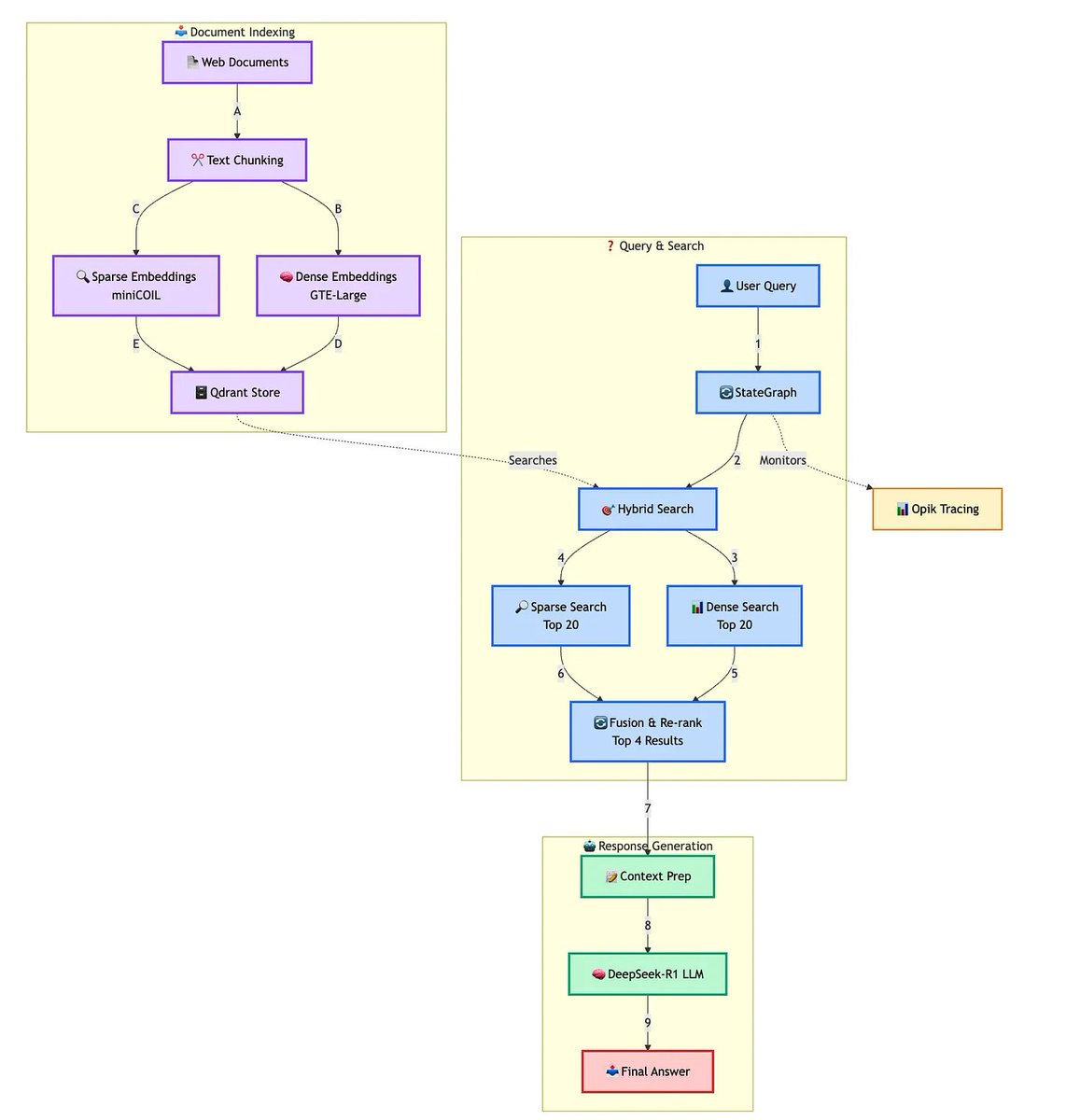
Hybrid RAG Chatbot New customer support system combines Qdrant's miniCOIL and LangGraph to deliver precise, context-aware responses through hybrid semantic and term-based matching. Check out the implementation guide! https://
medium.aiplanet.com/advanced-retri
eval-and-evaluation-hybrid-search-with-minicoil-using-qdrant-and-langgraph-6fbe5e514078
… -

Language Models Memory Capacity Scaling Laws Physics
By
–
Physics of Language Models: Part 3.3, Knowledge Capacity Scaling Laws very interesting (if somewhat controversial) they declare that models, after visiting data 1000 times during training, can memorize 2 bits/param (they arrive at this number via quantization with AutoGPTQ)
-
Scaling Laws for Fact Memorization in Large Language Models
By
–
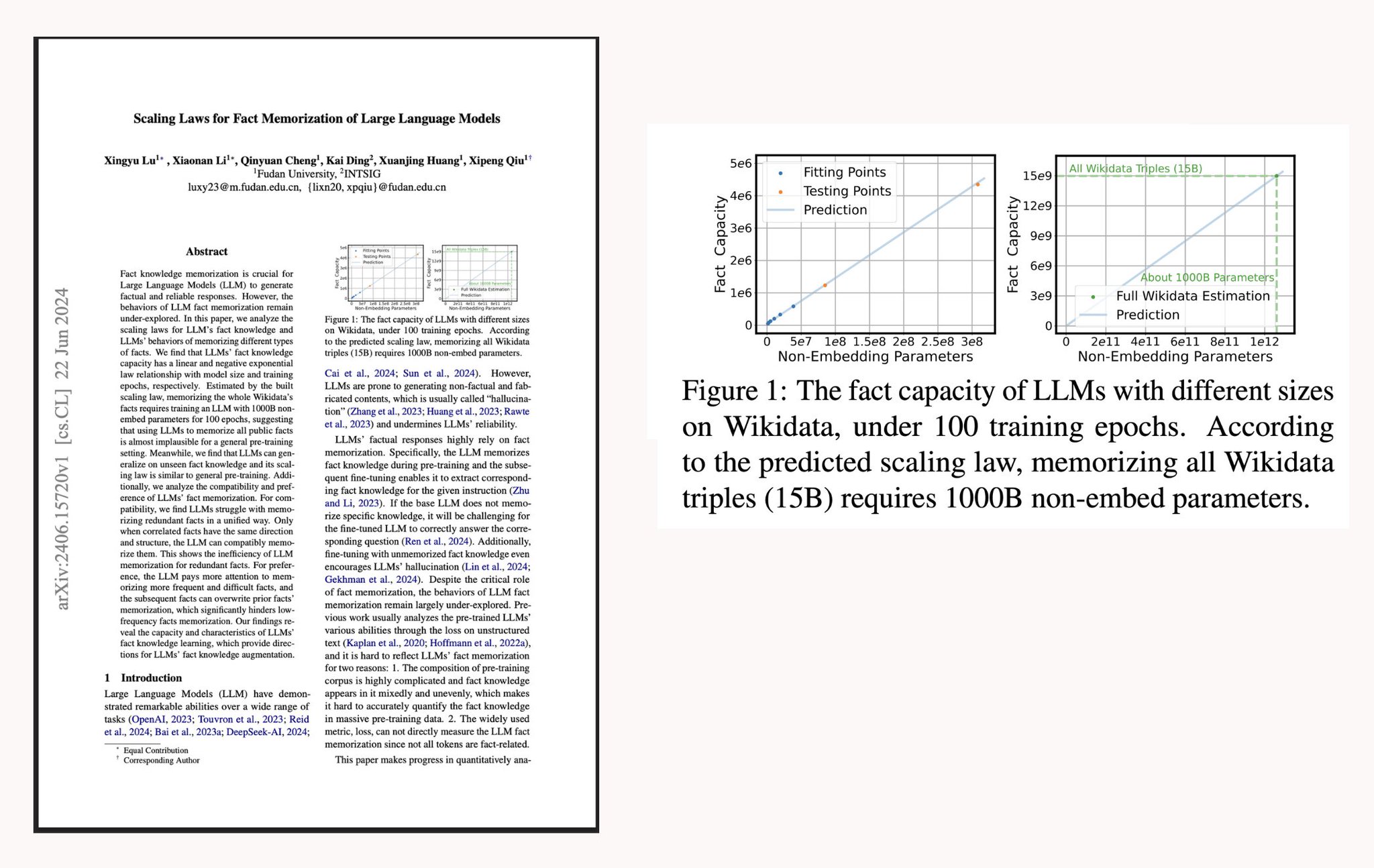
Scaling Laws for Fact Memorization of Large Language Models this paper is from last year (2024); it's a very well-executed study of the total number of facts a model can memorize they estimate 1T parameters are needed to perfectly memorize all relational pairs in wikipedia
-
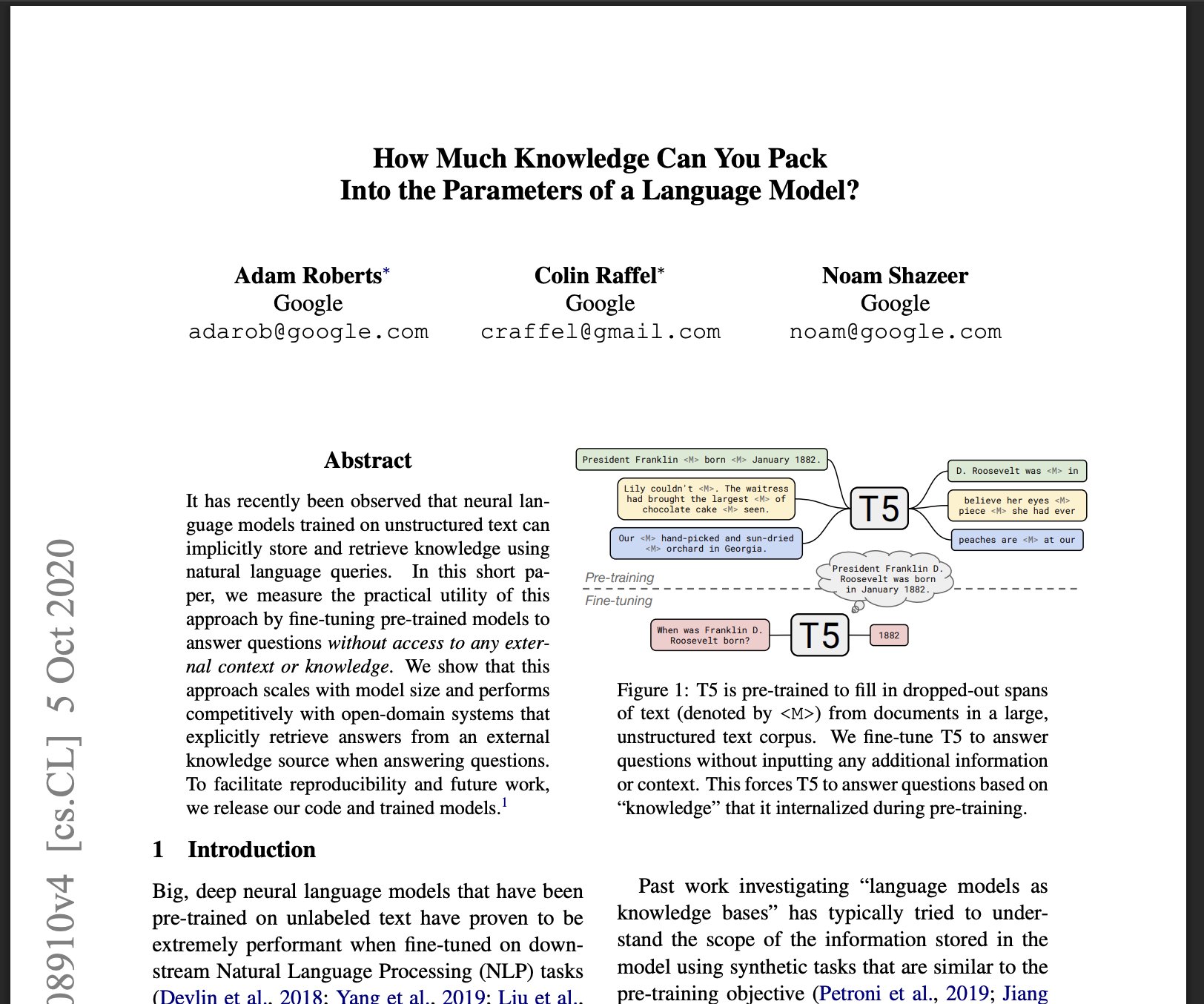
Knowledge Storage Capacity in Language Model Parameters
By
–
How Much Knowledge Can You Pack Into the Parameters of a Language Model? enter, transformers- in 2020 these folks had a different idea: once "pretraining" is a thing, you can measure the amount of 'facts' that the model 'knows', without training it at all
-

Language Models Knowledge Storage Capacity and Memorization Scaling
By
–
Language Models as Knowledge Bases: On Entity Representations, Storage Capacity, and Paraphrased Queries in 2021 these folks measure the exact number of 'statements' models can memorize (a) capacity scales linearly with parameters
(b) more training samples -> less memorization -

RNN Capacity: 5 Bits Per Parameter Storage Empirical Analysis
By
–
Capacity and Trainability in Recurrent Neural Networks this very nice paper from 2016 (!) estimates certain types of RNNs can store 5 bits/param. they find this empirically and measure bits using the entropy of the distribution of class labels