LLMs don’t learn like humans. These models have unique strengths and weaknesses that make them powerful building blocks in some areas and unreliable in others.
MACHINE LEARNING
-
1X Unveils 1XWM World Model for Realistic Robot Simulation
By
–
1X showcased 1XWM, a 'world model' that simulates a realistic, interactive world around a virtual robot
— Rowan Cheung (@rowancheung) 17 juin 2025
With a few initial real-world frames and action trajectories, it simulates the result of those exact actions, including the physics of objectspic.twitter.com/w5GuZTZhbc1X showcased 1XWM, a 'world model' that simulates a realistic, interactive world around a virtual robot With a few initial real-world frames and action trajectories, it simulates the result of those exact actions, including the physics of objects
-

Moonshot AI Launches Kimi-Dev-72B Open-Source Coding Model
By
–
Moonshot AI launched Kimi-Dev-72B, a new open-source coding model for software engineering tasks It achieves SOTA results on SWE-bench Verified software tasks, surpassing open-source rivals like DeepSeek R1, V3, and Devstral
-
Nvidia Launches Isaac Sim 5.0 and Isaac Lab 2.2 for Robot AI Development
By
–
Nvidia launched Issac Sim 5.0 and Issac Lab 2.2 in early preview on GitHub
— Rowan Cheung (@rowancheung) 17 juin 2025
These open frameworks now come with extensions for synthetic data generation and robot models — streamlining how devs build, train, and test AI robots in physics-based simulationspic.twitter.com/rAwpgcTaw7Nvidia launched Issac Sim 5.0 and Issac Lab 2.2 in early preview on GitHub These open frameworks now come with extensions for synthetic data generation and robot models — streamlining how devs build, train, and test AI robots in physics-based simulations
-

MiniMax M1: Open-Source Reasoner LLM with 1M Token Context
By
–
MiniMax dropped M1, a new open-source reasoner LLM with: —World’s largest context window: 1M-token input, 80k-token output
—SOTA agentic use among open-source models
—2x faster training, via CISPO RL algorithm -

Waymo Discovers Scaling Laws Apply to Autonomous Driving Models
By
–
Waymo released an interesting paper stating that autonomous driving is also susceptible to scaling laws: the more compute, the better the performance. The cool thing is we now have at least two clear domains where this idea works: language models and self-driving models.
-
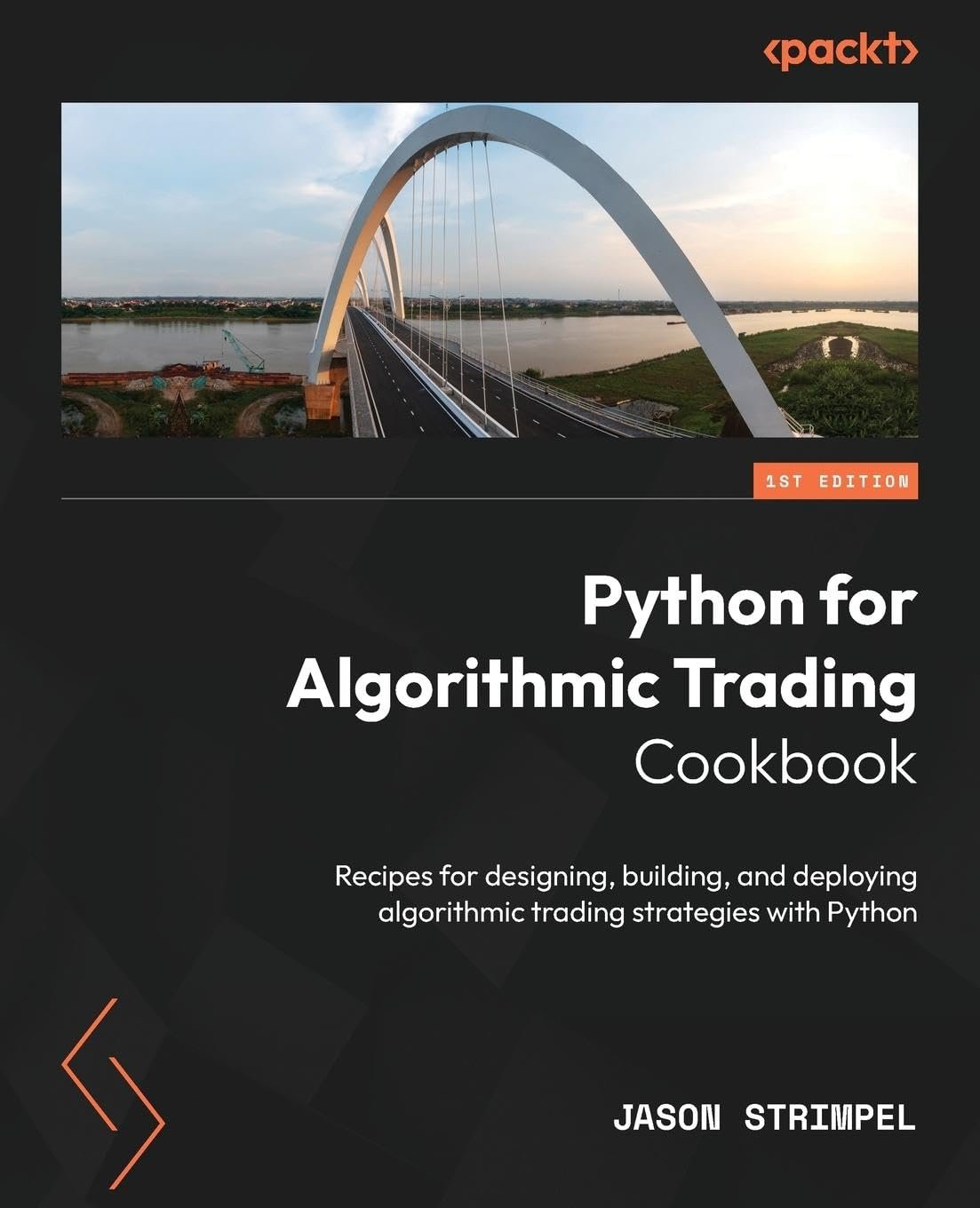
3 Essential Books on Algorithmic Trading with Python
By
–
3 Books on #AlgorithmicTrading with #Python 1) Cookbook with Recipes: https://
packtpub.com/en-us/product/
python-for-algorithmic-trading-cookbook-9781835084700?utm_medium=affiliate&utm_campaign=e1397f0b-52c9-8731-1019-60b63c72c74a&utm_term=5b056f65-afab-5c56-1f0a-5fd88167b4b5&utm_content=B21323
… via @PacktDataML 2) With Machine Learning: https://
packtpub.com/en-us/product/
machine-learning-for-algorithmic-trading-9781839217715?utm_medium=affiliate&utm_campaign=e1397f0b-52c9-8731-1019-60b63c72c74a&utm_term=5b056f65-afab-5c56-1f0a-5fd88167b4b5&utm_content=B15439
… 3) Quantitative Methods: https://
amzn.to/3uvYlKk
…with GitHub code repository: https://
github.com/chrisconlan/al
gorithmic-trading-with-python
… -
O4 Model Performance Improvements Through Reinforcement Learning
By
–
With this stronger base, RL should see improved performance, meaning o4 will likely saturate GPQA and probably many other benchmarks that are susceptible to RL.
-
Trade-offs of Large Language Models in AI Training
By
–
An interesting point is that using very large base models like GPT-4.5 involves trade offs. Larger, slower, and more expensive models mean longer training loops, higher compute usage, and thus a reduced overall learning rate.
-

Reinforcement Learning Improves with Stronger Base Models Like GPT-4o
By
–
Reinforcement learning works better when using stronger base models. In their recent post, SemiAnalysis stated that o1 and o3 were trained with GPT-4o as the base, and the respective 'mini' versions were distillations of their larger models.