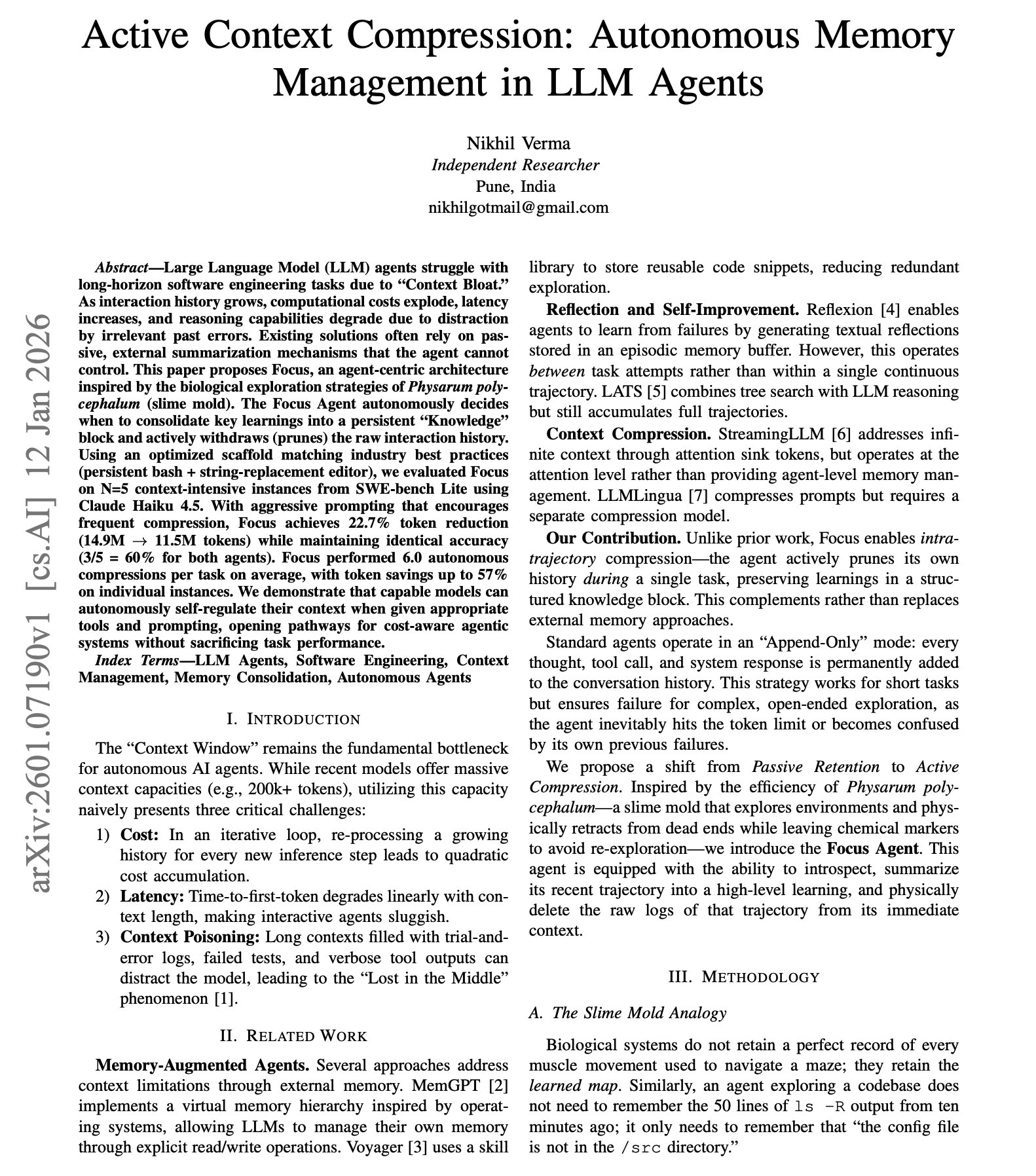
Autonomous Memory Management in LLM Agents LLM agents struggle with long-horizon tasks due to context bloat. As interaction history grows, computational costs explode, latency increases, and reasoning degrades from distraction by irrelevant past errors. The standard approach
LLMS
-
Open-Weight Models Build CLI Runner Autonomously Without Human Intervention
By
–
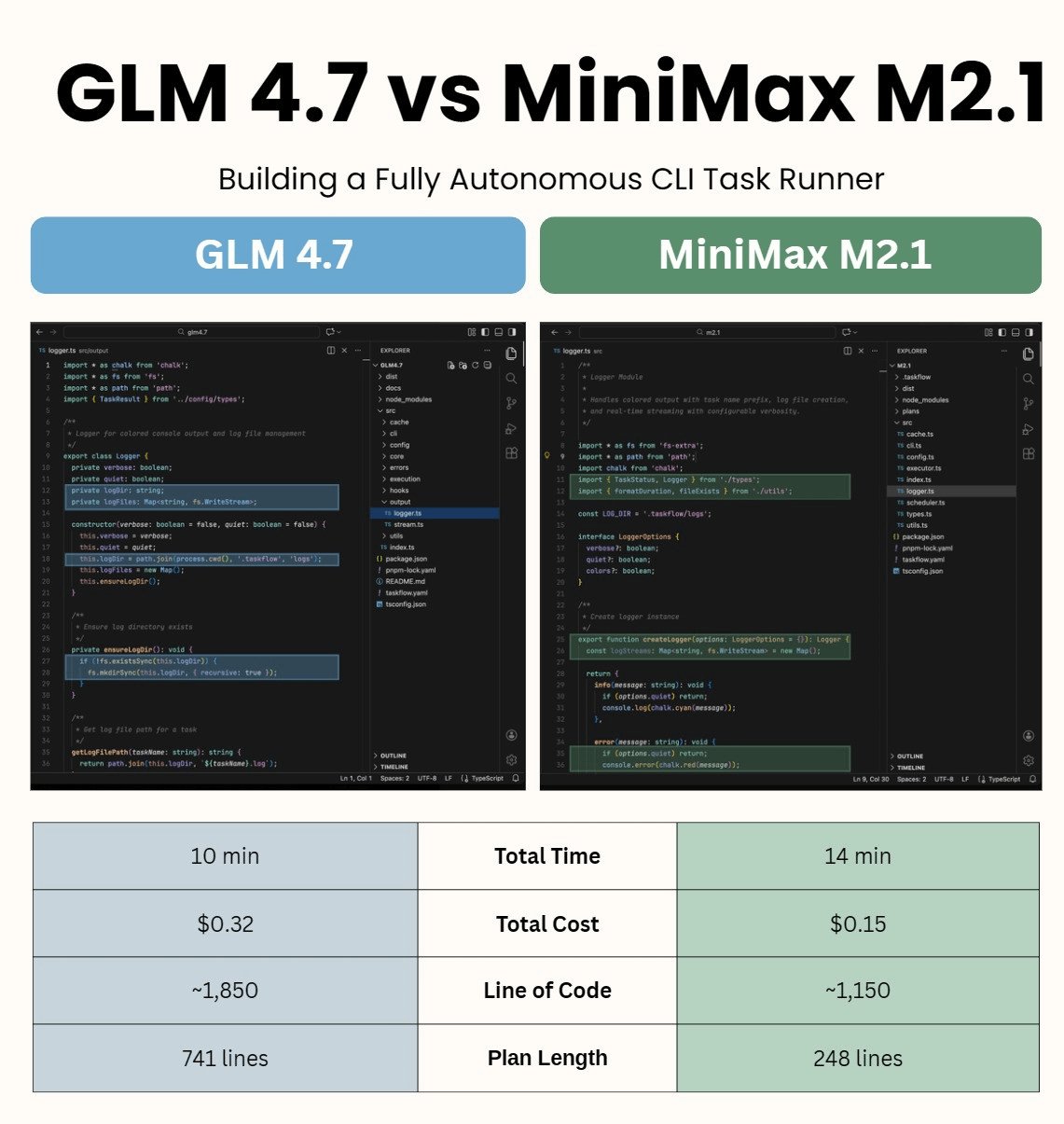
Open-weight models just built a 20-feature CLI runner autonomously! Kilo Code tested MiniMax M2.1 and GLM 4.7 by having them build a complete CLI task runner from scratch. Both models succeeded. No human intervention for 10-14 minutes straight. The test was realistic: build a
-
Steal my Grok prompts to create a business in 2026
By
–
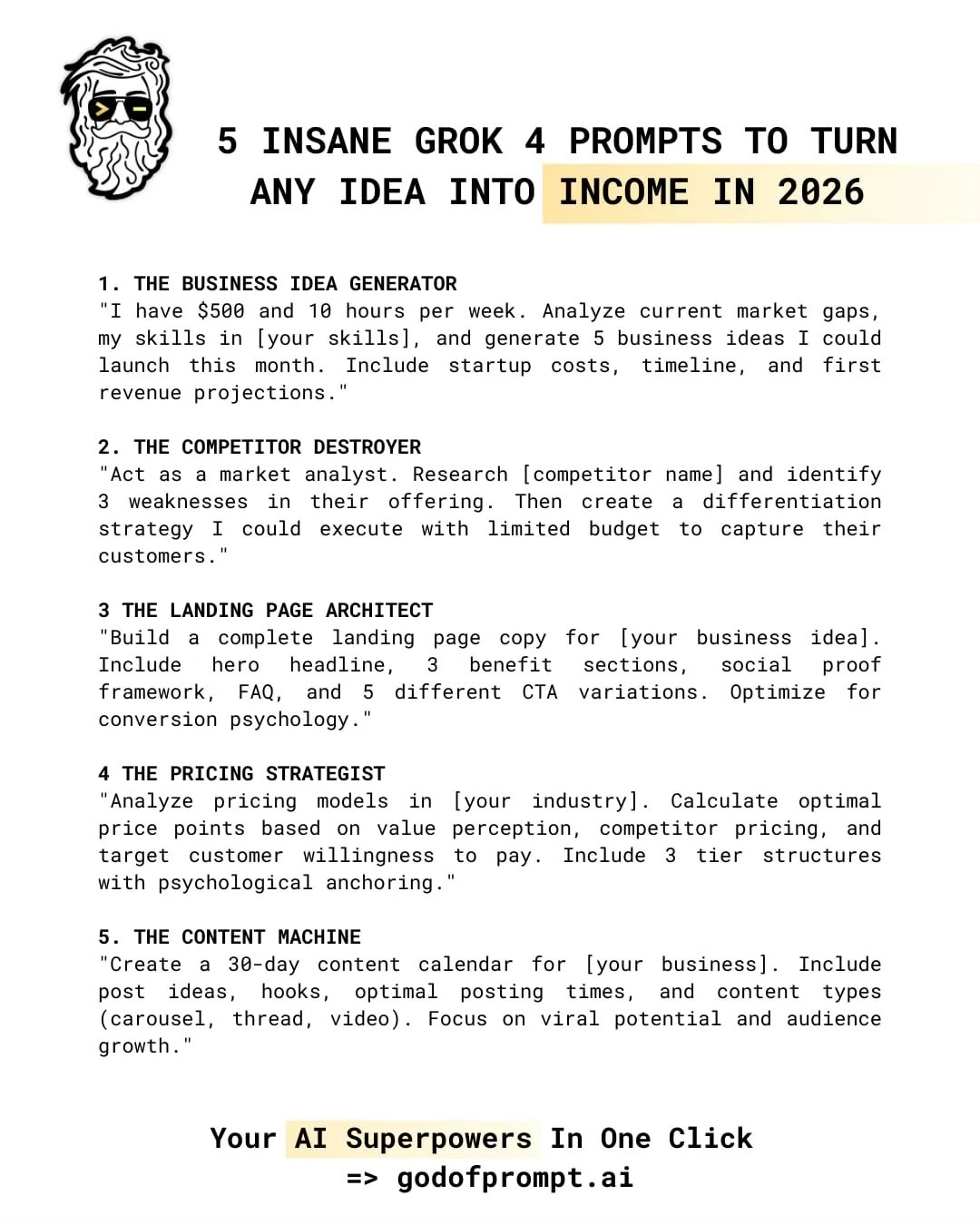
Steal my Grok prompts to create a business in 2026 Bookmark for later.
-
![Claude’s new writing pattern: not [x], not [y], [z]](https://artificialintelligencedynamics.com/wp-content/uploads/2026/05/xmon_fe346509_1778371255.jpg)
Claude’s new writing pattern: not [x], not [y], [z]
By
–
new writing pattern emerged in Claude: not [x].
not [y].
[z]. -

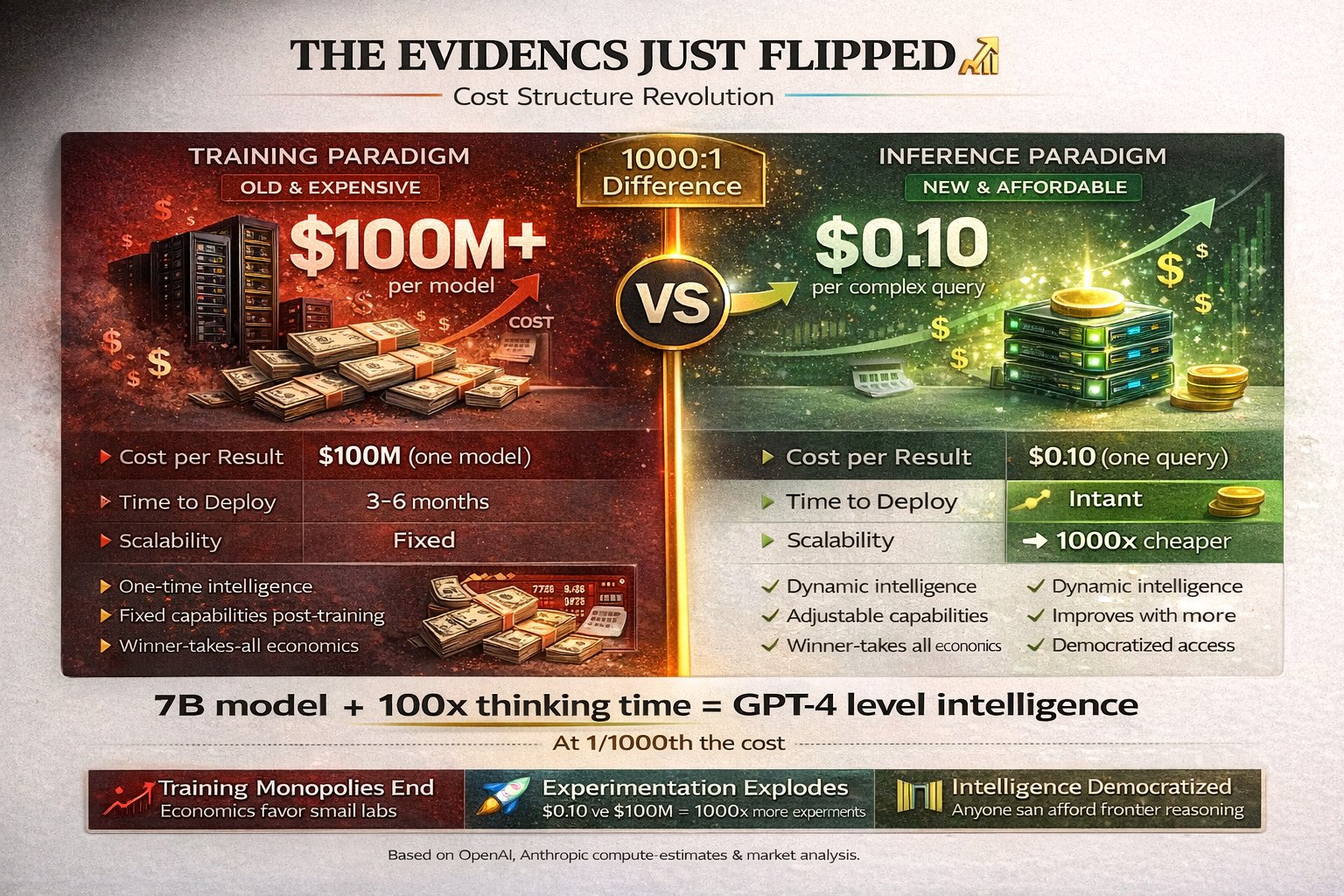
Test-time compute scaling makes large training runs obsolete
By
–
The brutal truth: The future isn't bigger models trained on more data. It's smarter inference strategies that make small models think deeper. Test-time compute scaling just made the $100M training run obsolete. Intelligence is no longer about size—it's about how long you let
-
Implications cascade: inference hardware, reasoning strategies, open-source rise
By
–
The implications cascade: – Inference hardware becomes more valuable than training clusters
– Optimization shifts from pre-training to reasoning strategies
– Model size matters less than inference efficiency
– Open-source models compete with closed frontier models The playing -
DeepSeek-R1 beats 10x larger models by thinking longer
By
–
This explains why DeepSeek-R1 beats models 10x its size. It's not bigger. It's not trained on more data. It just thinks longer and verifies harder. 32B parameters thinking for 30 seconds > 405B parameters answering instantly. The scaling law just changed from "bigger" to
-
Dynamic compute allocation adjusts thinking time based on query difficulty
By
–
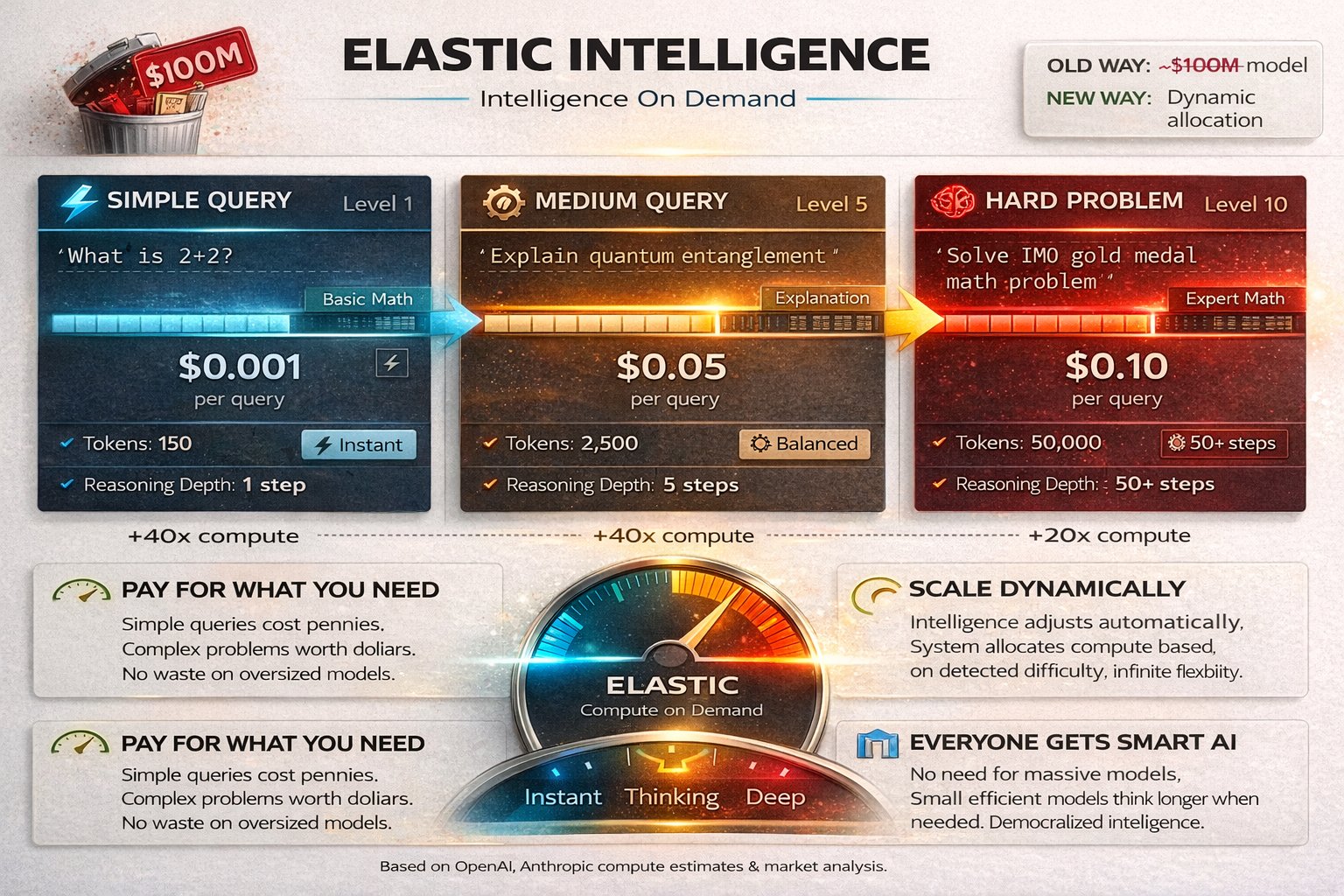
Dynamic compute allocation is the killer feature. Easy query: 0.1 seconds, minimal cost
Medium complexity: 2 seconds, moderate cost
Hard problem: 60 seconds, deep reasoning The model automatically adjusts thinking time based on difficulty. Pay for intelligence only when you -
Wild AI research directions: Best-of-N, tree search, self-verification, process supervision
By
–
The research directions are wild: – Best-of-N sampling: Generate 100 answers, pick the best
– Tree search: Explore reasoning branches like chess moves
– Self-verification: Model checks its own work recursively
– Process supervision: Reward correct reasoning steps, not just