We can try it, but that's an enormous additional labor burden on an already-stretched system
JOBS
-
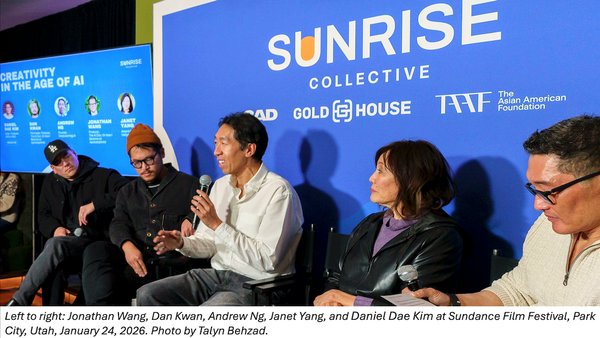
Building Bridges Between AI and Hollywood at Sundance
By
–
I recently spoke at the Sundance Film Festival on a panel about AI. Sundance is an annual gathering of filmmakers and movie buffs that serves as the premier showcase for independent films in the United States. Knowing that many people in Hollywood are extremely uncomfortable about AI, I decided to immerse myself for a day in this community to learn about their anxieties and build bridges. I’m grateful to Daniel Dae Kim @danieldaekim, an actor/producer/director I’ve come to respect deeply for his artistic and social work, for organizing the panel, which also included Daniel, Dan Kwan, Jonathan Wang, and Janet Yang. I found myself surrounded by award-winning filmmakers and definitely felt like the odd person out! First, Hollywood has many reasons to be uncomfortable with AI. People from the entertainment industry come from a very different culture than many who work in tech, and this drives deep differences in what we focus on and what we value. A significant subset of Hollywood is concerned that: – AI companies are taking their work to learn from it without consent and compensation. Whereas the software industry is used to open source and the open internet, Hollywood focuses much more on intellectual property, which underlies the core economic engines of the entertainment industry. – Powerful unions like SAG-AFTRA (Screen Actors Guild-American Federation of Television and Radio Artists) are deeply concerned about protecting the jobs of their members. When AI technology (or any other force) threatens the livelihoods of their members — like voice actors — they will fight mightily against potential job losses. – This wave of technological change feels forced on them more than previous waves, where they felt more free to adopt or reject the technology. For example, celebrities felt like it was up to them whether to use social media. In contrast, negative messaging from some AI leaders who present the technology as unstoppable, perhaps even a dangerous force that will wipe out many jobs, has not encouraged enthusiastic adoption. Having said that, Hollywood is under no illusions that AI will change entertainment, and that if Hollywood does not adapt, perhaps some other place will become the new center for entertainment. The entertainment industry is no stranger to technology change. Radio, TV, computer graphics special effects, video streaming, and social media transformed the industry. But the path to navigating AI’s transformation is still unclear, and organizations like the new Creators Coalition on AI are trying to stake out positions. Unfortunately, Hollywood’s negative sentiment toward AI also means it will produce a lot more Terminator-like movies that portray AI as more dangerous than helpful, and this hurts beneficial AI adoption as well. The interests of AI and Hollywood are not always aligned. (Every time I speak in a group like this as the “AI representative,” I can count on being asked very hard questions.) Most of us in tech would prefer a more open internet and more permissive use of creative works. But there is also much common ground, for example in wanting guardrails against deepfakes and a smooth transition for those whose jobs are displaced, perhaps via upskilling. Storytelling is hard. I’m optimistic that AI tools like Veo, Sora, Runway, Kling, Ray, Hailuo, and many others can make video creation easier for millions of people. I hope Hollywood and AI developers will find more opportunities to collaborate, find more common ground, and also steer our projects toward outcomes that are win-win for as many parties as possible. [Original text: deeplearning.ai/the-batch/is… ]
→ View original post on X — @andrewyng, 2026-02-13 16:22 UTC
-
Focus Skills Over Job Titles for Career Growth
By
–
If the promotion is not coming, don’t dwell on it. Or obsess over the next one. Focus on what you can do to take control of your skills. The title may look great on LinkedIn, but you will want more than that. https://
bit.ly/4rPtKA3
#careers #employees #Leadership #careergrowth -

AI Programme Success Requires Strong Organizational Fundamentals
By
–
Most AI programmes fail for the same reason sports teams lose, weak fundamentals. AI does not fail because the models are weak. It fails because organisations skip the basics, clear ownership, consistent training, good habits, and a way to measure progress that people trust.
-
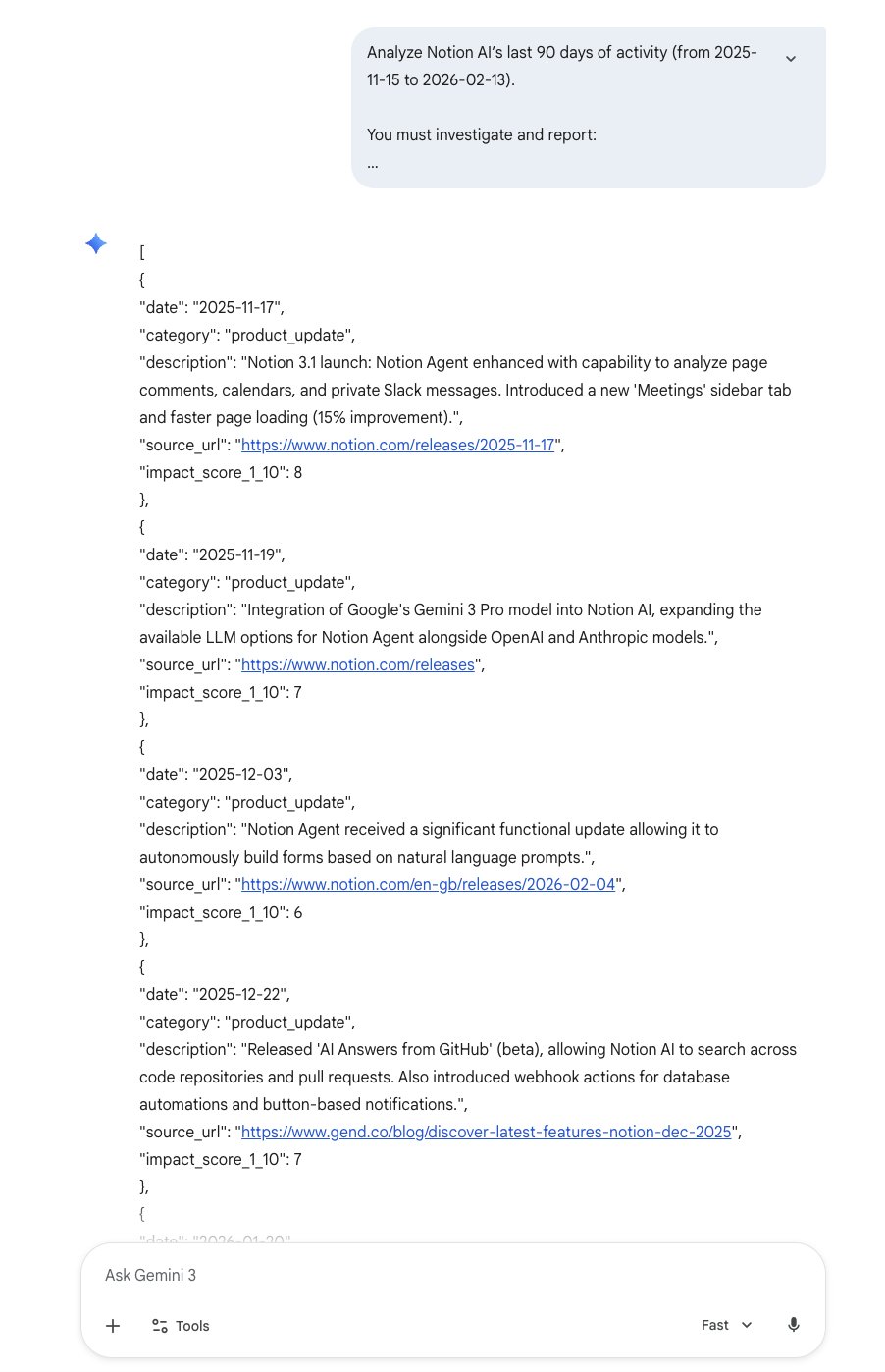
Competitor 90-Day AI Activity Analysis Template
By
–
Step 1 – Data Collection (Gemini) Prompt: Analyze [COMPETITOR]'s last 90 days of activity: 1. Product launches or updates
2. Pricing changes
3. New hires (executive level)
4. Customer complaints (Reddit, Twitter, G2)
5. Website changes (new pages, messaging shifts) Format as -

AI Transforms Communications: FleishmanHillard’s Training Strategy
By
–
How AI Is Transforming The Communications Industry: Lessons From FleishmanHillard FleishmanHillard's Ephraim Cohen reveals how the global #PR consultancy is democratizing #AI across its workforce through hands-on #training and integrated platforms, building #AIfluency among
-
AI Exposes Tech Companies Overstaffing Issues
By
–
Don't blame AI for exposing how overstaffed large tech companies are.
-
Fear AI too good in scalable subdomains redirects all human work
By
–
My biggest fear is that the AI will become *too good* in certain very valuable and very scalable subdomains, that we'll all be forced to reorient ALL of human work around those use cases, instead of trying to adopt AI for the workflows that we are used to and come more naturally.
-
Agency Surpasses Intelligence in the Age of AI
By
–
The modern age has richly rewarded people with a combination of high intelligence and high agency. Now that many aspects of intelligence are successfully being automated, it seems likely that people with relatively lower intelligence but exceptional agency will come into their own if they are willing to egolessly accept AI advice. Imagine a ruthless criminal that completely trusts everything their always-on AI glasses are telling them, knowing that it is carefully looking out for their best interests and isn't scheming to betray them. [Translated from EN to English]
→ View original post on X — @id_aa_carmack, 2026-02-12 18:46 UTC
-
AI Will Reveal True Added Value of White-Collar Workers
By
–
Oui. L'IA va mesurer la vraie valeur ajoutée de chacun au travail. Pour beaucoup de cadres en costume dans des tours, on se rendra compte qu'elle est de zéro voire négative.