The Llama Impact Grant program is growing
This year we're expanding the Llama Impacts Grant program by hosting a series of virtual events and in-person hackathons, workshops and trainings around the world — and providing technical guidance and mentorship to prospective
INNOVATION
-
Llama Impact Grant Program Expands with Global Events and Support
By
–
-
Llama 3.1 Impact Grants Support Global Community Projects
By
–
We’re inspired by the diverse projects we’ve seen developers undertake around the world to positively impact their communities by building with Llama and we're excited to support a new wave of global community impact with the Llama 3.1 Impact Grants.
-
Llama 3.1 Impact Grants: $500K for Community Solutions
By
–
Today we're opening a call for applications for Llama 3.1 Impact Grants! Until Nov 22, teams can submit proposals for using Llama to address social challenges across their communities for a chance to be awarded a $500K grant. Details + application https://
go.fb.me/smw6xc -
Llama 3.1 Compatibility and Overlap with Previous Version
By
–
Yes, there seems to be a large overlap. Llama 3.1 is based on 3.0, so it's not too crazy but it's nice it works without requiring any tweaking
-
Turbo LoRA: Faster Fine-Tuning with Improved Inference Efficiency
By
–
Get ready for Turbo #LoRA, our new approach to parameter-efficient #finetuning. You get: 2-3x faster text generation throughput vs. base models Task-specific response quality on par with LoRA Improved inference cost efficiency
Read more: -
Virtual Node Technique Predicts Optical Magnetic Properties
By
–
Moreover, the virtual node technique is not exclusive to phonons, and could also be used to predict challenging optical & magnetic properties.
-
VGNN accelerates phonon dispersion calculations for materials discovery
By
–
A VGNN could help calculate phonon dispersion relations for a few thousand materials in just a few seconds w/a personal computer. This efficiency could enable scientists to search a larger space when seeking materials with certain thermal properties.
-

Virtual Node Graph Neural Network Models Phonon Dynamics
By
–
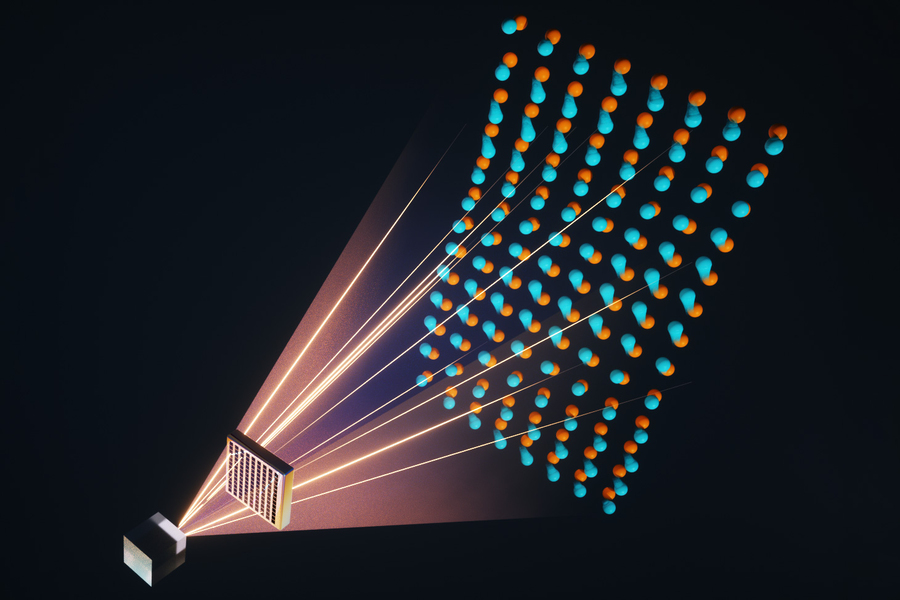
The team created a virtual node graph neural network (VGNN) by adding a series of flexible virtual nodes to the fixed crystal structure to represent phonons. The virtual nodes enable the output of the neural network to vary in size, so it isn’t restricted by the fixed crystal
-
VGNN Method Improves Phonon Dispersion Relation Calculations Efficiently
By
–
Since it has virtual nodes to represent phonons, the VGNN can skip many complex calculations when estimating phonon dispersion relations, which makes the method more efficient than a standard GNN.
-
MIT’s ML Framework Predicts Phonon Dispersion 1000x Faster
By
–
Roughly 70% of the energy generated worldwide ends up as waste heat, according to some estimates — with the trouble coming from phonons. MIT’s new ML framework can predict phonon dispersion relations up to 1,000x faster than other AI-based techniques w/comparable or even better