Top stories in tech today: – Startup that wants to grow you a spare body
– Space solar startup Aetherflux eyes $2B
– Meta tests new paid tier for Instagram
– Uber buys Blacklane to court high-end riders
– Quick hits on other tech news
INDUSTRY
-
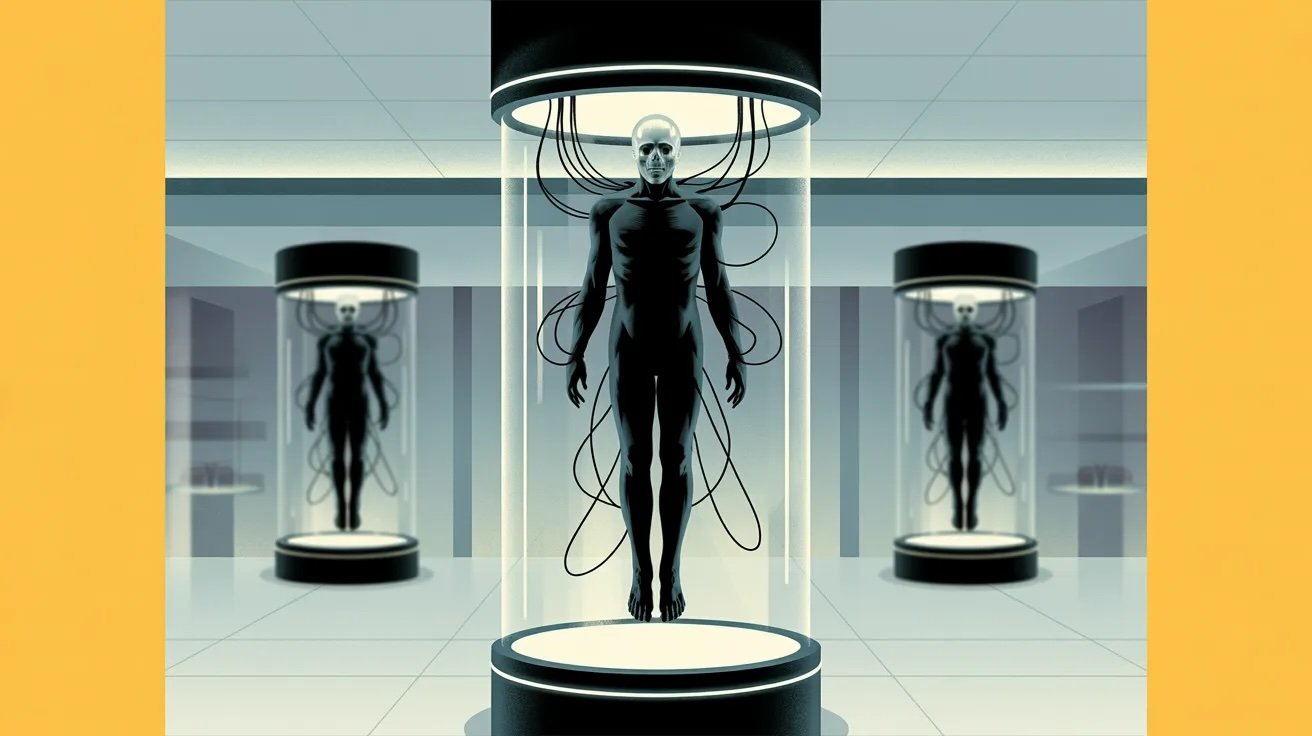
Tech Roundup: Startups, Space Solar, Meta, and Uber News
By
–
-
Energy Digital Twins Drive Manufacturing Competitive Advantage
By
–
Energy digital twins aggregate distributed energy assets across multiple factory sites and optimize grid participation in real time. For manufacturers with significant energy costs, this is not just an efficiency tool. It is becoming a direct competitive advantage as energy… pic.twitter.com/lYUK3bPcq4
— Lucian Fogoros (@fogoros) 31 mars 2026Energy digital twins aggregate distributed energy assets across multiple factory sites and optimize grid participation in real time. For manufacturers with significant energy costs, this is not just an efficiency tool. It is becoming a direct competitive advantage as energy
-
Top Smart Factory Technologies 2026: Agentic AI
By
–
And more insights here: https://
iiot-world.com/smart-manufact
uring/top-smart-factory-technologies-2026-agentic-ai-uns/
… #IIoT #EnergyEfficiency -
Britain’s high electricity costs threaten industrial competitiveness globally
By
–
Britain now has the highest industrial electricity prices in the developed world. At 25p per kilowatt-hour, its power costs stand at double the EU average and quadruple those of the US (6p) and China (7p). But this isn’t just about the death of old industry. Just as cheap
-
Robots Dominate China’s Nearly Autonomous Logistics Factory Operations
By
–
#Robots Run the Show in China’s Almost Unmanned #Logistics Factory
— Ronald van Loon (@Ronald_vanLoon) 31 mars 2026
by @Natie2Natie#Robotics #ArtificialIntelligence #Innovation #Technology pic.twitter.com/BtfY58zCWx#Robots Run the Show in China’s Almost Unmanned #Logistics Factory
by @Natie2Natie #Robotics #ArtificialIntelligence #Innovation #Technology -
Kingfisher beak redesigns bullet trains for efficiency
By
–
Japan’s bullet trains had a problem big enough to threaten the future of high-speed rail.
— Pascal Bornet (@pascal_bornet) 31 mars 2026
At 200 mph, tunnels turned them into sonic bombs.
Noise complaints grew.
Communities suffered.
Speed restrictions became a real risk.
What stands out to me is this:
The solution did not… pic.twitter.com/pYTdYcHmZOJapan’s bullet trains had a problem big enough to threaten the future of high-speed rail. At 200 mph, tunnels turned them into sonic bombs. Noise complaints grew. Communities suffered. Speed restrictions became a real risk. What stands out to me is this: The solution did not come from more force. It came from a bird. Engineer Eiji Nakatsu studied the kingfisher, which moves from air into water with barely a splash, and used that insight to redesign the Shinkansen’s nose. The result was remarkable: ↳ sonic boom dramatically reduced ↳ trains became about 10% faster ↳ electricity use dropped by around 15% But this was never just about noise. This is the deeper impact: ↳ 15% less energy has been framed as 200,000 fewer tons of CO2 annually ↳ 10% faster speeds can mean more people living outside expensive cities while still commuting ↳ quieter tunnels can mean families near the tracks finally sleeping through the night That is what makes this story bigger than engineering. One bird’s beak did not just improve a train. It reshaped how an entire system could perform, with less friction for people and the environment. I see a much bigger lesson here. The best innovation does not always come from adding more power, more cost, or more complexity. Sometimes it comes from observing better. Nature has already solved for speed, efficiency, resilience, and adaptation. The real question is whether we are humble enough to learn from it. Because the future will not belong only to those who build more powerful systems. It will belong to those who build systems that work better with reality. What system in your industry is still being forced forward when it should be fundamentally redesigned? #Innovation #Biomimicry #Engineering #Leadership #Technology #Transportation #Sustainability #AI #FutureOfWork #PascalBornet
→ View original post on X — @pascal_bornet, 2026-03-31 09:01 UTC
-
Centipede-Inspired Multi-Legged Robot for Terrain Exploration
By
–
Centipede-Inspired Multi-Legged #Robot Designed for All-Terrain Exploration and Field Operations
— Ronald van Loon (@Ronald_vanLoon) 31 mars 2026
via @ZappyZappy7
#Robotics #Engineering #ArtificialIntelligence #Innovation #Technology pic.twitter.com/m8kaBNm35cCentipede-Inspired Multi-Legged #Robot Designed for All-Terrain Exploration and Field Operations
via @ZappyZappy7 #Robotics #Engineering #ArtificialIntelligence #Innovation #Technology -
ICON’s 3D Printer Brings Repeatability and Scale to Construction
By
–
-

Energy Systems Reliability and Innovation at Gastech 2026
By
–
Rising energy demand is increasingly driven by digital infrastructure. Data centers, AI and electrification are reshaping load patterns, requiring smarter coordination between energy supply, grids and digital systems. Antonio Grasso (@antgrasso) Energy is back at the center of global attention. LNG markets, supply risks, and rising demand are testing power systems, making reliability, affordability, and resilience the real priority ahead of events like Gastech 2026. More> gastechevent.com @GastechEvent Partner. The real question today is no longer just how much energy we can produce. It is how to build systems that remain reliable, affordable, and resilient under increasing pressure. This is where Gastech 2026 becomes relevant. From 14–17 September in Bangkok, governments, energy companies, investors, and technology leaders will come together to work on practical solutions, from LNG and supply security to hydrogen, climate tech, more flexible grids, and digital optimization of energy systems. A step forward in building more secure, affordable, and innovative energy systems for the years ahead. — https://nitter.net/antgrasso/status/2038552477486731493#m
→ View original post on X — @antgrasso, 2026-03-31 07:37 UTC
-
Robots Revolutionize Solar Panel Installation with Speed and Safety
By
–
#Robots Take Over Solar Panel Installation for Faster, Safer Deployment
— Ronald van Loon (@Ronald_vanLoon) 31 mars 2026
by @lukas_m_ziegler
Robotics #ArtificialIntelligence #MI #ML #Tech #Innovation pic.twitter.com/frX7ZyVon4#Robots Take Over Solar Panel Installation for Faster, Safer Deployment
by @lukas_m_ziegler Robotics #ArtificialIntelligence #MI #ML #Tech #Innovation