Hope this was useful! I wanted to keep going but had to stop myself. Will post more soon. What are your favorite underrated Claude Code features?
GENERATIVE AI
-
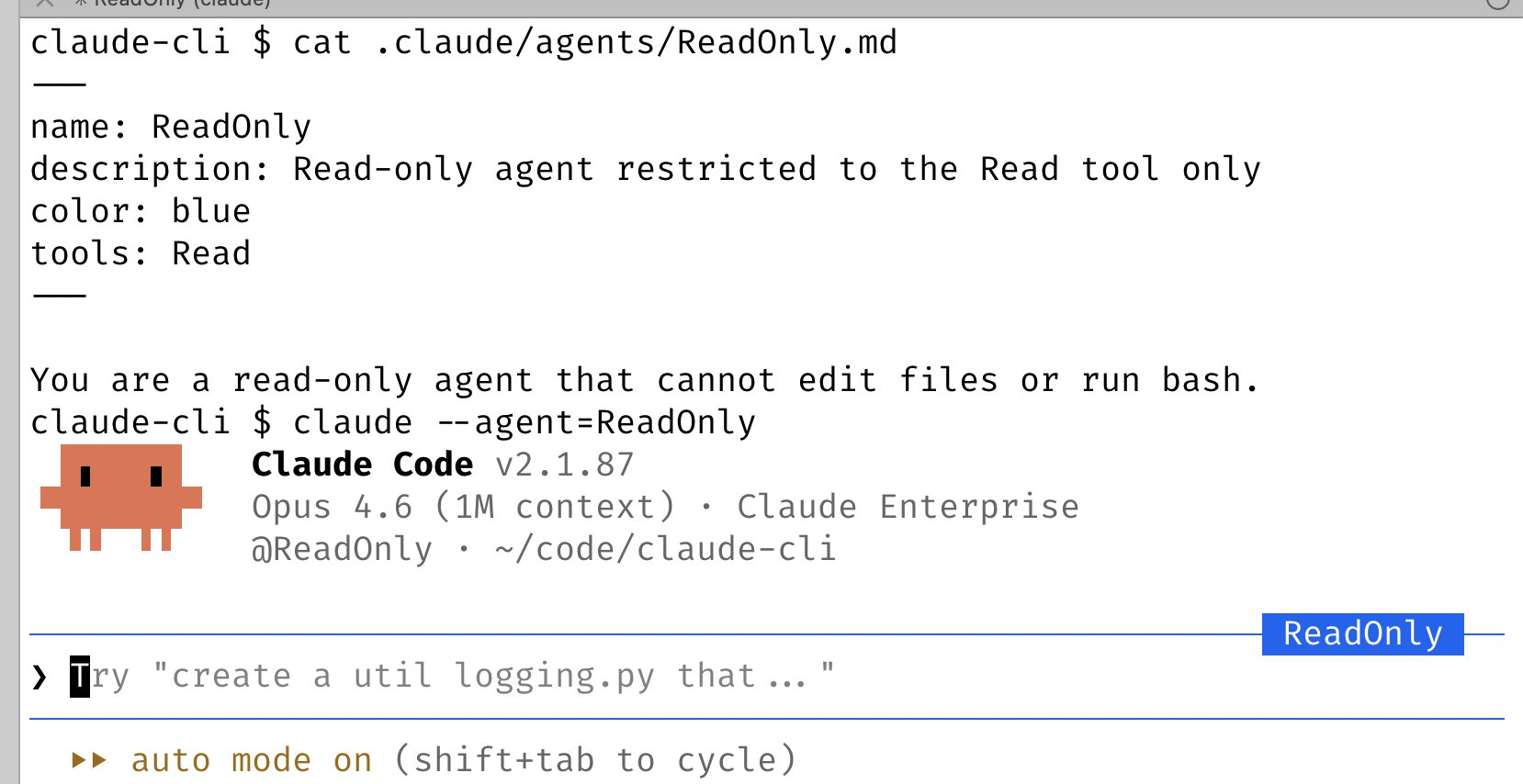
Claude Code Custom Agents with System Prompts and Tools
By
–
14/ Use –agent to give Claude Code a custom system prompt & tools Custom agents are a powerful primitive that often gets overlooked. To use it, just define a new agent in .claude/agents, then run claude –agent=
-
Dispatch: Secure Remote Control for Claude Desktop App
By
–
5/ Cowork Dispatch I use Dispatch every day to catch up on Slack and emails, manage files, and do things on my laptop when I'm not at a computer. When I'm not coding, I'm dispatching. Dispatch is a secure remote control for the Claude Desktop app. It can use your MCPs, browser,
-
Use Chrome Extension for Frontend Work with Claude Code
By
–
6/ Use the Chrome extension for frontend work The most important tip for using Claude Code is: give Claude a way to verify its output. Once you do that, Claude will iterate until the result is great. Think of it like any other engineer: if you ask someone to build a website but
-
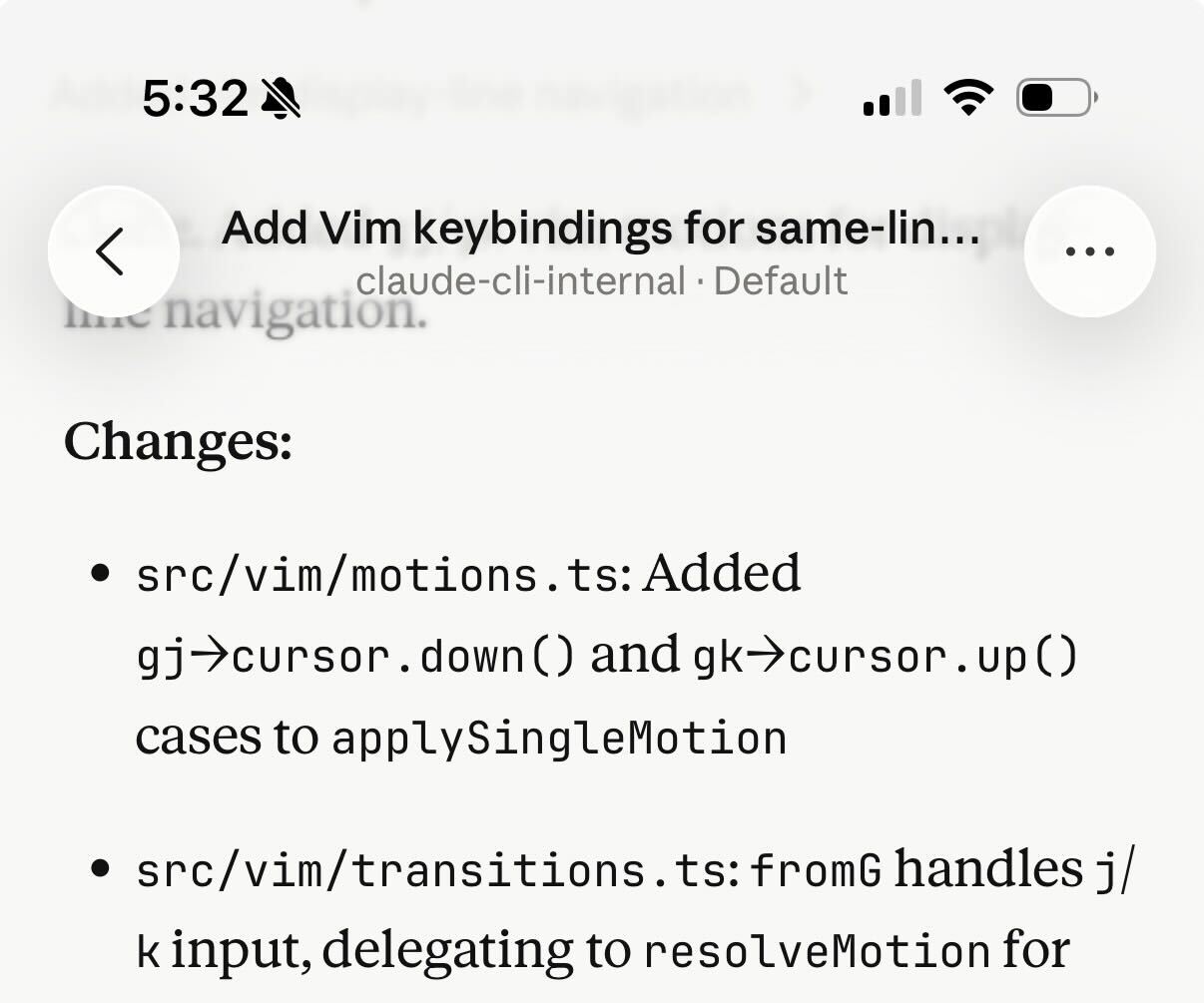
Claude Code Mobile App: Code on iOS and Android
By
–
1/ Did you know Claude Code has a mobile app? Personally, I write a lot of my code from the iOS app. It's a convenient way to make changes without opening a laptop. Download the Claude app for iOS/Android > Code tab on the left.
-
My Favorite Hidden Features in Claude Code
By
–
I wanted to share a bunch of my favorite hidden and under-utilized features in Claude Code. I'll focus on the ones I use the most. Here goes.
→ View original post on X — @jiquanngiam, 2026-03-30 03:12 UTC
-
Collective Intelligence Creating and Remixing New AI Concepts
By
–
Watching the hive mind at work creating and remixing a new concept is always so glorious
-
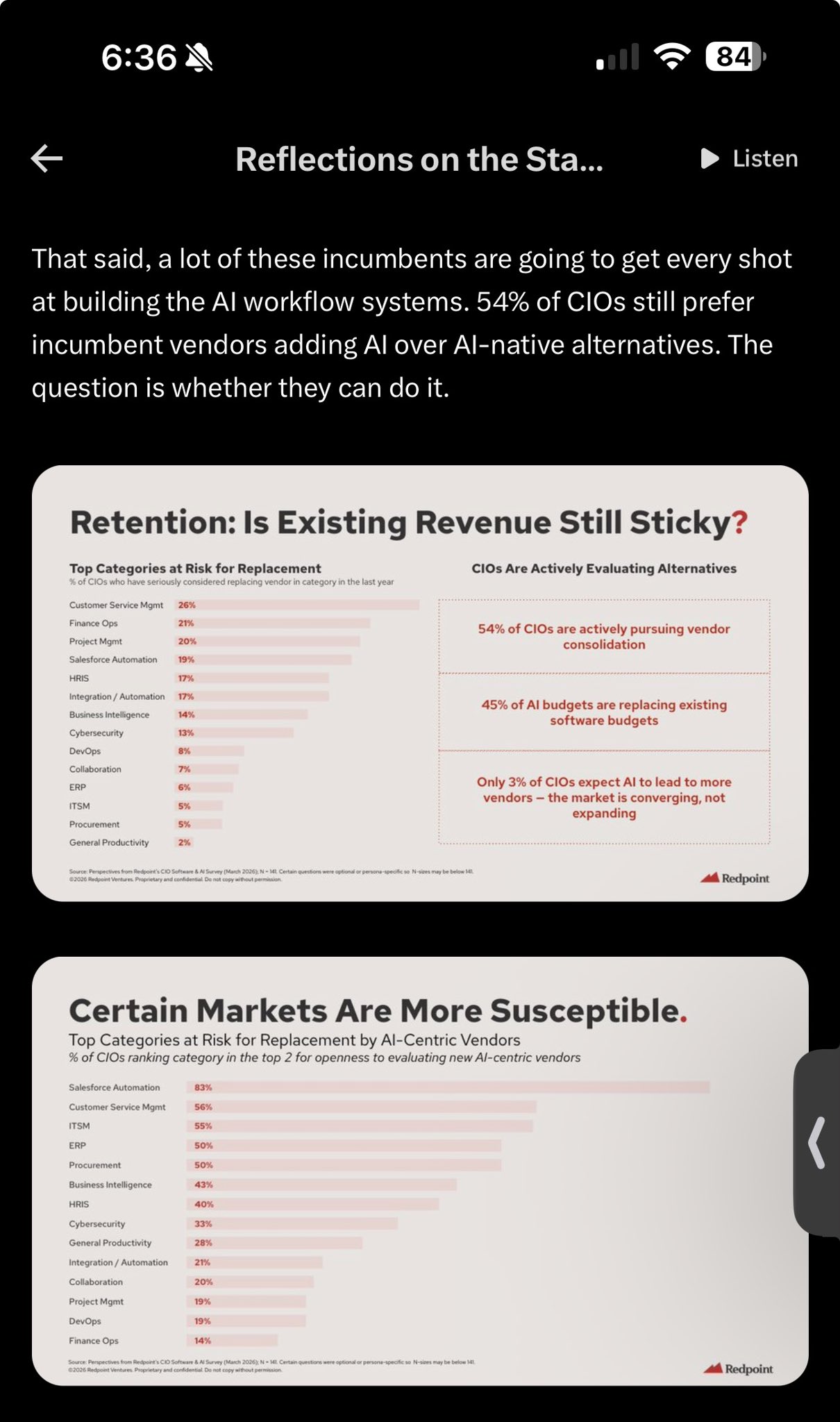
Redpoint’s AI SaaS Ranking Reveals Major Market Opportunity
By
–
redpoint literally just published a ranked list of saas businesses to redo from scratch with ai. you can flip the 54% and the number 46% of enterprise CIOs *open to new ainative startups* over incumbents is a stunning market opportunity. if you’d asked me prior to seeing this
-
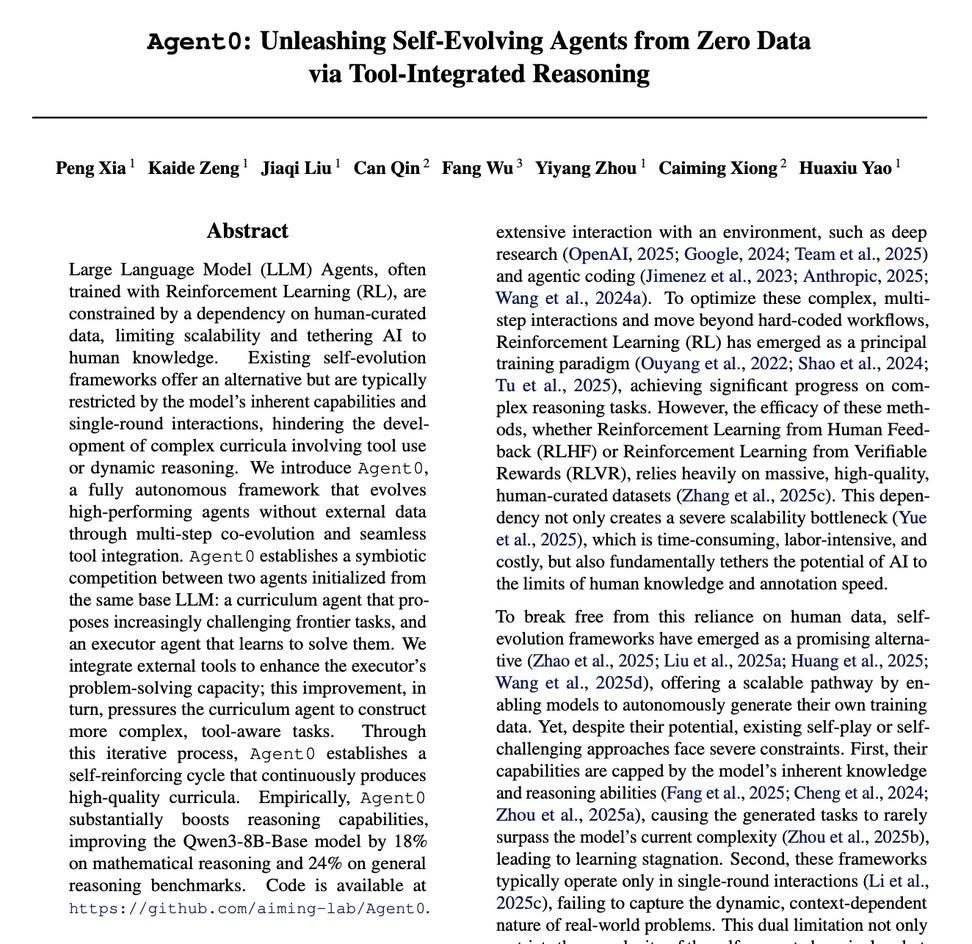
Stanford’s Agent0: AI System That Teaches Itself Without Human Supervision
By
–
🚨 BREAKING: Stanford just unlocked the cheat code for infinite AI reasoning. Not an upgrade. Not another model. A completely new way for AI to teach itself. Researchers at Stanford University just introduced a framework called Agent0… And it doesn’t learn like anything we’ve seen before. Most AI systems today depend on: • Massive curated datasets • Human feedback loops • Predefined training pipelines Agent0 throws all of that out. No labeled data. No human supervision. No hand-holding. Just pure self-evolution. Here’s what makes it wild: Agent0 starts from zero knowledge… Then improves by: • Generating its own problems • Solving them • Learning from its own mistakes • Iterating endlessly It’s basically AI teaching itself how to think. And the results? Honestly insane: → +18% improvement in mathematical reasoning → +24% boost in general reasoning tasks → Outperforms every existing self-play method currently available This isn’t incremental. This is a leap. But here’s the craziest part: You can literally watch the system evolve… It begins with basic geometry problems (simple shapes, angles, proofs) Then gradually levels up to: • Multi-step logical reasoning • Complex combinatorics • Abstract problem-solving No external help. Just self-driven intelligence scaling. Why this matters: We might be entering a phase where AI no longer needs: • Human-generated datasets • Expensive labeling • Constant retraining Instead… AI systems could: • Continuously improve themselves • Adapt in real-time • Unlock reasoning abilities we didn’t explicitly program If this direction scales… We’re not just building smarter AI. We’re building AI that learns how to become smarter on its own.
→ View original post on X — @debashis_dutta, 2026-03-30 00:28 UTC
-

AI-Designed Agent Harnesses Replace Human-Coded Constraints
By
–
I have long felt that agent harnesses – even claude code – are too restrictive, because they are still designed by humans. New paper for Tinsghua and Shenzhen says, what if AI itself runs the harness, rather than defining it in code? Given a natural language SOP of how an agent should orchestrate subagents, memory, compaction, etc., we can just have an LLM execute that logic! (And AI could design that SOP dynamically and depending on the task too) It's a bit mind-warping to think about, but genius once it clicks. Makes you wonder how else we should be designing AI systems as we can start consuming more and more tokens
→ View original post on X — @debashis_dutta, 2026-03-29 23:42 UTC