
I broke my own rule to never post about AI detection as it is fraught in many ways. The problem is that if you use AI a lot, you know AI writing on sight, which makes the difficulty of objectively proving that AI use to others very frustrating
GENERATIVE AI
-
GitHub’s Spec Kit tackles unreliable vibe coding
By
–
GitHub acaba de solucionar el mayor problema del vibe coding.
— Nico (@nicos_ai) 18 mai 2026
Acaban de lanzar Spec Kit y en días ya tiene +95K estrellas.
¿La idea?
En vez de tirar prompts vagos y rezar para que el agente no rompa tu proyecto…
Spec Kit obliga a la IA a crear una especificación estructurada… pic.twitter.com/pLVkNzrxdUGitHub has just solved the biggest problem with vibe coding. They've just launched Spec Kit and in days it already has +95K stars. The idea? Instead of throwing vague prompts and praying the agent doesn't break your project… Spec Kit forces the AI to create a structured
-
Achieving SUPERHOT Design Style with Codex 5.5 and Prompt Tweaks
By
–
With a few prompt tweaks/strategies, and a switch to Codex 5.5 instead of Opus 4.7, you can get MUCH closer to the SUPERHOT design style.
— Matt Shumer (@mattshumer_) 18 mai 2026
This was a one-shot output! https://t.co/jCaDRX25Ap pic.twitter.com/fIEP3eWi6iWith a few prompt tweaks/strategies, and a switch to Codex 5.5 instead of Opus 4.7, you can get MUCH closer to the SUPERHOT design style. This was a one-shot output!
-

AI Agents Must Learn to Read the Room for Mass Adoption
By
–
#AIAgents Won’t Reach Mass Adoption Until They Learn To Read The Room
by Shailesh Nalawadi @Forbes Learn more: https://
bit.ly/4uPzZ8v #LLM #GenerativeAI #ArtificialIntelligence #ML -
HeyGen introduces granular gesture and expression control for AI avatars
By
–
Body language was the missing piece in avatar videos and HeyGen just handed it over.
— AI Highlight (@AIHighlight) 18 mai 2026
Type the gesture, type the expression, type the gaze.
The delivery finally matches https://t.co/qUsQCKZlVQBody language was the missing piece in avatar videos and HeyGen just handed it over. Type the gesture, type the expression, type the gaze. The delivery finally matches
-
Codex Model’s Role in Autonomous Design Execution
By
–
No, Codex actually communicates with MagicPat, like it’s Codex that is making the designs. Having it running in the app is a nicer addition to the experience, but the real magic is that it’s Codex that is in control. In their video, it is just a browser lmao.
-
Seeking AI models for stylistic writing critique and sparring
By
–
what’s the best model & harness that just gets writing vibe right? i don’t want any content generated, but sparring partner and for it to really get the style im going for so it can critique i mix up trying a lot of md files, examples and such
-
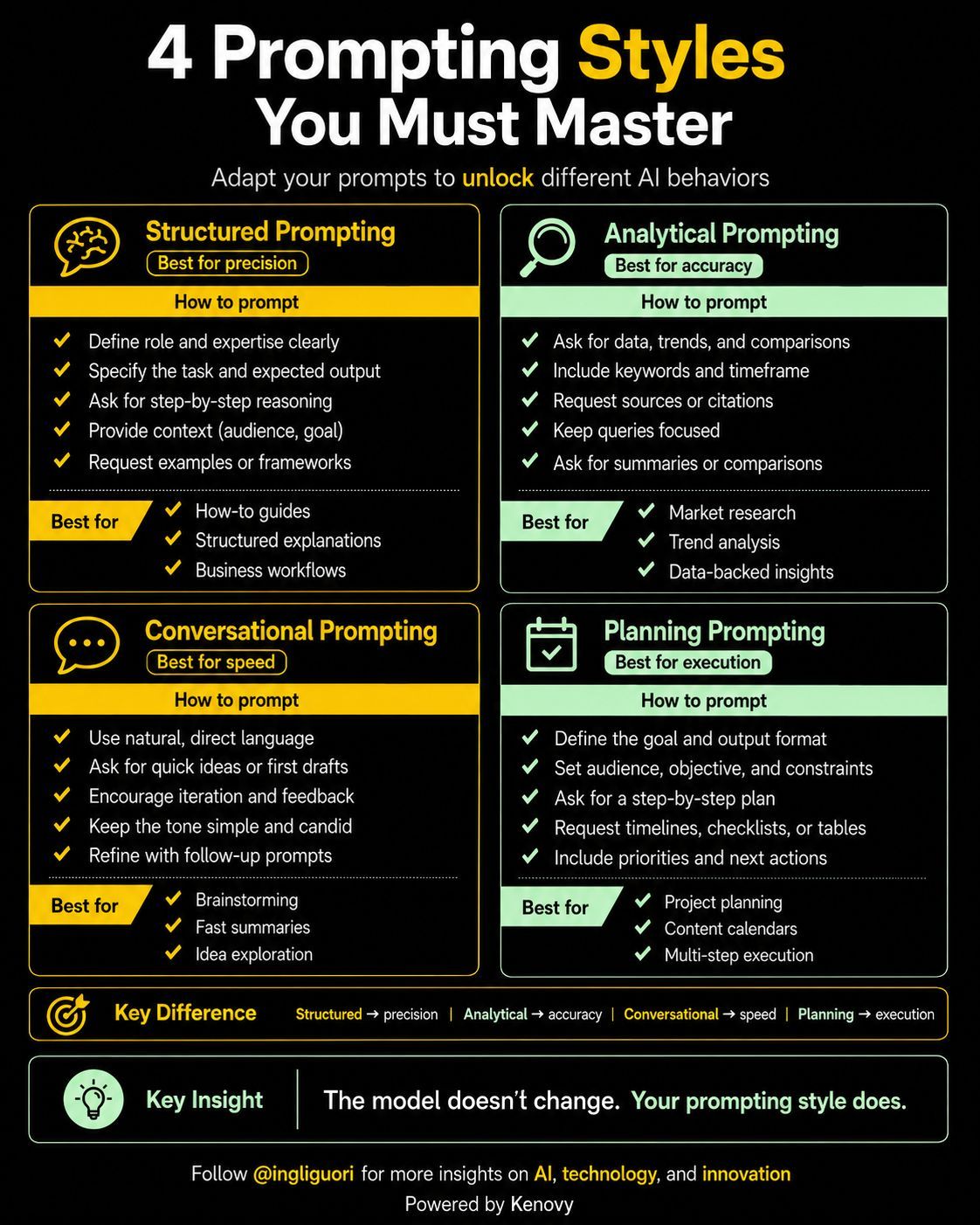
4 Prompting Styles to Master for AI Interaction
By
–
4 prompting styles to master • Structured → precision
• Analytical → accuracy
• Conversational → speed
• Planning → execution Better prompts unlock different AI behaviors. Via Giuliano Liguori (
@ingliguori
) #AI #Prompts #GenAI -
Training Major AI Model with 10x Compute on Colossus 2
By
–
> Together with SpaceXAI, we're training a significantly larger model from scratch, using 10x more total compute. With Colossus 2's million H100-equivalents and our combined data and training techniques, we expect this to be a major leap in model capability. That's double
-
Composer 2.5 and Large-Scale AI Model Training Initiative
By
–
Composer 2.5 is built on top of Kimi K2.5 Also interesting > Together with SpaceXAI, we're training a significantly larger model from scratch, using 10x more total compute. With Colossus 2's million H100-equivalents and our combined data and training techniques, we expect