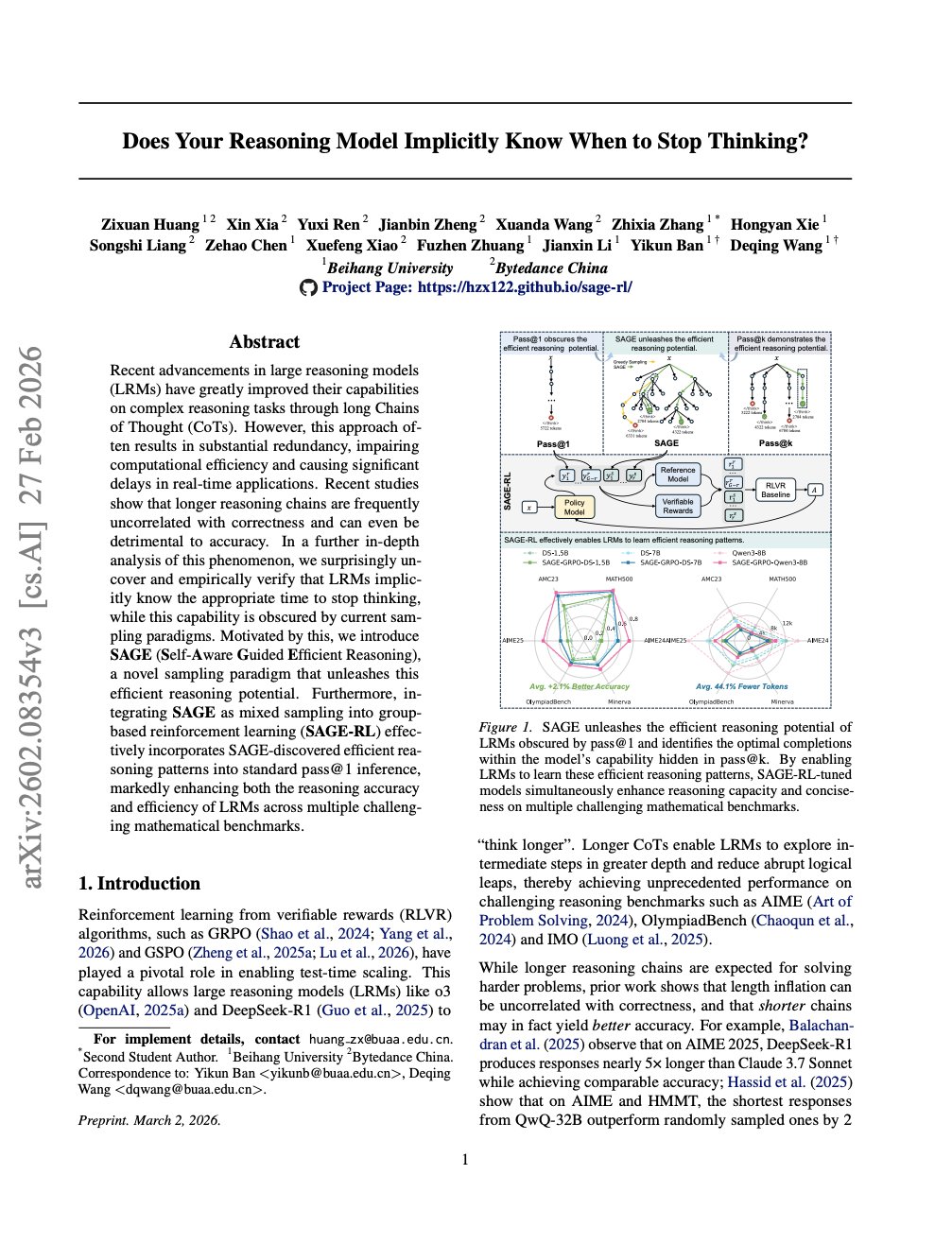
then they fold it into training with SAGE-RL. dead simple modification: in standard reinforcement learning (GRPO), you sample 8 responses per question. SAGE-RL replaces 2 of those 8 with SAGE-generated samples. the other 6 stay normal. one-line code change. the model learns to
GENERATIVE AI
-
SAGE: Efficient Reasoning with Confidence Checks
By
–
their solution: SAGE (Self-Aware Guided Efficient Reasoning). instead of generating token by token, SAGE extends chains in whole reasoning steps. after each step, it checks: is the model confidently signaling it wants to stop? if yes, reasoning ends. no fine-tuning. no new
-
Researchers test AI self-awareness in reasoning
By
–
here's where it gets interesting. the researchers probed whether models internally "know" they're done. they introduced TSearch, which scores partial reasoning traces by cumulative log-probability across the entire chain, not just the next token. when you let the model explore
-
Overthinking harms accuracy in AI responses
By
–
and it's not just wasted compute. overthinking actively hurts accuracy. DeepSeek-R1 produces responses 5x longer than Claude 3.7 Sonnet on AIME 2025 with comparable accuracy. QwQ-32B scores 2 percentage points HIGHER with its shortest answers using 31% fewer tokens. 72% of
-
RFCS Metric Reveals Early Correct Steps
By
–
first, the problem quantified. the researchers created a metric called RFCS (Ratio of First Correct Step) that tracks where in a chain of thought the correct answer first appears. on MATH-500, across every model tested, the right answer shows up well before the end in over half
-
Overthinking in AI: A Sampling Issue
By
–
reasoning models already know when they've solved the problem. we just don't let them stop. new paper from Beihang University and ByteDance shows that the overthinking problem in models like DeepSeek-R1 and Qwen3 isn't a training failure. it's a sampling failure. the fix cuts
-
AI hallucinations provide mental health break with new real-time world model
By
–
The hallucinations of AI provide mental health break
— Robert Scoble (@Scobleizer) 6 mars 2026
A new kind of AI is here.
A real-time world model.
This isn’t like anything else you’ve ever done on your computer. It creates frames one after another, which translates into a new kind of video generation engine.
I’m… pic.twitter.com/qKDHDjV85kThe hallucinations of AI provide mental health break A new kind of AI is here. A real-time world model. This isn’t like anything else you’ve ever done on your computer. It creates frames one after another, which translates into a new kind of video generation engine. I’m
-
AI-assisted discovery solves open theoretical physics problem
By
–
Solving an Open Problem in Theoretical Physics using AI-Assisted Discovery Paper:
-
AI Governance: Attribution and Provenance in Creative Processes
By
–
Well said Knut and really interesting framing. As #AI becomes more embedded in creative processes, governance around attribution, provenance and trust may become just as important as traditional ownership frameworks. In fact, this shift from pure ownership toward collaboration,
-
Comparison between Claude Code and Codex App
By
–
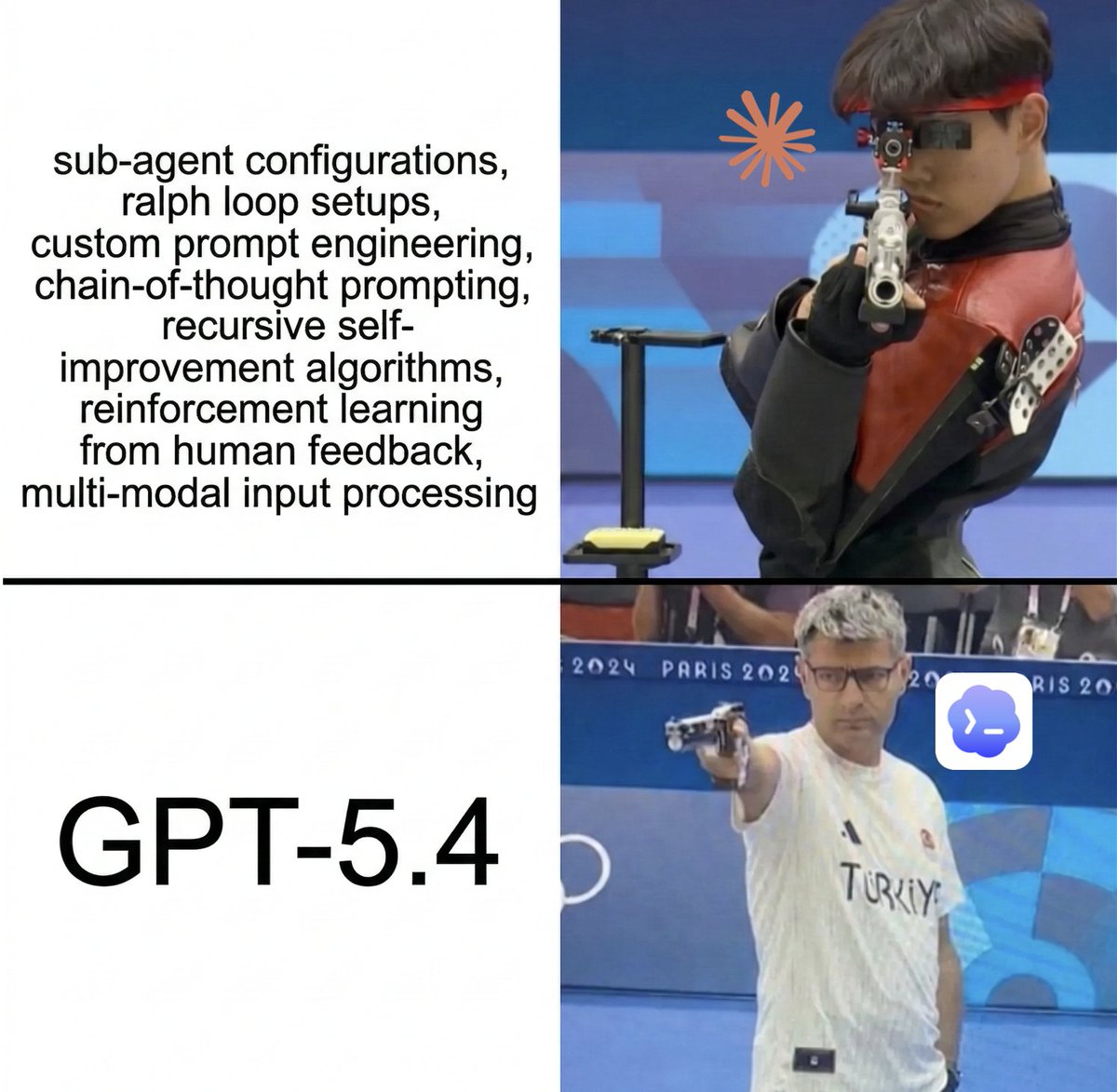
Claude Code vs Codex App [Translated from EN to English]
→ View original post on X — @arrakis_ai, 2026-03-06 07:44 UTC