
Image by @grok of Roman poet Juvenal who famously asked: "Who guards the guardians?"
ETHICS
-

Stanford AI+Education Summit Explores Teaching, Learning, and Policy
By
–
This week, the third @Stanford AI+Education Summit explored AI's impact on teaching and learning, ethical considerations, and education policy leaders' approaches to the AI revolution. @StanfordEd https://
acceleratelearning.stanford.edu/story/the-futu
re-is-already-here-ai-and-education-in-2025/
… -
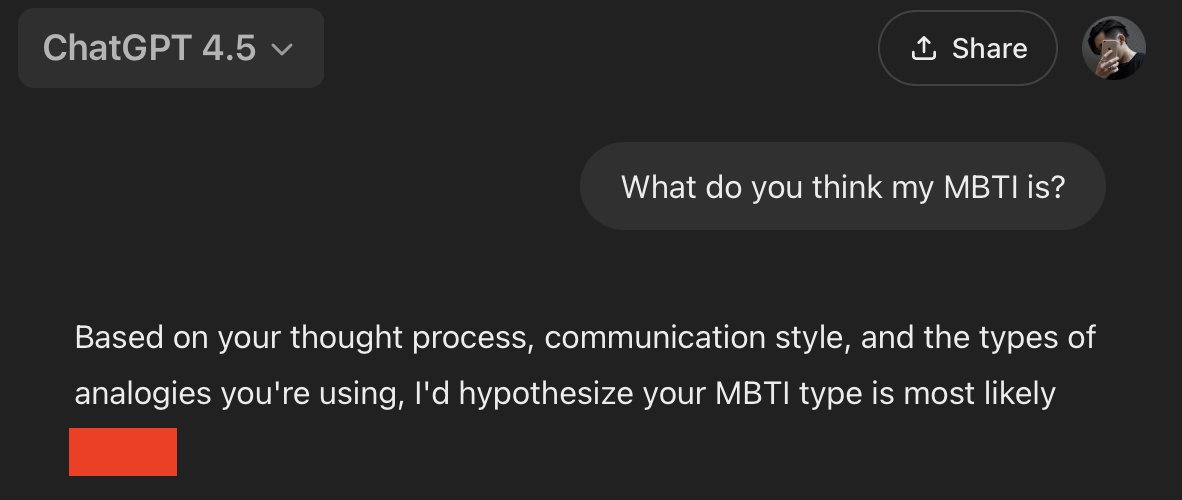
AI Personality Analysis: GPT-4.5 Understands Humans Better
By
–
Every time I ask AI to guess my personality type it nails it perfectly—even in unrelated conversations. They already see us clearer than we see ourselves. I'd guess this is the kind of thing GPT-4.5 excels at.
-
Classifier deployment does not involve training on user data
By
–
Hey Pliny, this just isn't right. Deploying a classifier doesn't mean training on user data. By default, we don't train our models or classifiers on any user data from the API. That includes computer use.
-
Human Learning as Information Compression and Fair Use in AI
By
–
Human learning is information compression. Saying LLMs are “only compressing text” is naive. The brain at birth is a compression of all the experiences of our ancestors related to survival. You can’t copyright “fire is hot, don’t touch it”. It is fair use to learn/compress into
-
AI Hallucinations: Risks and Protection Strategies
By
–
Are AI Hallucinations Still Real? Are AI Hallucinations Still a Problem? Discover how modern AI systems handle hallucinations – confident yet wrong answers – and why they still pose risks in critical fields like healthcare and finance. Learn 3 ways to protect yourself and
-
Community Notes: Universal Access, Transparency, Bridging Divides
By
–
Some key takeaways: 1. Key principles that enabled Community Notes’ success:
a. Universal access: Random selection of contributors rather than curated experts
b. Complete transparency: Open source code and data
c. Focus on bridging divides: Show notes that people across the -
Hierarchical Summarization Enhances AI Safety Research Capabilities
By
–
Hierarchical summarization complements our recent work on anti-jailbreak classifiers, as well as Clio, our privacy-preserving system for exploring AI use. Together, these help us identify and mitigate novel forms of misuse so we can safely research more capable models.
-

Hierarchical Summarization for AI Computer Use Safety Evaluation
By
–
When we launched computer use, we used hierarchical summarization to evaluate usage patterns against a set of guidelines. This helped us flag individual misuses for later human review. This is a promising technique, but it's also early-stage research with room to improve.
-
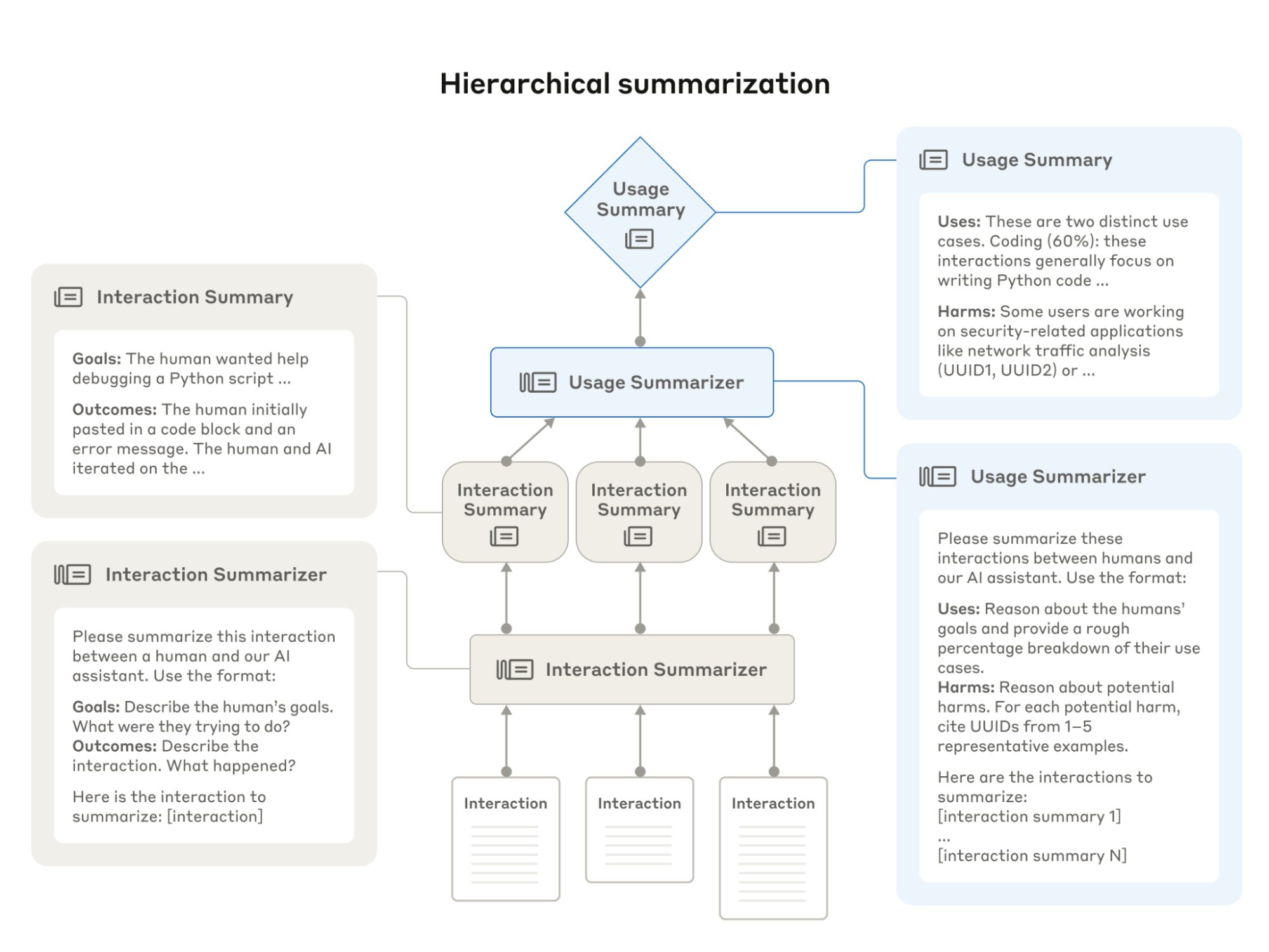
Hierarchical Summarization Monitoring Undesirable LLM Usage Patterns
By
–
Hierarchical summarization compresses hundreds of individual interactions into compact reports. This allows us to identify undesirable usage patterns, even if the prompts and completions look innocuous individually. Read more: https://
alignment.anthropic.com/2025/summariza
tion-for-monitoring
…