this is a scheduled tweet just as a reminder to self – 1 year ago when we recorded the Claude Code @latentspacepod
, 47% of people hadnt even tried it
CODE
-
One Year Reflection on Claude Code Adoption Growth
By
–
-

Ultralytics YOLO Models Export Integration for Metis AIPUs
By
–
From trained model to edge deployment in days, not months. Ultralytics has introduced an updated export integration for Metis AIPUs. Export your YOLO models, compile for Metis hardware, and run inference without PyTorch at the edge. >> Join us on April 8 for an Ultralytics Live session where we'll walk through the integration in action. Stay tuned for details! >> Check out the blog here: eu1.hubs.ly/H0t6rj40 #AxeleraAI #Ultralytics #YOLO #EdgeAI #ComputerVision
→ View original post on X — @axeleraai, 2026-03-31 14:44 UTC
-
AI Agents Transform Database Architecture Beyond 1980s Models
By
–
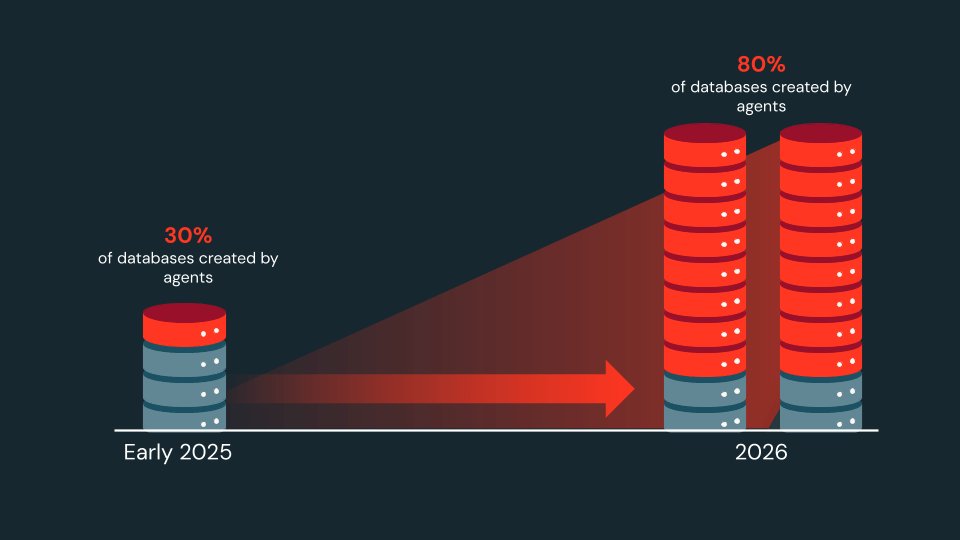
The database architecture that made sense in the 1980s doesn't hold up in a world where agents are the primary builders. The reason is that agentic development doesn't work like traditional development. AI agents now create roughly 4x more databases than human users on Lakebase.
-
Claude Memory Mechanism Analysis: Solid Engineering But Limited Architecture
By
–
I took a look at CC's Memory mechanism, and it's nothing special.The entire memory system's core is just a single MEMORY.md file, no more than 200 lines, which gets stuffed into the context at the start of each conversation. What happens when memories accumulate?A background subprocess called AutoDream runs periodically to scan, merge, and trim, ensuring everything fits.In plain terms: the model can't remember on its own, so it uses the file system + LLM self-management to simulate memory.This solution is solid from an engineering standpoint, but has several fundamental limitations:1. Storage and retrieval depend entirely on the file system + Markdown, cannot scale to cross-project, cross-Agent scenarios; memory becomes isolated silos2. No true semantic indexing, no dynamic recall based on relevance; 200 lines is a hard ceiling3. AutoDream's consolidation is rule-driven (scanning, merging, trimming), not cognition-driven; it can deduplicate and compress, but cannot extract new insights from experience4. No forgetting curve, no memory reinforcement mechanism; memories either exist or are deleted, with no middle groundAfter working on Memory for a while, you realize the ceiling for these solutions isn't actually engineering—it's architecture. As long as the model's attention mechanism itself doesn't support efficient retrieval of large historical contexts, the application layer will always be patching.This is why we chose a different path at EverMind. The MSA (Memory Sparse Attention) we released recently does content-aware sparse routing directly at the Transformer attention layer, letting the model learn itself what to recall and what to ignore, rather than relying on external scripts to make those decisions.A's engineering prowess is undoubtedly top-tier. But this leak happens to prove: the Agent Memory problem is far from solved. [Translated from EN to English]
→ View original post on X — @elliotchen100, 2026-03-31 14:40 UTC
-
Humans and AI Agents Collaborating in Shared Canvas Workspace
By
–
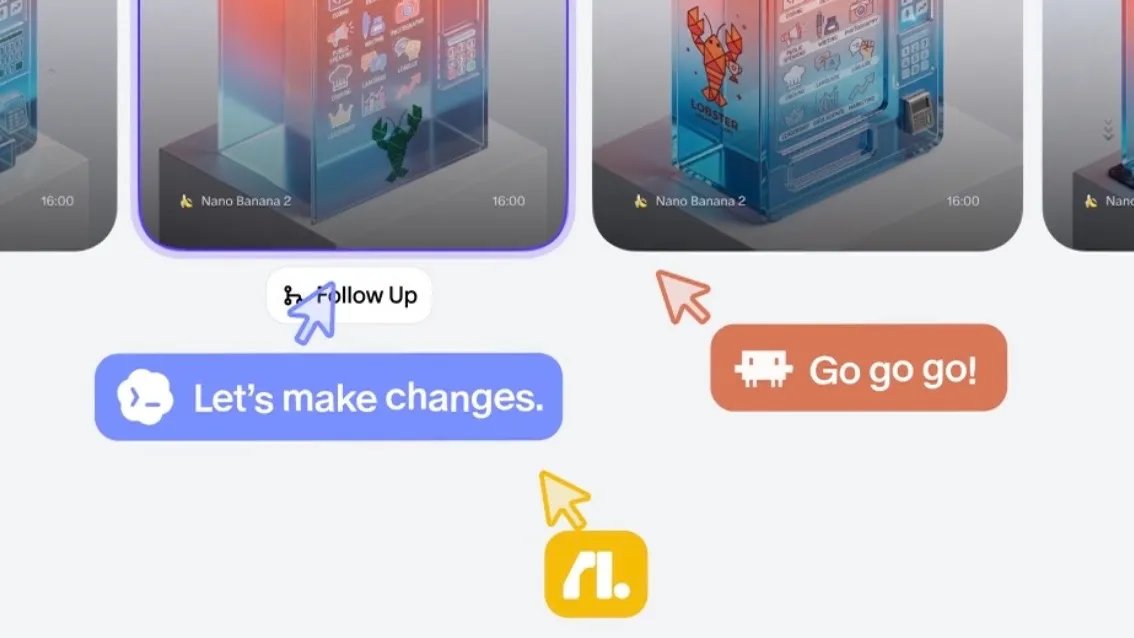
First time ever seeing humans and AI agents actually collaborating in a shared, visible workspace, with Codex and Claude Code creating on canvas at the same time.
— Chubby♨️ (@kimmonismus) 31 mars 2026
I'm pretty sure this the world's first canvas built for agents!
Humans and machines are now becoming collaborators… https://t.co/ItoIDowLOs pic.twitter.com/KjSl0CrvnhFirst time ever seeing humans and AI agents actually collaborating in a shared, visible workspace, with Codex and Claude Code creating on canvas at the same time. I'm pretty sure this the world's first canvas built for agents! Humans and machines are now becoming collaborators
-
Letting Claude Code choose how to build stuff
By
–
Nowadays a lot with Claude Code cause I let it choose how to build stuff 😀
-
MultiGen: Neural Network-Generated Real-Time Multiplayer Game Live
By
–
We built a real-time multiplayer game generated entirely by a neural network—and now you can actually play it.
— Gordon Wetzstein (@GordonWetzstein) 31 mars 2026
In collaboration with @modal, we just launched the live demo for MultiGen, our diffusion-based multiplayer game engine. Grab some friends and try it here 👇 pic.twitter.com/3pnKz1MUrpWe built a real-time multiplayer game generated entirely by a neural network—and now you can actually play it. In collaboration with @modal, we just launched the live demo for MultiGen, our diffusion-based multiplayer game engine. Grab some friends and try it here 👇
→ View original post on X — @sallyeaves, 2026-03-31 14:29 UTC
-
Unified Agent Definition Across Claude Code CrewAI OpenAI
By
–
Absolutely, same agent definition across Claude Code, CrewAI, and OpenAI is what makes it useful
-

GitAgent: Framework-Agnostic Standard for Portable AI Agents
By
–
If you found it useful, reshare it with your network Follow me → @Sumanth_077 for more insights and tutorials on AI Engineering! nitter.net/Sumanth_077/status/203… Sumanth (@Sumanth_077) Turn any git repo into an AI agent! GitAgent is a framework-agnostic standard that lets you define agents as git repositories. Every AI framework has its own structure. Claude Code, OpenAI, LangGraph, CrewAI, AutoGen all use different formats. You build an agent in one framework and it's locked there. No portability. No reuse. GitAgent fixes this. Your repository becomes your agent. Drop two files into a git repo (agent.yaml for the manifest, SOUL. md for identity) and it becomes a portable agent definition. Export it to any framework with adapters. You get git's workflow for free. Version control your prompts. Roll back broken changes with git revert. Fork public agents, customize them, and PR improvements back. Run gitagent validate in GitHub Actions to catch issues before deployment. The structure is flexible. Start with just agent.yaml and SOUL. md. Add skills, tools, workflows, memory, and compliance rules as you need them. Everything is optional except those two core files. It works across frameworks. Export to Claude Code, OpenAI Agents SDK, CrewAI, or as a raw system prompt. Same agent definition, different runtimes. Built for compliance. First-class support for FINRA, Federal Reserve, and SEC requirements. Segregation of duties built into the spec. Define roles, conflict matrices, and handoff workflows in agent.yaml. Link to the Github Repo in comments! — https://nitter.net/Sumanth_077/status/2038981420664959188#m
→ View original post on X — @sumanth_077, 2026-03-31 14:07 UTC
-
GitAgent Open Source Repository on GitHub
By
–
Github Repo: github.com/open-gitagent/git…
→ View original post on X — @sumanth_077, 2026-03-31 14:07 UTC